Goodman 3.5 Ton 15.2 SEER2 AC & Gas Furnace System – Multi-Speed, 120000 BTU Gas Furnace, 92% AFUE, Upflow, R32
View on AC Direct see your lowest price →Check current price on AC Direct →
Key features
- 3.5-ton cooling capacity with 15.2 SEER2 efficiency rating
- 120,000 BTU upflow gas furnace at 92% AFUE
- Multi-speed blower motor for improved airflow and humidity management
- R-32 refrigerant with lower global-warming potential than R-410A
- Factory-matched components for simplified refrigerant charge verification
- Compatible with Goodman communicating controls for future thermostat upgrades
About this system
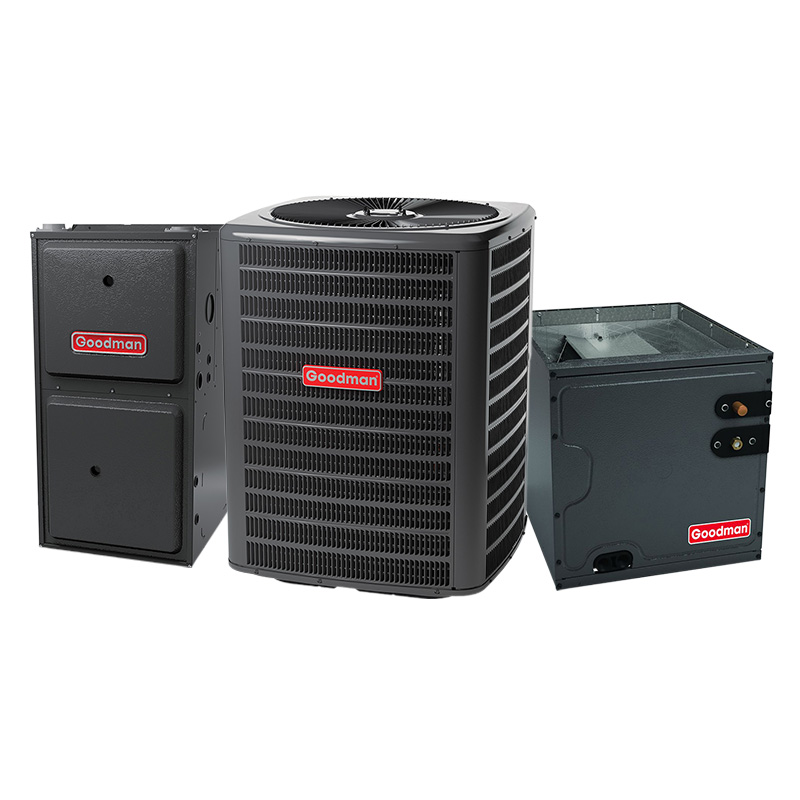
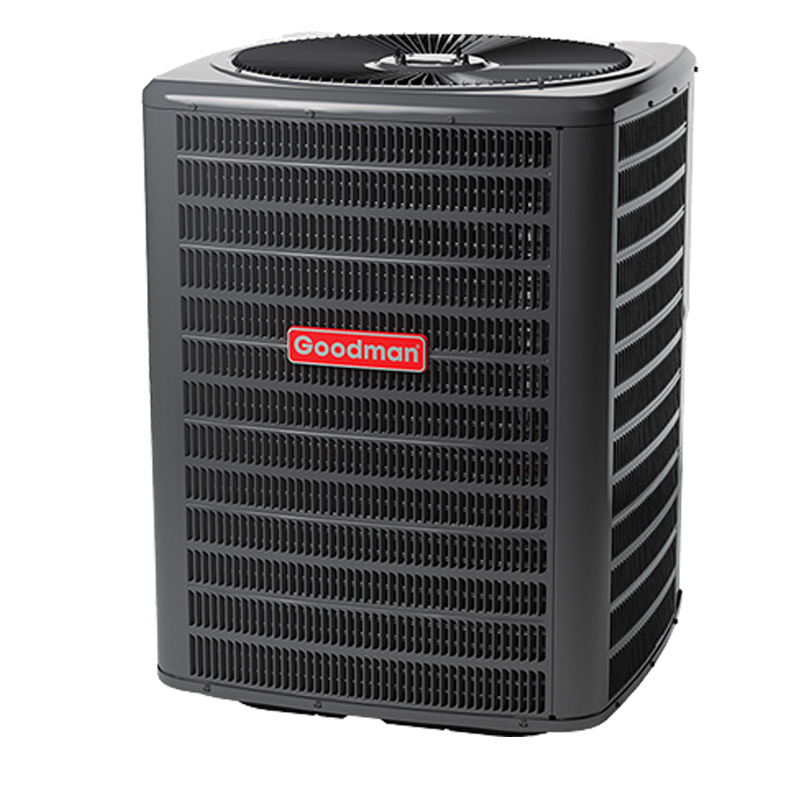
The Goodman GLXS4BA4210 bundles a 3.5-ton, 15.2 SEER2 split-system air conditioner with a 120,000 BTU, 92% AFUE upflow gas furnace into a single matched package. At 3.5 tons the cooling side targets homes roughly in the 1,800 to 2,400 square foot range depending on climate, insulation quality, and ceiling height. The 15.2 SEER2 rating sits right at the current federal minimum threshold for most northern U.S. regions, so this is an entry-level efficiency system rather than an energy-star standout. What it does offer over the bare minimum is the R-32 refrigerant charge, a lower global-warming-potential alternative to R-410A that is becoming the industry standard going forward.
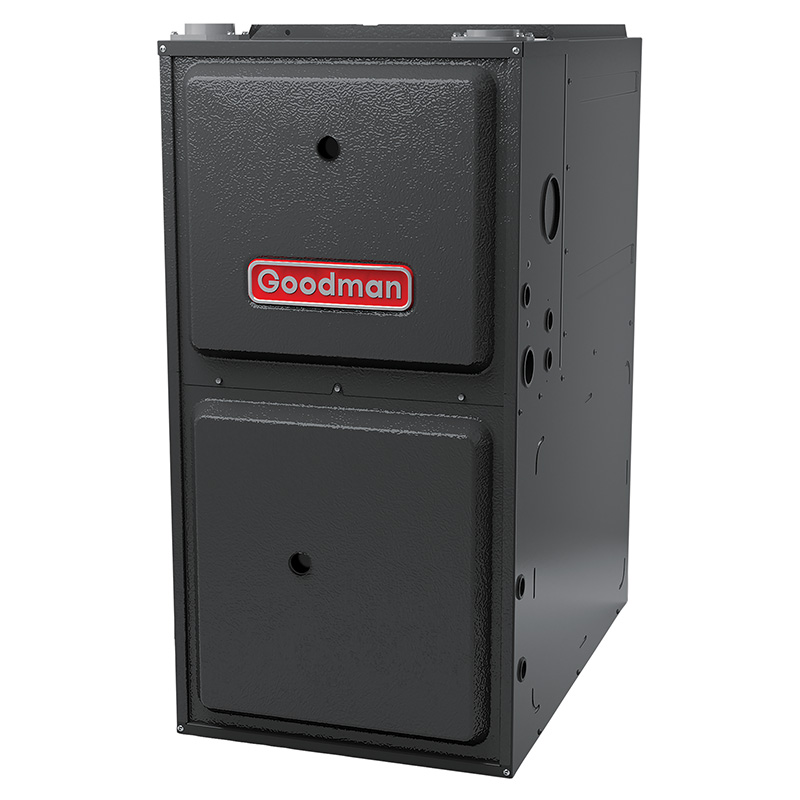
The furnace side runs a multi-speed blower, which gives the system a bit more flexibility in air distribution and humidity control compared to a fixed-speed unit, though it stops short of the comfort advantages you get from a fully modulating or variable-speed communicating system. The 92% AFUE rating means roughly 92 cents of every dollar spent on natural gas goes toward usable heat, clearing the federal non-condensing efficiency floor but trailing the 96% to 98% AFUE condensing furnaces available at a higher price. The upflow configuration suits the most common installation scenario, where the air handler sits in a basement or utility closet and supply ducts run up into the living space. This is a solid budget-tier matched system for buyers who want reliable brand-matched components and a straightforward installation without paying premium-brand prices.
The Goodman GLXS4BA4210 is a competent budget-tier matched system that delivers adequate efficiency at a price typically 15 to 25 percent below comparable Carrier, Trane, or Lennox configurations. Its real-world longevity leans heavily on installation quality and where you land on the documented capacitor and coil-leak failure curve after year seven. Buyers who want proven long-term reliability or plan to stay in their home 15-plus years should weigh the savings against Goodman's shorter average compressor lifespan.
Overall score is the average of the five ratings above.
What we like
- Purchase price is meaningfully lower than premium-brand equivalents at similar efficiency
- Factory-matched AC and furnace reduces compatibility guesswork and simplifies commissioning
- R-32 refrigerant positions the system for current and near-future regulatory requirements
- Multi-speed blower improves dehumidification and air distribution over single-speed alternatives
- Wide dealer network means parts and service technicians are generally accessible
Trade-offs
- Compressor lifespan averages 10 to 14 years, shorter than the 15 to 20 years documented for premium brands
- Dual-run capacitor failures are the most commonly reported issue and tend to cluster after year seven
- A minority of owners have reported refrigerant leaks within the first year, typically traced to install or initial charge quality
- 15.2 SEER2 is the regional minimum threshold, so energy bill savings over the system's life are limited compared to higher-efficiency options
What homeowners and pros say about Goodman
Homeowners who have gone through the Goodman ownership cycle tend to report a pattern that aligns with its ConsumerAffairs score of around 2.5 out of 5 and its more forgiving Google dealer review average of roughly 3.8 out of 5. The gap between those two numbers reflects who is doing the talking: people motivated to write a review after a bad repair experience versus customers who appreciated the upfront savings and a dealer who took care of them. Affordability is the most common thread in the positive feedback, and many owners report years of uneventful operation when the system was installed correctly by a competent contractor. The complaints that pile up on ConsumerAffairs cluster around repair costs after the seven-year mark, which tracks with Goodman’s documented dual-run capacitor failure pattern and the reported evaporator coil leak issues that show up in a meaningful share of longer-term owner reviews.
HVAC technicians who service Goodman equipment frequently describe it as workable but maintenance-sensitive. The dual-run capacitor is the part they expect to replace on older Goodman systems, and they note it is a straightforward repair when caught during a scheduled tune-up rather than a mid-summer emergency call. The bigger concern pros raise is compressor longevity: Goodman compressors are generally documented to average 10 to 14 years, a shorter window than the 15 to 20 years technicians associate with Carrier, Trane, or Lennox compressors at similar operating conditions. A small but notable share of first-year owners have also reported refrigerant leaks, which technicians typically attribute to installation quality rather than a manufacturing defect. The consistent pro advice: choose your installer carefully, register the warranty immediately, and build a relationship with a service company that will check capacitor health on every annual visit.
Sources: ConsumerAffairs Goodman owner reviews, AHRI Directory of Certified Product Performance, U.S. DOE appliance and equipment efficiency standards, Goodman product specification sheets.
What it costs to run
At 15.2 SEER2, cooling this 3.5-ton system for a typical 1200-hour cooling season at the U.S. average electricity rate of $0.17/kWh works out to roughly $564 per year in cooling, about $75 less per year than a minimum-efficiency 13.4 SEER2 unit of the same size. Your real cost depends on your climate and local rate.
Method: (42,000 BTU/hr ÷ 15.2 SEER2) × 1200 hours ÷ 1000 × $0.17/kWh. Rate source: U.S. EIA average; cooling hours: moderate-climate estimate.
How it compares
| Brand | Comparable model | SEER2 | Stage | Price position |
|---|---|---|---|---|
| Goodman | GLXS4BA4210 | 15.2 | Single-stage | Value pick |
| Carrier | Comfort 14 Series (24ACC6) | 15.2 | Single-stage | Typically 15 to 25 percent more than Goodman |
| Trane | XR15 Series | 15.0 to 16.0 | Single-stage | Typically 15 to 25 percent more than Goodman |
| Lennox | Merit ML14XC1 Series | 15.2 | Single-stage | Typically 15 to 25 percent more than Goodman |
Competitor rows are comparable single-stage units at similar efficiency; price is relative position, not a quote.
Questions about this system
Is 3.5 tons the right size for my house, or should I go up to 4 tons?
Tonnage should be determined by a Manual J load calculation, not square footage alone. A 3.5-ton unit is commonly appropriate for homes in the 1,800 to 2,400 square foot range in moderate climates, but ceiling height, insulation, window area, and local design temperatures all affect the answer. Oversizing leads to short cycling and humidity problems, so get a load calc from your installer before committing.
What does the R-32 refrigerant mean for me as an owner?
R-32 has a lower global-warming potential than the R-410A it replaces and is increasingly the refrigerant of choice for new residential equipment. For day-to-day ownership the practical difference is small, but it does mean that if you need a refrigerant top-off in the future, your technician will need to be certified for R-32 and carry it on their truck, which is becoming standard but is worth confirming with any service provider.
How worried should I be about the capacitor failures I read about with Goodman units?
Dual-run capacitor failure is the most commonly reported repair on Goodman equipment, and it tends to show up after roughly year seven. The repair itself is typically a quick, low-cost fix in the $300 to $600 range when caught early. Buying a home warranty or extended service agreement that covers parts and labor is one way to manage this cost, and having your technician check capacitor condition during annual maintenance visits helps catch it before a hot-day failure.
Does the 92% AFUE furnace qualify for any federal tax credits?
As of current IRS guidance, gas furnaces must reach 97% AFUE to qualify for the 25C energy efficiency tax credit in most situations. At 92% AFUE, this furnace falls below that threshold, so you should not count on a federal tax credit for the furnace portion. Check with your tax advisor and local utility for any state or utility rebate programs that may apply at lower efficiency levels.
What warranty does the Goodman system carry, and are there any conditions I need to meet?
Goodman typically offers a 10-year parts limited warranty on registered equipment, with registration required within a specified window after installation. The warranty generally covers parts but not labor, meaning a covered compressor replacement could still carry a significant labor bill. Confirming your installer registers the equipment promptly and keeping installation records on file is important to protect that coverage.
Specifications
| Cooling capacity | 3.5 Ton |
| Efficiency | 15.2 SEER2 |
| Furnace output | 120000 BTU |
| Furnace efficiency | 92% AFUE |
| Configuration | Upflow |
| Refrigerant | R-32 |
| Model | GLXS4BA4210 |