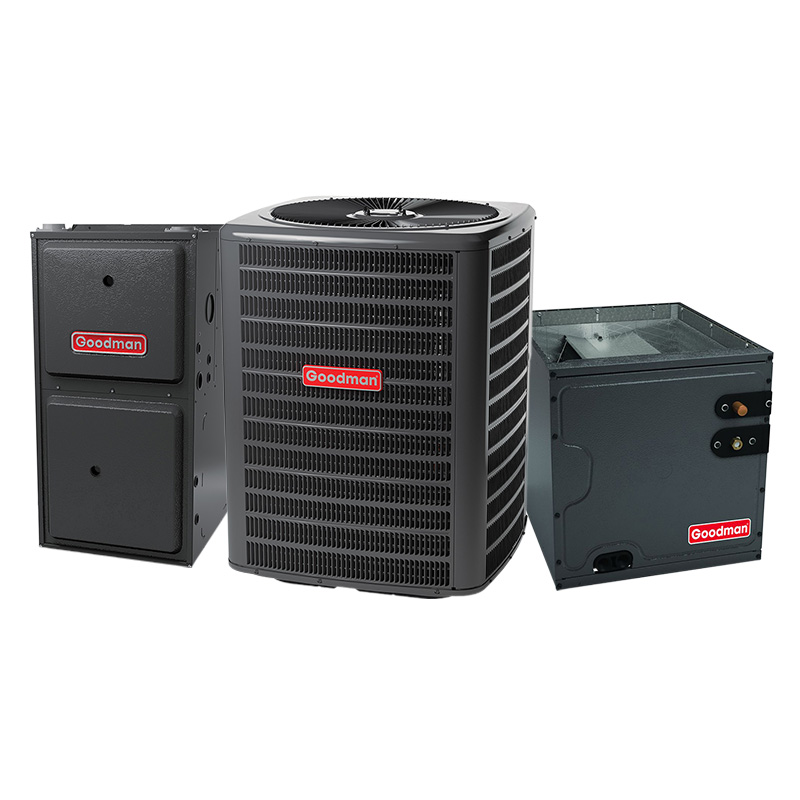
Goodman 3.5 Ton 15.2 SEER2 AC & Gas Furnace System – Multi-Speed, 80000 BTU Gas Furnace, 92% AFUE, Upflow, R32
View on AC Direct see your lowest price →Check current price on AC Direct →
Key features
- 3.5-ton cooling capacity, 15.2 SEER2 efficiency rating
- 80,000 BTU gas furnace with 92% AFUE heating efficiency
- Multi-speed blower motor for improved airflow and humidity control
- R-32 refrigerant with approximately 68% lower global warming potential than R-410A
- Upflow configuration for basement or interior closet installations
- Bundled matched system tested and rated together for consistent performance
About this system
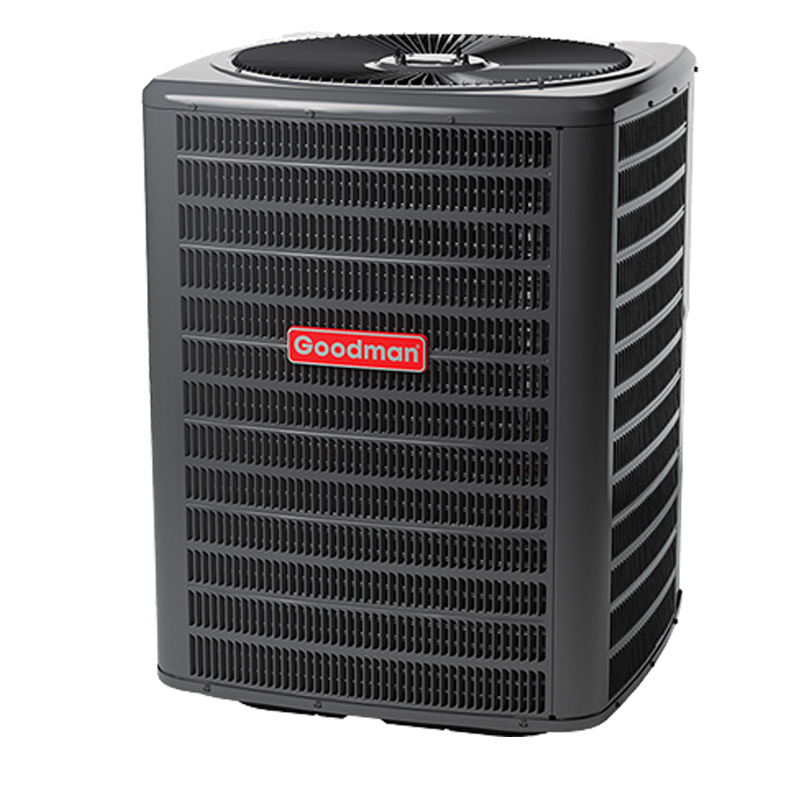
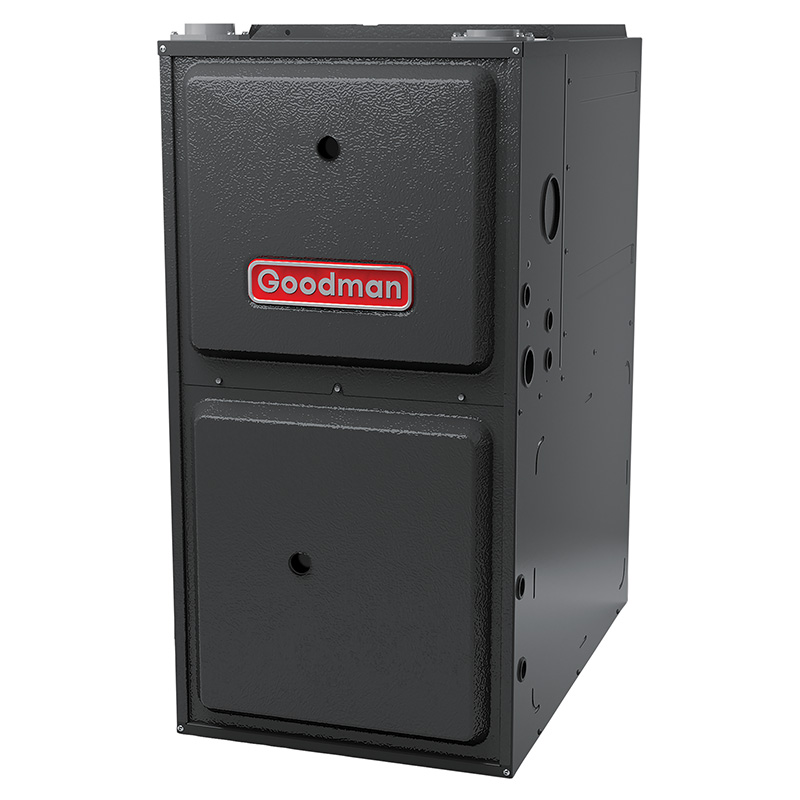
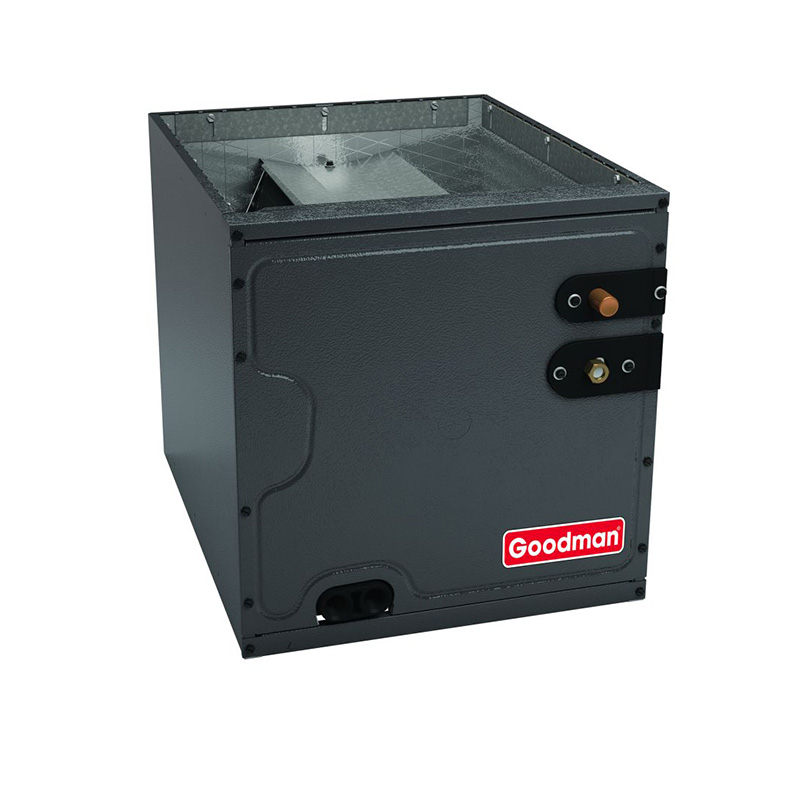
The Goodman GLXS4BA4210 pairs a 3.5-ton, 15.2 SEER2 air conditioner with an 80,000 BTU, 92% AFUE upflow gas furnace in a bundled system that covers roughly 1,800 to 2,400 square feet depending on your climate zone, insulation, and duct layout. The 15.2 SEER2 rating clears the current federal minimum for most U.S. regions by a comfortable margin, putting it in the entry-level efficient tier rather than the premium tier. The 92% AFUE furnace means 8 cents of every heating dollar escapes as exhaust, which is a meaningful improvement over an 80% unit but falls short of the 96–98% condensing furnaces that maximize gas savings in colder climates.
R-32 refrigerant is a notable forward-looking spec here. It has a global warming potential roughly 68% lower than R-410A, and as the industry phases down R-410A under EPA regulations, R-32 systems will face less regulatory and cost pressure for future service calls. The multi-speed furnace blower improves air distribution and humidity control compared to single-speed alternatives, which is a practical comfort benefit beyond just the efficiency number. The upflow configuration suits basements and interior utility closets where the furnace sits below the air handler and supply air moves upward into the duct system. If your home uses a horizontal or downflow setup, this system is not compatible without modification.
This bundle makes the most sense for a homeowner replacing aging equipment on a budget who wants a code-compliant, reasonably efficient system without the price premium of Carrier, Trane, or Lennox. It is not the right choice if you want variable-speed comfort, long-term compressor durability data comparable to premium brands, or the lowest possible utility bills in an extreme climate. Goodman’s value proposition has always been upfront cost savings, and that trade-off is real and documented.
The Goodman GLXS4BA4210 delivers a solid, code-compliant efficiency package at a price point 15 to 25 percent below comparable premium-brand systems, making it a defensible choice for budget-conscious homeowners who prioritize upfront cost. The R-32 refrigerant and multi-speed blower are genuine advantages in this price tier, but Goodman's documented compressor lifespan of 10 to 14 years, recurring coil leak reports, and quality outcomes that hinge heavily on installer skill mean buyers should factor ongoing service costs into the total-cost picture. It earns its place as a value option, not a premium one.
Overall score is the average of the five ratings above.
What we like
- Priced 15 to 25 percent below Carrier, Trane, and Lennox systems at similar efficiency
- R-32 refrigerant future-proofs the system against R-410A phase-down costs
- Multi-speed blower improves comfort and humidity management over single-speed units
- 15.2 SEER2 clears current federal minimums with room to spare in most regions
- Matched system bundle simplifies sizing, warranty alignment, and coil compatibility
Trade-offs
- Compressor lifespan averages 10 to 14 years versus 15 to 20 years for premium brands
- Evaporator coil leaks appear in a meaningful share of owner reviews, adding potential mid-life repair costs
- A minority of owners report refrigerant leaks within the first year, typically traced to installation or charge issues
- Overall reliability outcome depends heavily on installer quality, more so than with premium brands
What homeowners and pros say about Goodman
Homeowners who bought Goodman equipment and left feedback online tell a fairly consistent story: the systems start up without drama and the upfront savings feel real, but opinions split after the first few years of ownership. Goodman’s ConsumerAffairs rating of approximately 2.5 out of 5 reflects a complaint-heavy audience, and the recurring issue is not sudden breakdowns but rather a pattern of service calls and repair costs that begin to accumulate after roughly year seven. Google dealer reviews paint a more balanced picture at around 3.8 out of 5, where the word that shows up most often in positive feedback is simply affordable. The R-32 refrigerant and multi-speed blower on the GLXS4BA4210 are frequently called out as welcome upgrades from older equipment, and for homeowners replacing a failing 10-year-old system on a defined budget, the value calculation often makes sense.
HVAC technicians who service Goodman equipment regularly point to dual-run capacitor failures as the most routine call they see on these units, a repair that runs between $300 and $600 and is not considered serious. More costly are evaporator coil leaks, which show up in a meaningful share of owner accounts and can require coil replacement if refrigerant loss is significant. Compressor longevity is the longer-term concern professionals raise most often: Goodman compressors tend to average 10 to 14 years in the field, compared to 15 to 20 years seen in Carrier, Trane, and Lennox units at similar efficiency ratings. Technicians are consistent on one point above all: how this system performs over its life depends more on the quality of the installation than on anything Goodman builds into it at the factory, making contractor selection as important as the equipment choice itself.
Sources: ConsumerAffairs Goodman owner reviews, AHRI Directory of Certified Product Performance, U.S. DOE appliance and equipment efficiency standards, Goodman product specification sheets.
What it costs to run
At 15.2 SEER2, cooling this 3.5-ton system for a typical 1200-hour cooling season at the U.S. average electricity rate of $0.17/kWh works out to roughly $564 per year in cooling, about $75 less per year than a minimum-efficiency 13.4 SEER2 unit of the same size. Your real cost depends on your climate and local rate.
Method: (42,000 BTU/hr ÷ 15.2 SEER2) × 1200 hours ÷ 1000 × $0.17/kWh. Rate source: U.S. EIA average; cooling hours: moderate-climate estimate.
How it compares
| Brand | Comparable model | SEER2 | Stage | Price position |
|---|---|---|---|---|
| Goodman | GLXS4BA4210 | 15.2 | Single-stage | Value pick |
| Carrier | Comfort Series (24ACC6) | 15.2 | Single-stage | Typically 15 to 25 percent more than Goodman |
| Trane | XR15 Series | 15.0–16.0 | Single-stage | Typically 15 to 25 percent more than Goodman |
| Lennox | Merit Series (ML14XC1) | 15.0–16.0 | Single-stage | Typically 15 to 25 percent more than Goodman |
Competitor rows are comparable single-stage units at similar efficiency; price is relative position, not a quote.
Questions about this system
What size home does a 3.5-ton system actually cover?
A 3.5-ton unit is generally appropriate for homes in the range of 1,800 to 2,400 square feet, but the right size depends on your local climate, ceiling height, window area, and insulation levels. A proper Manual J load calculation by your installer is the only reliable way to confirm 3.5 tons is correct for your specific home, and an oversized system will short-cycle and cause humidity problems regardless of the brand.
Is R-32 refrigerant safe, and will it be easy to service?
R-32 is classified as mildly flammable (A2L), which means technicians need specific handling training and tools, but it is widely used in residential systems globally and is gaining rapid adoption in the U.S. market. Most established HVAC contractors are either already certified or actively getting certified to work with A2L refrigerants, so serviceability should not be a significant concern in most metro areas within the next few years.
Goodman has mixed reviews online. How worried should I be?
Goodman's ConsumerAffairs score sits at around 2.5 out of 5, but that platform skews heavily toward complaints, and the recurring theme is repair costs climbing after roughly year seven rather than early catastrophic failures. Google dealer reviews average around 3.8 out of 5, where affordability is the most common praise. The realistic picture is a system that works adequately if well-installed but may require more maintenance spending in the second decade than a premium brand would.
What are the most common repairs I should budget for on this system?
Dual-run capacitors are the most frequently reported failure point on Goodman equipment and typically cost between $300 and $600 to replace, making them a relatively affordable fix. More consequential are evaporator coil leaks, which appear in a meaningful share of owner reviews and can run into the thousands depending on whether the coil needs replacement. A small percentage of owners also report refrigerant leaks in the first year, which are usually an installation or charging issue.
Does the 92% AFUE furnace qualify for any federal tax credits?
As of the current federal guidelines, gas furnaces need to meet a 97% AFUE threshold to qualify for the 25C energy efficiency tax credit in most U.S. climate zones, so this 92% AFUE unit does not qualify for that credit. It is worth checking your state and local utility programs separately, as some offer rebates at lower efficiency thresholds. Confirm current eligibility with a tax professional before making a purchase decision based on credits.
Specifications
| Cooling capacity | 3.5 Ton |
| Efficiency | 15.2 SEER2 |
| Furnace output | 80000 BTU |
| Furnace efficiency | 92% AFUE |
| Configuration | Upflow |
| Refrigerant | R-32 |
| Model | GLXS4BA4210 |