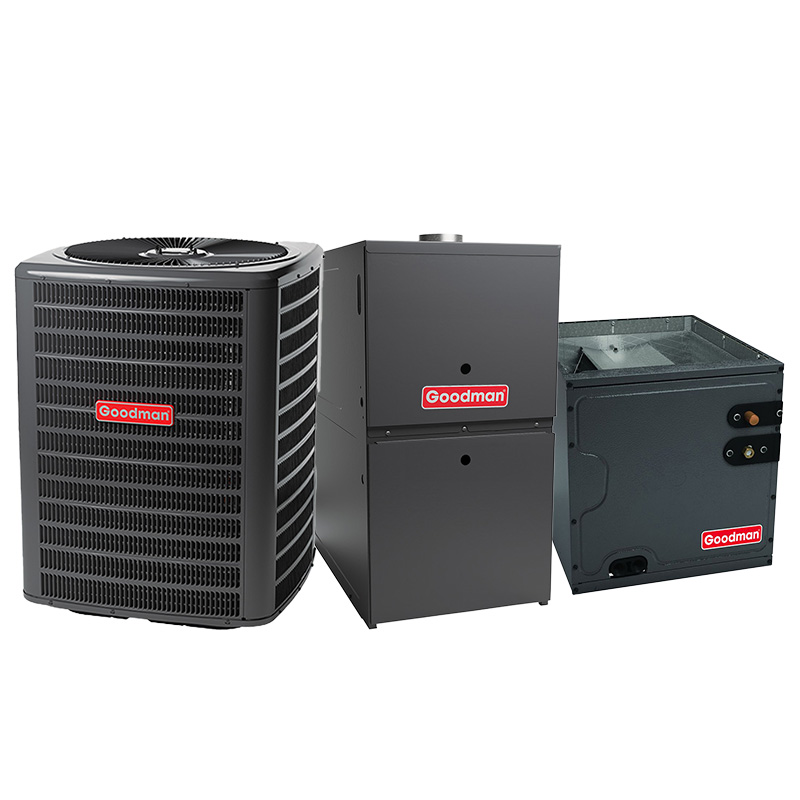
Goodman 3.5 Ton 15.2 SEER2 AC & Gas Furnace System – Two Stage Variable-Speed 100000 BTU Gas Furnace, 80% AFUE, Upflow, R32
View on AC Direct see your lowest price →Check current price on AC Direct →
Key features
- Two-stage compressor runs at low capacity on mild days to reduce short-cycling and improve humidity control
- Variable-speed ECM blower motor adjusts airflow in small increments for quieter, more even temperature distribution
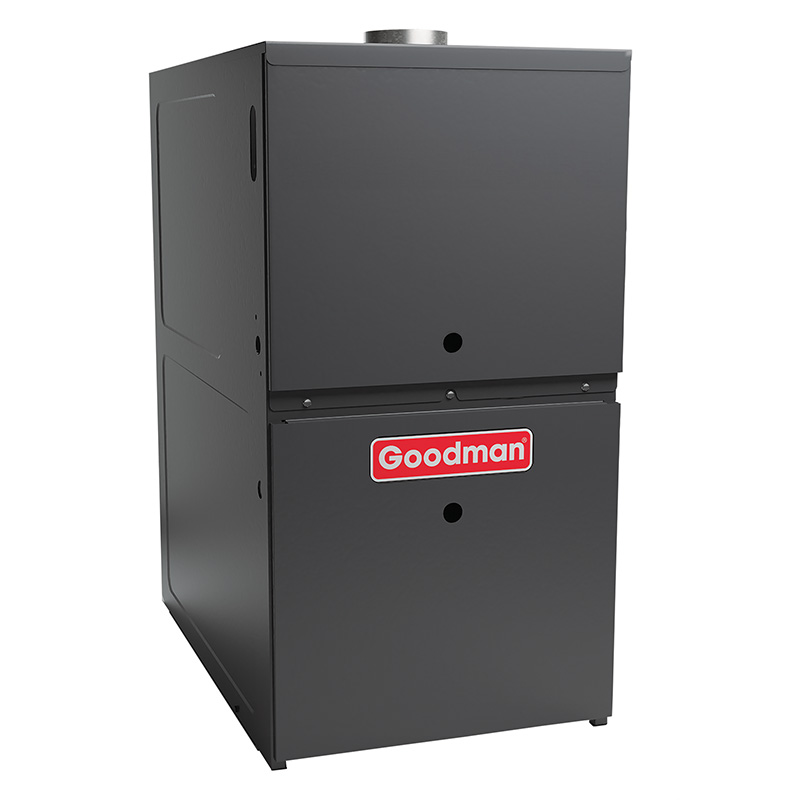
- 100,000 BTU, 80% AFUE gas furnace in upflow configuration for standard basement or utility-closet installs
- R-32 refrigerant with lower global warming potential than R-410A, meeting current and near-future regulatory standards
- 15.2 SEER2 efficiency rating clears the federal minimum with margin, keeping operating costs moderate without premium pricing
- Priced roughly 15 to 25 percent below comparable Trane, Lennox, and Carrier bundles for the same capacity and stage count
About this system
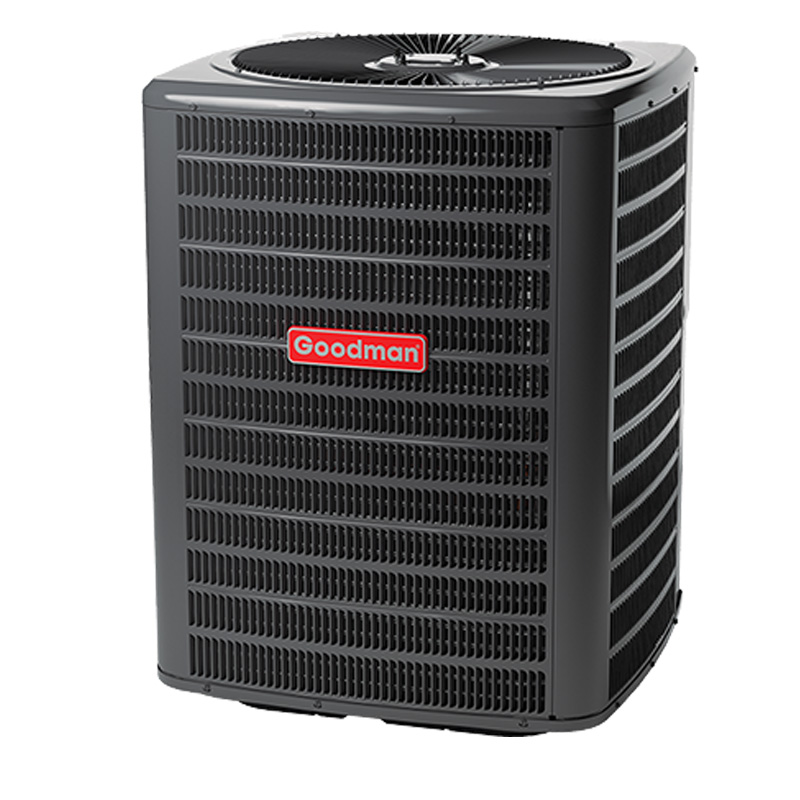
The Goodman 3.5-ton, 15.2 SEER2 split system pairs a two-stage air conditioner with a variable-speed, 100,000 BTU gas furnace rated at 80% AFUE. That combination targets homes in the 1,800 to 2,400 square foot range, though exact sizing depends heavily on your climate, insulation, and duct layout. The two-stage compressor runs at low capacity on mild days and ramps up only when demand rises, which reduces short-cycling, keeps humidity more stable than a single-stage unit, and softens the spike in your electric bill during shoulder seasons.
The 80% AFUE furnace is a mid-efficiency choice. It meets code in most U.S. climates but is not the right pick if you are in a heating-dominated northern zone where 96% AFUE units pay back their premium within a few years. What it offers is lower upfront cost and straightforward maintenance. The upflow configuration suits standard installations where the furnace sits in a basement or utility closet and air rises into overhead ductwork. R-32 refrigerant is a meaningful step forward over older R-410A: it has a lower global warming potential and is increasingly the industry standard, so finding a technician familiar with it should not be difficult going forward. At 15.2 SEER2, this system clears the federal minimum threshold with a modest margin, landing it solidly in the entry-to-mid-efficiency tier rather than the high-efficiency bracket.
This bundle suits buyers who need reliable climate control on a budget, are replacing aging equipment in a home they do not plan to own for 20-plus years, or are working with a landlord or investment-property budget. It is less suited to buyers who want the lowest possible operating costs over a long horizon or who prioritize premium longevity above all else.
This Goodman bundle delivers two-stage cooling and variable-speed airflow at a price point that genuinely undercuts the major premium brands by a meaningful margin. The specs are honest and the system performs well when properly installed, but Goodman's real-world ownership record shows repair costs tend to climb after year seven and compressor longevity lags behind premium competitors. It is a sensible buy for cost-conscious homeowners who accept those trade-offs and commit to annual maintenance.
Overall score is the average of the five ratings above.
What we like
- Upfront cost is 15 to 25 percent lower than equivalent Trane, Lennox, or Carrier systems
- Two-stage operation improves humidity control and comfort compared to single-stage alternatives at this price
- Variable-speed ECM blower reduces energy use and noise during the majority of run hours
- R-32 refrigerant is forward-looking and has a lower environmental impact than R-410A
- Widely stocked parts network means capacitors and common repair components are easy for technicians to source
Trade-offs
- Dual-run capacitors are the most frequently reported failure point and typically need replacement within the first decade
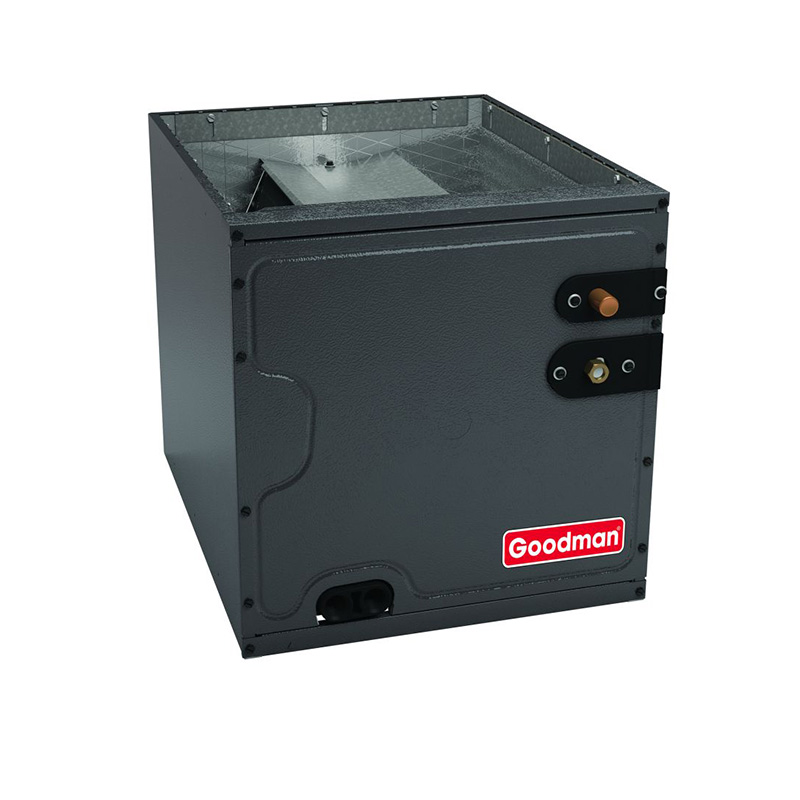
- Evaporator coil leaks appear in a notable share of owner reviews, which can be a costly mid-life repair
- Compressor lifespan averages 10 to 14 years versus 15 to 20 years typical of premium-brand compressors
- 80% AFUE is mid-tier efficiency; homeowners in cold climates will pay noticeably more to heat than with a 95-plus AFUE unit
What homeowners and pros say about Goodman
Homeowners who share their Goodman experiences online tend to cluster at the extremes: those who got a clean install and routine maintenance often report years of unremarkable, solid service, while those who encountered problems are vocal about repair bills that arrive around year seven or eight. Goodman’s ConsumerAffairs score sits at roughly 2.5 out of 5, a figure that reflects that complaint-driven channel’s skew, but the recurring theme of rising repair costs in the mid-ownership years is consistent enough to take seriously. Google reviews aggregated across dealer locations land around 3.8 out of 5, where affordability is the praise that shows up most often, and that number gives a fairer picture of the day-to-day ownership experience for buyers who go in with realistic expectations.
HVAC technicians who work on Goodman equipment regularly tend to have a pragmatic view: the systems are not built to the same component tolerances as Trane or Carrier, but they are well-understood and easy to service. The dual-run capacitor is the failure mode technicians cite first, a relatively inexpensive fix that is almost a scheduled maintenance item on older Goodman units. Evaporator coil leaks show up in a meaningful share of owner accounts and can be a more costly repair when they do. Compressor longevity in the 10 to 14 year range, compared to 15 to 20 years on premium brands, is the trade-off that matters most on a long ownership horizon. For a two-stage system at this price point, the value proposition is genuine, provided you factor in a maintenance plan and the realistic possibility of one or two moderate repairs before the 15-year mark.
Sources: ConsumerAffairs Goodman owner reviews, AHRI Directory of Certified Product Performance, U.S. DOE appliance and equipment efficiency standards, Goodman product specification sheets.
What it costs to run
At 15.2 SEER2, cooling this 3.5-ton system for a typical 1200-hour cooling season at the U.S. average electricity rate of $0.17/kWh works out to roughly $564 per year in cooling, about $75 less per year than a minimum-efficiency 13.4 SEER2 unit of the same size. Your real cost depends on your climate and local rate.
Method: (42,000 BTU/hr ÷ 15.2 SEER2) × 1200 hours ÷ 1000 × $0.17/kWh. Rate source: U.S. EIA average; cooling hours: moderate-climate estimate.
How it compares
| Brand | Comparable model | SEER2 | Stage | Price position |
|---|---|---|---|---|
| Goodman | GSZ2 / GMVC8 Series Bundle (this system) | 15.2 | two-stage | Value pick |
| Carrier | Performance 16 (24ACC6) with 80% Comfort Series Furnace | ~15.5 | single-stage | Typically 15 to 25 percent more than this Goodman bundle |
| Trane | XR15 (4TTR5) with S8X1 80% Furnace | ~15.0 | single-stage | Typically 15 to 25 percent more than this Goodman bundle |
| Lennox | Merit 16ACX with ML180 80% Furnace | ~15.2 | single-stage | Typically 15 to 25 percent more than this Goodman bundle |
Competitor rows are comparable single-stage units at similar efficiency; price is relative position, not a quote.
Questions about this system
Is 80% AFUE going to cost me significantly more to heat compared to a higher-efficiency furnace?
In mild to moderate climates, the difference is real but not dramatic. In colder northern climates where the furnace runs hard for five or more months, upgrading to a 96% AFUE unit can reduce annual heating costs by 15 to 20 percent, and that gap compounds over years. If your heating bills are a major concern, it is worth pricing a high-AFUE alternative before committing.
What does the two-stage compressor actually do differently in daily operation?
On most days the compressor runs at its lower stage, which is gentler on the system, reduces short on-and-off cycling, and allows longer run times that help pull moisture out of the air more effectively. The full stage only kicks in during the hottest demand periods. The practical result for most homeowners is fewer humid afternoons inside and quieter, steadier operation.
How worried should I be about the capacitor failures I keep reading about in Goodman reviews?
Dual-run capacitor failure is the most commonly documented issue with Goodman equipment and typically shows up somewhere between years three and ten. The good news is it is one of the cheapest HVAC repairs, generally in the 300 to 600 dollar range with a service call, and a competent technician can swap one in under an hour. Enrolling in an annual maintenance plan helps catch a weakening capacitor before it strands you in a heat wave.
Does R-32 refrigerant require a specially certified technician?
Technicians still need EPA 608 certification to work with R-32, the same credential already required for R-410A. R-32 is mildly flammable, so some installers who are new to it will take additional precautions, but the training gap is shrinking quickly as R-32 becomes the industry standard. Most established HVAC companies in 2024 and beyond are fully equipped to handle it.
What warranty comes with this Goodman system and are there conditions I need to know about?
Goodman's standard warranty on this type of system is typically 10 years on parts when registered within a set window after installation, dropping to a shorter period if you miss that registration deadline. The compressor and heat exchanger often carry their own coverage terms. Read the registration requirements carefully and keep your installation paperwork, because warranty claims almost always require proof of a licensed contractor installation and a registered serial number.
Specifications
| Cooling capacity | 3.5 Ton |
| Efficiency | 15.2 SEER2 |
| Furnace output | 100000 BTU |
| Furnace efficiency | 80% AFUE |
| Configuration | Upflow |
| Refrigerant | R-32 |