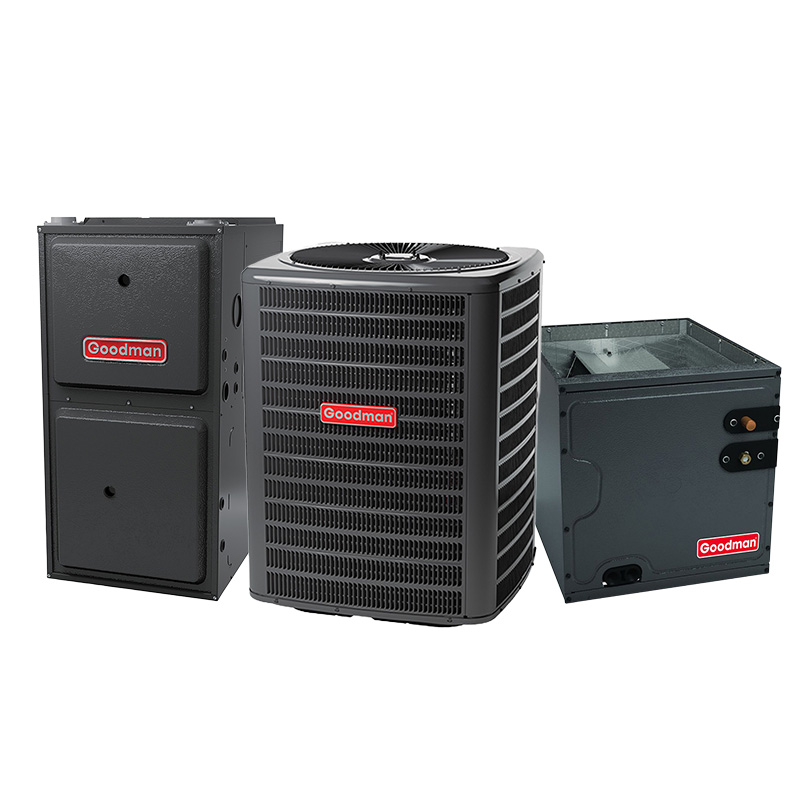
Goodman 3.5 Ton 15.2 SEER2 AC & Gas Furnace System – Two Stage Variable-Speed, 120000 BTU Gas Furnace, 96% AFUE, Upflow, R32
View on AC Direct see your lowest price →Check current price on AC Direct →
Key features
- Two-stage compressor for improved humidity control and fewer short cycles compared to single-stage units
- 96% AFUE high-efficiency gas furnace reduces heating fuel costs versus standard 80% AFUE equipment
- Variable-speed ECM blower motor for quieter operation and more even airflow distribution
- 15.2 SEER2 efficiency rating meets current federal minimum standards with moderate efficiency gains
- R-32 refrigerant with lower global warming potential than the R-410A it replaces
- Upflow configuration compatible with the most common residential ducted-system layouts
About this system
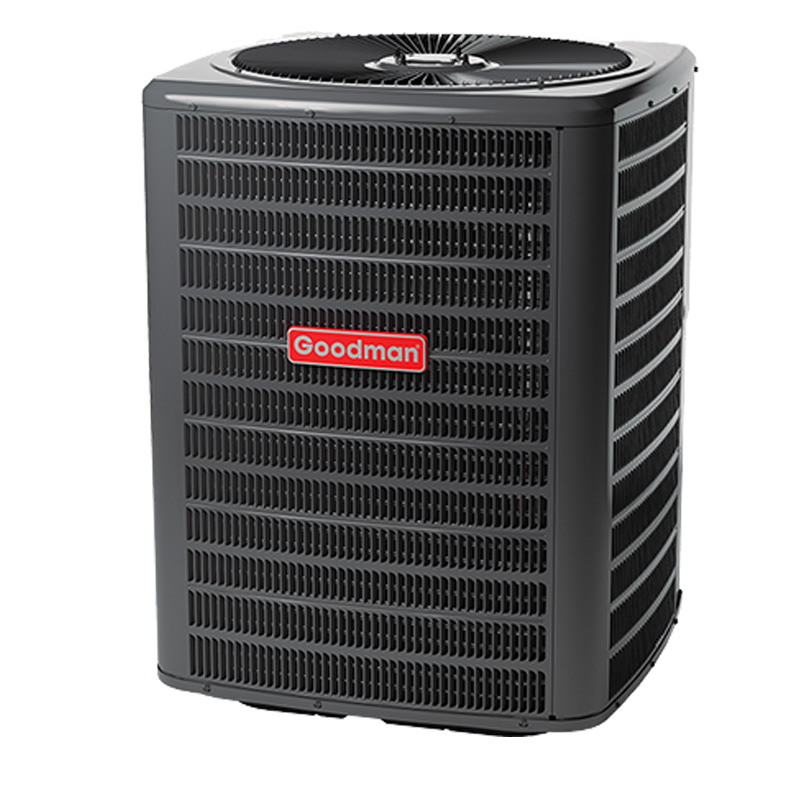
The Goodman GLXS4BA4210 pairs a 3.5-ton, 15.2 SEER2 two-stage air conditioner with a 120,000 BTU, 96% AFUE variable-speed gas furnace in an upflow configuration. At 3.5 tons, this system is sized for larger homes, typically in the 1,800 to 2,400 square foot range depending on climate, insulation, and window load. The two-stage compressor runs at a lower capacity most of the time and only shifts to full output on the hottest days, which reduces short cycling, helps manage humidity better than a single-stage unit, and keeps indoor temperatures more consistent.
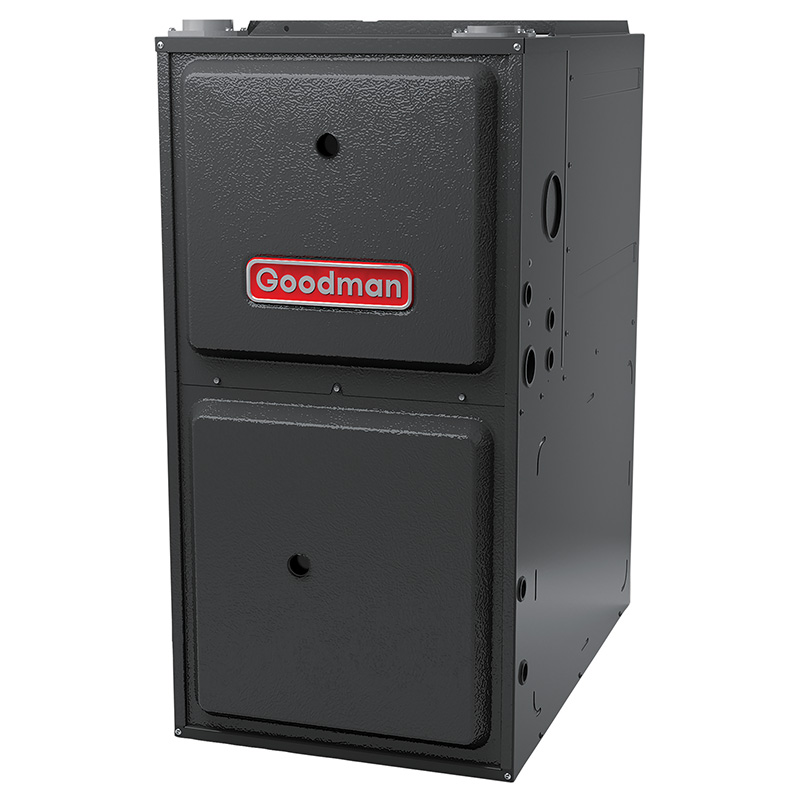
The 96% AFUE furnace is a high-efficiency gas unit, meaning roughly 96 cents of every dollar spent on gas goes toward heat rather than escaping up the flue. The variable-speed blower motor adjusts airflow continuously, which pairs well with the two-stage compressor to extend run times, improve air distribution, and run more quietly at low-demand settings. R-32 refrigerant has a lower global warming potential than the R-410A it replaces and is now the industry-standard direction for new residential equipment. The upflow configuration means the furnace sits vertically and discharges conditioned air upward into the duct system, the most common layout in homes with basement or closet installations.
This system makes the most sense for a homeowner who wants meaningfully better comfort and efficiency than a basic single-stage setup but does not want to pay the premium that Carrier, Trane, or Lennox charge for comparable staging and AFUE. It suits buyers who are working with a qualified local installer and understand that Goodman’s long-term performance is closely tied to installation quality and a willingness to handle routine maintenance and the occasional repair.
The Goodman GLXS4BA4210 delivers real comfort upgrades over single-stage equipment at a price point that is noticeably lower than comparable Carrier, Trane, or Lennox systems. The trade-off is a brand track record that shows higher rates of component failures after roughly year seven and compressor longevity that typically falls short of premium competitors. For buyers who go in clear-eyed about that trade-off and prioritize upfront savings, this system offers solid value when installed by a skilled technician.
Overall score is the average of the five ratings above.
What we like
- Two-stage operation improves humidity management and comfort over single-stage alternatives
- 96% AFUE furnace is among the most efficient gas furnace tiers available for residential use
- Variable-speed blower runs quieter and more efficiently than standard PSC motors
- Priced roughly 15 to 25 percent below comparable Carrier, Trane, and Lennox configurations
- R-32 refrigerant is future-forward and has lower environmental impact than R-410A
Trade-offs
- Compressor longevity averages 10 to 14 years versus 15 to 20 years for premium-brand compressors
- Dual-run capacitor failures are the most commonly reported repair issue, typically appearing after the first few years of use
- A minority of owners report refrigerant leaks within the first year, often tied to install or initial charge quality
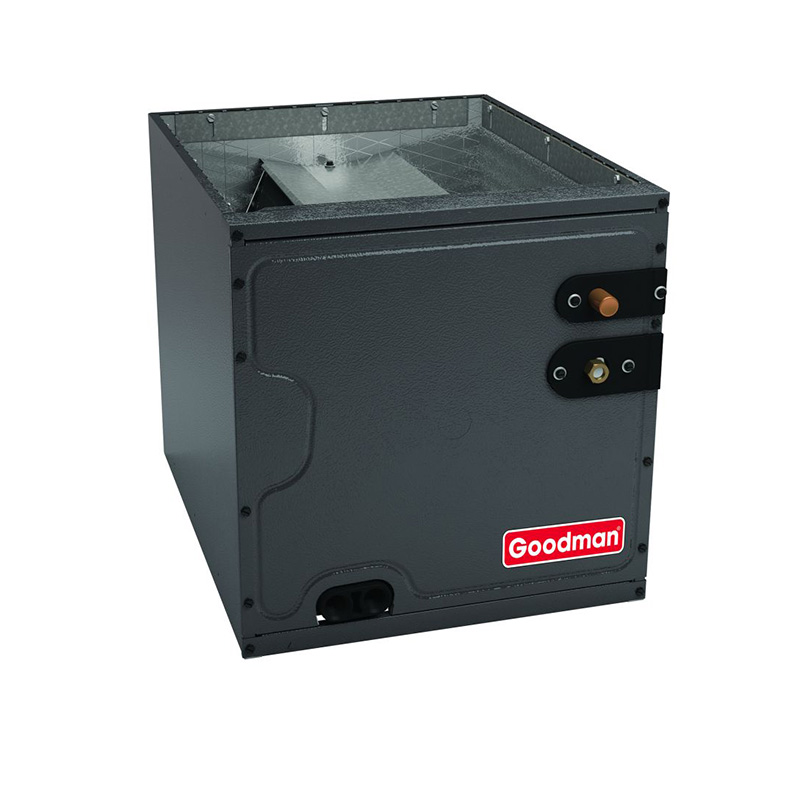
- Evaporator coil leaks appear in a meaningful share of owner reviews, which can be a costly mid-life repair
What homeowners and pros say about Goodman
Homeowners who chose Goodman equipment most often point to the lower upfront cost as the deciding factor, and dealer Google reviews averaging around 3.8 out of 5 suggest that a large share of buyers are satisfied, at least in the early years. The picture shifts on ConsumerAffairs, where Goodman sits at roughly 2.5 out of 5, and the recurring complaints center on repair bills that start adding up after roughly year seven. The specific failure modes that show up most in owner accounts are dual-run capacitor failures, which tend to be a straightforward and relatively affordable fix in the 300 to 600 dollar range, and evaporator coil leaks, which are less welcome and can be significantly more expensive to address.
HVAC technicians who work on Goodman equipment regularly tend to hold a nuanced view. Many will say that a well-installed Goodman in a home with good airflow and regular maintenance performs acceptably, but they also note that compressor longevity typically lands in the 10 to 14 year range rather than the 15 to 20 years they see from Trane, Carrier, or Lennox compressors. For this specific system, the two-stage compressor and variable-speed furnace add complexity relative to a basic single-stage Goodman, which means installation quality matters even more. A small but documented share of owners also report refrigerant leaks within the first year, which technicians typically attribute to installation or initial charge issues rather than a defect in the equipment itself, underscoring how much the installer’s skill shapes the outcome with this brand.
Sources: ConsumerAffairs Goodman owner reviews, AHRI Directory of Certified Product Performance, U.S. DOE appliance and equipment efficiency standards, Goodman product specification sheets.
What it costs to run
At 15.2 SEER2, cooling this 3.5-ton system for a typical 1200-hour cooling season at the U.S. average electricity rate of $0.17/kWh works out to roughly $564 per year in cooling, about $75 less per year than a minimum-efficiency 13.4 SEER2 unit of the same size. Your real cost depends on your climate and local rate.
Method: (42,000 BTU/hr ÷ 15.2 SEER2) × 1200 hours ÷ 1000 × $0.17/kWh. Rate source: U.S. EIA average; cooling hours: moderate-climate estimate.
How it compares
| Brand | Comparable model | SEER2 | Stage | Price position |
|---|---|---|---|---|
| Goodman | GLXS4BA4210 | 15.2 | Two-stage | Value pick |
| Carrier | Comfort 15 Series (24ACC636) | 15.2 | Single-stage | Typically 15 to 25 percent more than Goodman |
| Trane | XR15 Series (4TTR5036) | 15.2 | Single-stage | Typically 15 to 25 percent more than Goodman |
| Lennox | Merit 14ACX Series (14ACX-036) | 15.0 | Single-stage | Typically 15 to 25 percent more than Goodman |
Competitor rows are comparable single-stage units at similar efficiency; price is relative position, not a quote.
Questions about this system
Is 3.5 tons the right size for my house?
Tonnage depends on your home's square footage, insulation, climate zone, ceiling height, and window area, not a single rule of thumb. You should ask your installer to perform a Manual J load calculation before purchasing. Oversizing a two-stage system wastes money and reduces dehumidification efficiency; undersizing means it runs continuously on hot days and never keeps up.
What does two-stage actually mean for day-to-day comfort?
A two-stage compressor runs at a lower capacity, roughly 65 to 70 percent, during most cooling hours and only kicks to full capacity when outdoor temperatures are at their peak. Longer, lower-intensity run cycles remove more moisture from the air than short full-blast cycles do, which tends to feel more comfortable at the same thermostat setting. It also reduces the temperature swings you get with single-stage equipment.
How reliable is Goodman compared to Carrier or Trane at this price difference?
Goodman carries a ConsumerAffairs rating of around 2.5 out of 5, which is complaint-skewed but reflects a real pattern of repair costs climbing after roughly year seven. Google dealer reviews average around 3.8 out of 5, with affordability as the most common positive note. Documented failure modes include dual-run capacitor failures (a relatively low-cost fix), evaporator coil leaks, and compressor lifespans that average 10 to 14 years versus 15 to 20 for premium brands. The gap is real, and the price difference reflects it.
Does this system use R-32 refrigerant, and is that a problem for future service?
Yes, this unit uses R-32, which the industry is transitioning to as R-410A is phased down under updated environmental regulations. R-32 is already widely used globally and is becoming the standard for new U.S. residential equipment, so availability and technician familiarity should not be a concern going forward. The main thing to confirm is that your installing contractor has the proper equipment and certification to handle R-32.
What maintenance should I plan for to get the most out of this system?
Annual professional tune-ups, regular filter changes every one to three months depending on your home, and keeping the outdoor condenser coil clean are the basics that apply to any system. Given Goodman's documented pattern of dual-run capacitor failures and evaporator coil leaks, it is worth having your technician inspect those components specifically during each visit, particularly after years five through seven when component wear tends to accelerate.
Specifications
| Cooling capacity | 3.5 Ton |
| Efficiency | 15.2 SEER2 |
| Furnace output | 120000 BTU |
| Furnace efficiency | 96% AFUE |
| Configuration | Upflow |
| Refrigerant | R-32 |
| Model | GLXS4BA4210 |