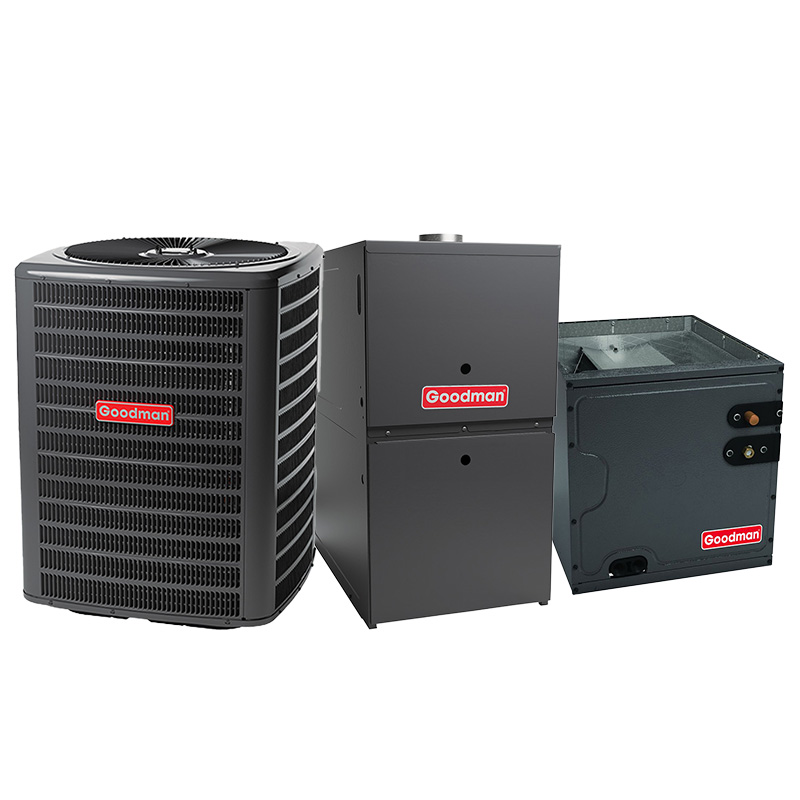
Goodman 3.5 Ton 15.2 SEER2 AC & Gas Furnace System – Two Stage Variable-Speed 80000 BTU Gas Furnace, 80% AFUE, Upflow, R32
View on AC Direct see your lowest price →Check current price on AC Direct →
Key features
- Two-stage cooling compressor reduces short-cycling and improves humidity control on mild days
- Variable-speed air handler delivers quieter, more consistent airflow than single-speed models
- 80,000 BTU, 80% AFUE upflow gas furnace meets code-minimum efficiency in most regions
- R-32 refrigerant with lower global-warming potential than legacy R-410A systems
- 15.2 SEER2 rating clears federal minimum thresholds for all U.S. climate zones
- Goodman factory warranty covers parts for 10 years with registered installation
About this system
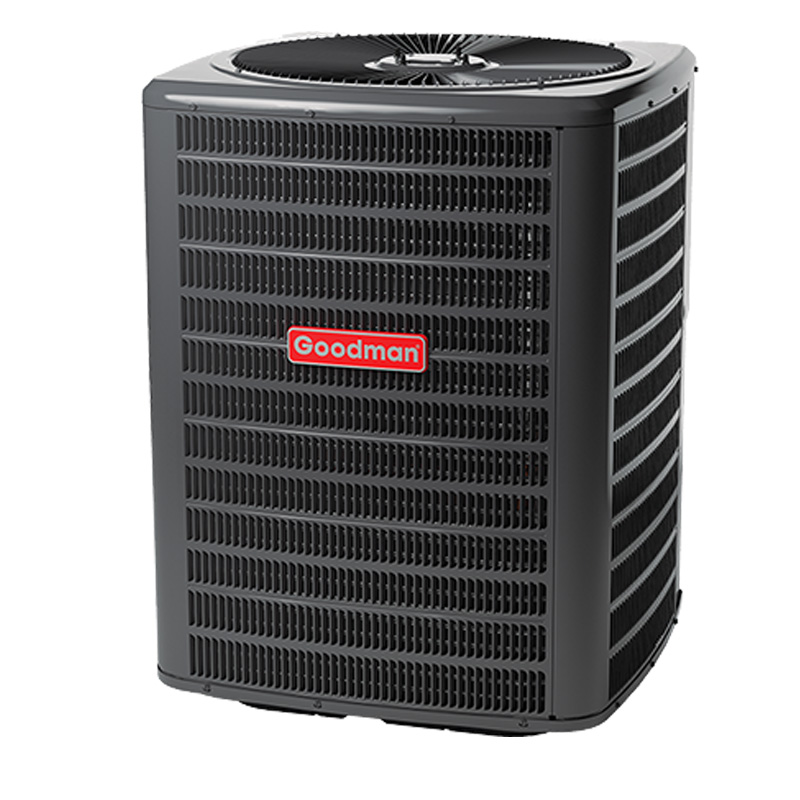
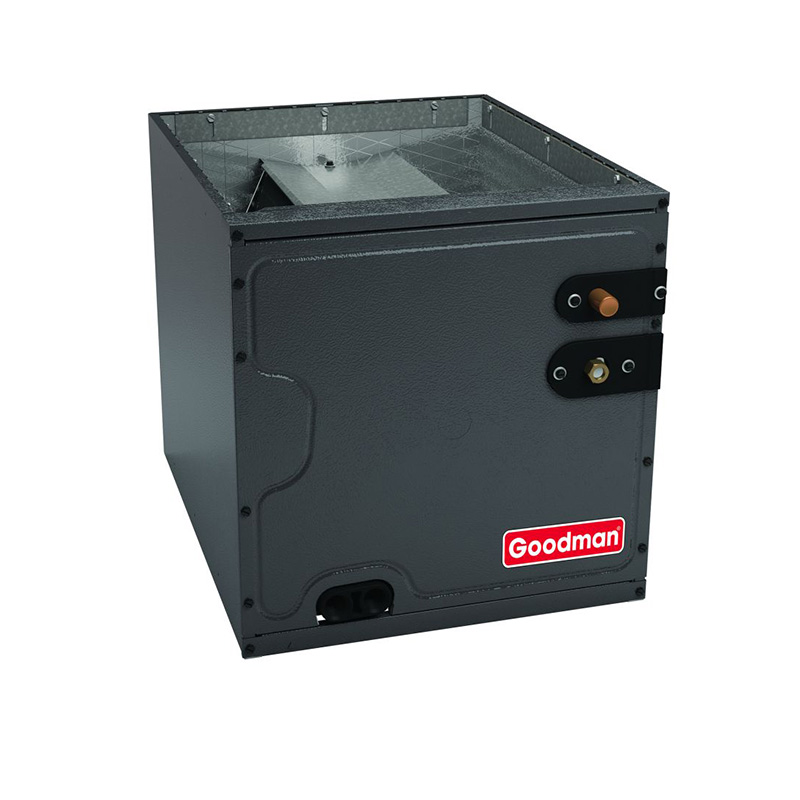
The Goodman 3.5-ton 15.2 SEER2 split system pairs a two-stage air conditioner with an 80,000 BTU, 80% AFUE upflow gas furnace and a variable-speed air handler, making it a practical upgrade for mid-size homes in the 1,800 to 2,400 square-foot range that currently run older single-stage equipment. The two-stage cooling compressor runs at low capacity on mild days and ramps up only when the heat demands it, which reduces short-cycling, keeps humidity more consistently in check, and trims energy bills compared with a single-stage replacement at the same SEER2 rating.
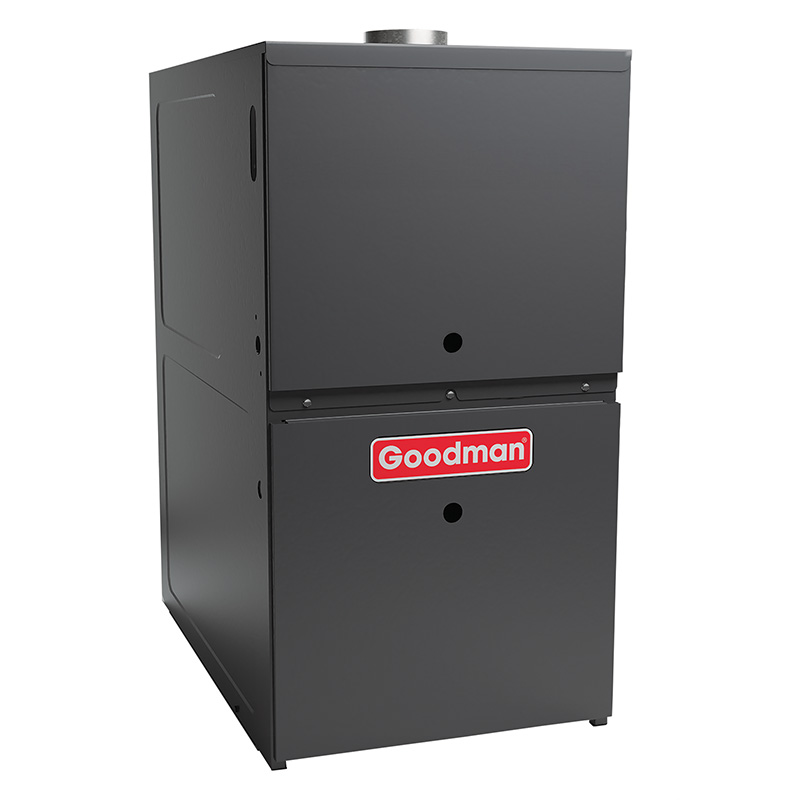
On the heating side, 80% AFUE means one dollar in five leaves as exhaust, which is the code-minimum efficiency tier in many northern climates and a reasonable choice where winters are moderate or where a full 90%+ condensing furnace upgrade is not in the budget. R-32 refrigerant has a lower global-warming potential than the R-410A it replaces and is increasingly the industry standard, so parts and service technicians are familiar with it. The upflow configuration suits a basement or ground-level closet installation where supply air rises into the living space above; confirm your duct layout before ordering.
This system sits squarely in the value segment. Goodman prices typically run 15 to 25 percent below Trane, Lennox, and Carrier equivalents, and the savings are real, but so are the trade-offs. Compressor longevity, coil durability, and long-run repair costs all trail premium brands by a measurable margin, and the system’s performance is unusually sensitive to installation quality. It suits budget-conscious buyers who want two-stage comfort without the premium-brand price tag and who plan to stay in the home for roughly a decade rather than two.
This Goodman bundle delivers genuine two-stage comfort and a variable-speed blower at a price point that undercuts premium brands by a meaningful margin, making it an honest value for budget-focused buyers. The trade-offs are real: compressor lifespan, coil durability, and post-year-7 repair frequency all lag behind Carrier, Trane, and Lennox equivalents, and the system rewards a skilled installer more than most. Buyers willing to invest in a quality installation and keep a modest repair fund will get solid mid-tier performance; those expecting premium-brand longevity on a budget-brand price should recalibrate expectations.
Overall score is the average of the five ratings above.
What we like
- Two-stage compressor meaningfully improves humidity management and comfort over single-stage alternatives
- Variable-speed blower reduces noise and energy use during the longer low-demand run cycles
- R-32 refrigerant is future-ready and aligns with the direction the industry is heading
- Purchase price runs 15 to 25 percent below comparable Carrier, Trane, and Lennox systems
- 10-year registered parts warranty provides reasonable coverage at this price tier
Trade-offs
- Compressor lifespan averages 10 to 14 years versus 15 to 20 years for premium-brand compressors
- Evaporator coil leaks are a documented recurring complaint from a meaningful share of owners
- 80% AFUE is code-minimum efficiency and will cost more to operate than a 96%+ furnace over time
- Dual-run capacitors are the most common failure point and repairs typically run $300 to $600
What homeowners and pros say about Goodman
Homeowners who share feedback on Goodman equipment tend to land in one of two camps. Those who had a thorough installation by an experienced contractor often report years of uneventful service and point to the upfront savings as a clear win. Those who ran into problems early frequently trace the trouble back to an installation shortcut rather than a factory defect, which aligns with Goodman’s own dealer network acknowledging that install quality is the single biggest variable in how these systems perform long-term. On Google dealer reviews, Goodman-installed systems earn around 3.8 out of 5 across hundreds of locations, with affordability as the most repeated compliment. ConsumerAffairs scores land closer to 2.5 out of 5, though that platform skews heavily toward owners motivated to post by a frustrating experience rather than a smooth one.
HVAC technicians who service Goodman equipment regularly cite dual-run capacitor failures as the most common call they make on these systems, a repair that typically runs $300 to $600 and is straightforward when caught early. Evaporator coil leaks show up in a meaningful share of owner reviews and tend to be more expensive to address, especially once a system is out of its labor warranty window. Compressor lifespan is the longer-term concern: Goodman compressors typically average 10 to 14 years in the field, compared with 15 to 20 years reported for premium-brand compressors, a gap that matters most for buyers planning to stay in the home for two decades or more. For buyers with a defined budget and realistic expectations about the brand tier they are buying into, this system delivers on its value proposition, provided the installation is done right.
Sources: ConsumerAffairs Goodman owner reviews, AHRI Directory of Certified Product Performance, U.S. DOE appliance and equipment efficiency standards, Goodman product specification sheets.
What it costs to run
At 15.2 SEER2, cooling this 3.5-ton system for a typical 1200-hour cooling season at the U.S. average electricity rate of $0.17/kWh works out to roughly $564 per year in cooling, about $75 less per year than a minimum-efficiency 13.4 SEER2 unit of the same size. Your real cost depends on your climate and local rate.
Method: (42,000 BTU/hr ÷ 15.2 SEER2) × 1200 hours ÷ 1000 × $0.17/kWh. Rate source: U.S. EIA average; cooling hours: moderate-climate estimate.
How it compares
| Brand | Comparable model | SEER2 | Stage | Price position |
|---|---|---|---|---|
| Goodman | 3.5-Ton 15.2 SEER2 Two-Stage AC + 80% AFUE Variable-Speed Furnace Bundle | 15.2 | Two-stage | Value pick |
| Carrier | Comfort 15 Series (24ACC636) | 15+ | Single-stage | Typically 15 to 25 percent more than Goodman |
| Trane | XR15 Series (4TTR5036) | 15+ | Single-stage | Typically 15 to 25 percent more than Goodman |
| Lennox | Merit 14ACX Series (14ACX-042) | 15+ | Single-stage | Typically 15 to 25 percent more than Goodman |
Competitor rows are comparable single-stage units at similar efficiency; price is relative position, not a quote.
Questions about this system
Does the 80% AFUE furnace meet code in my area, and is it worth upgrading to 96%+ AFUE?
Many northern U.S. jurisdictions now require 90% AFUE or higher for new furnace installations, so confirm your local code before purchasing. If you are in a region with long, cold winters, a 96%+ condensing furnace can cut heating fuel costs by 15 to 20 percent annually compared with this 80% unit, often recovering the price difference within a few years.
What does the 10-year warranty actually cover, and what do I need to do to activate it?
Goodman's 10-year parts limited warranty requires you to register the equipment online within 60 days of installation by a licensed HVAC contractor. Without registration, coverage defaults to a shorter base warranty; the warranty covers parts only, not labor, refrigerant, or diagnostic fees, so budget for those costs on any future service call.
Is R-32 refrigerant harder to service than R-410A, and will technicians in my area know it?
R-32 is increasingly common in new residential equipment and most trained HVAC technicians are already certified to handle it, though it does require specific recovery equipment. Call your local service contractors before buying to confirm they are equipped for R-32, particularly in rural markets where adoption may lag.
How sensitive is this Goodman system to installation quality compared with premium brands?
Goodman technicians and dealers consistently note that proper refrigerant charge, correct airflow setup, and tight electrical connections matter more with Goodman equipment than with premium brands that have tighter factory tolerances. A minority of owners who report refrigerant leaks in the first year are typically dealing with an install or charge issue rather than a factory defect, making contractor selection unusually important with this brand.
The upflow configuration is listed, but my existing ductwork runs differently. Can this unit be converted?
Upflow means the air handler draws return air from the bottom and discharges supply air from the top, which suits basement or closet installs with overhead duct runs. This specific model is not field-convertible to horizontal or downflow configurations, so if your ducts run differently you will need a different cabinet orientation. Confirm the airflow direction with your installer before placing the order.
Specifications
| Cooling capacity | 3.5 Ton |
| Efficiency | 15.2 SEER2 |
| Furnace output | 80000 BTU |
| Furnace efficiency | 80% AFUE |
| Configuration | Upflow |
| Refrigerant | R-32 |