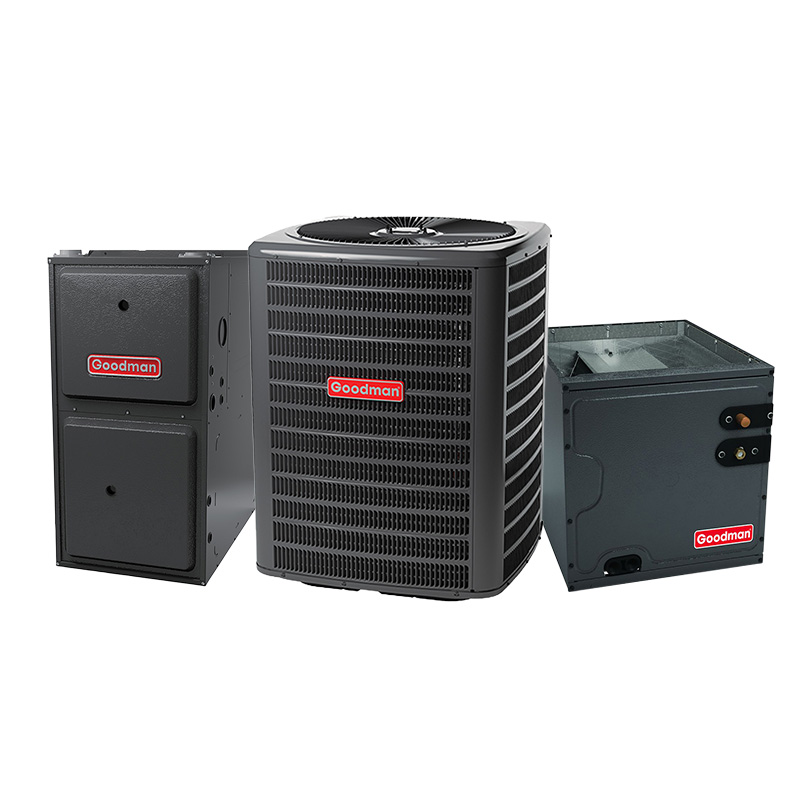
Goodman 3.5 Ton 15.2 SEER2 Dual Fuel Heat Pump & Gas Furnace Hybrid System – Modulating Variable-Speed, 100000 BTU Gas Furnace, 97% AFUE, Upflow, R32
View on AC Direct see your lowest price →Check current price on AC Direct →
Key features
- Dual fuel hybrid design: variable-speed R-32 heat pump pairs with 97% AFUE modulating gas furnace
- 15.2 SEER2 cooling efficiency meets current federal minimum for most U.S. climate regions
- 100,000 BTU gas furnace with modulating burner adjusts output to match actual heating load
- Upflow configuration for basement or utility-room installs with overhead ductwork
- R-32 refrigerant: lower global warming potential than R-410A, requires certified R-32 technician
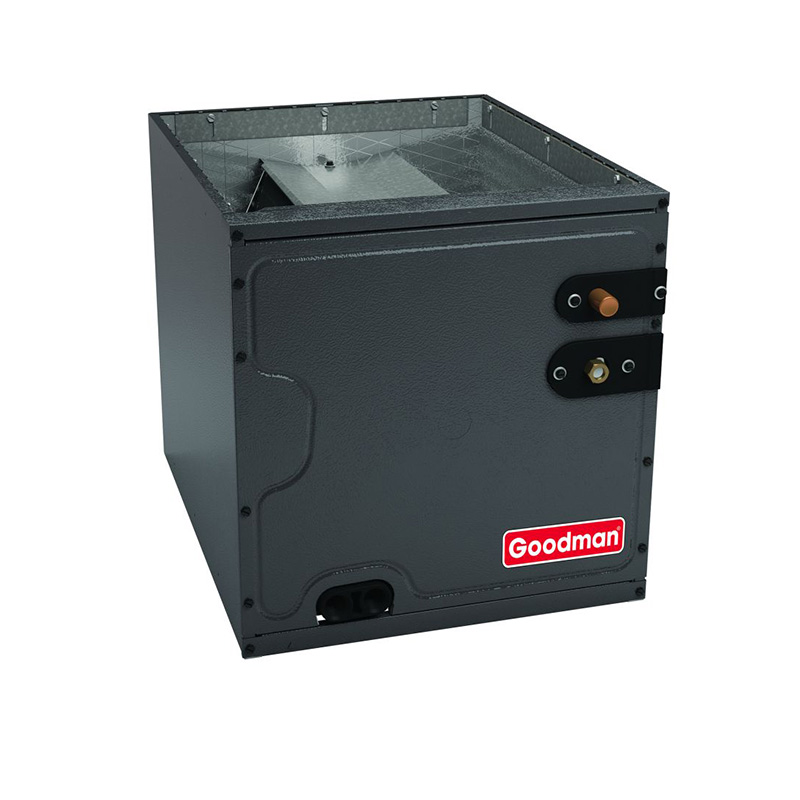
- Variable-speed air handler reduces temperature swings and improves humidity control versus single-stage units
About this system
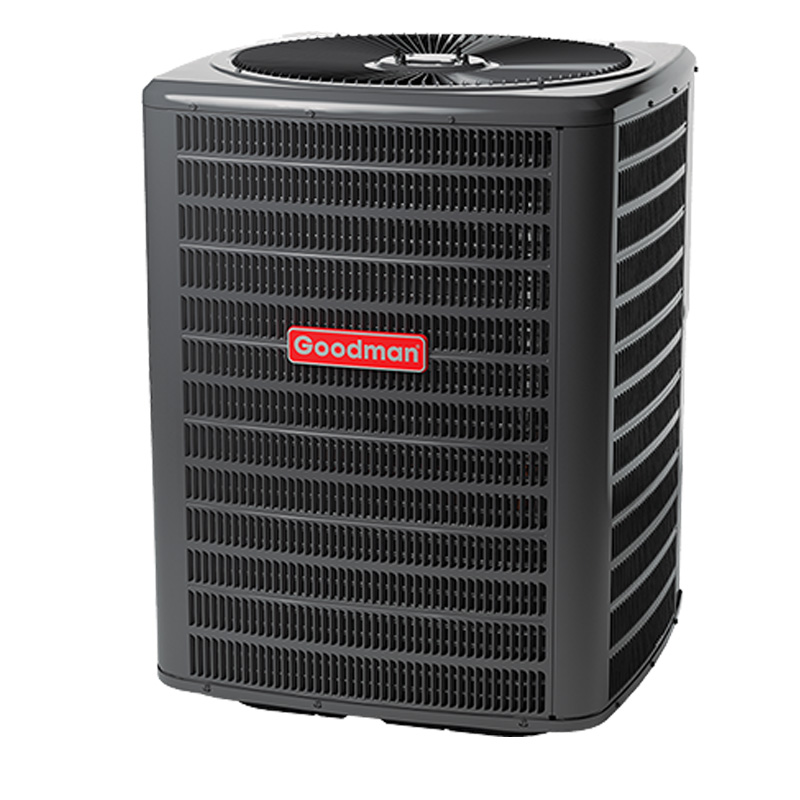
The Goodman GLZS4BA4210 is a 3.5-ton dual fuel hybrid system that pairs a 15.2 SEER2 variable-speed heat pump with a 100,000 BTU, 97% AFUE modulating gas furnace. That combination gives you two heating sources working together: the heat pump handles moderate cold efficiently, and the gas furnace takes over when outdoor temps drop below the heat pump’s cost-effective threshold. The result is a system that can meaningfully reduce annual heating costs compared to straight gas or straight electric heat, particularly in climates that see genuine winter cold but not sustained extreme lows.
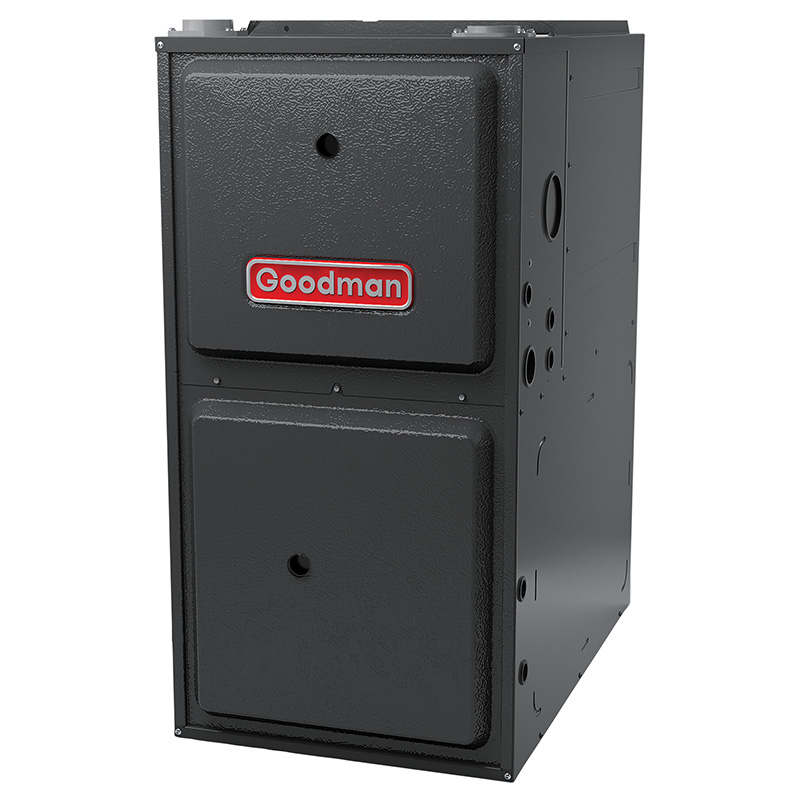
The 97% AFUE furnace sits in the top tier of gas efficiency, converting 97 cents of every dollar of gas into usable heat. The upflow configuration routes conditioned air upward through ductwork, which suits most homes with a basement or utility-room installation and ductwork overhead. R-32 refrigerant carries a lower global warming potential than the R-410A it replaces and runs at slightly lower pressures, though it does require technicians who are specifically certified and equipped to handle it. The modulating furnace and variable-speed air handler adjust output in small increments rather than cycling on and off at full blast, which tends to improve comfort consistency and can reduce temperature swings room to room.
This system suits homeowners in mixed-climate zones who already have a natural gas line, want to hedge against gas price swings, and are working with a budget that does not stretch to Carrier, Trane, or Lennox pricing. It is a capable setup on paper, but like all Goodman equipment, real-world performance depends heavily on the quality of the installation and commissioning work.
The GLZS4BA4210 delivers genuinely high gas efficiency and solid hybrid flexibility at a price point meaningfully below premium brands, making it a reasonable choice for budget-conscious buyers in dual-fuel climates. The trade-off is a brand track record that shows compressors averaging 10 to 14 years versus 15 to 20 for top-tier competitors, and documented failure modes that can accelerate repair costs after year seven. If install quality is locked in and extended coverage is added, it earns its place; if either of those conditions is uncertain, the savings gap narrows fast.
Overall score is the average of the five ratings above.
What we like
- 97% AFUE furnace is among the most efficient gas ratings available, reducing heating bills on gas-dependent days
- Dual fuel logic lets the system default to whichever energy source is cheaper at a given outdoor temperature, lowering annual operating costs
- Modulating furnace and variable-speed fan improve comfort consistency and humidity management compared to single-stage systems
- R-32 refrigerant is a forward-looking choice as R-410A is phased out industry-wide
- Priced roughly 15 to 25 percent below comparable Carrier, Trane, and Lennox hybrid systems, reducing upfront investment
Trade-offs
- Compressor lifespan averages 10 to 14 years in documented owner reports, shorter than the 15 to 20 years common with premium brands
- Dual-run capacitor failures are the most frequently reported repair issue, and while the fix is usually low-cost, they signal a pattern of component quality trade-offs
- Evaporator coil leaks appear in a meaningful share of owner reviews, which can mean refrigerant loss, repair costs, and lost cooling capacity
- R-32 refrigerant handling requires specifically certified technicians, limiting the pool of service providers who can legally work on this system in some markets
What homeowners and pros say about Goodman
Goodman’s reputation among homeowners and HVAC professionals sits in a specific lane: affordable upfront, functional when installed right, and prone to incremental repair costs as systems age. On ConsumerAffairs, Goodman scores around 2.5 out of 5, a figure shaped by that platform’s bias toward dissatisfied owners, but the recurring theme in those reviews is genuine: repair bills start climbing after roughly year seven. Google dealer reviews land around 3.8 out of 5 across hundreds of location-level reviews, where the most consistent praise is the lower purchase price and the most consistent concern is long-term parts quality. For a modulating dual fuel hybrid like the GLZS4BA4210, those dynamics matter more than they would on a simpler single-stage unit because there are more components to service over time.
Technicians who work on Goodman regularly point to dual-run capacitor failures as the most predictable repair, usually a straightforward fix in the 300 to 600 dollar range but a sign that component selection is a place where cost was trimmed. Evaporator coil leaks show up in a meaningful share of owner accounts, and compressor lifespan averaging 10 to 14 years falls noticeably short of the 15 to 20 years typical of Carrier, Trane, and Lennox compressors. A minority of owners also report refrigerant leaks within the first year, which technicians generally attribute to install or charge issues rather than the equipment itself. That last point cuts both ways: it underscores why installation quality is the single most important variable with any Goodman system, and why choosing a licensed, experienced installer matters more here than it might with a premium brand that tolerates less-than-perfect commissioning.
Sources: ConsumerAffairs Goodman owner reviews, AHRI Directory of Certified Product Performance, U.S. DOE appliance and equipment efficiency standards, Goodman product specification sheets.
What it costs to run
At 15.2 SEER2, cooling this 3.5-ton system for a typical 1200-hour cooling season at the U.S. average electricity rate of $0.17/kWh works out to roughly $564 per year in cooling, about $75 less per year than a minimum-efficiency 13.4 SEER2 unit of the same size. Your real cost depends on your climate and local rate.
Method: (42,000 BTU/hr ÷ 15.2 SEER2) × 1200 hours ÷ 1000 × $0.17/kWh. Rate source: U.S. EIA average; cooling hours: moderate-climate estimate.
How it compares
| Brand | Comparable model | SEER2 | Stage | Price position |
|---|---|---|---|---|
| Goodman | GLZS4BA4210 Hybrid System | 15.2 | Variable / Modulating | Value pick |
| Carrier | Performance Dual Fuel (25HCB / 59TP8 series) | 15.2 to 16 | Two-stage / Variable | Typically 15 to 25 percent more than Goodman |
| Trane | XV18 / XC15 Hybrid Dual Fuel System | 15 to 18 | Variable | Typically 15 to 25 percent more than Goodman |
| Lennox | Dave Lennox Signature XP21 Dual Fuel System | 15.2 to 20.5 | Variable | Typically 15 to 25 percent more than Goodman |
Competitor rows are comparable single-stage units at similar efficiency; price is relative position, not a quote.
Questions about this system
At what outdoor temperature does this system switch from heat pump to gas furnace, and can I adjust that switchover point?
The switchover temperature, called the balance point, is typically set during commissioning and depends on your local utility rates and the heat pump's efficiency curve. Most installers set it between 35 and 40 degrees Fahrenheit, but a good technician will calculate it based on your specific gas and electricity prices. Adjusting it later requires a qualified HVAC technician to reprogram the system controls.
Does this system qualify for federal tax credits given the 15.2 SEER2 rating?
As of 2025, the Inflation Reduction Act's 25C tax credit for heat pumps requires a minimum of 15.2 SEER2 for split systems in most northern climate zones. This unit meets that threshold, but you should verify current IRS guidance and confirm the specific model is on the AHRI certified products list before filing, since eligibility rules can update between tax years.
How hard is it to find a technician who can service the R-32 refrigerant on this system?
R-32 requires a technician with Section 608 EPA certification and equipment rated for A2L refrigerants. In most metro areas that is increasingly common as R-32 adoption grows, but in rural markets you may find fewer qualified service providers. It is worth confirming local technician availability before purchase, especially if you are outside a major metro.
What warranty does Goodman offer on this system, and what do I need to do to activate it?
Goodman's standard registered warranty on this class of equipment is typically 10 years on parts and the compressor when registered within a set window after installation, dropping to shorter terms if registration is missed. You must register the unit through Goodman's website to receive the full warranty term. The warranty covers parts but not labor, so out-of-pocket repair costs after year one can still be significant.
The 100,000 BTU furnace seems large for a 3.5-ton system. Is it oversized, and does that cause problems?
In a dual fuel hybrid setup, the gas furnace is intentionally sized to handle the home's heating load during the coldest days when the heat pump is less effective, so a higher BTU furnace paired with a mid-range tonnage heat pump is not unusual. That said, proper Manual J load calculations are critical: an oversized furnace will short-cycle even with modulating capability, reducing comfort and efficiency. Ask your installer to show you the load calculation before committing to this configuration.
Specifications
| Cooling capacity | 3.5 Ton |
| Efficiency | 15.2 SEER2 |
| Furnace output | 100000 BTU |
| Furnace efficiency | 97% AFUE |
| Configuration | Upflow |
| Refrigerant | R-32 |
| Model | GLZS4BA4210 |