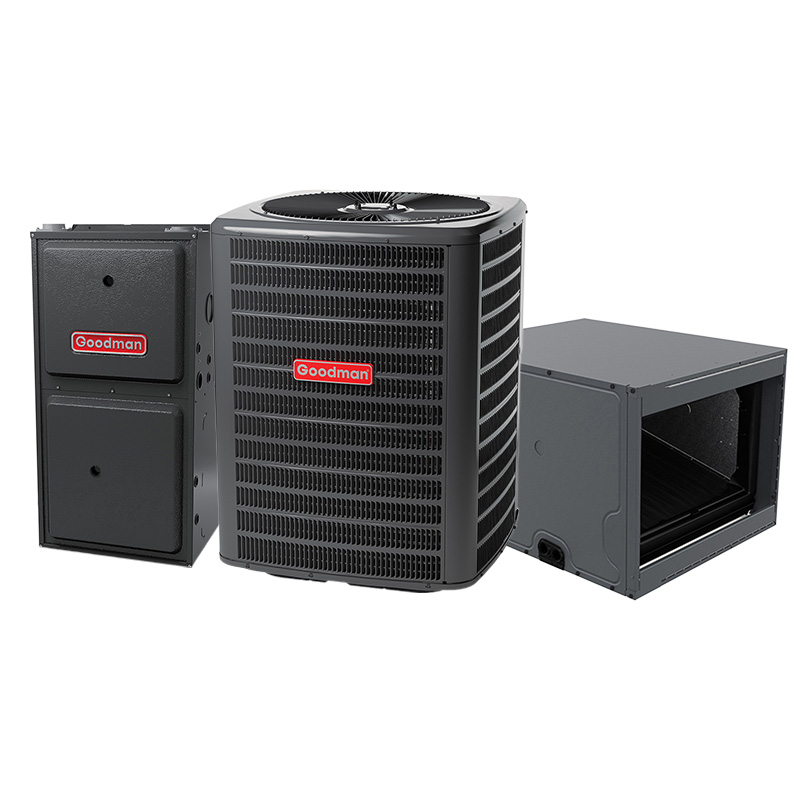
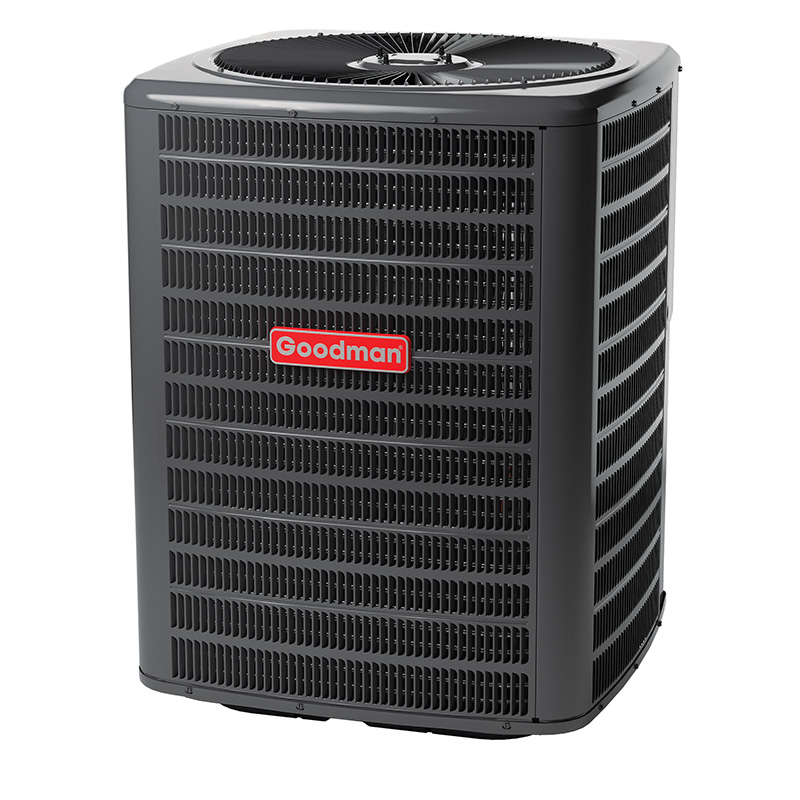
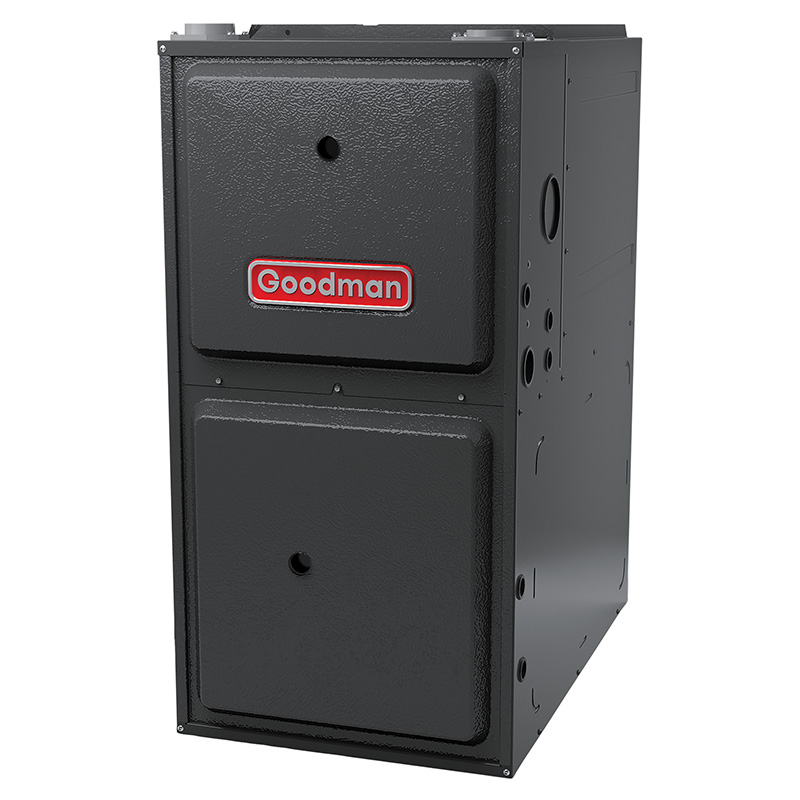
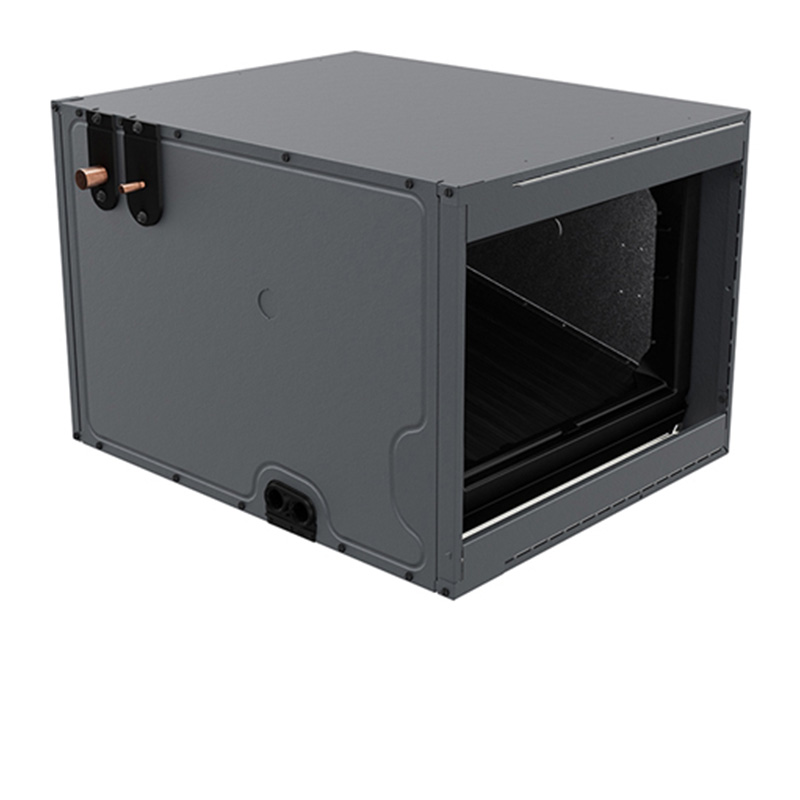
Goodman 3.5 Ton 15 SEER2 AC & Gas Furnace System – Multi-Speed, 120000 BTU Gas Furnace, 92% AFUE, Horizontal, R32
View on AC Direct see your lowest price →Check current price on AC Direct →
Key features
- 3.5-ton cooling capacity paired with a 120,000 BTU gas furnace for medium-to-large homes
- 15 SEER2 efficiency rating meets current federal minimums for most regions
- 92% AFUE multi-speed furnace provides mid-tier gas efficiency with quieter blower operation
- Horizontal configuration designed for attic, crawlspace, or side-discharge installations
- R-32 refrigerant with lower global warming potential than legacy R-410A systems
- Factory-matched system tested together, simplifying equipment selection and warranty compliance
About this system
The Goodman GLXS5BA4210D bundles a 3.5-ton, 15 SEER2 air conditioner with a 120,000 BTU, 92% AFUE multi-speed gas furnace in a horizontal configuration, making it a practical fit for homes where the air handler lives in a crawlspace, attic, or tight utility closet that cannot accommodate a vertical unit. At 3.5 tons it targets medium-to-large homes in the 1,800 to 2,400 square foot range, though actual sizing depends on your local climate, insulation, and window load. The R-32 refrigerant charge is a forward-looking choice: R-32 has a lower global warming potential than the older R-410A it replaces, and it is the direction the industry is heading, so replacement refrigerant should remain available well into the future.
A 15 SEER2 rating sits at the entry tier of the current federal efficiency standards, which is adequate but not high-efficiency. Homeowners in moderate climates who run the AC for shorter seasons may find it perfectly sufficient. Those in the Sun Belt running the system six or more months a year will pay more in electricity over time compared with a 17 or 18 SEER2 unit, so the upfront savings need to be weighed against that longer operating horizon. The 92% AFUE furnace recovers 92 cents of every dollar of gas burned, a solid mid-efficiency figure that avoids the cost and complexity of a two-pipe condensing system while still beating the 80% units common in older homes. The multi-speed blower (as opposed to a simple single-speed) offers quieter low-demand operation and more even humidity control than a basic on/off motor.
This Goodman bundle gives buyers a properly sized, forward-looking R-32 system at a price point typically 15 to 25 percent below comparable Carrier, Trane, or Lennox packages, and the horizontal configuration fills a real need that not every brand covers at this price. The trade-off is real: compressor longevity and coil reliability lag premium competitors, and long-term ownership costs depend heavily on who installs and services the unit.
Overall score is the average of the five ratings above.
What we like
- Priced 15 to 25 percent below comparable premium-brand systems, leaving room in the budget for a quality installer
- Horizontal configuration is less common at this price tier, broadening its fit for attic and crawlspace applications
- R-32 refrigerant is the industry's near-term direction, reducing risk of refrigerant obsolescence
- Multi-speed blower improves comfort and humidity control compared with single-speed alternatives
- Factory-matched coil and furnace combination simplifies warranty and commissioning for installers
Trade-offs
- Dual-run capacitors are the most frequently reported failure, typically appearing within the first several years and costing $300 to $600 to repair
- Evaporator coil leaks show up in a meaningful share of owner reports, a more disruptive and expensive fix than a capacitor swap
- Compressor lifespan averages 10 to 14 years versus 15 to 20 years for premium-brand compressors, meaning earlier replacement is more likely
- A minority of owners report refrigerant leaks in year one, most often traced to installation or initial charge quality rather than the equipment itself
What homeowners and pros say about Goodman
Homeowners who follow Goodman online land in two distinct camps, and both reflect real experiences. On ConsumerAffairs, Goodman scores around 2.5 out of 5, driven largely by owners who bought at the low end of the market and then faced repair costs climbing after roughly year seven. The recurring frustration is not that the equipment failed immediately, but that the total cost of ownership crept closer to premium-brand territory once service calls started accumulating. The most commonly cited hardware issues are dual-run capacitor failures (a relatively low-cost fix in the $300 to $600 range but an annoying one) and evaporator coil leaks, which are more disruptive and expensive. Compressor longevity is another honest concern: the documented average of 10 to 14 years falls short of the 15 to 20 years owners of premium brands often report.
At the dealer level, where the reviews capture the full installation experience rather than just the equipment, Goodman earns around 3.8 out of 5 on Google across hundreds of location-level reviews. The consistent praise there is affordability, and technicians who work on Goodman regularly note that a well-installed, well-maintained unit can run reliably for a solid decade. The catch they also acknowledge is that the margin for a poor installation is thinner than with premium brands. For a horizontal system like this one, where the configuration itself adds some commissioning complexity, that installer-quality variable carries more weight than usual. Buyers who treat the savings on equipment as a budget to spend on an experienced installer tend to have better outcomes than those who cut corners on both ends.
Sources: ConsumerAffairs Goodman owner reviews, AHRI Directory of Certified Product Performance, U.S. DOE appliance and equipment efficiency standards, Goodman product specification sheets.
What it costs to run
At 15 SEER2, cooling this 3.5-ton system for a typical 1200-hour cooling season at the U.S. average electricity rate of $0.17/kWh works out to roughly $571 per year in cooling, about $68 less per year than a minimum-efficiency 13.4 SEER2 unit of the same size. Your real cost depends on your climate and local rate.
Method: (42,000 BTU/hr ÷ 15 SEER2) × 1200 hours ÷ 1000 × $0.17/kWh. Rate source: U.S. EIA average; cooling hours: moderate-climate estimate.
How it compares
| Brand | Comparable model | SEER2 | Stage | Price position |
|---|---|---|---|---|
| Goodman | GLXS5BA4210D | 15 | Single-stage | Value pick |
| Carrier | Comfort Series (24ACC6) | 15-16 | Single-stage | Typically 15 to 25 percent more than the Goodman |
| Trane | XR15 | 15 | Single-stage | Typically 15 to 25 percent more than the Goodman |
| Lennox | Merit Series (14ACX) | 15-16 | Single-stage | Typically 15 to 25 percent more than the Goodman |
Competitor rows are comparable single-stage units at similar efficiency; price is relative position, not a quote.
Questions about this system
Why does this system use R-32 instead of R-410A, and does that affect service costs?
R-32 is a next-generation refrigerant with a lower global warming potential than R-410A, and the industry is broadly moving toward it as R-410A is phased out. Availability is growing, so service costs should not be higher than R-410A over the system's life, and may become more competitive as adoption increases. Your technician will need an R-32-rated recovery machine and certification, so confirm that before scheduling service.
Is a horizontal furnace harder to find service for than a standard upflow unit?
Any licensed HVAC technician familiar with Goodman equipment can service a horizontal furnace. The configuration affects where it is installed and how drain lines are routed, but the internal components are essentially the same. What matters more is finding a technician with experience commissioning horizontal installations, since improper slope or drain setup is a common source of early issues.
How long should I realistically expect the compressor to last?
Based on documented owner experience, Goodman compressors tend to average 10 to 14 years, compared with 15 to 20 years for premium-brand compressors. Annual maintenance, correct refrigerant charge from day one, and not running the system in extreme conditions can help maximize that range, but buyers should plan for a potential compressor replacement earlier than they might with a Trane or Carrier unit.
The 15 SEER2 rating is the minimum allowed in many regions. Should I pay more for a higher-efficiency model?
If you live in a mild climate and run the air conditioner only a few months per year, the payback period on a higher-efficiency unit can stretch well beyond 10 years, making 15 SEER2 a reasonable choice. In hot climates where cooling runs six or more months annually, a 17 or 18 SEER2 unit can reduce electricity costs enough to close that gap meaningfully over the system's life. Running a payback calculation with your local utility rate will give you a more accurate answer than any general rule.
What does the Goodman warranty actually cover, and are there conditions attached?
Goodman typically offers a 10-year parts warranty when the equipment is registered within a set window after installation, dropping to a shorter period for unregistered units. The warranty covers parts but not labor, which is often where the real cost of a repair sits. Coverage also generally requires the system to be installed by a licensed contractor and maintained properly, so keep your maintenance records in case a warranty claim arises.
Specifications
| Cooling capacity | 3.5 Ton |
| Efficiency | 15 SEER2 |
| Furnace output | 120000 BTU |
| Furnace efficiency | 92% AFUE |
| Configuration | Horizontal |
| Refrigerant | R-32 |
| Model | GLXS5BA4210D |