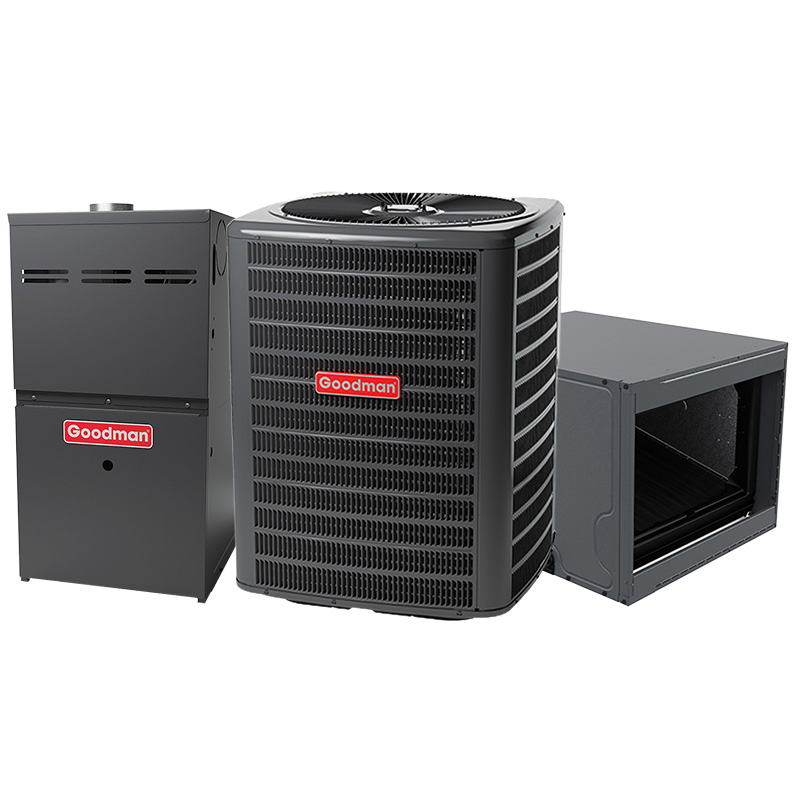
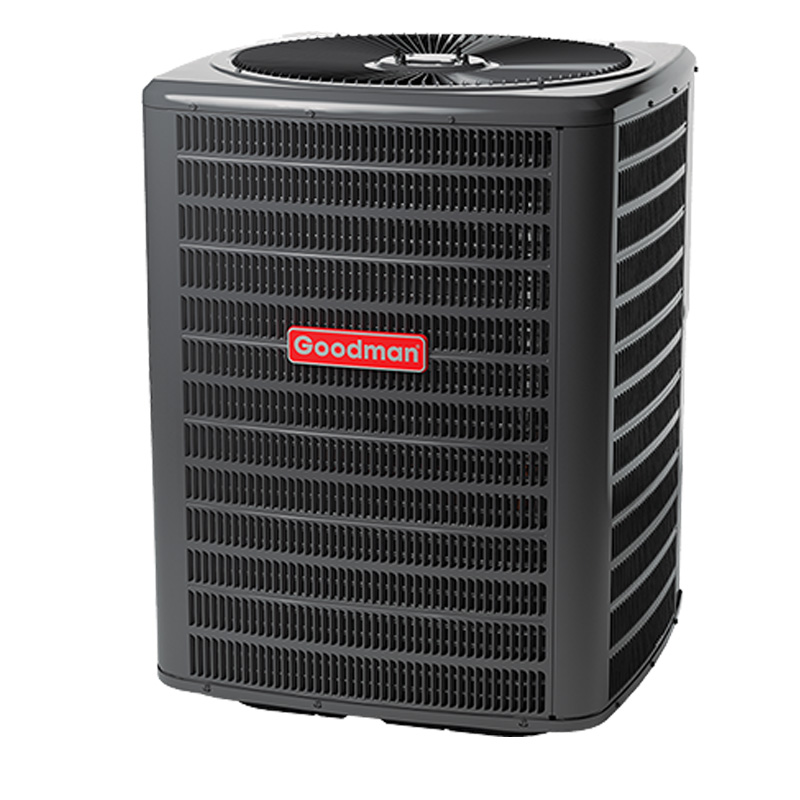
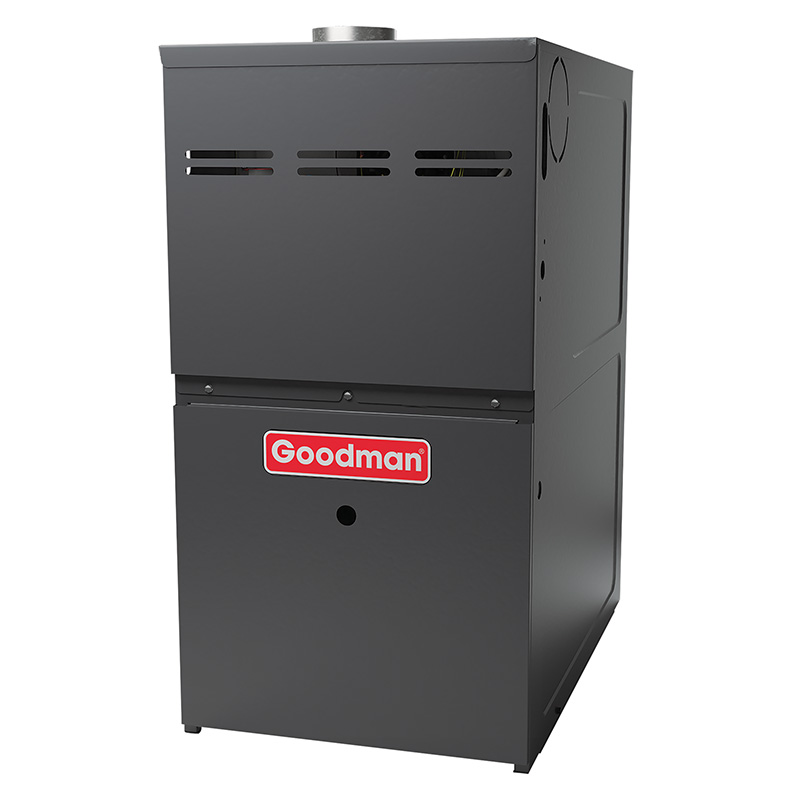
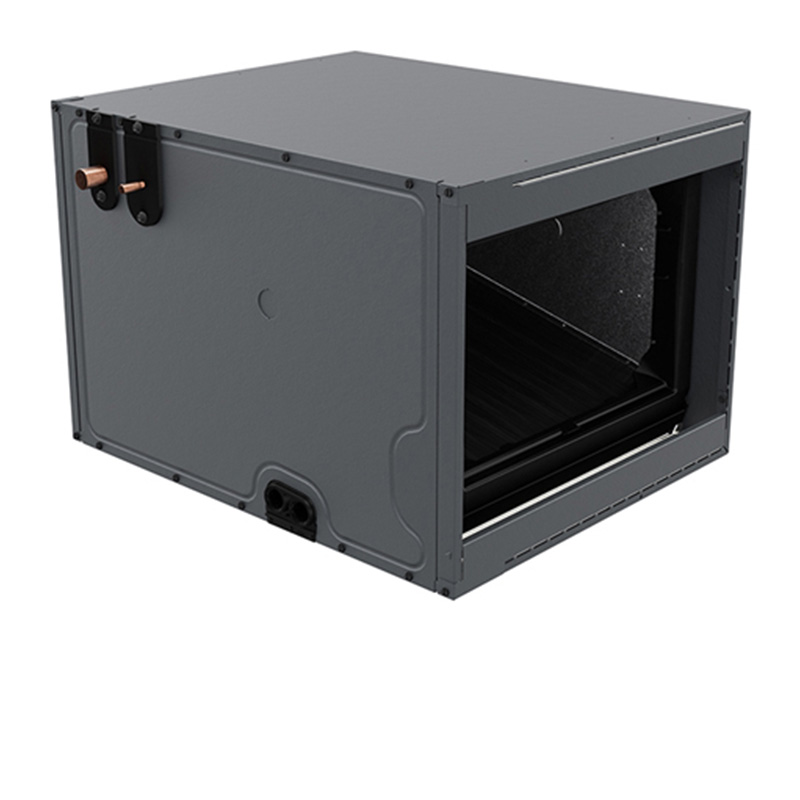
Goodman 3.5 Ton AC And 100000 BTU 80% AFUE Gas Furnace System | 14.5 SEER2 AC | Multi-Speed ECM Low NOx Furnace | Horizontal | R32
View on AC Direct see your lowest price →Check current price on AC Direct →
Key features
- 3.5-ton cooling capacity with 14.5 SEER2 efficiency rating
- 100,000 BTU output, 80% AFUE single-stage gas furnace
- Horizontal configuration for attic, crawlspace, or side-discharge installs
- R-32 refrigerant: lower global-warming potential than R-410A
- Multi-speed ECM blower motor for quieter operation and better humidity control
- Low NOx burner design to meet stricter regional air-quality requirements
About this system
This Goodman bundle pairs a 3.5-ton, 14.5 SEER2 central air conditioner with a 100,000 BTU, 80% AFUE gas furnace in a horizontal configuration, making it purpose-built for attic or crawlspace installs where a standard upflow cabinet simply will not fit. The R-32 refrigerant charge is a meaningful step forward: R-32 has a lower global-warming potential than the R-410A it replaces, and its higher energy density allows the system to use less refrigerant by weight for the same cooling capacity. The multi-speed ECM blower motor in the furnace ramps airflow up and down rather than running at full blast constantly, which helps with humidity control and keeps operating noise lower than a single-speed PSC motor would.
At 14.5 SEER2 and 80% AFUE, these are baseline-compliant efficiency ratings, not high-efficiency ones. The AC meets the 2023 federal minimum for most U.S. climate regions, and the furnace recovers 80 cents of every dollar of gas input as usable heat. Homeowners who need a reliable, code-legal system for a mid-size home (roughly 1,800 to 2,400 square feet depending on climate and insulation) without stretching the budget will find the spec sheet reasonable. Buyers who prioritize long-term gas savings or who live in colder climates where the furnace runs hard most of the year should weigh whether a 96% AFUE unit would recover its price premium over time.
This bundle is a workable, budget-conscious choice for homeowners who need a horizontal-fit system and want to keep upfront costs down. Efficiency sits at the code minimum, so it will not win on energy bills, and Goodman's real-world reliability record is decent in the early years but shows more repair activity past year seven. For buyers where install cost and purchase price are the primary concerns, it competes well; those prioritizing long-term ownership cost or premium durability should look higher in the product tier.
Overall score is the average of the five ratings above.
What we like
- Purchase price runs 15 to 25 percent below comparable Carrier, Trane, and Lennox systems
- Horizontal configuration makes it one of fewer options that actually fits attic and crawlspace applications
- R-32 refrigerant is more environmentally responsible and future-oriented than R-410A
- ECM multi-speed blower improves comfort and humidity management over basic single-speed motors
- Low NOx burners allow installation in California and other regions with strict emissions rules
Trade-offs
- 80% AFUE is the entry-level efficiency tier; a 96% AFUE furnace can meaningfully lower annual gas bills in colder climates
- Dual-run capacitors are the most frequently reported failure point on Goodman AC units, typically appearing within the first ten years
- Compressor lifespan averages 10 to 14 years versus 15 to 20 years for premium-brand compressors, raising long-term replacement odds
- Evaporator coil leaks appear in a notable share of owner reports, and a minority of owners have reported refrigerant charge issues within the first year
What homeowners and pros say about Goodman
Homeowners who leave Google reviews through local Goodman dealers give the brand roughly 3.8 out of 5 stars, and affordability is the word that comes up most often. Buyers who stretched their budget to avoid the brand and then compared installed quotes frequently report that the Goodman price difference covered several years of potential repair bills. That math holds up in the early years of ownership. The picture shifts in complaint-heavy channels like ConsumerAffairs, where the brand sits around 2.5 out of 5, and the recurring story is rising repair costs starting around year seven or eight. That gap between the two scores is itself informative: Goodman tends to start well and age faster than the premium tier.
HVAC technicians who work on this specific horizontal bundle flag a few things worth knowing before you buy. Dual-run capacitors are the most commonly replaced component on Goodman AC units, and while that repair typically runs between 300 and 600 dollars and is not catastrophic, it comes up often enough that experienced installers recommend budgeting for it. Evaporator coil leaks appear in a meaningful share of owner reports, and a minority of owners have experienced refrigerant charge problems within the first year, which technicians usually trace back to the installation rather than the equipment itself. Compressor lifespan on Goodman units tends to fall in the 10-to-14-year range, shorter than the 15-to-20 years more commonly seen with Trane, Carrier, and Lennox compressors. On the R-32 refrigerant side, most technicians acknowledge it is where the industry is heading, but shops that have not yet invested in A2L-rated tools and training may be less comfortable servicing it, so confirming your local contractor is equipped matters more with this system than it would with an R-410A unit.
Sources: ConsumerAffairs Goodman owner reviews, AHRI Directory of Certified Product Performance, U.S. DOE appliance and equipment efficiency standards, Goodman product specification sheets.
What it costs to run
At 14.5 SEER2, cooling this 3.5-ton system for a typical 1200-hour cooling season at the U.S. average electricity rate of $0.17/kWh works out to roughly $591 per year in cooling, about $48 less per year than a minimum-efficiency 13.4 SEER2 unit of the same size. Your real cost depends on your climate and local rate.
Method: (42,000 BTU/hr ÷ 14.5 SEER2) × 1200 hours ÷ 1000 × $0.17/kWh. Rate source: U.S. EIA average; cooling hours: moderate-climate estimate.
How it compares
| Brand | Comparable model | SEER2 | Stage | Price position |
|---|---|---|---|---|
| Goodman | This system (3.5T 14.5 SEER2 AC + 80% AFUE Horizontal Furnace, R-32) | 14.5 | Single-stage | Value pick |
| Carrier | Comfort Series (24ACC6 AC + 58SB0 80% AFUE Furnace) | 14.5 | Single-stage | Typically 15 to 25 percent more than this Goodman bundle |
| Trane | XR14 AC + S8X1 80% AFUE Furnace | 14.3–15.0 | Single-stage | Typically 15 to 25 percent more than this Goodman bundle |
| Lennox | Merit Series (ML14XC1 AC + ML180 80% AFUE Furnace) | 14.3–15.0 | Single-stage | Typically 15 to 25 percent more than this Goodman bundle |
Competitor rows are comparable single-stage units at similar efficiency; price is relative position, not a quote.
Questions about this system
Why is this listed as a horizontal system and can it also be installed in an upflow application?
The cabinet and coil in this bundle are configured specifically for horizontal airflow, which is required in attic installs and some crawlspace applications where the unit lies on its side. It is not interchangeable with a standard upflow configuration without purchasing different components, so confirm your install orientation with your contractor before ordering.
Is R-32 refrigerant going to be easy to find for service calls, and is it safe?
R-32 is a mildly flammable (A2L classification) refrigerant, so technicians must be certified to handle it and use compatible tools. Supply availability is growing as more manufacturers adopt it, but it is not yet as universally stocked as R-410A was, so confirm your local service providers are equipped for it before committing.
What does the Goodman warranty actually cover on this system, and do I need to register it?
Goodman typically offers a 10-year parts warranty on registered equipment, which covers components including the compressor and heat exchanger. Registration must be completed within a set window after installation, usually 60 days, or the warranty defaults to a shorter period. Read the warranty card that ships with the unit and register promptly.
The ConsumerAffairs score for Goodman is around 2.5 out of 5. Should that concern me?
ConsumerAffairs skews toward complaint-driven reviews, meaning satisfied owners rarely post there, so the 2.5 score reflects a vocal subset of dissatisfied buyers rather than a statistically representative sample. Goodman's Google dealer reviews average closer to 3.8 out of 5, which is a more balanced signal. The honest takeaway is that repair costs tend to climb after roughly year seven, and the brand performs better than its worst reviews suggest but not as well as premium competitors.
Is 100,000 BTU too much furnace for a 3.5-ton AC system, and how do I know if it fits my home?
Furnace and AC sizing serve different loads (heating versus cooling), so a mismatch in rated BTU versus tonnage is normal and not itself a problem. What matters is whether 100,000 BTU output is correctly sized for your home's heating load, which depends on square footage, insulation, window area, and climate. An ACCA Manual J load calculation by your installer will confirm whether this output is appropriate or oversized for your space.
Specifications
| Cooling capacity | 3.5 Ton |
| Efficiency | 14.5 SEER2 |
| Furnace output | 100000 BTU |
| Furnace efficiency | 80% AFUE |
| Configuration | Horizontal |
| Refrigerant | R-32 |