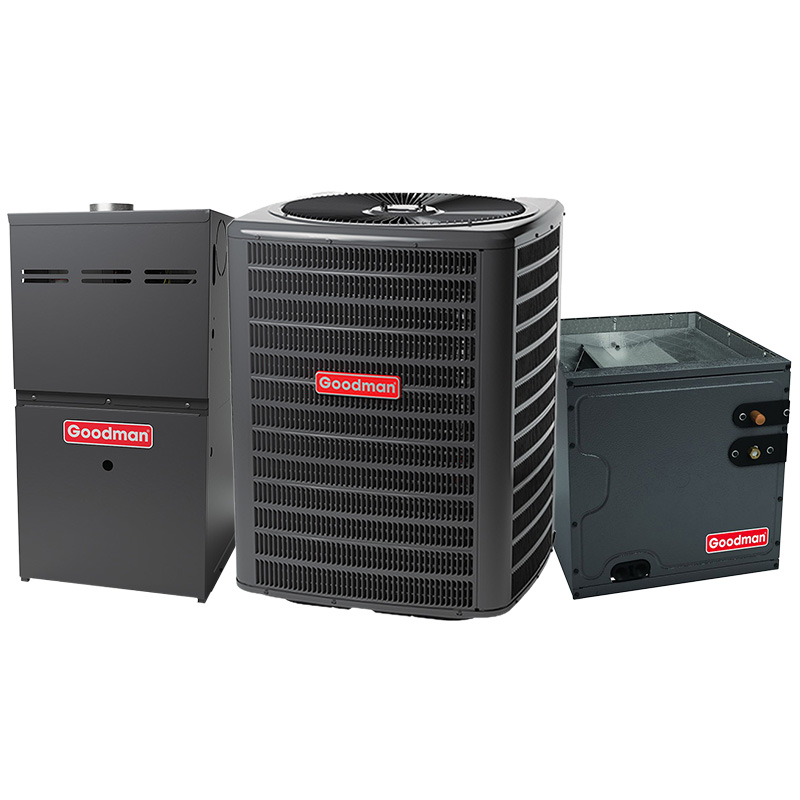
Goodman 3.5 Ton AC And 80000 BTU 80% AFUE Gas Furnace System | 15.2 SEER2 AC | Multi-Speed ECM Low NOx Furnace | Upflow | R32
View on AC Direct see your lowest price →Check current price on AC Direct →
Key features
- 3.5-ton cooling capacity with 15.2 SEER2 efficiency rating
- 80,000 BTU gas furnace at 80% AFUE with multi-speed ECM blower
- R-32 refrigerant, a lower global-warming-potential option replacing R-410A
- Low NOx combustion meets California and similar state emissions standards
- Upflow configuration for basement or closet installs with overhead ductwork
- Value-tier pricing, typically 15 to 25 percent below Trane, Lennox, and Carrier
About this system
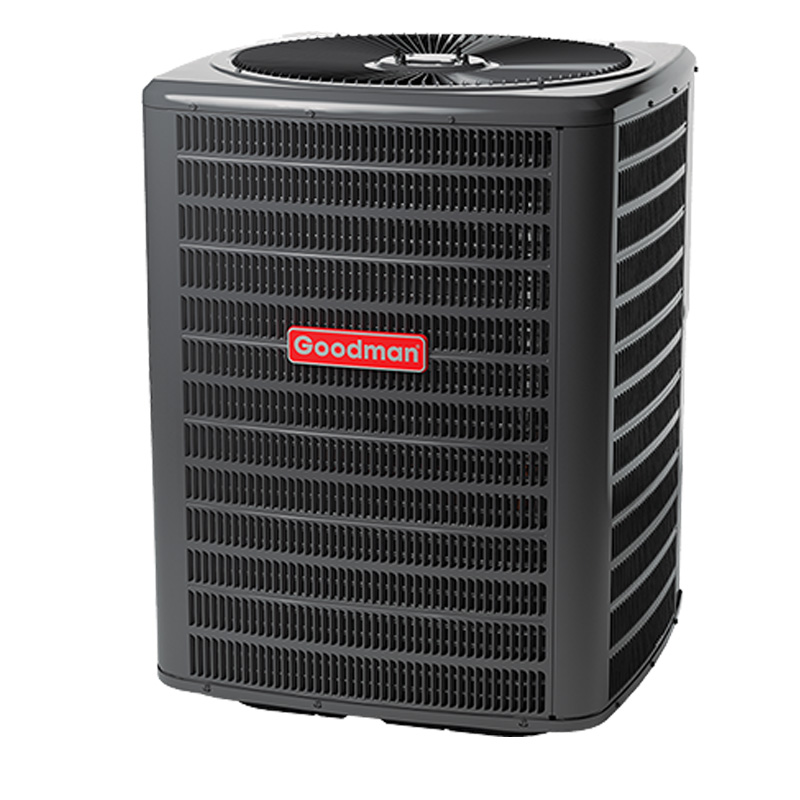
This Goodman bundle pairs a 3.5-ton, 15.2 SEER2 central air conditioner with an 80,000 BTU, 80% AFUE upflow gas furnace in an R-32 refrigerant system. The 3.5-ton capacity is a common fit for homes in the 1,600 to 2,200 square foot range, though actual sizing depends on your climate zone, insulation, and duct layout. The 15.2 SEER2 rating clears the federal minimum for most U.S. regions and will deliver meaningful savings over an older 10 to 13 SEER unit, though it sits in the entry-to-mid efficiency tier rather than the high-efficiency category. R-32 refrigerant is a lower global-warming-potential alternative to R-410A, and its growing adoption means service technicians are becoming more familiar with it across the country.
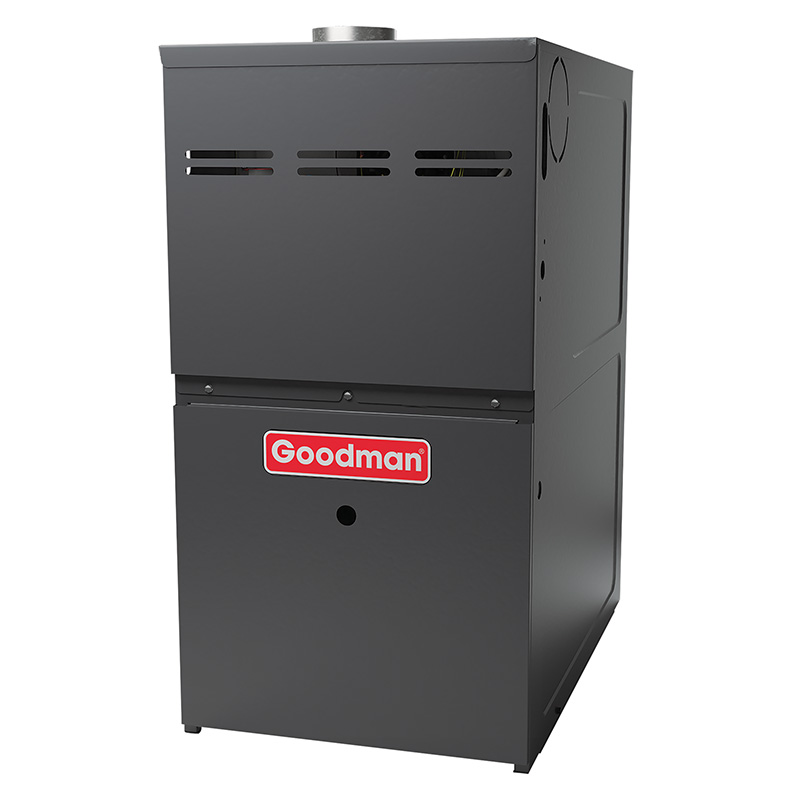
The furnace side runs an 80% AFUE rating, meaning 80 cents of every fuel dollar becomes usable heat. That is the baseline efficiency threshold and is best suited to moderate climates or homes where gas is inexpensive and heating seasons are short. The multi-speed ECM blower motor improves airflow consistency compared to a single-speed unit, and the Low NOx combustion design meets stricter emissions standards required in California and a growing number of other states. The upflow configuration directs conditioned air upward into overhead ductwork, which is the standard arrangement for basement or closet installations in most single-story and two-story homes.
This Goodman system delivers competent entry-to-mid-tier heating and cooling at a price point that leaves real money on the table for installation quality and future maintenance. The specs are honest rather than impressive, and the long-term experience will depend heavily on who installs it and how well it is commissioned. It is a reasonable choice for budget-conscious buyers who vet their installer carefully, but it asks more of the owner than a premium brand system would.
Overall score is the average of the five ratings above.
What we like
- Purchase price runs 15 to 25 percent below comparable Carrier, Trane, and Lennox systems
- 15.2 SEER2 clears federal minimums and improves on older low-SEER equipment
- Multi-speed ECM blower improves comfort and humidity control over single-speed furnaces
- Low NOx furnace qualifies for installation in California and other strict-emissions states
- R-32 refrigerant has lower environmental impact and is increasingly serviceable nationwide
Trade-offs
- 80% AFUE is the minimum efficiency tier; high-heating-load climates will see better returns from a 96% unit
- Dual-run capacitors are the most documented failure point, typically showing up after several years of use
- Compressor longevity averages 10 to 14 years versus 15 to 20 years seen in premium brand equipment
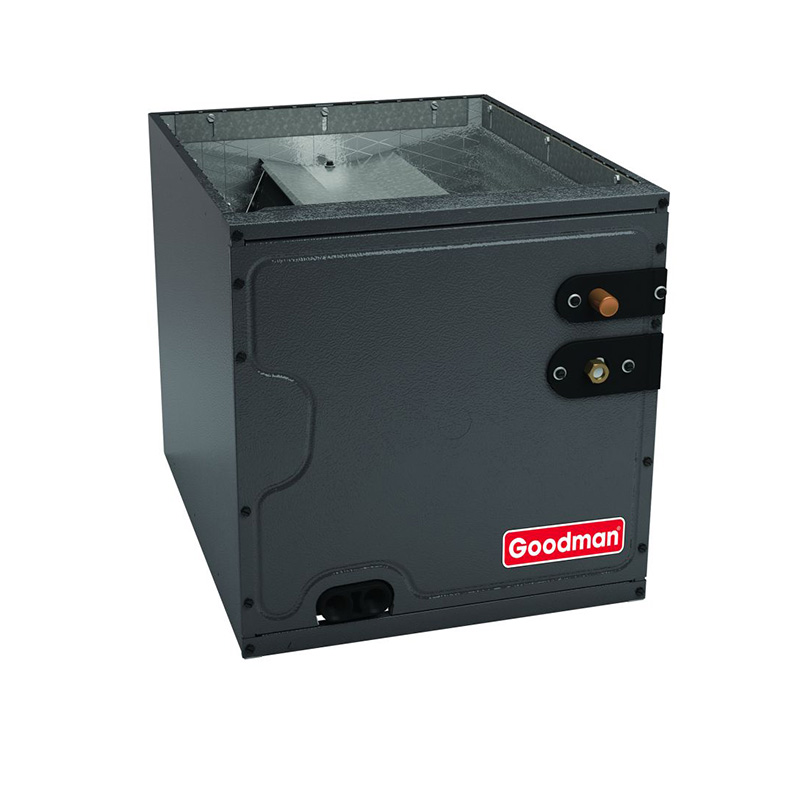
- Evaporator coil leaks and first-year refrigerant charge issues appear in a meaningful share of owner reports, often tied to install quality
What homeowners and pros say about Goodman
Goodman’s standing among homeowners and HVAC professionals is genuinely split. On Google dealer reviews, the brand averages around 3.8 out of 5 stars across locations, with affordability coming up as the most consistent point of praise. On ConsumerAffairs, where unhappy owners are more likely to post, the average drops to roughly 2.5 out of 5, and the recurring complaint is repair costs that climb after year seven or so. For this 3.5-ton system specifically, the failure modes that show up most often in owner accounts are dual-run capacitor failures, which are generally a low-cost fix in the 300 to 600 dollar range, and evaporator coil leaks, which are more disruptive and expensive. A smaller share of owners have reported refrigerant leaks in the first year, something technicians typically attribute to an improper charge at installation rather than a product defect.
On the professional side, HVAC technicians tend to frame Goodman as equipment that performs acceptably when installed and commissioned correctly, and that can become a recurring service call if it is not. Compressor lifespan is the longer-term concern cited most often: Goodman compressors tend to average 10 to 14 years in the field, which falls short of the 15 to 20 years commonly reported for Trane, Lennox, and Carrier compressors. That gap matters most to homeowners planning to stay in a home long-term. For buyers who are weighing the upfront savings carefully and plan to invest those savings into a quality installation and annual maintenance, this system can deliver years of reliable service. For those who want to minimize the role that install quality and maintenance play in the outcome, a premium brand is a more forgiving choice.
Sources: ConsumerAffairs Goodman owner reviews, AHRI Directory of Certified Product Performance, U.S. DOE appliance and equipment efficiency standards, Goodman product specification sheets.
What it costs to run
At 15.2 SEER2, cooling this 3.5-ton system for a typical 1200-hour cooling season at the U.S. average electricity rate of $0.17/kWh works out to roughly $564 per year in cooling, about $75 less per year than a minimum-efficiency 13.4 SEER2 unit of the same size. Your real cost depends on your climate and local rate.
Method: (42,000 BTU/hr ÷ 15.2 SEER2) × 1200 hours ÷ 1000 × $0.17/kWh. Rate source: U.S. EIA average; cooling hours: moderate-climate estimate.
How it compares
| Brand | Comparable model | SEER2 | Stage | Price position |
|---|---|---|---|---|
| Goodman | This system (3.5T AC + 80K BTU 80% AFUE Upflow) | 15.2 | Single-stage | Value pick |
| Carrier | Comfort Series (24ACC636 / 58CVA080) | 15.2 | Single-stage | Typically 15 to 25 percent more than this Goodman bundle |
| Trane | XR15 / S8X1 80% Gas Furnace | 15.2 | Single-stage | Typically 15 to 25 percent more than this Goodman bundle |
| Lennox | Merit Series (14ACX / ML180 80% Gas Furnace) | 15.2 | Single-stage | Typically 15 to 25 percent more than this Goodman bundle |
Competitor rows are comparable single-stage units at similar efficiency; price is relative position, not a quote.
Questions about this system
Is 15.2 SEER2 going to make a noticeable difference on my electric bill compared to my old system?
If you are replacing a unit from the early 2000s rated at 10 to 12 SEER, you will likely see a meaningful reduction in cooling costs. If you are replacing a 14 SEER unit installed in the last decade, the savings will be more modest. The actual difference depends on your local electricity rate, how many cooling hours your climate demands, and how well your duct system is sealed.
My house is in California. Is this furnace actually legal to install here?
Yes. The Low NOx designation on this furnace meets California Air Resources Board emissions requirements, which are stricter than federal standards. You should still confirm with your local air quality management district, as some Southern California districts have additional requirements, but this unit is designed with those markets in mind.
What maintenance should I plan for to avoid the common Goodman failure points?
Annual tune-ups that include inspecting and testing the dual-run capacitor are the single most cost-effective step, since capacitor failure is the most frequently reported issue and a proactive replacement runs far less than an emergency service call. Keeping the evaporator coil clean and ensuring the refrigerant charge is verified correct at installation also reduces the risk of the coil leak issues seen in some owner reports.
Does the 80% AFUE furnace make sense, or should I upgrade to a 96% model?
In climates with mild winters and low natural gas costs, the payback period on a 96% unit can stretch to 10 years or more, making the 80% unit a financially reasonable choice. In cold climates like the upper Midwest or Northeast where the furnace runs hard for five or six months a year, the higher efficiency unit typically pays back faster and is worth the added investment.
How important is it to use a certified installer, and will a poor installation void the warranty?
Install quality is the single biggest variable in how long this system lasts, according to HVAC technicians who work on Goodman equipment. Goodman requires installation by a licensed HVAC contractor and proper system commissioning to maintain the full warranty coverage, so a cut-rate or uncertified install can put both your warranty and your equipment's lifespan at risk. Getting multiple bids and checking contractor reviews before committing is worth the extra effort.
Specifications
| Cooling capacity | 3.5 Ton |
| Efficiency | 15.2 SEER2 |
| Furnace output | 80000 BTU |
| Furnace efficiency | 80% AFUE |
| Configuration | Upflow |
| Refrigerant | R-32 |