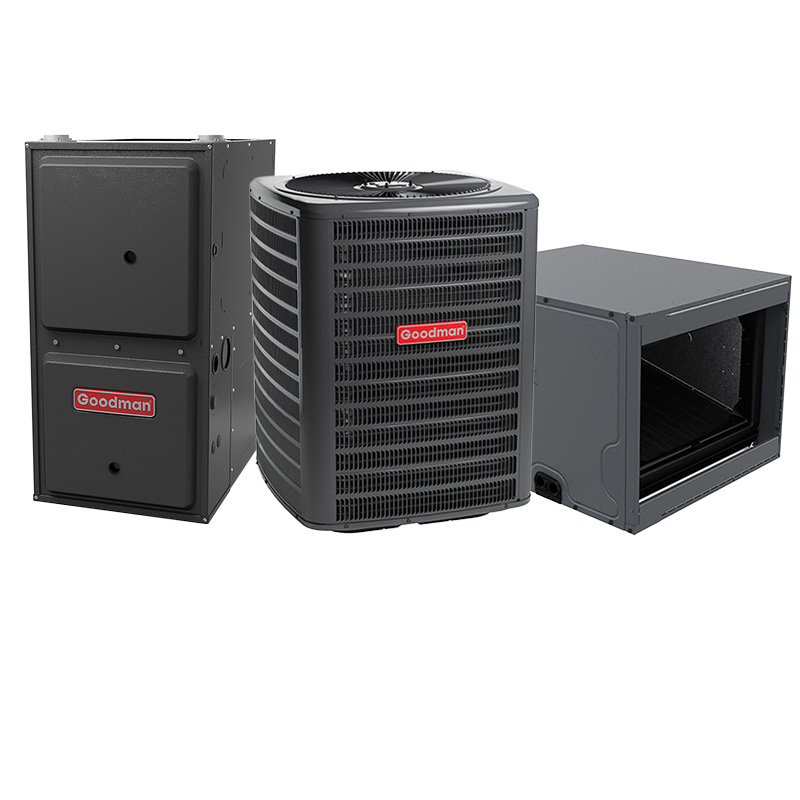
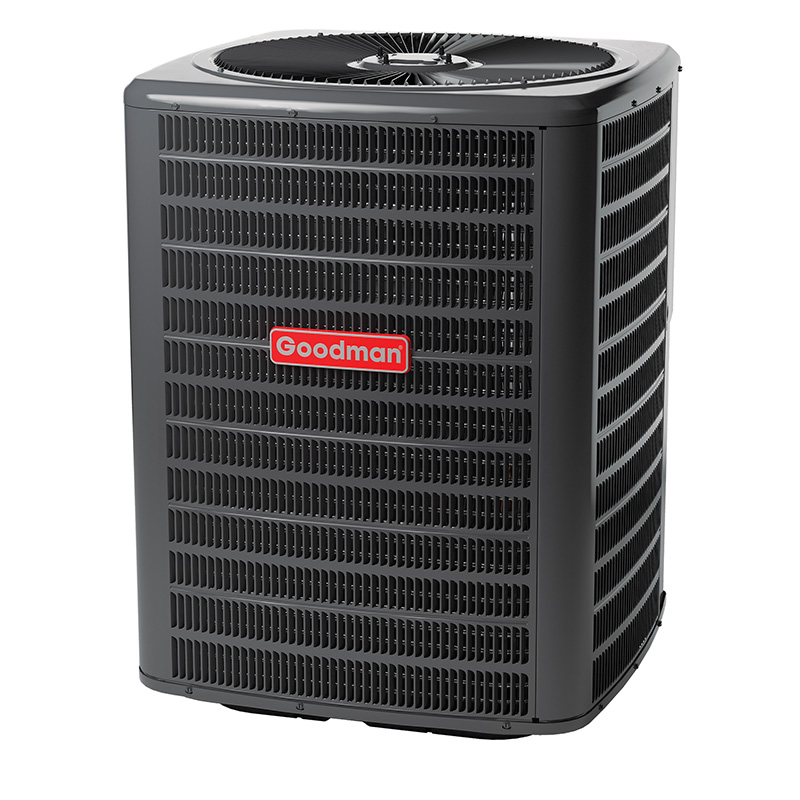
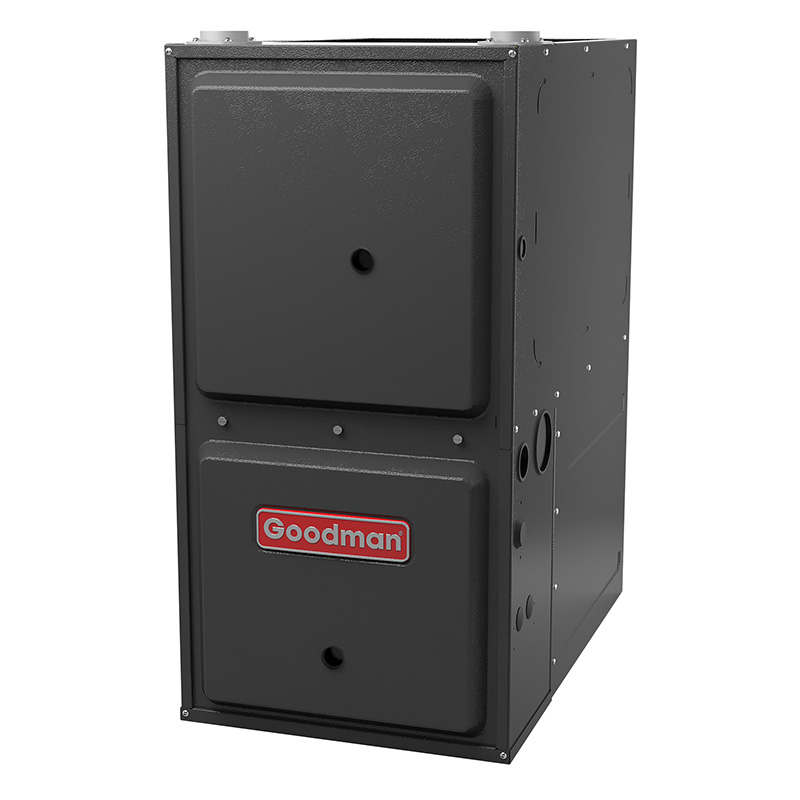
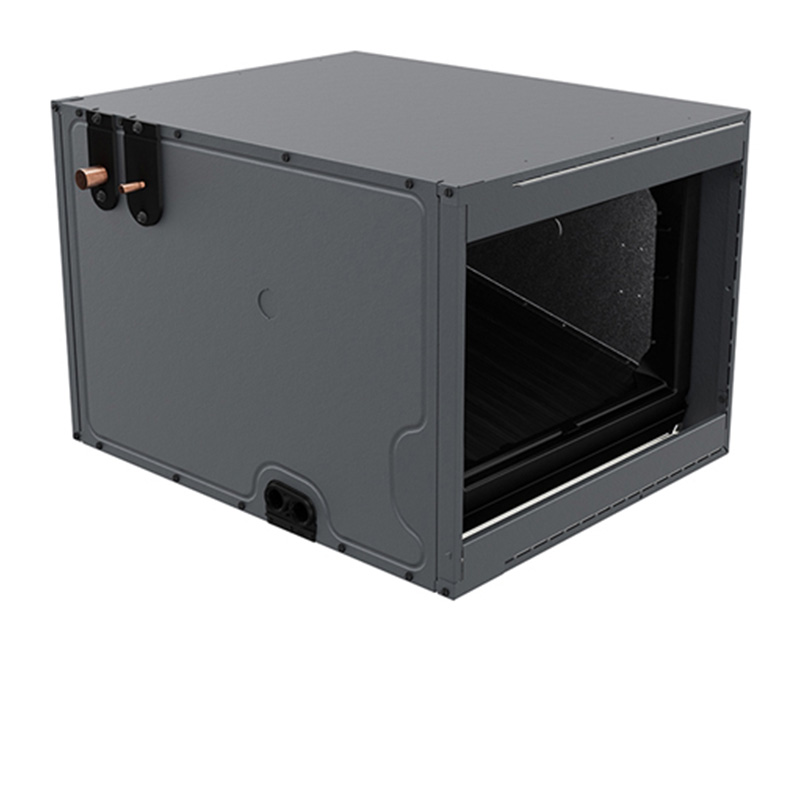
Goodman 3.5 Ton 15.2 SEER2 R32 AC System with 80,000 BTU 80% AFUE Gas Furnace – California & Colorado Ultra Low NOx, Horizontal, Multi-Speed ECM
View on AC Direct see your lowest price →Check current price on AC Direct →
Key features
- 3.5-ton cooling capacity with 15.2 SEER2 efficiency rating
- R-32 refrigerant with lower global warming potential than R-410A
- California and Colorado Ultra Low NOx certified for strict emissions compliance
- Horizontal configuration designed for attic or crawl-space installs
- Multi-speed ECM blower motor for improved airflow and humidity management
- 80,000 BTU output at 80% AFUE for baseline-efficiency gas heating
About this system
The Goodman 3.5-ton 15.2 SEER2 R-32 system paired with an 80,000 BTU 80% AFUE gas furnace is built for California and Colorado homeowners who face strict Ultra Low NOx emissions requirements. The horizontal configuration makes it a fit for attic or crawl-space installations where vertical clearance is tight, and the multi-speed ECM blower motor improves airflow consistency and humidity control compared to single-speed alternatives. At 15.2 SEER2, this system clears the federal minimum threshold by a modest margin, which keeps the upfront cost lower but means long-term energy savings are less dramatic than you would see from a 17 or 18 SEER2 unit.
R-32 refrigerant is worth noting: it has a lower global warming potential than R-410A and is becoming the industry standard as R-410A is phased down, so parts and service should remain accessible for the life of the equipment. The 80% AFUE furnace converts 80 cents of every fuel dollar into usable heat, which is the baseline efficiency tier. Homeowners in mild climates or those who rely mainly on air conditioning may find that adequate, but colder Colorado high-country locations or anyone with high heating loads will likely want to weigh a 96% AFUE option before committing. This package suits a mid-size home, roughly 1,800 to 2,400 square feet depending on insulation and local climate, where budget is the primary driver and a professional installation is confirmed.
This Goodman package delivers a code-compliant, budget-friendly solution for Ultra Low NOx markets, and the ECM blower is a genuine upgrade over basic single-speed setups at this price tier. The trade-offs are real though: 80% AFUE is the lowest efficiency tier available, compressor longevity runs shorter than premium brands, and Goodman's reputation depends heavily on who installs it and how well it is maintained.
Overall score is the average of the five ratings above.
What we like
- Priced 15 to 25 percent below comparable Carrier, Trane, and Lennox equipment
- R-32 refrigerant is future-ready as R-410A is phased out
- Meets strict California and Colorado Ultra Low NOx emissions standards
- Multi-speed ECM motor provides better comfort and humidity control than single-speed alternatives
- Horizontal orientation solves space constraints in attic or platform installations
Trade-offs
- 80% AFUE is the lowest efficiency tier; homeowners with significant heating loads will pay more in fuel costs annually versus a 96% AFUE unit
- Goodman compressors average 10 to 14 years in field reports, roughly 3 to 6 years shorter than premium-brand benchmarks
- Dual-run capacitor failures and evaporator coil leaks are documented recurring issues in owner feedback
- 15.2 SEER2 offers only modest efficiency gains over the federal minimum, limiting long-term utility savings
What homeowners and pros say about Goodman
Homeowners discussing Goodman online tend to split along a familiar line: those who had a careful, experienced installer and kept up with maintenance report solid performance for the price, while those who encountered rushed installs or skipped tune-ups more often report the repair costs and shortened equipment life that pull Goodman’s ConsumerAffairs score down to around 2.5 out of 5. That platform skews toward frustrated owners, but the recurring theme of costs climbing after roughly year seven is consistent enough to take seriously. Google dealer reviews land at around 3.8 out of 5 across hundreds of location-based reviews, where affordability draws the most consistent praise from satisfied customers.
HVAC technicians in the field tend to view Goodman as dependable entry-level equipment that lives or dies by the installation. The documented weak points for this brand are specific and worth knowing before you buy: dual-run capacitors are the most commonly replaced part and usually a straightforward low-cost fix, but evaporator coil leaks and compressor lifespans averaging 10 to 14 years versus 15 to 20 for premium brands represent real long-term cost differences. For this particular system, a small number of owners have also reported refrigerant leaks within the first year, which technicians typically attribute to installation or charge errors rather than a factory defect. That makes contractor vetting every bit as important as the equipment choice itself.
Sources: ConsumerAffairs Goodman owner reviews, AHRI Directory of Certified Product Performance, U.S. DOE appliance and equipment efficiency standards, Goodman product specification sheets.
What it costs to run
At 15.2 SEER2, cooling this 3.5-ton system for a typical 1200-hour cooling season at the U.S. average electricity rate of $0.17/kWh works out to roughly $564 per year in cooling, about $75 less per year than a minimum-efficiency 13.4 SEER2 unit of the same size. Your real cost depends on your climate and local rate.
Method: (42,000 BTU/hr ÷ 15.2 SEER2) × 1200 hours ÷ 1000 × $0.17/kWh. Rate source: U.S. EIA average; cooling hours: moderate-climate estimate.
How it compares
| Brand | Comparable model | SEER2 | Stage | Price position |
|---|---|---|---|---|
| Goodman | GSXH5 / GMVC8 Series | 15.2 | Single-stage / Multi-speed | Value pick |
| Carrier | Comfort 14 / 15 Series (24ACC6) | 15.2 | Single-stage | Typically 15 to 25 percent more than Goodman |
| Trane | XR15 Series | 15.2 | Single-stage | Typically 15 to 25 percent more than Goodman |
| Lennox | Merit ML15 Series | 15.2 | Single-stage | Typically 15 to 25 percent more than Goodman |
Competitor rows are comparable single-stage units at similar efficiency; price is relative position, not a quote.
Questions about this system
Why does this system specify Ultra Low NOx, and does that matter outside California and Colorado?
California's South Coast AQMD rules and Colorado's air quality regulations cap NOx emissions from gas furnaces far below the national standard, so any furnace sold or installed in those states must carry this certification. Outside those two states the Ultra Low NOx rating is not required, but it does no harm and the equipment functions identically.
Is 80% AFUE good enough, or should I upgrade to a 96% AFUE furnace?
At 80% AFUE, 20 cents of every fuel dollar exits through the flue as waste heat. For moderate heating climates or homes already well insulated that gap may pay back slowly, but in colder Colorado locations with long heating seasons the annual fuel savings from a 96% unit can be meaningful over 10 or more years. Run the numbers on local gas rates and your estimated heating hours before deciding.
What are the most common repair issues I should budget for with Goodman equipment?
Dual-run capacitor failure is the most frequently reported problem and is typically a 300 to 600 dollar repair that a technician can handle quickly. Evaporator coil leaks appear in a notable share of owner reviews and are more expensive to address. Keeping up with annual maintenance and verifying a proper refrigerant charge at installation reduces the risk of both.
Does this system work with a standard thermostat, or does the ECM motor require a specific control?
The multi-speed ECM blower is controlled internally by the furnace control board and communicates with most standard 24-volt thermostats. For full airflow and fan-speed control a communicating or variable-speed-compatible thermostat is ideal, but the system will operate with a conventional programmable or smart thermostat as well.
Is R-32 refrigerant harder to service than R-410A, and will technicians in my area know how to handle it?
R-32 requires slightly different handling procedures because it is mildly flammable, and technicians need to confirm their equipment and training covers it. Adoption is growing quickly as the industry shifts away from R-410A, so most metro-area HVAC shops are already equipped, but it is worth confirming with your contractor before scheduling service.
Specifications
| Cooling capacity | 3.5 Ton |
| Efficiency | 15.2 SEER2 |
| Furnace output | 80,000 BTU |
| Furnace efficiency | 80% AFUE |
| Configuration | Horizontal |
| Refrigerant | R-32 |