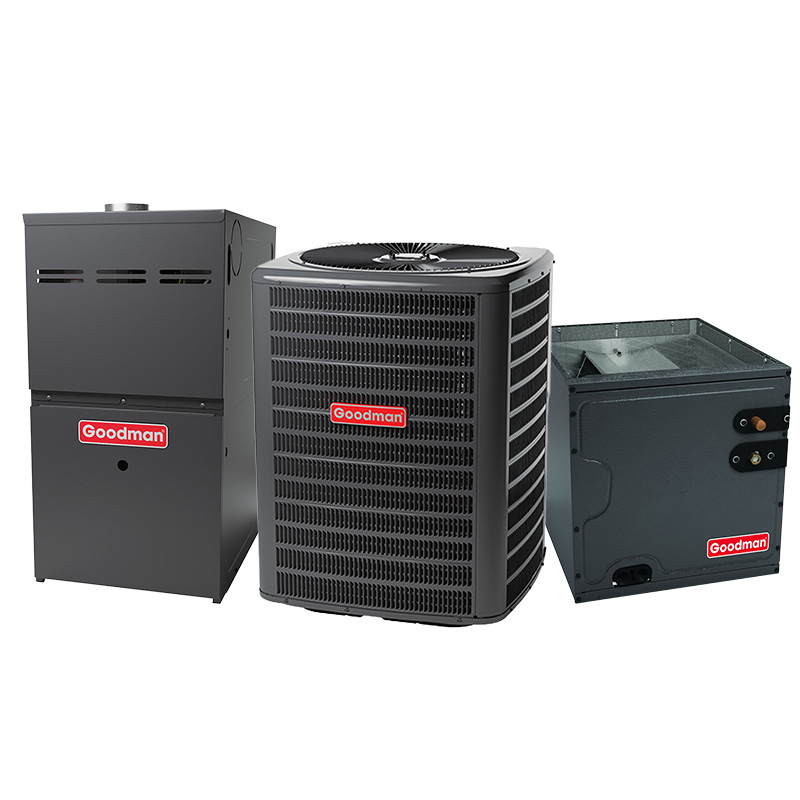
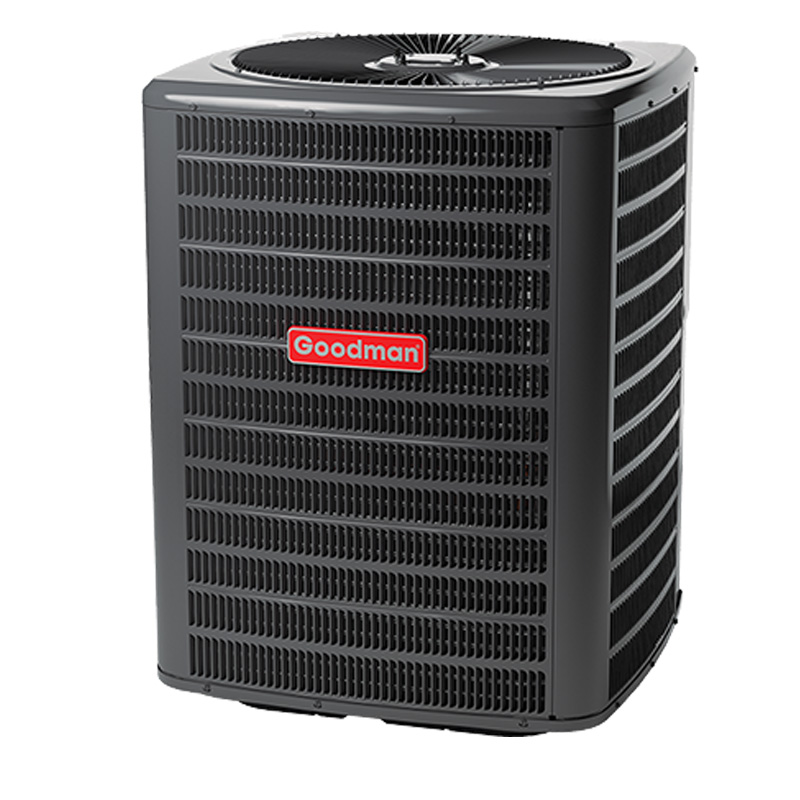
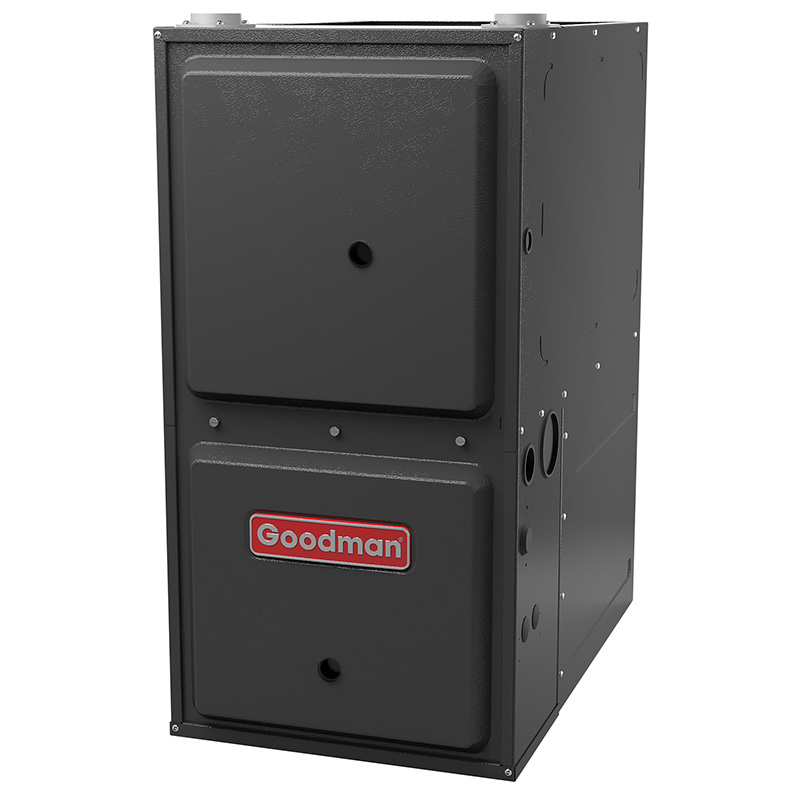
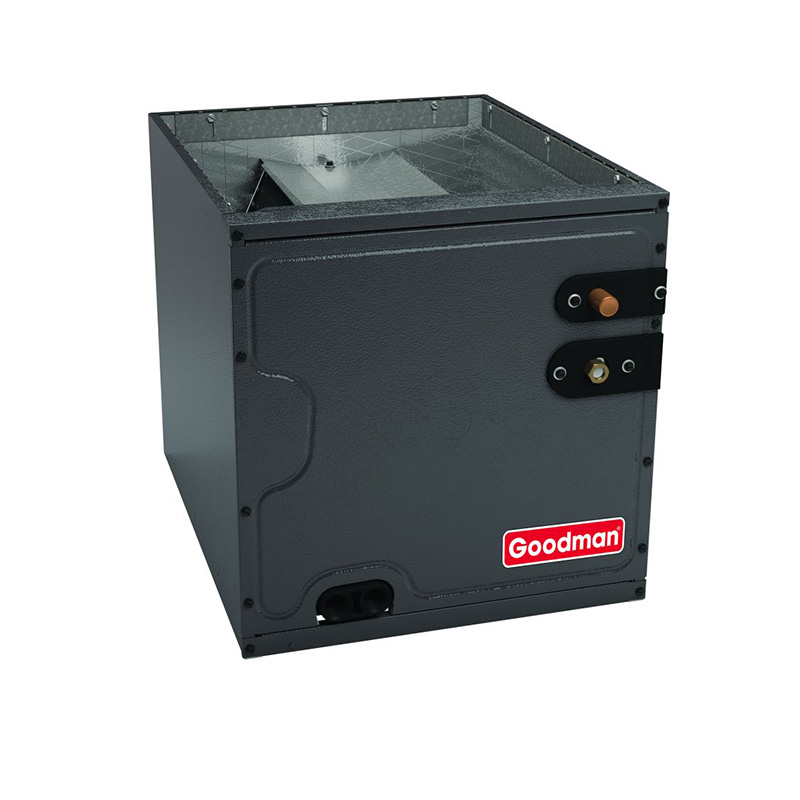
Goodman 3.5 Ton Dual Fuel Hybrid Heat Pump System – 100000 BTU Gas Furnace, 80% AFUE, 15.2 SEER2, Upflow, R32
View on AC Direct see your lowest price →Check current price on AC Direct →
Key features
- 3.5-ton dual-fuel hybrid system pairs a 15.2 SEER2 heat pump with a 100,000 BTU gas furnace
- 80% AFUE gas furnace serves as backup heat when outdoor temps fall below heat pump efficiency threshold
- R-32 refrigerant with lower global warming potential than R-410A; requires certified handling
- Upflow configuration for homes with basement or floor-level air handler installations
- Automatic fuel-source switching balances operating cost between electricity and gas
- Goodman pricing runs 15 to 25 percent below comparable Trane, Lennox, and Carrier equipment
About this system
The Goodman 3.5-ton Dual Fuel Hybrid Heat Pump System pairs a 15.2 SEER2 heat pump with a 100,000 BTU, 80% AFUE gas furnace in an upflow configuration. The dual-fuel setup is the core selling point: the system automatically favors electric heat pump operation during mild weather when electricity is cheaper to run, then switches to gas combustion when outdoor temperatures drop to a point where a heat pump loses efficiency. That crossover logic can cut annual heating costs compared to a straight gas-only system, particularly in climates that see moderate winters with occasional hard freezes. At 3.5 tons, it covers homes roughly in the 1,600 to 2,200 square foot range, depending on insulation and local climate load.
The refrigerant choice matters here. R-32 has a lower global warming potential than the R-410A it displaces and is increasingly standard in new residential equipment, but it does require technicians who are certified to handle it. The 80% AFUE furnace falls at the entry tier of efficiency: 20 cents of every dollar in gas goes out the flue as exhaust. High-efficiency 96% or 97% AFUE alternatives exist, but they carry a higher upfront cost and require condensate drainage that some installations cannot accommodate. For mild-to-moderate heating climates where the heat pump handles most of the load anyway, the 80% furnace is a reasonable compromise rather than a shortcut. Upflow configuration means the furnace sits at floor level and distributes conditioned air upward through ductwork, the most common setup in homes with a basement or dedicated mechanical room.
This system delivers a practical dual-fuel setup at a price point that makes hybrid heating accessible to budget-conscious homeowners, and 15.2 SEER2 clears the federal minimum without reaching premium efficiency territory. The trade-off is a brand with a documented track record of mid-life component failures and compressor longevity that trails premium competitors, meaning the upfront savings can erode if maintenance is deferred or installation is anything less than meticulous.
Overall score is the average of the five ratings above.
What we like
- Dual-fuel logic can meaningfully reduce annual heating costs in climates with cold but not extreme winters
- 15.2 SEER2 meets current federal efficiency standards and qualifies for many utility rebates
- R-32 refrigerant is more environmentally responsible than R-410A and is increasingly well-supported by technicians
- Priced 15 to 25 percent below comparable Carrier, Trane, and Lennox systems, lowering the barrier to hybrid heating
- Upflow configuration is widely compatible with existing ductwork in basement-and-first-floor home layouts
Trade-offs
- 80% AFUE furnace wastes 20% of fuel as exhaust heat, a real cost in climates where gas covers a significant heating load
- Dual-run capacitor failures are the most common documented repair, typically arising within the first several years of use
- Compressor lifespan averages 10 to 14 years versus 15 to 20 years for premium brands, affecting long-term cost of ownership
- A minority of owners have reported refrigerant leaks in year one, pointing to sensitivity to install quality and initial charge accuracy
What homeowners and pros say about Goodman
Homeowners who have lived with Goodman equipment for several years tend to share a split view. Those who had a skilled installer and kept up with annual maintenance often report years of trouble-free operation and credit the lower upfront cost as genuine savings. Those who encountered problems tend to focus on repair bills that arrived earlier than expected: capacitor replacements in the 300 to 600 dollar range are the most common complaint, followed by evaporator coil leaks that can run considerably higher. On ConsumerAffairs, Goodman sits at roughly 2.5 out of 5, a score shaped largely by frustrated owners rather than satisfied ones, with the recurring theme being that repair costs climb noticeably after about year seven. Google dealer reviews tell a more balanced story, averaging around 3.8 out of 5 across hundreds of reviews per location, where affordability is the praise that appears most consistently.
HVAC technicians who work on Goodman equipment regularly tend to frame it plainly: the equipment is serviceable and competitively priced, but it rewards a careful installation more than premium brands do, and it punishes a rushed or poorly charged one. The R-32 refrigerant on this system adds a handling requirement that not every shop is set up for yet. The compressor longevity data is worth knowing going in: Goodman compressors averaging 10 to 14 years versus 15 to 20 for top-tier brands is not a knock against the brand so much as a realistic planning horizon. For a dual-fuel hybrid system specifically, where the heat pump compressor runs in shoulder seasons and the furnace takes over in the coldest weather, that workload split may actually extend compressor life relative to a heat-pump-only system in the same climate.
Sources: ConsumerAffairs Goodman owner reviews, AHRI Directory of Certified Product Performance, U.S. DOE appliance and equipment efficiency standards, Goodman product specification sheets.
What it costs to run
At 15.2 SEER2, cooling this 3.5-ton system for a typical 1200-hour cooling season at the U.S. average electricity rate of $0.17/kWh works out to roughly $564 per year in cooling, about $75 less per year than a minimum-efficiency 13.4 SEER2 unit of the same size. Your real cost depends on your climate and local rate.
Method: (42,000 BTU/hr ÷ 15.2 SEER2) × 1200 hours ÷ 1000 × $0.17/kWh. Rate source: U.S. EIA average; cooling hours: moderate-climate estimate.
How it compares
| Brand | Comparable model | SEER2 | Stage | Price position |
|---|---|---|---|---|
| Goodman | 3.5-Ton Dual Fuel Hybrid – GMVC8 / GSZ2 Series | 15.2 | Single-stage | Value pick |
| Carrier | Performance Series Dual Fuel – 25HPB / 59SP5 | 15.2 | Single-stage | Typically 15 to 25 percent more than Goodman |
| Trane | XR15 Dual Fuel – XR15 / S8X1 Series | 15.2 | Single-stage | Typically 15 to 25 percent more than Goodman |
| Lennox | Merit Series Dual Fuel – 14HPX / ML180 | 15.2 | Single-stage | Typically 15 to 25 percent more than Goodman |
Competitor rows are comparable single-stage units at similar efficiency; price is relative position, not a quote.
Questions about this system
How does the dual-fuel switching actually work, and do I have to set it manually?
The system uses an outdoor thermostat or the communicating controls to detect when outdoor temperatures drop below a pre-set balance point, typically somewhere between 35 and 40 degrees Fahrenheit. Below that point, the gas furnace takes over automatically because it becomes cheaper or more effective to heat with combustion than to extract heat from cold outdoor air. You set the balance point during commissioning and should not need to intervene manually after that.
Is R-32 safe, and will local HVAC technicians know how to service it?
R-32 is mildly flammable (A2L classification), which means technicians need specific certification and handling procedures, but it is not considered a significant safety risk in residential installations done to code. Adoption is accelerating quickly, and most established HVAC shops now have R-32-certified technicians, but it is worth confirming this with your service contractor before you buy.
What is the documented failure history on Goodman units like this one?
Dual-run capacitor failure is the most commonly reported issue and is generally a low-cost repair in the 300 to 600 dollar range. Evaporator coil leaks appear in a meaningful share of owner reviews, and compressor longevity averages 10 to 14 years rather than the 15 to 20 years seen in premium brands. A minority of first-year refrigerant leaks have also been reported, which typically trace back to installation or initial charge issues rather than the equipment itself.
Will 100,000 BTU be too much furnace for my 3.5-ton cooling system?
Furnace BTU sizing and cooling tonnage address different loads and are not required to match proportionally. A proper Manual J heat load calculation for your home is the only reliable way to confirm whether 100,000 BTU is right-sized; in many mid-size homes with moderate insulation this capacity is appropriate, but an oversized furnace will short-cycle and reduce efficiency and comfort, so get the load calculation done before purchase.
Does this system qualify for the federal energy efficiency tax credit?
Heat pump components meeting the 15 SEER2 threshold can qualify under the Inflation Reduction Act's 25C tax credit for up to 30 percent of installed cost, subject to annual limits. However, the 80% AFUE furnace portion does not meet the 97% AFUE threshold required for furnaces to qualify independently. Confirm current IRS guidance and your specific configuration with your tax advisor before assuming full system eligibility.
Specifications
| Cooling capacity | 3.5 Ton |
| Efficiency | 15.2 SEER2 |
| Furnace output | 100000 BTU |
| Furnace efficiency | 80% AFUE |
| Configuration | Upflow |
| Refrigerant | R-32 |