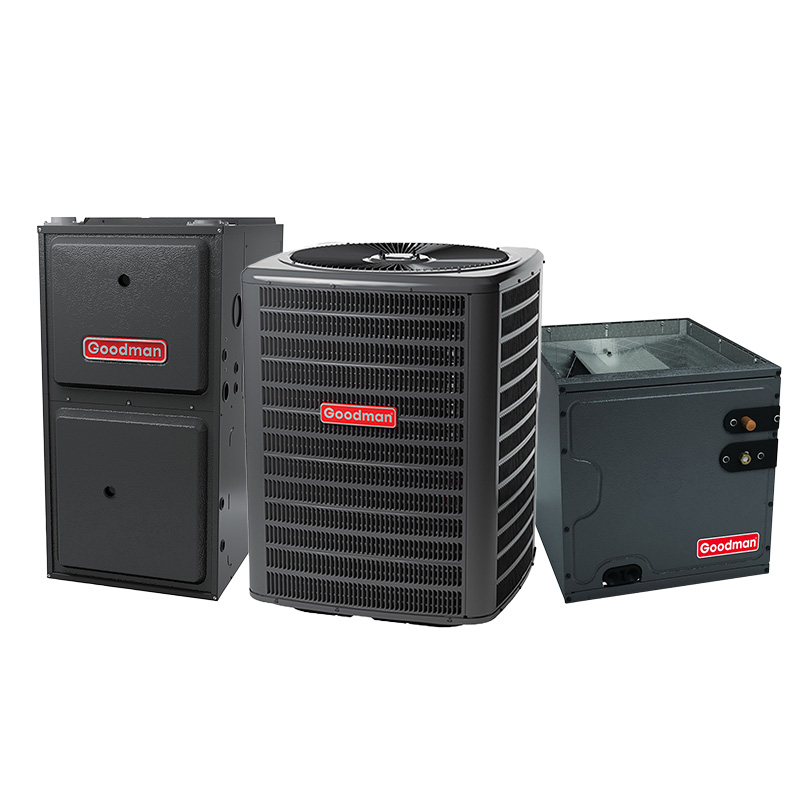
Goodman 3.5 Ton Dual Fuel Hybrid Heat Pump System – 100000 BTU Gas Furnace, Two Stage, 96% AFUE, Upflow, 15.2 SEER2, R32
View on AC Direct see your lowest price →Check current price on AC Direct →
Key features
- Dual fuel hybrid operation: heat pump runs in mild weather, gas furnace takes over at a user-set outdoor temperature threshold
- Two-stage 96% AFUE gas furnace reduces fuel use and temperature swings compared to single-stage models
- 15.2 SEER2 cooling efficiency meets current federal standards and qualifies for select utility rebates
- R-32 refrigerant offers a lower global warming potential than older R-410A blends
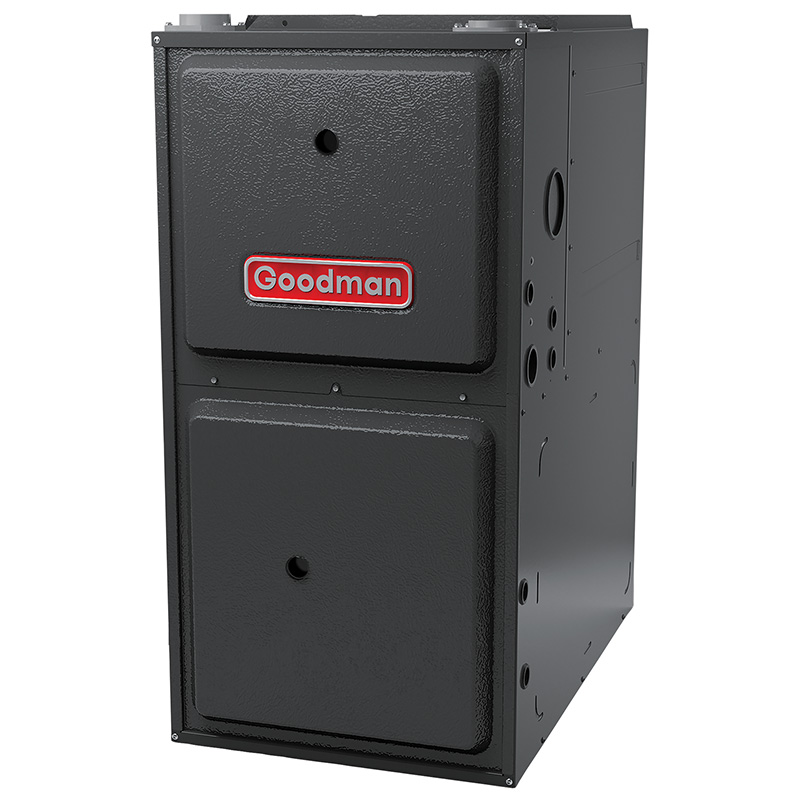
- Upflow configuration designed for basement or closet installations where supply air exits the top
- 3.5-ton capacity suited for homes in the approximately 1,600 to 2,200 square foot range, subject to load calculation
About this system
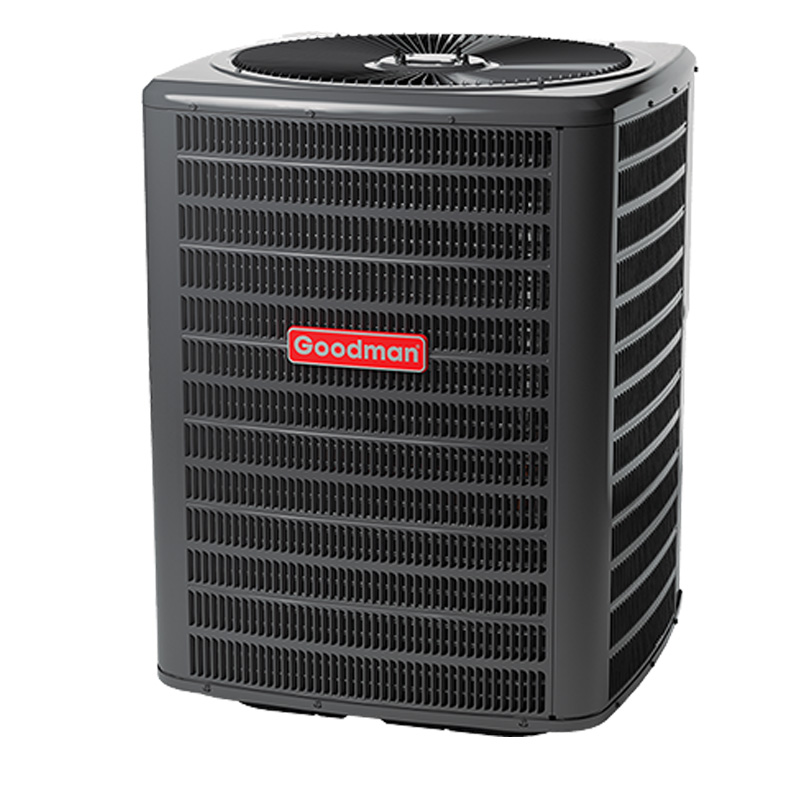
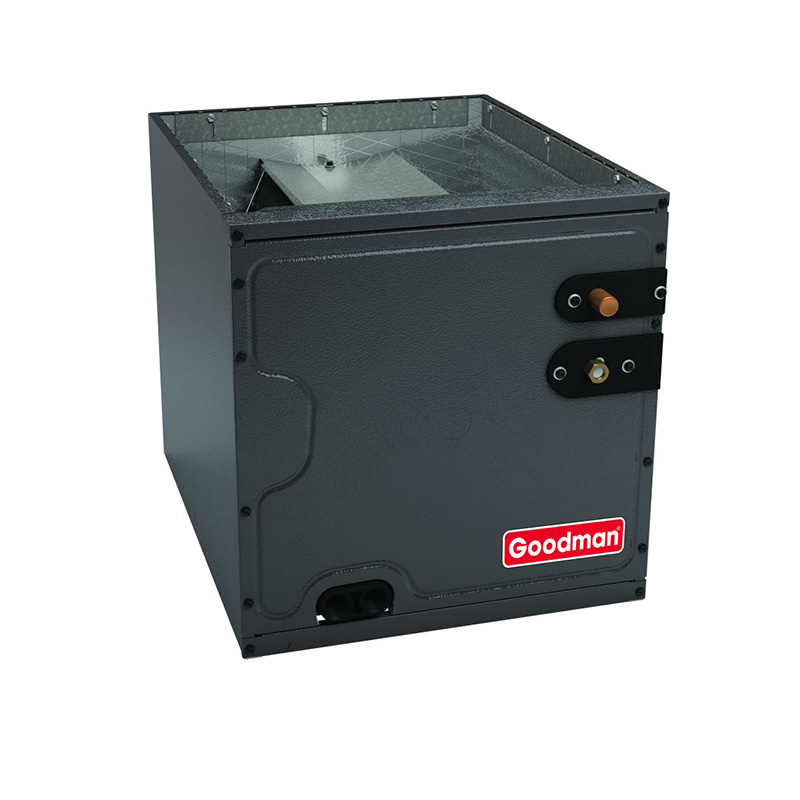
The Goodman 3.5-ton Dual Fuel Hybrid Heat Pump System pairs a 15.2 SEER2-rated heat pump with a 100,000 BTU, 96% AFUE two-stage gas furnace in an upflow configuration. A dual fuel setup is purpose-built for climates where winters get cold enough to overwhelm a heat pump’s efficiency but not so extreme that gas-only heat makes sense year-round. The system automatically switches between electric heat pump operation during mild weather and gas furnace operation when outdoor temperatures drop to a setpoint you define, giving you lower operating costs across the full heating season without sacrificing comfort.
The two-stage furnace is a meaningful upgrade over single-stage alternatives. It runs on a lower fire most of the time, which reduces temperature swings, lowers noise, and cuts fuel consumption during shoulder-season heating. R-32 refrigerant replaces older blends with a lower global warming potential and slightly better heat transfer efficiency, which is part of how this unit reaches its 15.2 SEER2 rating. That rating sits at the entry point of the mid-efficiency tier, meeting federal minimums in most regions and qualifying for some utility rebates, though it will not hit the higher rebate thresholds that 17-plus SEER2 variable-speed systems reach. At 3.5 tons, this system is sized for roughly 1,600 to 2,200 square feet depending on insulation, ceiling height, and local climate, and a proper Manual J load calculation is essential before buying.
Goodman positions this system as a value alternative to premium brands, typically priced 15 to 25 percent below comparable Trane, Lennox, and Carrier equipment. That price advantage is real, but so are the trade-offs around long-term reliability. Buyers who prioritize upfront affordability and have access to a skilled installer will find this system genuinely capable. Buyers who prioritize 20-plus-year longevity with minimal service calls will want to weigh the cost gap against Goodman’s documented reliability history before committing.
This Goodman dual fuel system delivers genuinely useful technology at a price point that is hard to match, and the two-stage furnace with 96% AFUE is solid hardware on paper. The ongoing trade-off is Goodman's documented reliability history, where component failures tend to increase after year seven and compressor lifespan runs shorter than premium-brand averages, so the upfront savings should be weighed against realistic long-term service costs.
Overall score is the average of the five ratings above.
What we like
- Priced 15 to 25 percent below comparable Trane, Lennox, and Carrier dual fuel systems
- 96% AFUE two-stage furnace is efficient and provides more even heat distribution than single-stage operation
- Dual fuel logic reduces annual operating costs by using whichever energy source is cheaper for the conditions
- R-32 refrigerant is a more environmentally responsible choice and improves heat transfer efficiency
- 15.2 SEER2 rating meets current federal standards and positions it for utility rebate eligibility in many areas
Trade-offs
- Compressors average 10 to 14 years in documented owner experience, well below the 15 to 20 years typical of premium brands
- Dual-run capacitor failures are the most commonly reported issue and, while usually inexpensive to fix, add to lifetime service costs
- Evaporator coil leaks appear in a meaningful share of owner reviews and can be a significant repair
- A minority of owners report refrigerant leaks in the first year, typically traced to install quality rather than the equipment itself
What homeowners and pros say about Goodman
Homeowners who have chosen this type of Goodman dual fuel setup most often point to the price gap versus Carrier, Trane, and Lennox as the deciding factor, and the Google dealer review average of around 3.8 out of 5 reflects genuine satisfaction in the early years of ownership. The two-stage furnace draws consistent praise for quieter, more even heating compared to the single-stage units many buyers are replacing. Where the sentiment shifts is in the mid-term ownership experience. ConsumerAffairs shows a rating of roughly 2.5 out of 5 for Goodman overall, and while that platform overrepresents complaints, the pattern is consistent: repair frequency and cost tend to climb after year seven, and owners who were not prepared for that curve feel the sting more sharply because they chose Goodman partly to save money upfront.
HVAC technicians who service Goodman equipment regularly tend to hold a pragmatic view of this brand. They note that dual-run capacitor failures are the most commonly reported issue across the Goodman line, and while a capacitor swap typically runs in the 300 to 600 dollar range and is a straightforward repair, it signals the kind of maintenance rhythm buyers should budget for. Evaporator coil leaks are documented in a meaningful share of owner reports and represent a more serious expense. Compressor longevity averaging 10 to 14 years versus the 15 to 20 years seen in premium brands is the figure technicians cite most often when explaining the long-horizon cost difference. First-year refrigerant leaks, which affect a minority of owners, are nearly always traced back to installation workmanship rather than the unit itself. The consistent professional advice is straightforward: the quality of the installing contractor matters more with Goodman than it does with a premium brand that has tighter factory tolerances and more robust component specs.
Sources: ConsumerAffairs Goodman owner reviews, AHRI Directory of Certified Product Performance, U.S. DOE appliance and equipment efficiency standards, Goodman product specification sheets.
What it costs to run
At 15.2 SEER2, cooling this 3.5-ton system for a typical 1200-hour cooling season at the U.S. average electricity rate of $0.17/kWh works out to roughly $564 per year in cooling, about $75 less per year than a minimum-efficiency 13.4 SEER2 unit of the same size. Your real cost depends on your climate and local rate.
Method: (42,000 BTU/hr ÷ 15.2 SEER2) × 1200 hours ÷ 1000 × $0.17/kWh. Rate source: U.S. EIA average; cooling hours: moderate-climate estimate.
How it compares
| Brand | Comparable model | SEER2 | Stage | Price position |
|---|---|---|---|---|
| Goodman | 3.5-Ton Dual Fuel Hybrid System, 96% AFUE, Two-Stage | 15.2 | Two-stage | Value pick |
| Carrier | Performance Series Dual Fuel (25HCE6 heat pump with 59TP6 furnace) | 15–16 | Two-stage | Typically 15 to 25 percent more than this Goodman system |
| Trane | XR15 Dual Fuel System (XR15 heat pump with S9X2 furnace) | 15–16 | Two-stage | Typically 15 to 25 percent more than this Goodman system |
| Lennox | Merit Series Dual Fuel (ML15XP1 heat pump with ML196 furnace) | 15–15.5 | Single-stage to two-stage depending on configuration | Typically 15 to 25 percent more than this Goodman system |
Competitor rows are comparable single-stage units at similar efficiency; price is relative position, not a quote.
Questions about this system
At what outdoor temperature does the system switch from heat pump to gas furnace, and can I adjust it?
The balance point, which is the outdoor temperature at which the system hands off from heat pump to gas heat, is typically set during installation by your technician on the thermostat or control board. Most thermostats compatible with dual fuel systems allow you to adjust this setpoint, and the optimal temperature depends on your local utility rates for electricity versus gas.
Will a 3.5-ton unit be the right size for my home?
Tonnage cannot be reliably estimated from square footage alone. Insulation levels, window area, ceiling height, local climate, and duct condition all affect the correct size. An HVAC contractor must perform a Manual J load calculation before purchase, and installing an oversized or undersized system is one of the most common causes of early component failure in Goodman equipment.
How does R-32 refrigerant affect service costs compared to older R-410A systems?
R-32 is becoming more widely available as manufacturers transition away from R-410A, and it is handled with standard equipment by certified technicians. At this time, R-32 service costs are broadly similar to R-410A, though parts availability can vary by region, so it is worth confirming your local technicians are familiar with it before buying.
What does Goodman's warranty cover on this system, and are there conditions attached?
Goodman typically offers a 10-year parts limited warranty when the system is registered within 60 days of installation, dropping to five years if registration is missed. The warranty covers parts but not labor, which means out-of-pocket service costs can still be significant for covered repairs. Confirming exact warranty terms for this specific model configuration before purchase is strongly recommended.
Goodman's reliability reviews look mixed online. Should I be worried?
Goodman carries a ConsumerAffairs rating of around 2.5 out of 5, which reflects a complaint-skewed platform where repair costs after roughly year seven are the recurring theme. Google dealer reviews average around 3.8 out of 5, with affordability as the most common praise. The documented failure points are dual-run capacitors, evaporator coil leaks, and compressor lifespans averaging 10 to 14 years versus 15 to 20 for premium brands. These are real trade-offs, and the installation quality of your chosen contractor is consistently cited as the biggest factor in how long any Goodman system lasts.
Specifications
| Cooling capacity | 3.5 Ton |
| Efficiency | 15.2 SEER2 |
| Furnace output | 100000 BTU |
| Furnace efficiency | 96% AFUE |
| Configuration | Upflow |
| Refrigerant | R-32 |