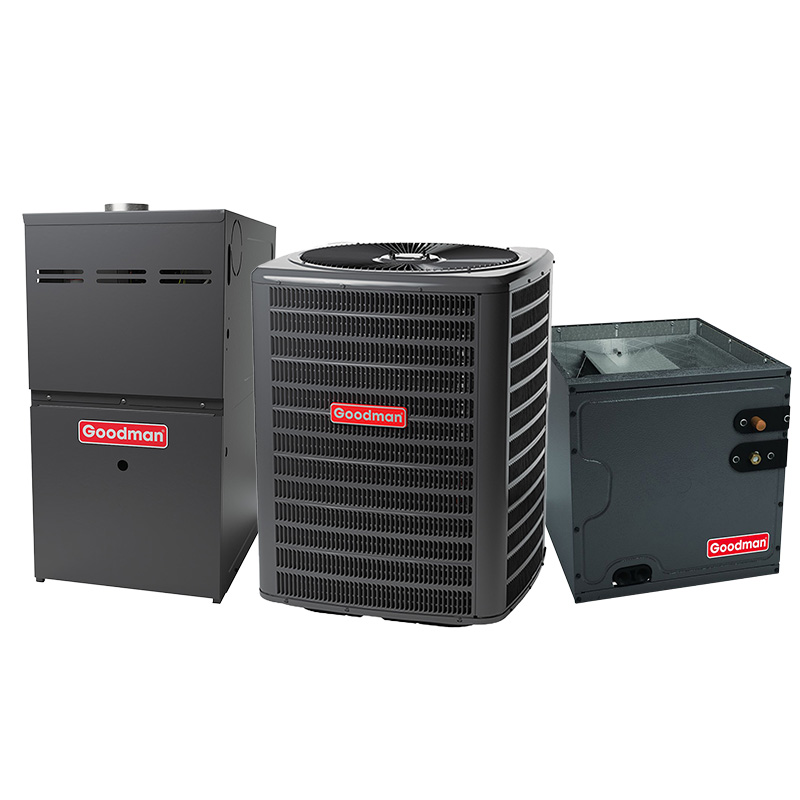
Goodman 3.5 Ton Dual Fuel Hybrid Heat Pump System – 80000 BTU California Low NOx Gas Furnace, 80% AFUE, 15.2 SEER2, Upflow, R32
View on AC Direct see your lowest price →Check current price on AC Direct →
Key features
- 15.2 SEER2 heat pump efficiency qualifies for many utility rebates and meets 2023 federal minimum standards with room to spare
- Dual fuel hybrid logic automatically switches between heat pump and gas heat based on outdoor temperature for lower operating costs
- 80,000 BTU gas furnace at 80% AFUE uses conventional venting, simplifying installation in homes with existing flue systems
- R-32 refrigerant with lower global warming potential than R-410A and strong ongoing industry support
- Upflow cabinet orientation fits standard basement, closet, and utility room installations with existing ductwork
- Goodman pricing typically runs 15 to 25 percent below comparable Trane, Lennox, and Carrier configurations
About this system
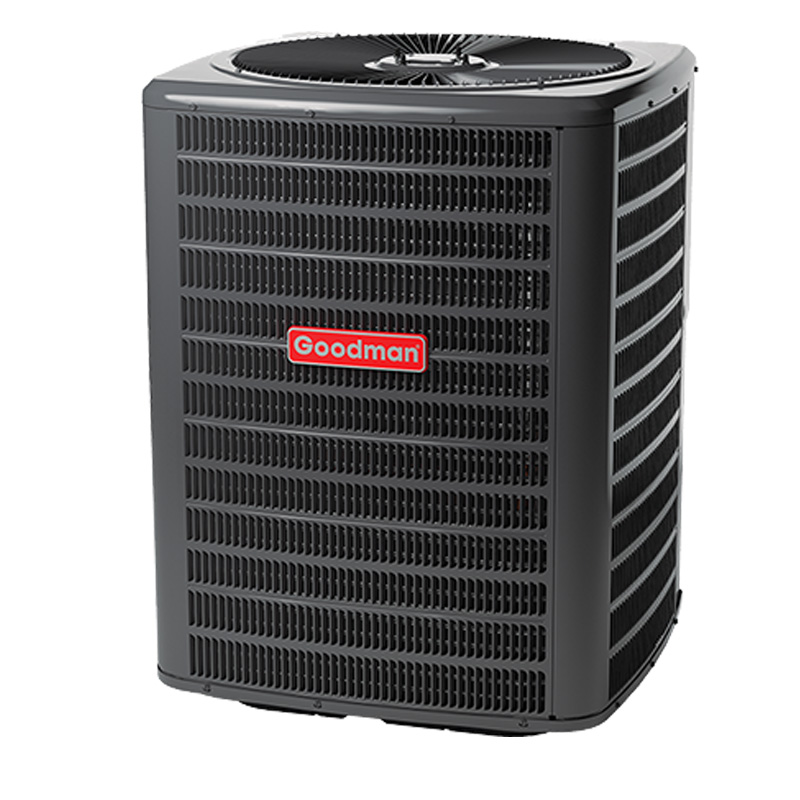
The Goodman 3.5-ton dual fuel hybrid heat pump system pairs a 15.2 SEER2 outdoor heat pump with an 80,000 BTU upflow gas furnace rated at 80% AFUE. The hybrid setup is the core selling point: the system defaults to the more economical heat pump when outdoor temperatures are mild, then automatically switches to gas heat once temperatures drop below your balance point, typically somewhere in the mid-30s Fahrenheit. That switchover logic can meaningfully reduce gas consumption in climates that see moderately cold but not brutal winters, making this configuration popular in the upper South, mid-Atlantic, and parts of the Mountain West.
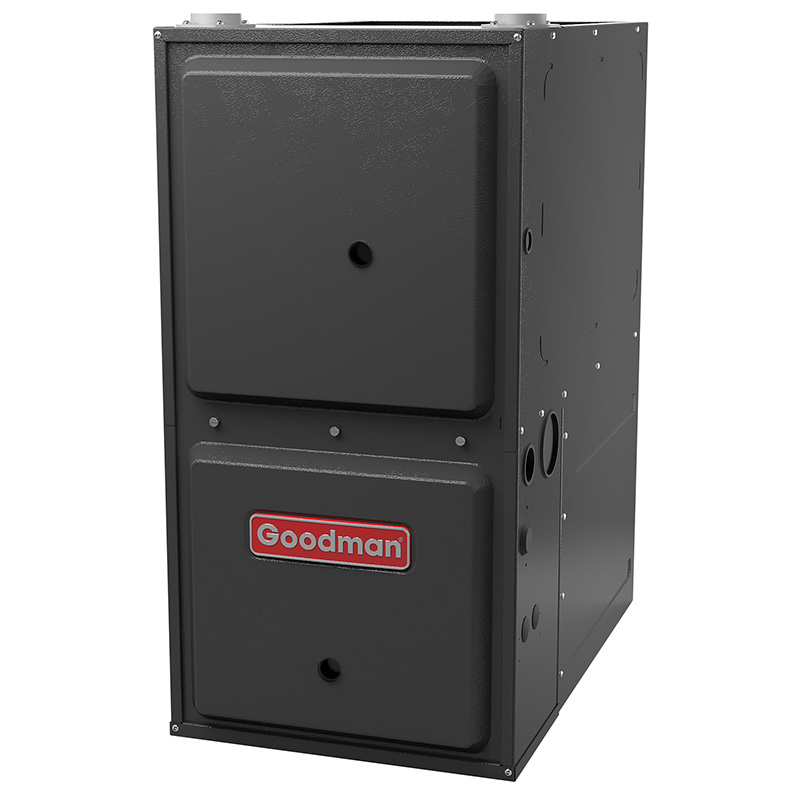
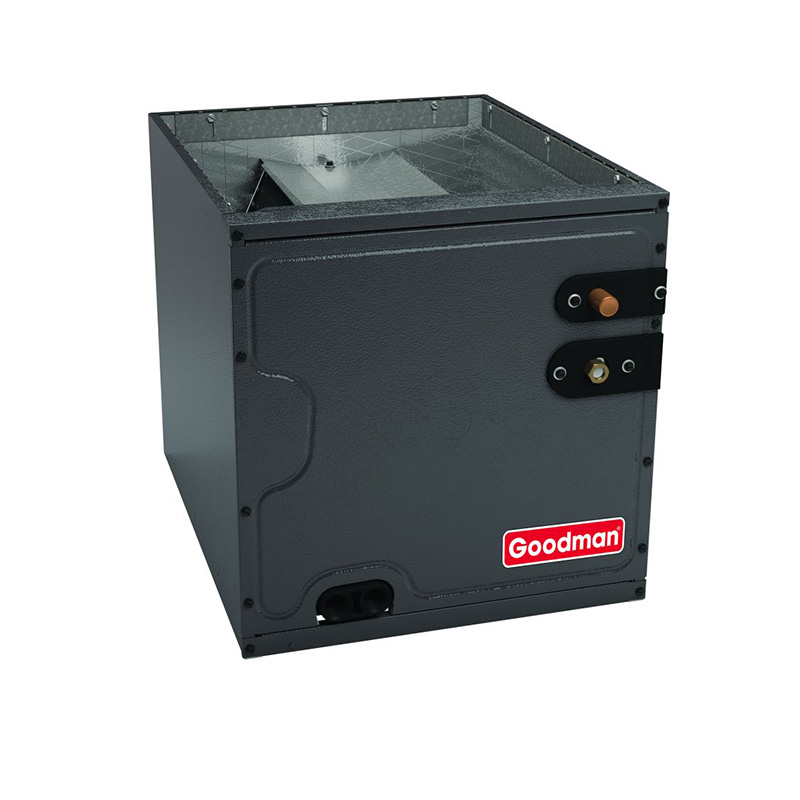
The R-32 refrigerant is a notable upgrade over older R-410A systems. R-32 carries a lower global warming potential and is increasingly the standard in new residential equipment, so parts and service support should remain solid for the foreseeable future. The 80% AFUE furnace is a standard-efficiency unit, meaning combustion gases exhaust through a conventional flue rather than a PVC condensate pipe. That keeps installation straightforward in homes already equipped with a B-vent or masonry chimney, but it does leave roughly 20% of every gas dollar going up the flue. Homeowners who prioritize gas efficiency over upfront cost may want to compare a 96% AFUE alternative. The upflow configuration suits the majority of residential forced-air installations where the air handler sits in a basement or closet and supply air moves up into living spaces.
This system targets buyers who want a capable dual fuel setup at a price point well below premium brands, and who are working with a qualified contractor who can ensure proper refrigerant charge, airflow calibration, and balance-point configuration. Done right, this combination delivers genuine operating cost savings and solid comfort. Done poorly, it underperforms regardless of what the specs say.
This Goodman dual fuel system offers a genuinely useful hybrid configuration at an accessible price, and the R-32 refrigerant and 15.2 SEER2 rating are solid for this price tier. The trade-offs are real: compressor longevity trails premium brands, coil leaks and capacitor failures are documented recurring issues, and the 80% AFUE furnace leaves efficiency on the table compared to condensing alternatives. Buyers who secure a skilled installation and stay current on maintenance can get good years out of this system; those rolling the dice on the cheapest installer available are taking a measurable risk.
Overall score is the average of the five ratings above.
What we like
- Dual fuel hybrid operation reduces heating costs in climates with moderate winters by favoring electric heat pump operation above the balance point
- Priced 15 to 25 percent below Trane, Lennox, and Carrier equivalents, lowering the barrier to a dual fuel system
- R-32 refrigerant is a forward-compatible, lower-GWP choice that aligns with where the industry is heading
- 15.2 SEER2 efficiency is competitive for this price segment and supports utility rebate eligibility in many regions
- Upflow configuration with conventional venting works with the widest range of existing residential ductwork and flue setups
Trade-offs
- 80% AFUE furnace wastes approximately one in five gas BTUs; a condensing furnace at 96% AFUE would meaningfully cut heating bills in cold-dominated climates
- Compressor lifespan averages 10 to 14 years per documented owner experience, compared to 15 to 20 years for premium-brand compressors
- Evaporator coil leaks are a recurring theme in owner reviews, a repair that can run into the thousands depending on the refrigerant involved
- Dual-run capacitor failures are the most commonly reported service call, and while repairs are relatively affordable, they point to a component quality ceiling consistent with the price tier
What homeowners and pros say about Goodman
Homeowners who post about Goodman equipment online tend to cluster at the extremes, and the numbers reflect that. On ConsumerAffairs, Goodman sits at roughly 2.5 out of 5, a channel that skews toward frustrated owners rather than satisfied ones, and the pattern in those complaints is consistent: systems that run fine for the first several years start generating repair bills after roughly year seven, often around capacitors, coil leaks, or refrigerant issues. Google dealer reviews tell a more balanced story at around 3.8 out of 5, where the most frequent praise is straightforward: the equipment costs less, and for buyers working within a budget, that margin matters. For this dual fuel system specifically, online forum discussions often focus on the importance of proper balance-point configuration, with owners noting that a miscalibrated switchover setting can undercut most of the efficiency benefit the hybrid design is supposed to deliver.
HVAC technicians who comment publicly on the brand tend to be pragmatic about it. The consensus is that Goodman equipment is installable, serviceable, and capable of delivering solid performance when set up correctly, but that it rewards attentive maintenance more than premium equipment does. The documented failure modes on this platform, including dual-run capacitor failures as the most common service call, evaporator coil leaks in a meaningful share of units, and compressor lifespans that typically land in the 10 to 14 year range rather than the 15 to 20 years more commonly seen on Trane, Carrier, and Lennox equipment, are consistent with what technicians report in the field. None of those issues are disqualifying at the price point, but they are worth factoring into a realistic 15-year cost-of-ownership calculation before signing a contract.
Sources: ConsumerAffairs Goodman owner reviews, AHRI Directory of Certified Product Performance, U.S. DOE appliance and equipment efficiency standards, Goodman product specification sheets.
What it costs to run
At 15.2 SEER2, cooling this 3.5-ton system for a typical 1200-hour cooling season at the U.S. average electricity rate of $0.17/kWh works out to roughly $564 per year in cooling, about $75 less per year than a minimum-efficiency 13.4 SEER2 unit of the same size. Your real cost depends on your climate and local rate.
Method: (42,000 BTU/hr ÷ 15.2 SEER2) × 1200 hours ÷ 1000 × $0.17/kWh. Rate source: U.S. EIA average; cooling hours: moderate-climate estimate.
How it compares
| Brand | Comparable model | SEER2 | Stage | Price position |
|---|---|---|---|---|
| Goodman | GSZH5 / GMVC8 Dual Fuel Series | 15.2 | Single-stage | Value pick |
| Carrier | Performance 15 Dual Fuel (25HPB6 / 59SC5) | 15.0-15.5 | Single-stage | Typically 15 to 25 percent more than the Goodman |
| Trane | XR15 Dual Fuel (4TWR / S8B1) | 15.0-15.5 | Single-stage | Typically 15 to 25 percent more than the Goodman |
| Lennox | Merit 15 Dual Fuel (ML15XP1 / ML80UH) | 15.0-15.5 | Single-stage | Typically 15 to 25 percent more than the Goodman |
Competitor rows are comparable single-stage units at similar efficiency; price is relative position, not a quote.
Questions about this system
What outdoor temperature does the system switch from heat pump to gas heat?
The switchover temperature, called the balance point, is typically set by your installer during commissioning and often falls somewhere between 35 and 40 degrees Fahrenheit. At that point the gas furnace takes over because it becomes more cost-effective than running the heat pump in colder air. Getting this setting calibrated correctly for your local utility rates is one of the more important parts of the installation.
Does the 80% AFUE furnace require a new flue or chimney liner?
An 80% AFUE furnace exhausts at high enough temperatures to use a conventional metal B-vent or lined masonry chimney, so many existing homes can use the current venting with an inspection and possible liner upgrade. Unlike a 96% condensing furnace, it does not need PVC condensate piping, which simplifies retrofits in homes with older flue systems. Your installer should inspect and size the existing vent before assuming it can be reused.
What are the most common repairs I should budget for over the first 10 years?
The most frequently documented failure on Goodman equipment is the dual-run capacitor, a repair that typically costs between 300 and 600 dollars including labor and is usually straightforward. Evaporator coil leaks have also been reported by a meaningful share of owners and can be a more significant expense. Keeping up with annual maintenance visits gives a technician the chance to catch early refrigerant loss or electrical issues before they become larger problems.
Is R-32 refrigerant hard to find or more expensive to service?
R-32 is increasingly common in residential equipment and is stocked by most commercial HVAC suppliers, so sourcing it is not typically a problem. Technicians do need specific certification and equipment to handle it safely, since it is mildly flammable, but any competent licensed HVAC contractor will already have the required training and tools. Long-term, R-32 is in better regulatory standing than R-410A, so parts and refrigerant availability should remain stable.
How does the 15.2 SEER2 rating affect my utility rebate eligibility?
Most utility rebate programs and the federal tax credit under the Inflation Reduction Act have efficiency minimums that vary by climate zone and equipment type, but 15.2 SEER2 clears the threshold for many programs in the country. You should check your specific utility's current rebate requirements before purchasing, since thresholds can shift annually and some programs have additional requirements around the furnace or installation type.
Specifications
| Cooling capacity | 3.5 Ton |
| Efficiency | 15.2 SEER2 |
| Furnace output | 80000 BTU |
| Furnace efficiency | 80% AFUE |
| Configuration | Upflow |
| Refrigerant | R-32 |