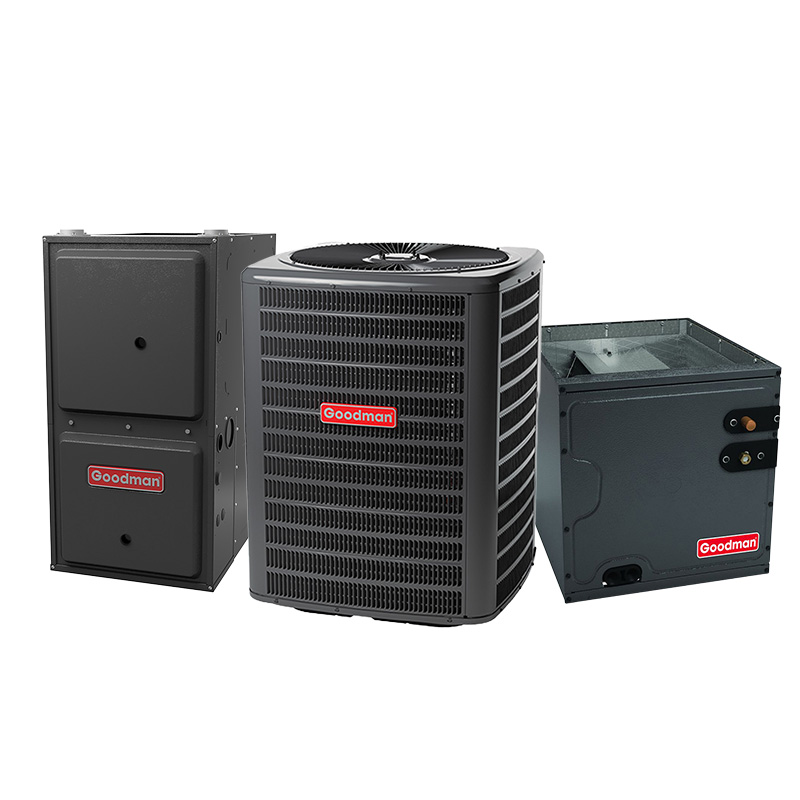
Goodman 3.5 Ton Dual Fuel Hybrid Heat Pump System – 80000 BTU California Ultra-Low NOx Gas Furnace, 80% AFUE, 15.2 SEER2, Upflow, R32
View on AC Direct see your lowest price →Check current price on AC Direct →
Key features
- Dual fuel hybrid configuration: heat pump handles mild weather, 80,000 BTU gas furnace takes over in deep cold
- 15.2 SEER2 cooling efficiency meets current federal minimums for most U.S. regions
- 80% AFUE furnace is the entry efficiency tier, lower upfront cost but higher operating cost than 90-plus percent units
- R-32 refrigerant replaces R-410A with a lower global-warming-potential charge
- Upflow air handler orientation suits the most common residential duct configuration
- California Ultra-Low NOx certified gas furnace meets strict California and some other state air quality standards
About this system
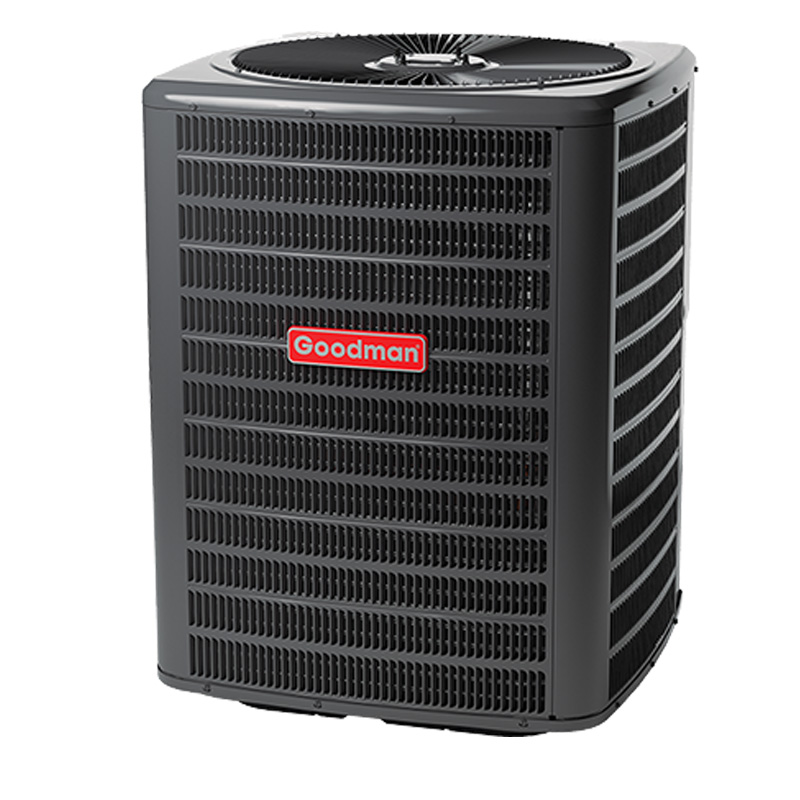
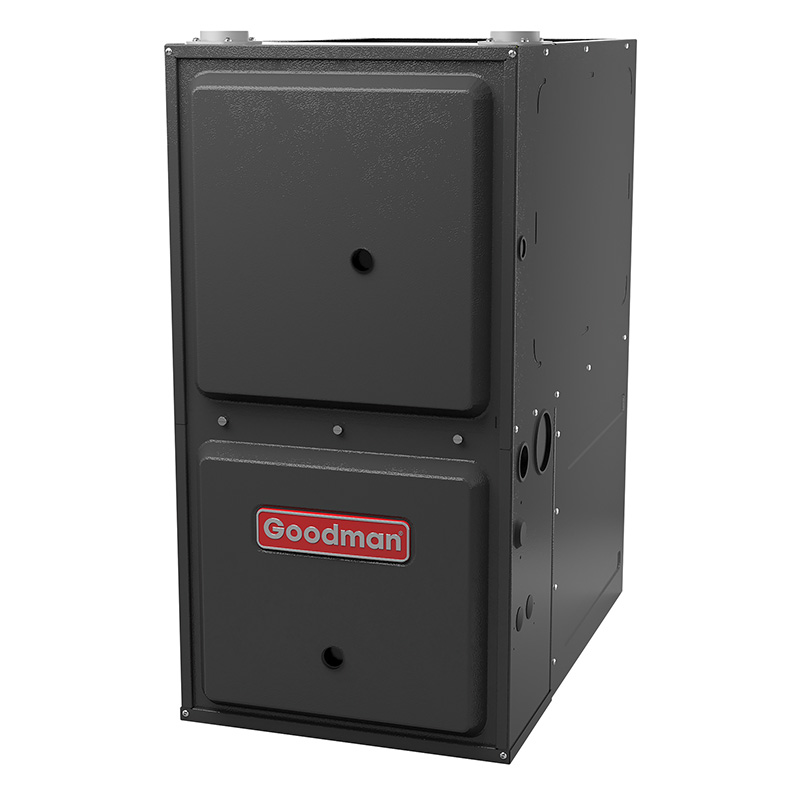
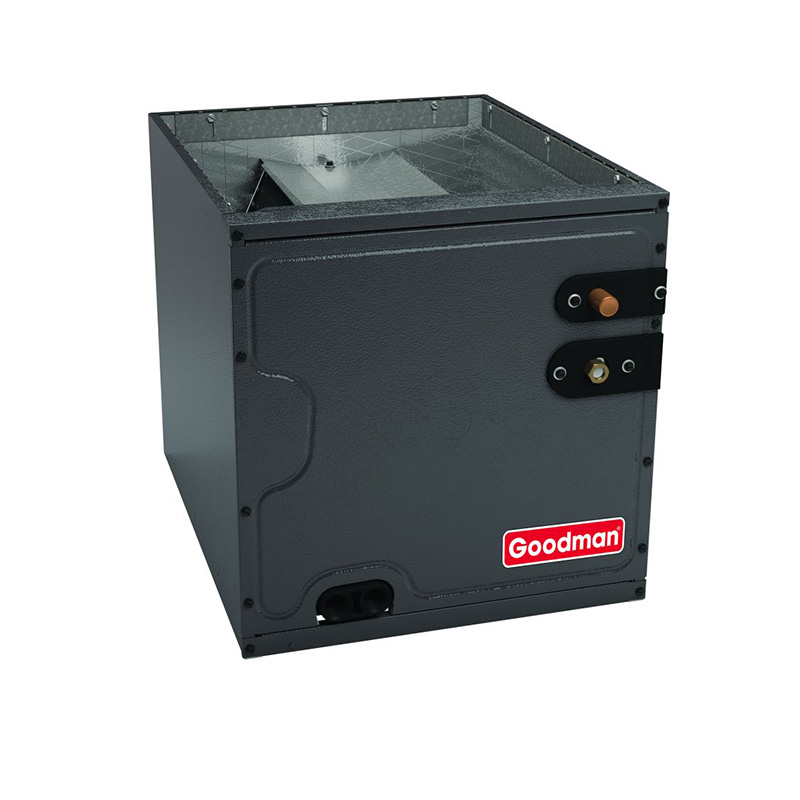
The Goodman 3.5-ton dual fuel hybrid heat pump system pairs a 15.2 SEER2 heat pump with an 80,000 BTU, 80% AFUE upflow gas furnace to give you two heating sources in one setup. The system automatically switches between electric heat pump operation and gas heat depending on outdoor temperatures, which is the core appeal of any dual fuel configuration: you get the cost efficiency of a heat pump when it is mild outside, and the raw heating power of gas when temperatures drop below the heat pump’s effective range. R-32 refrigerant is the newer, lower global-warming-potential alternative to R-410A, so this system is positioned for the current regulatory direction in refrigerant standards.
At 15.2 SEER2, this unit clears the federal minimum for most U.S. climate regions but sits in the entry-level tier of efficiency rather than the mid or high tier. The 80% AFUE furnace means 20 cents of every dollar in gas is lost as exhaust, which is the lowest efficiency class available for new equipment. That trade-off lowers the upfront price but raises long-term operating costs relative to a 95% or 96% AFUE furnace, particularly if you are in a colder climate where the gas side runs frequently. The upflow configuration requires the air handler to sit below the ductwork, which is the most common residential arrangement but means this unit is not suitable for homes needing downflow or horizontal installation without additional components.
This system suits mid-size homes in mixed climates where winters are cold enough to warrant a gas backup but mild enough that the heat pump carries most of the heating load for several months of the year. Buyers who prioritize keeping the initial installed cost down and are comfortable with the longer-term efficiency trade-offs of 80% AFUE will find this package competitive. Those who heat primarily with gas for most of winter should weigh whether stepping up to a 96% AFUE furnace makes more financial sense over a ten-year horizon.
This Goodman dual fuel system delivers a functional hybrid heating solution at a price point 15 to 25 percent below comparable Carrier, Trane, and Lennox packages, and the R-32 refrigerant and California ULNOx certification are genuine forward-looking features. The efficiency specs, however, are entry-level on both sides: 15.2 SEER2 and 80% AFUE leave meaningful operating cost savings on the table compared with higher-tier alternatives. Long-term value depends heavily on installation quality and whether you factor in Goodman's documented repair trends after year seven.
Overall score is the average of the five ratings above.
What we like
- Significantly lower purchase price than Carrier, Trane, or Lennox systems of similar size and efficiency
- Dual fuel setup reduces heating costs in mixed climates by running the heat pump when outdoor temperatures allow
- R-32 refrigerant aligns with current and near-future regulatory direction, avoiding the R-410A phase-out
- California Ultra-Low NOx certification means this furnace can be legally installed in California and other strict-emissions states
- Upflow design covers the majority of residential install situations without additional adaptation
Trade-offs
- 80% AFUE is the lowest furnace efficiency tier available; homes with significant heating loads will pay more in gas bills annually versus 95-plus percent AFUE alternatives
- 15.2 SEER2 is an entry-level cooling efficiency rating, leaving energy savings potential on the table compared with 17 or 18 SEER2 systems
- Goodman's documented failure modes include dual-run capacitor failures, evaporator coil leaks, and compressor lifespans averaging 10 to 14 years versus 15 to 20 years for premium brands
- ConsumerAffairs feedback averages around 2.5 out of 5, with recurring complaints about rising repair costs after roughly year seven
What homeowners and pros say about Goodman
Homeowners who have purchased Goodman equipment tend to split along a familiar line. On Google dealer reviews, where the audience skews toward buyers who had a straightforward experience, Goodman locations average around 3.8 out of 5 stars across several hundred reviews per location, and affordability is the praise that comes up most consistently. On ConsumerAffairs, a channel that disproportionately captures frustrated owners, Goodman sits at roughly 2.5 out of 5, with repair costs after about year seven as the recurring complaint thread. For this dual fuel system specifically, the documented failure modes worth knowing are dual-run capacitor failure, which is the most commonly reported issue and is generally a low-cost fix in the 300 to 600 dollar range; evaporator coil leaks, which show up in a meaningful share of longer-term owner reports; and compressor longevity, which in Goodman equipment tends to average 10 to 14 years rather than the 15 to 20 years associated with premium brands. A smaller number of owners have reported refrigerant leaks within the first year, a problem that technicians usually attribute to installation or initial charge quality rather than a manufacturing defect.
HVAC professionals are generally measured about Goodman. The most consistent point technicians make is that installation quality drives the outcome more than the brand name on the cabinet, and that is especially true for a dual fuel setup, where the balance point calibration, refrigerant charge, and thermostat configuration all need to be done correctly for the system to switch fuels at the right time and run efficiently. Pros who work on Goodman equipment regularly note that the capacitor failures are a routine service call and not a reason to avoid the brand, but that coil leaks and early compressor wear are the situations where the initial savings can erode. The consensus is that this system delivers honest value for buyers who understand the reliability trade-offs, budget for maintenance, and use a qualified installer rather than cutting corners on labor to stretch the equipment savings further.
Sources: ConsumerAffairs Goodman owner reviews, AHRI Directory of Certified Product Performance, U.S. DOE appliance and equipment efficiency standards, Goodman product specification sheets.
What it costs to run
At 15.2 SEER2, cooling this 3.5-ton system for a typical 1200-hour cooling season at the U.S. average electricity rate of $0.17/kWh works out to roughly $564 per year in cooling, about $75 less per year than a minimum-efficiency 13.4 SEER2 unit of the same size. Your real cost depends on your climate and local rate.
Method: (42,000 BTU/hr ÷ 15.2 SEER2) × 1200 hours ÷ 1000 × $0.17/kWh. Rate source: U.S. EIA average; cooling hours: moderate-climate estimate.
How it compares
| Brand | Comparable model | SEER2 | Stage | Price position |
|---|---|---|---|---|
| Goodman | 3.5-Ton Dual Fuel Hybrid Heat Pump with 80,000 BTU 80% AFUE ULNOx Upflow Furnace (R-32) | 15.2 | Single-stage | Value pick |
| Carrier | Performance Series Dual Fuel System (25HCB / 59SP5) | 15.2 | Single-stage | Typically 15 to 25 percent more than the Goodman equivalent |
| Trane | XR15 Dual Fuel System (4TWR / S8B1) | 15.0 to 15.5 | Single-stage | Typically 15 to 25 percent more than the Goodman equivalent |
| Lennox | Merit Series Dual Fuel System (14HPX / ML180UH) | 15.0 to 15.5 | Single-stage | Typically 15 to 25 percent more than the Goodman equivalent |
Competitor rows are comparable single-stage units at similar efficiency; price is relative position, not a quote.
Questions about this system
At what outdoor temperature does the system switch from heat pump to gas furnace?
The switchover point, often called the balance point, is typically set between 35 and 40 degrees Fahrenheit by the installer using a dual fuel thermostat. Your HVAC technician should calculate the balance point for your specific home's heat load and local utility rates so the system switches at the temperature where gas becomes cheaper or more effective than the heat pump.
Will this system work in California given the Ultra-Low NOx designation?
Yes. The California Ultra-Low NOx certification on the furnace means it meets the South Coast AQMD and other California air district requirements for NOx emissions. If you are in California or another state adopting similar standards, this furnace is legally installable where standard furnaces are not.
What is covered under the Goodman warranty and for how long?
Goodman offers a limited lifetime compressor warranty and a 10-year parts warranty on registered units when installed by a licensed contractor. Registration must typically be completed within 60 days of installation to activate the full coverage; unregistered units default to shorter terms. Read the specific warranty document for this model because exclusions, including improper installation, apply.
How does R-32 refrigerant affect service costs compared with R-410A?
R-32 requires technicians to be certified to handle it, which is similar to the existing requirements for R-410A. Parts and refrigerant availability are growing as more manufacturers adopt R-32, but it is not yet as universally stocked as R-410A. In the near term, a small number of service shops may charge more or need to order R-32 rather than having it on hand.
What are the most common repairs to budget for with this Goodman system?
Goodman's documented failure points include dual-run capacitors, which typically fail in the 300 to 600 dollar repair range and are the most frequently reported issue; evaporator coil leaks, which appear in a meaningful share of owner reports and carry a higher repair cost; and compressor replacement, which tends to be needed earlier than with premium brands, averaging 10 to 14 years. A small number of owners have also reported refrigerant leaks within the first year, generally linked to installation or initial charge issues rather than the equipment itself.
Specifications
| Cooling capacity | 3.5 Ton |
| Efficiency | 15.2 SEER2 |
| Furnace output | 80000 BTU |
| Furnace efficiency | 80% AFUE |
| Configuration | Upflow |
| Refrigerant | R-32 |