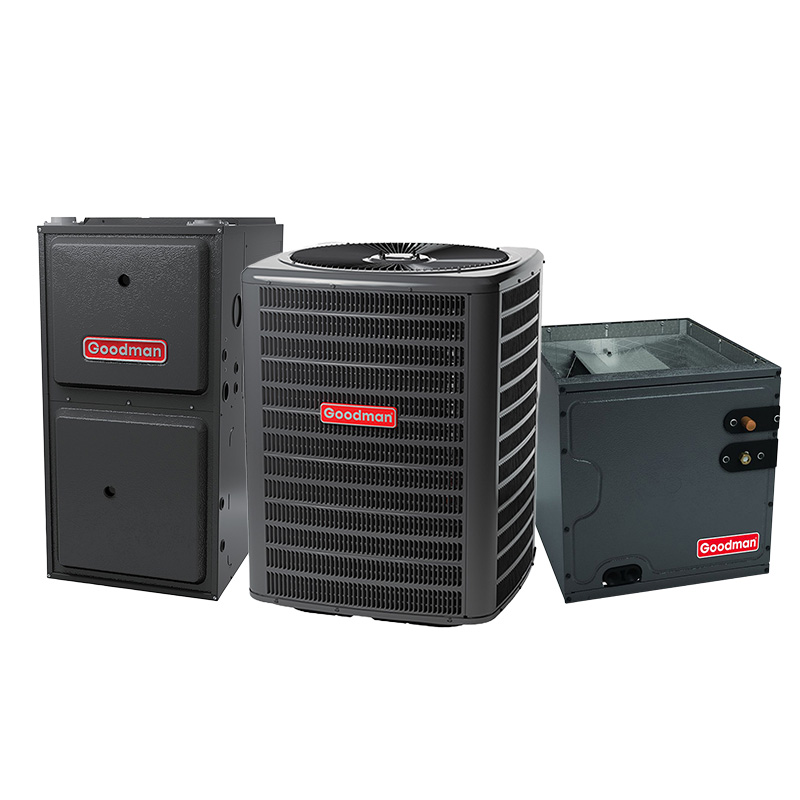
Goodman 3.5 Ton Dual Fuel Hybrid Heat Pump System – 80000 BTU Gas Furnace, 96% AFUE, 15.2 SEER2, Upflow, R32
View on AC Direct see your lowest price →Check current price on AC Direct →
Key features
- Dual fuel hybrid design automatically switches between heat pump and 96% AFUE gas furnace based on operating conditions
- 15.2 SEER2 cooling efficiency meets current federal minimum standards with moderate energy savings
- R-32 refrigerant with lower global warming potential, compliant with EPA refrigerant transition regulations
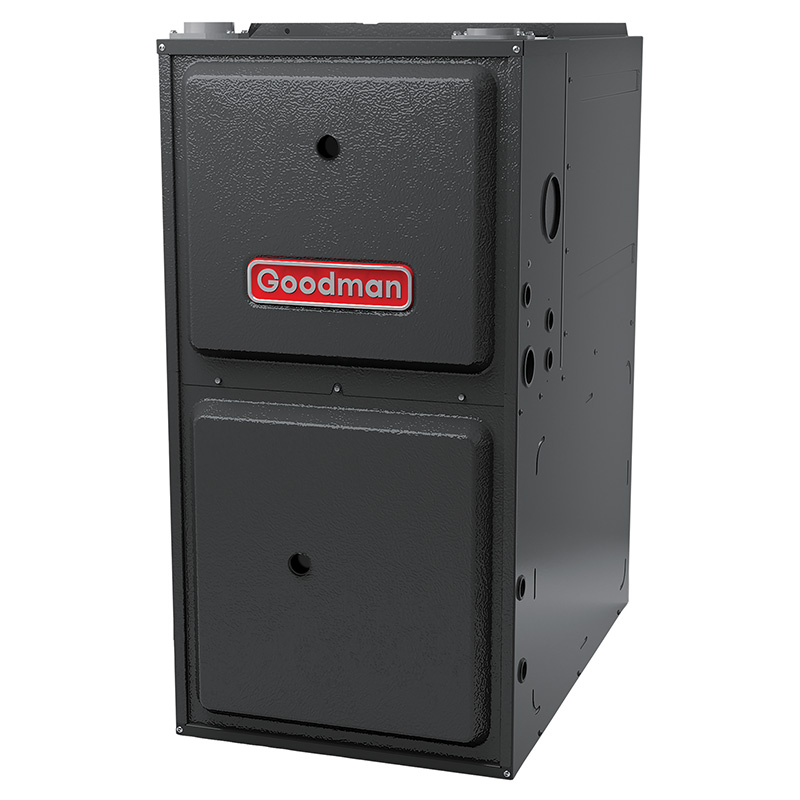
- 80,000 BTU upflow furnace configuration for basement or closet installations with overhead duct systems
- 3.5-ton capacity suited to homes in the 1,800 to 2,400 square foot range depending on load calculations
- 96% AFUE furnace qualifies for federal tax credits under current Inflation Reduction Act efficiency thresholds
About this system
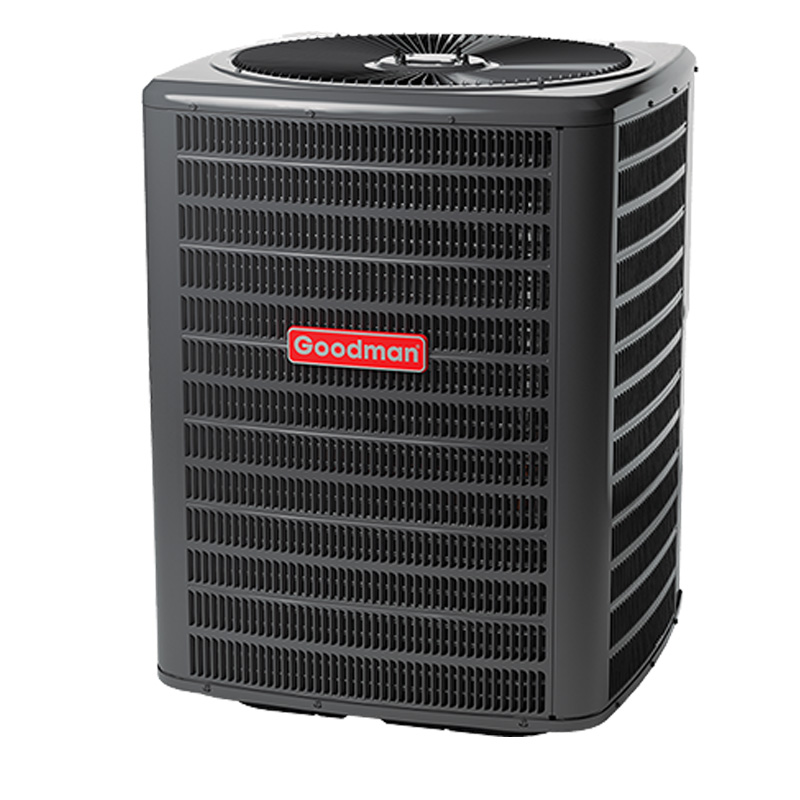
The Goodman 3.5-ton dual fuel hybrid system pairs an 80,000 BTU upflow gas furnace rated at 96% AFUE with a 15.2 SEER2 heat pump that runs on R-32 refrigerant. The hybrid setup is the main story here: the system automatically switches between electric heat pump operation and gas furnace heating depending on which fuel is cheaper or more effective at a given outdoor temperature. For homeowners in mixed climates who pay variable electricity and gas rates, that fuel flexibility can meaningfully reduce seasonal heating bills compared to a gas-only or heat-pump-only system.
At 3.5 tons, this unit is sized for homes in roughly the 1,800 to 2,400 square foot range, depending on insulation, ceiling height, and local climate. The 96% AFUE furnace means 96 cents of every dollar spent on gas becomes usable heat, which sits at the upper end of the high-efficiency tier and qualifies the furnace component for federal tax credits under current Inflation Reduction Act guidelines. The upflow configuration directs conditioned air upward into the duct system, making it the right fit for basement or closet installations where supply ducts run overhead. R-32 refrigerant carries a lower global warming potential than the R-410A it is replacing across the industry, so this system is compliant with current and near-future EPA phasedown rules.
This is a value-positioned system, priced noticeably below comparable Carrier, Trane, and Lennox dual fuel packages. That lower entry cost comes with real trade-offs in long-term component durability that prospective buyers should weigh carefully, particularly if they plan to stay in the home for fifteen or more years.
The Goodman 3.5-ton dual fuel hybrid delivers a genuinely useful heating strategy at a price point that undercuts premium brands by 15 to 25 percent, and the 96% AFUE furnace is a legitimate efficiency highlight. The trade-off is a documented history of component failures after year seven and compressor longevity that typically trails Trane and Carrier equipment by several years, so the true cost of ownership depends heavily on how long you plan to stay in the home and how well the system is installed.
Overall score is the average of the five ratings above.
What we like
- Hybrid fuel switching provides real-world heating cost flexibility in mixed climates with variable gas and electricity rates
- 96% AFUE furnace is a top-tier efficiency rating that can offset the purchase price through lower gas bills over time
- R-32 refrigerant positions this system for regulatory compliance well into the next decade
- Entry price runs 15 to 25 percent below comparable Carrier, Trane, and Lennox dual fuel systems
- Upflow configuration is a straightforward fit for the most common residential duct layouts
Trade-offs
- Dual-run capacitor failures are the most commonly reported repair, typically appearing after year five and costing $300 to $600 per incident
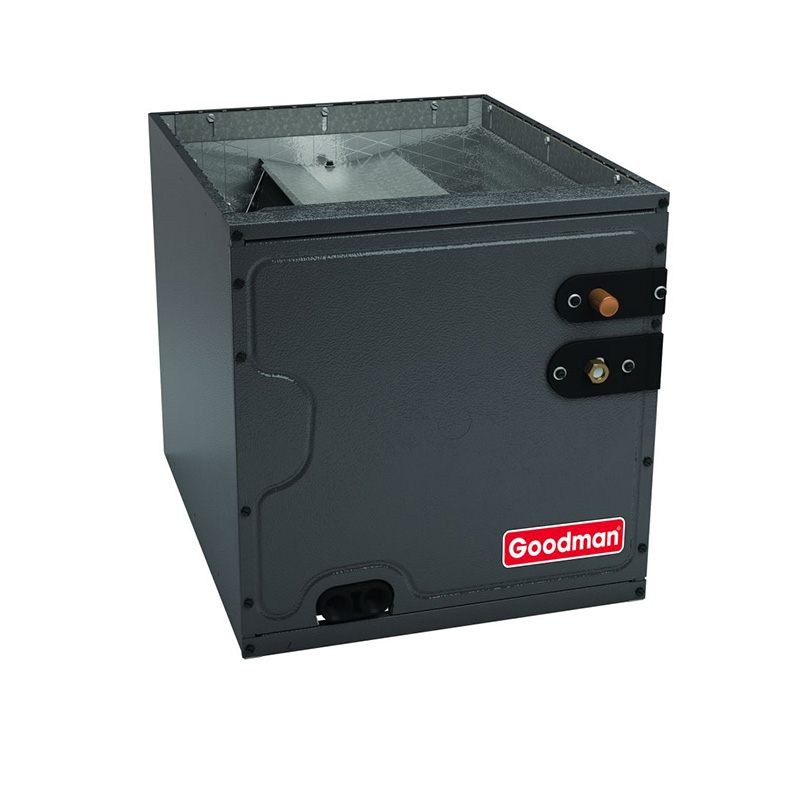
- Evaporator coil leaks show up in a meaningful share of owner reviews, a repair that is disruptive and expensive
- Compressor lifespan averages 10 to 14 years compared to 15 to 20 years in premium-brand equipment, a real gap for long-term owners
- A minority of owners report refrigerant leaks within the first year, which points to install quality as a critical variable
What homeowners and pros say about Goodman
Owners and installers who discuss Goodman equipment online tend to land in two distinct camps, and that split shows up clearly in the ratings. On ConsumerAffairs, Goodman scores around 2.5 out of 5, a platform where frustrated owners are far more likely to post than satisfied ones, and the recurring complaint is repair costs that start climbing after roughly year seven. Google dealer reviews tell a more balanced story, averaging around 3.8 out of 5 across hundreds of reviews per location, where affordability is the most consistent praise. For this dual fuel hybrid specifically, the feedback pattern likely holds: buyers who got a careful installation and budgeted for a repair or two over the decade report solid satisfaction, while those who chose the cheapest installer to go with the cheapest equipment tend to encounter the documented failure modes sooner.
The failure modes worth knowing about with Goodman are specific and consistent. Dual-run capacitors are the most commonly cited repair, generally a low-drama fix in the $300 to $600 range, but one that shows up more often than owners expect. Evaporator coil leaks appear in a meaningful share of reviews and are a more serious and costly issue. Compressor lifespan is documented to average 10 to 14 years, a real gap compared to the 15 to 20 years that premium brands like Trane and Carrier tend to deliver. And a minority of first-year owners report refrigerant leaks, which experienced technicians typically attribute to installation errors rather than factory defects. None of this makes Goodman a bad choice at this price point, but it does mean that installer selection and a realistic repair budget are not optional parts of the ownership plan.
Sources: ConsumerAffairs Goodman owner reviews, AHRI Directory of Certified Product Performance, U.S. DOE appliance and equipment efficiency standards, Goodman product specification sheets.
What it costs to run
At 15.2 SEER2, cooling this 3.5-ton system for a typical 1200-hour cooling season at the U.S. average electricity rate of $0.17/kWh works out to roughly $564 per year in cooling, about $75 less per year than a minimum-efficiency 13.4 SEER2 unit of the same size. Your real cost depends on your climate and local rate.
Method: (42,000 BTU/hr ÷ 15.2 SEER2) × 1200 hours ÷ 1000 × $0.17/kWh. Rate source: U.S. EIA average; cooling hours: moderate-climate estimate.
How it compares
| Brand | Comparable model | SEER2 | Stage | Price position |
|---|---|---|---|---|
| Goodman | 3.5-Ton Dual Fuel Hybrid (80k BTU, 96% AFUE, 15.2 SEER2, R-32) | 15.2 | Single-stage | Value pick |
| Carrier | Performance Series Dual Fuel (25HCB / 58TP pairing) | 15.2 | Single-stage | Typically 15 to 25 percent more than Goodman |
| Trane | XR15 Dual Fuel (XR15 heat pump / S9X1 furnace pairing) | 15.0–15.5 | Single-stage | Typically 15 to 25 percent more than Goodman |
| Lennox | Merit Series Dual Fuel (ML15XP1 / ML196 pairing) | 15.0–15.5 | Single-stage | Typically 15 to 25 percent more than Goodman |
Competitor rows are comparable single-stage units at similar efficiency; price is relative position, not a quote.
Questions about this system
At what outdoor temperature does the system switch from the heat pump to the gas furnace?
The switchover point, often called the balance point, is typically set between 30 and 40 degrees Fahrenheit and is programmed by the installer during setup using a compatible dual fuel thermostat. Getting this setting calibrated correctly to your local climate and utility rates is one of the most important parts of the installation and directly affects how much you save on heating costs.
Does the 96% AFUE furnace qualify for the federal tax credit?
Yes, under current Inflation Reduction Act rules a gas furnace must meet or exceed 97% AFUE in most of the country to qualify for the $600 federal tax credit, but Northern climate zone homes may qualify at 96% AFUE. You should confirm your specific climate zone eligibility with a tax professional or the ENERGY STAR database before purchasing with the credit in mind.
What does R-32 refrigerant mean for my service costs compared to the older R-410A systems?
R-32 has a lower global warming potential than R-410A and is part of the industry's EPA-mandated transition away from older refrigerants, so parts and refrigerant supply should remain widely available for the foreseeable future. Technician familiarity with R-32 is growing quickly, and handling procedures are well established, so service costs are not expected to differ significantly from R-410A systems in most markets.
How important is the installer choice for a Goodman system specifically?
It is critical. Goodman's own track record and technician feedback consistently identify installation quality as the single biggest factor in how long the equipment lasts and how reliably it runs. The documented first-year refrigerant leak complaints, in particular, are most often traced to improper charging or connection errors at installation rather than factory defects, so choosing an experienced, licensed contractor matters more with Goodman than it might with a premium brand.
What are the most likely repairs I should budget for over the first ten years?
Dual-run capacitor replacement is the most commonly reported repair for Goodman equipment, usually costing $300 to $600 and considered a straightforward fix. Evaporator coil leaks and refrigerant issues are documented in owner reviews and can run significantly higher. Setting aside a repair reserve of $500 to $1,000 after year five is a reasonable approach given the brand's track record.
Specifications
| Cooling capacity | 3.5 Ton |
| Efficiency | 15.2 SEER2 |
| Furnace output | 80000 BTU |
| Furnace efficiency | 96% AFUE |
| Configuration | Upflow |
| Refrigerant | R-32 |