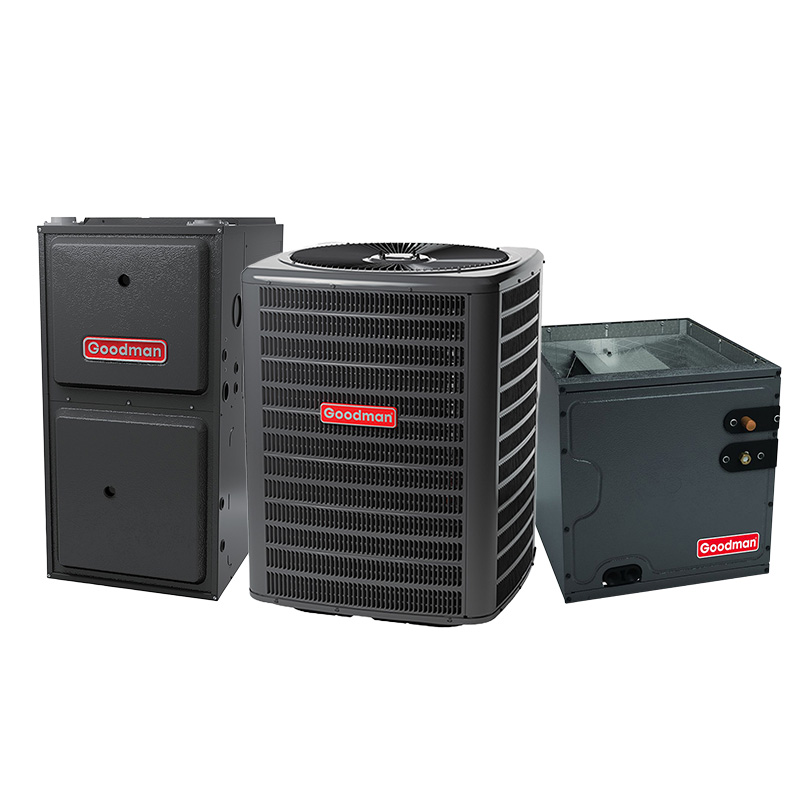
Goodman 3.5 Ton Dual Fuel Hybrid Heat Pump System – 80000 BTU Gas Furnace, 96% AFUE, 15.2 SEER2, Upflow, R32
View on AC Direct see your lowest price →Check current price on AC Direct →
Key features
- Dual-fuel hybrid design automatically switches between heat pump and 96% AFUE gas furnace based on outdoor temperature
- 15.2 SEER2 cooling efficiency meets federal minimum standards with headroom and may qualify for energy efficiency tax credits
- 80,000 BTU gas furnace output suited for heating loads in medium to large homes
- R-32 refrigerant with lower global warming potential than R-410A; requires R-32 compatible service equipment
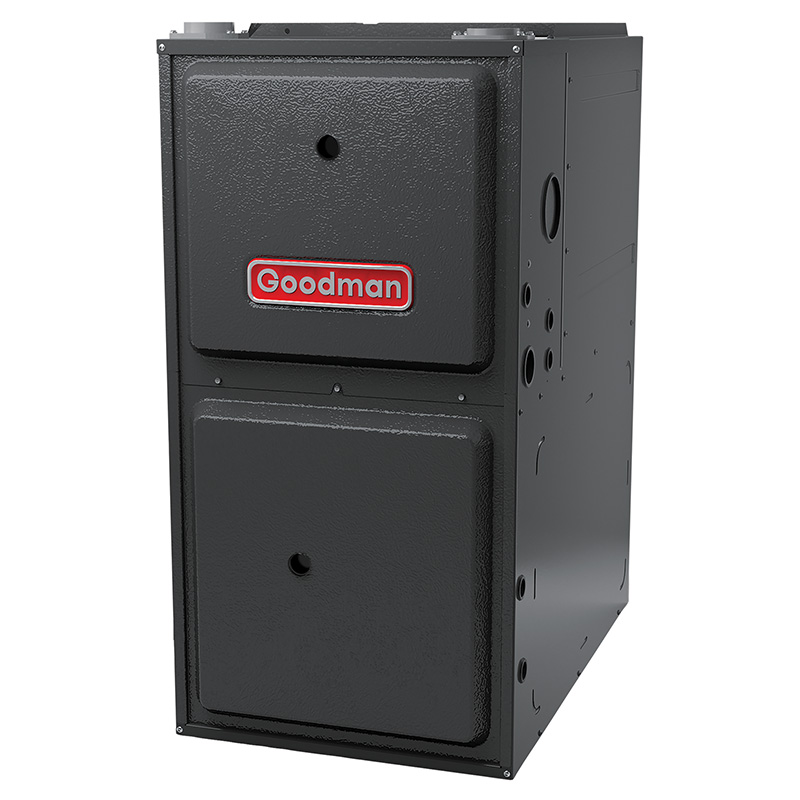
- Upflow configuration for basement or closet installs with overhead duct systems
- 3.5-ton capacity sized for approximately 1,800 to 2,400 square feet depending on local climate and building envelope
About this system
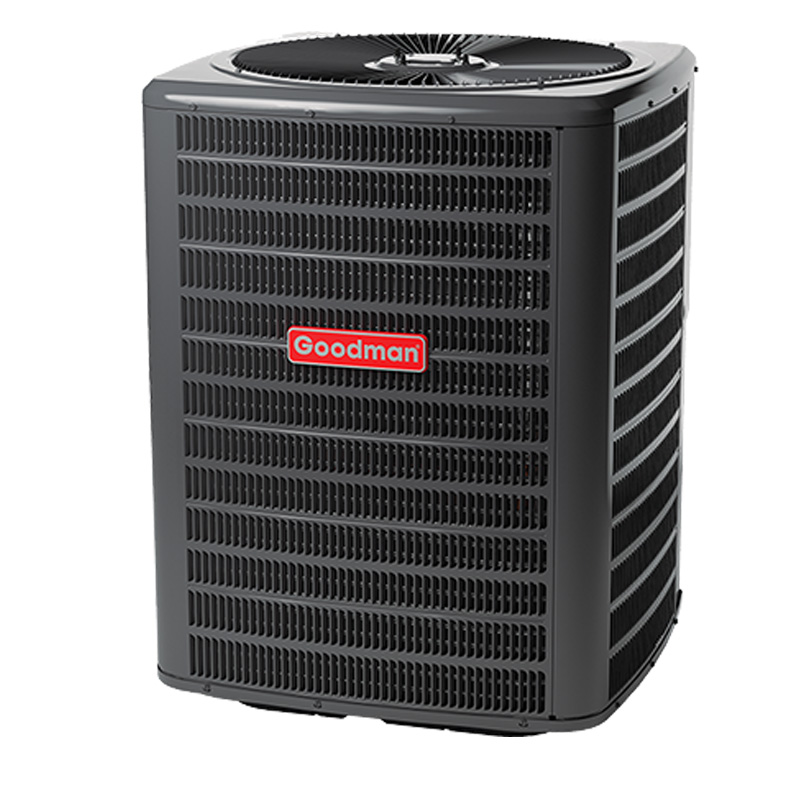
The Goodman 3.5-ton Dual Fuel Hybrid Heat Pump System pairs a 15.2 SEER2 heat pump with an 80,000 BTU, 96% AFUE upflow gas furnace, giving you two heat sources that hand off automatically depending on outdoor temperature. When it is mild outside, the heat pump handles heating on electricity alone. When temperatures drop to the point where the heat pump struggles to extract useful heat from cold air, the gas furnace takes over. That switchover strategy can meaningfully reduce annual fuel costs compared to running a straight gas system year-round, and it is especially effective in climates that see extended stretches of temperatures between roughly 25 and 45 degrees Fahrenheit.
At 15.2 SEER2 the cooling efficiency clears the federal minimum comfortably and qualifies this system for consideration under applicable energy efficiency tax credits, though you should confirm eligibility with a tax professional for your situation. The 96% AFUE furnace keeps very little heat from going out the flue, which is near the top of what non-condensing designs offer. R-32 refrigerant has a lower global warming potential than the older R-410A it replaces, and it runs at slightly lower pressures, which affects the tooling your installer will need to have on hand. The upflow configuration directs conditioned air upward into ductwork above the unit, making it the right fit for basement or closet installs where the duct system runs through the floors and ceilings above.
This is a 3.5-ton system, appropriate for homes in the roughly 1,800 to 2,400 square foot range depending on local climate, insulation quality, and window load. Because Goodman prices typically run 15 to 25 percent below comparable Trane, Lennox, and Carrier equipment, the upfront number looks attractive, but the total-cost picture depends heavily on installation quality and whether your installer has experience commissioning dual-fuel hybrid setups, which are more involved than a straight heat pump or straight gas furnace install.
This Goodman dual-fuel hybrid system delivers a genuinely capable efficiency combination at a price point well below premium brands, making it a reasonable choice for cost-conscious buyers in mixed climates who want the fuel-cost flexibility of a hybrid setup. The 96% AFUE furnace and 15.2 SEER2 rating are real performance specs, not marketing padding. The trade-off is that Goodman's track record shows more variability in long-term reliability than Carrier, Trane, or Lennox, and a hybrid system's added complexity means installation quality matters even more here than it does with a conventional split system.
Overall score is the average of the five ratings above.
What we like
- Upfront price runs 15 to 25 percent below comparable Carrier, Trane, and Lennox dual-fuel systems
- 96% AFUE furnace keeps fuel waste extremely low during gas-heat operation
- Automatic fuel-source switching can reduce annual energy costs in climates with variable winters
- R-32 refrigerant is more environmentally favorable than R-410A and is increasingly available through certified technicians
- 15.2 SEER2 efficiency clears the federal regional minimum and may support tax credit eligibility
Trade-offs
- Compressor lifespan averages 10 to 14 years versus 15 to 20 years for premium-brand compressors, raising long-term replacement cost risk
- Dual-run capacitors are the most frequently reported failure point, typically costing 300 to 600 dollars to repair, and evaporator coil leaks appear in a meaningful share of owner reports
- A minority of owners have reported refrigerant leaks within the first year, most often traced to installation or initial charge issues rather than the equipment itself
- Dual-fuel hybrid commissioning is more involved than a straight heat pump or furnace install, and errors in setup can undermine both efficiency and reliability regardless of equipment quality
What homeowners and pros say about Goodman
Homeowners who have lived with Goodman equipment for several years tend to land in two camps. Those who had a careful, experienced installer often report years of trouble-free operation and point to the lower purchase price as money they are glad they kept. Those who ran into problems more frequently describe frustration with repair costs that began climbing after roughly year 7, a pattern consistent with Goodman’s ConsumerAffairs rating of about 2.5 out of 5, a channel where complaints dominate the sample. Google dealer reviews tell a somewhat more balanced story, averaging around 3.8 out of 5 across locations, where the most consistent praise is that the equipment delivered reliable cooling and heating at a price that made the project financially workable.
HVAC technicians who service Goodman equipment regularly point to a few recurring issues worth knowing before you commit. Dual-run capacitors are the most commonly reported failure point across the Goodman line, typically a low-drama repair in the 300 to 600 dollar range when caught promptly. Evaporator coil leaks show up in a meaningful share of owner reports and are a more disruptive fix. Compressor longevity tends to fall in the 10 to 14 year range rather than the 15 to 20 years associated with premium brands, which factors into lifetime cost calculations. A smaller number of owners have reported refrigerant leaks within the first year, and technicians generally attribute those to installation or initial charge problems rather than a flaw in the unit itself. For a dual-fuel hybrid system like this one, where commissioning involves programming a balance point and verifying two separate heat sources work in coordination, the quality of the installer is not a minor variable. It is arguably the most important factor in how this equipment performs over its life.
Sources: ConsumerAffairs Goodman owner reviews, AHRI Directory of Certified Product Performance, U.S. DOE appliance and equipment efficiency standards, Goodman product specification sheets.
What it costs to run
At 15.2 SEER2, cooling this 3.5-ton system for a typical 1200-hour cooling season at the U.S. average electricity rate of $0.17/kWh works out to roughly $564 per year in cooling, about $75 less per year than a minimum-efficiency 13.4 SEER2 unit of the same size. Your real cost depends on your climate and local rate.
Method: (42,000 BTU/hr ÷ 15.2 SEER2) × 1200 hours ÷ 1000 × $0.17/kWh. Rate source: U.S. EIA average; cooling hours: moderate-climate estimate.
How it compares
| Brand | Comparable model | SEER2 | Stage | Price position |
|---|---|---|---|---|
| Goodman | 3.5 Ton Dual Fuel Hybrid 96% AFUE / 15.2 SEER2 Upflow R-32 | 15.2 | Single-stage | Value pick |
| Carrier | Performance Series Dual Fuel (25HCB / 59SP8 pairing) | 15 to 16 | Single-stage | Typically 15 to 25 percent more than this Goodman system |
| Trane | XR15 Heat Pump with S8X1 Gas Furnace dual-fuel pairing | 15 to 15.6 | Single-stage | Typically 15 to 25 percent more than this Goodman system |
| Lennox | Merit Series ML15XP1 Heat Pump with ML196E Gas Furnace dual-fuel pairing | 15 to 15.5 | Single-stage | Typically 15 to 25 percent more than this Goodman system |
Competitor rows are comparable single-stage units at similar efficiency; price is relative position, not a quote.
Questions about this system
How does the system decide when to switch from the heat pump to the gas furnace?
The thermostat or control board uses a pre-set outdoor temperature threshold, often called the balance point, to trigger the switchover. Your installer programs this during commissioning based on your local climate and the efficiency curves of both units. Getting this balance point set correctly is important for both comfort and fuel cost savings.
Is R-32 refrigerant going to be harder to service than R-410A?
R-32 requires technicians to use R-32 compatible equipment and follow slightly different handling procedures because it is mildly flammable, but it is not an exotic refrigerant. Most established HVAC companies are already equipped to handle it. Confirm your service provider is certified for R-32 before scheduling any maintenance or repairs.
What is the realistic lifespan of this system and what should I budget for repairs?
Based on Goodman's documented track record, the compressor typically averages 10 to 14 years, which is shorter than the 15 to 20-year range associated with premium brands. Dual-run capacitor failures are the most commonly reported repair, usually running 300 to 600 dollars, and evaporator coil leaks have shown up in a meaningful portion of owner accounts. Setting aside a repair reserve after year 5 is a practical approach.
Will my existing ductwork and thermostat work with this dual-fuel system?
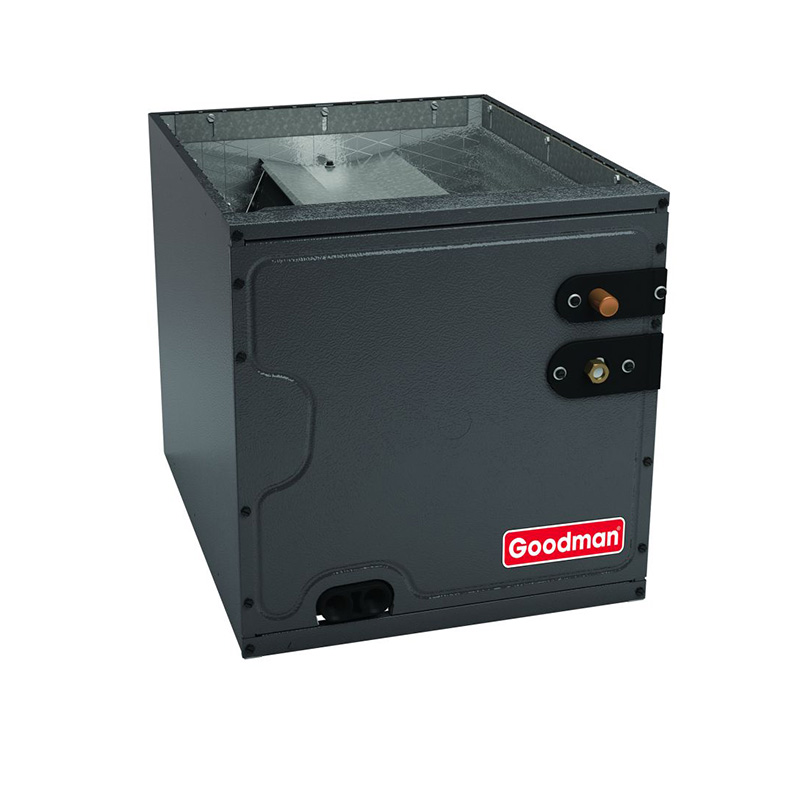
Upflow configuration requires ductwork above the air handler, so the physical layout needs to match your existing setup. Dual-fuel systems also require a thermostat that supports fossil fuel backup control and can send separate signals to the heat pump and furnace. Many standard thermostats do not support this without an upgrade, so confirm compatibility with your installer before purchase.
Does Goodman's warranty fully cover parts and labor if something fails in year one?
Goodman's registered warranty covers parts for an extended period, but labor is not covered at any point, which means a compressor or coil replacement in year two still carries a potentially significant service bill. Registration must be completed within a specific window after installation to activate the full warranty terms, so confirm that step is handled by your contractor.
Specifications
| Cooling capacity | 3.5 Ton |
| Efficiency | 15.2 SEER2 |
| Furnace output | 80000 BTU |
| Furnace efficiency | 96% AFUE |
| Configuration | Upflow |
| Refrigerant | R-32 |