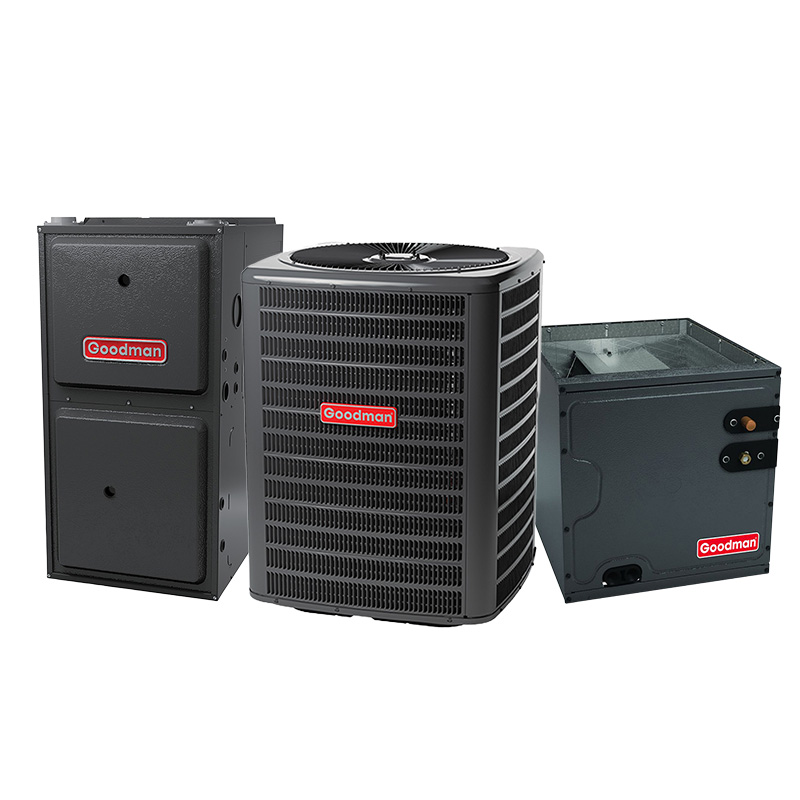
Goodman 3.5 Ton Dual Fuel Hybrid Heat Pump System – 80000 BTU Gas Furnace, Two Stage, 96% AFUE, Upflow, 15.2 SEER2, R32
View on AC Direct see your lowest price →Check current price on AC Direct →
Key features
- 15.2 SEER2 rated heat pump paired with 96% AFUE two-stage gas furnace for dual fuel hybrid operation
- 3.5-ton capacity sized for roughly 1,600 to 2,200 square feet with a proper load calculation
- Two-stage furnace operation runs at low fire for most conditions, improving comfort and humidity control
- R-32 refrigerant replaces R-410A with a significantly lower global warming potential
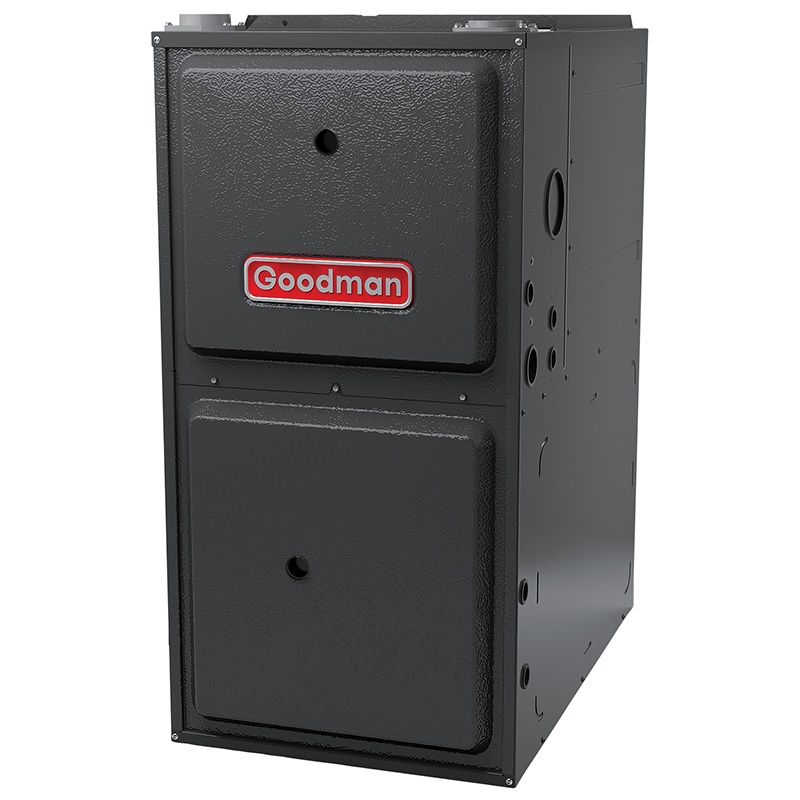
- Upflow furnace configuration suits homes with basement or closet installations and supply air routed overhead
- Automatic fuel switching selects heat pump or gas heat based on outdoor temperature balance point
About this system
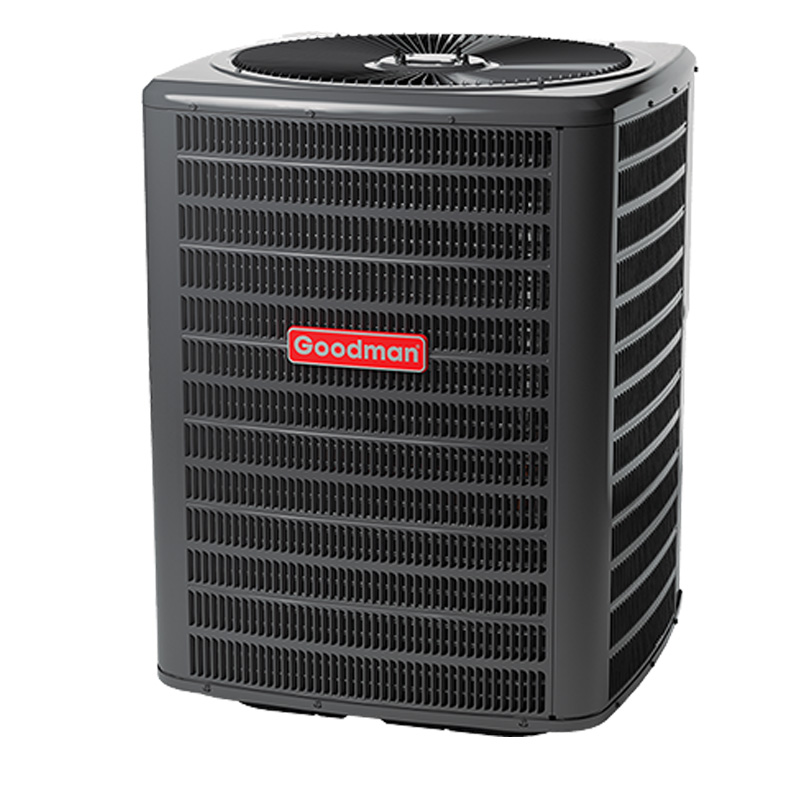
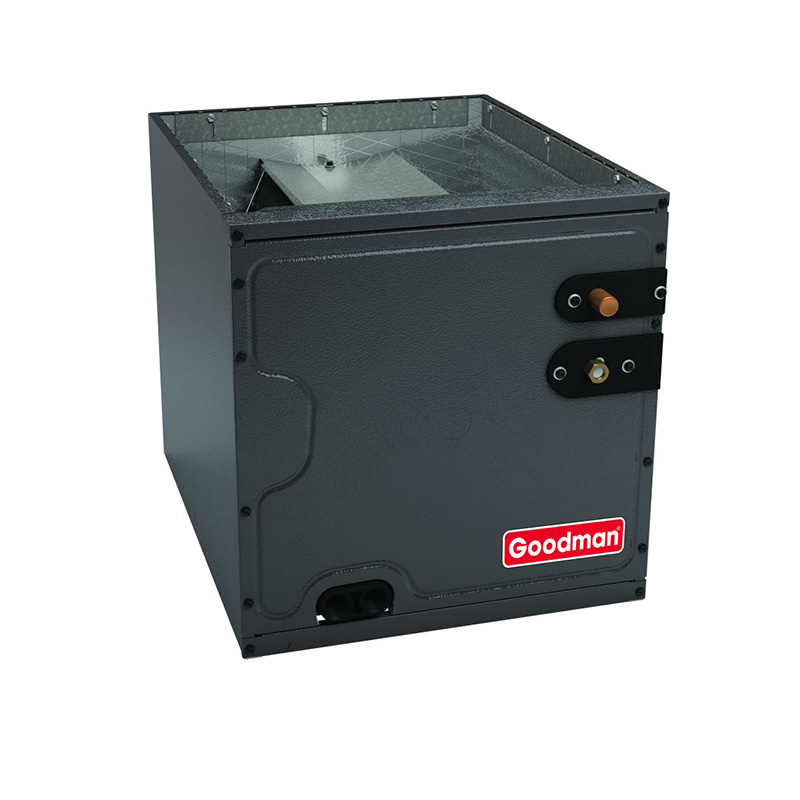
The Goodman 3.5-ton dual fuel hybrid heat pump system pairs a 15.2 SEER2 outdoor heat pump with an 80,000 BTU, 96% AFUE two-stage gas furnace in an upflow configuration. Dual fuel means the system automatically switches between the heat pump and the gas furnace depending on outdoor temperatures, letting the more efficient electric heat pump handle mild weather while the high-efficiency furnace takes over when temperatures drop below the balance point. For homes in climate zones 4 or 5 where winters are genuinely cold but not extreme, this combination can deliver meaningful annual energy savings compared to a straight gas system or a cold-climate heat pump running alone.
The R-32 refrigerant charge is a forward-looking spec. R-32 has a lower global warming potential than the R-410A it replaces and is already the standard in many international markets, so parts availability and technician familiarity are growing. Two-stage operation on the furnace side means the system runs at low fire most of the time, cycling up to full capacity only when loads demand it, which improves temperature consistency and humidity control versus a single-stage unit. At 3.5 tons, this system is sized for homes roughly in the 1,600 to 2,200 square foot range, though a proper Manual J load calculation by your installer should always confirm sizing before purchase.
Goodman positions this system as a budget-friendly entry into hybrid heat pump technology, typically priced 15 to 25 percent below comparable Trane, Carrier, or Lennox dual fuel packages. That price gap is real, and so are the trade-offs. Goodman’s track record shows above-average complaint rates after year 7, and actual longevity depends heavily on installation quality and ongoing maintenance. Buyers who prioritize upfront cost and are comfortable budgeting for potential mid-life repairs will find genuine value here; buyers who want a set-and-forget system with minimal lifetime friction should weigh the premium brands seriously.
This Goodman dual fuel system delivers genuine efficiency credentials and a real cost advantage over premium brands, making it a solid pick for budget-conscious buyers in mixed-climate regions. The two-stage furnace and 96% AFUE rating are strong specs for the price tier, but Goodman's documented repair history and install-sensitivity mean long-term satisfaction hinges more on who installs and services the system than on the equipment itself. Go in with a trusted installer and a maintenance plan, and the value proposition holds up; skip that due diligence and the savings can erode quickly.
Overall score is the average of the five ratings above.
What we like
- Priced 15 to 25 percent below comparable Trane, Lennox, and Carrier dual fuel systems
- 96% AFUE two-stage furnace is near the top of efficiency tiers for gas heat
- 15.2 SEER2 meets or exceeds minimum efficiency standards in most U.S. climate zones
- R-32 refrigerant is a more environmentally responsible choice than R-410A
- Dual fuel hybrid operation gives meaningful flexibility across varying seasonal temperatures
Trade-offs
- Dual-run capacitors are the most commonly reported failure, typically surfacing within the first decade and costing $300 to $600 to repair
- Evaporator coil leaks appear in a meaningful share of owner reports, a potentially costly repair outside warranty
- Compressor lifespan averages 10 to 14 years versus 15 to 20 years for premium brand compressors
- A minority of owners report refrigerant leaks in year one, generally traced to installation or initial charge issues rather than the equipment itself
What homeowners and pros say about Goodman
Homeowners who share feedback on Goodman equipment tend to sort into two distinct camps. On Google dealer reviews, where Goodman averages around 3.8 out of 5 stars across hundreds of location-level reviews, affordability is the most consistent praise: buyers who got a clean installation at a fair price report solid early-year performance and appreciate the lower upfront cost versus premium brands. On ConsumerAffairs, where the platform attracts a higher share of frustrated owners, Goodman scores closer to 2.5 out of 5, and the recurring pattern is repair costs that accelerate after roughly year 7. Neither data point tells the whole story, but together they suggest a system that starts well and ages unevenly depending on install quality and maintenance habits.
HVAC technicians who work on Goodman equipment regularly point to dual-run capacitors as the most common service call, a fix that usually runs $300 to $600 and is straightforward to complete. More concerning in the field are evaporator coil leaks, which appear in enough owner reports to be a recognized pattern and can be a substantially more expensive repair. Compressor longevity is another honest conversation: Goodman compressors tend to average 10 to 14 years in practice, compared to 15 to 20 years for Trane, Carrier, and Lennox compressors, a gap that matters when you are evaluating total cost of ownership rather than purchase price alone. A small minority of owners also report refrigerant leaks within the first year, which technicians generally attribute to installation or initial charge issues rather than a manufacturing defect. The consistent professional advice is that a Goodman system installed carefully by an experienced contractor, with a maintenance agreement and early attention to any charge or leak concerns, can deliver solid value over its service life.
Sources: ConsumerAffairs Goodman owner reviews, AHRI Directory of Certified Product Performance, U.S. DOE appliance and equipment efficiency standards, Goodman product specification sheets.
What it costs to run
At 15.2 SEER2, cooling this 3.5-ton system for a typical 1200-hour cooling season at the U.S. average electricity rate of $0.17/kWh works out to roughly $564 per year in cooling, about $75 less per year than a minimum-efficiency 13.4 SEER2 unit of the same size. Your real cost depends on your climate and local rate.
Method: (42,000 BTU/hr ÷ 15.2 SEER2) × 1200 hours ÷ 1000 × $0.17/kWh. Rate source: U.S. EIA average; cooling hours: moderate-climate estimate.
How it compares
| Brand | Comparable model | SEER2 | Stage | Price position |
|---|---|---|---|---|
| Goodman | 3.5 Ton Dual Fuel Hybrid – 80K BTU 96% AFUE Two-Stage Upflow / 15.2 SEER2 Heat Pump | 15.2 | Two-stage | Value pick |
| Carrier | Performance Series Dual Fuel – 59TP6 Furnace / 25HPB Heat Pump | 15.2 | Two-stage | Typically 15 to 25 percent more than Goodman |
| Trane | S8X2 Furnace / XR15 Heat Pump Dual Fuel Package | 15.0 | Two-stage | Typically 15 to 25 percent more than Goodman |
| Lennox | ML180 Furnace / HS15 Heat Pump Dual Fuel Package | 15.0 | Two-stage | Typically 15 to 25 percent more than Goodman |
Competitor rows are comparable single-stage units at similar efficiency; price is relative position, not a quote.
Questions about this system
What outdoor temperature does the system switch from heat pump to gas heat?
The switchover temperature, called the balance point, is typically set by your installer during commissioning and commonly falls between 30 and 40 degrees Fahrenheit, depending on your home's heat loss and local utility rates. Setting it correctly is one of the most important steps in a dual fuel installation and should not be skipped or left at a default.
Is R-32 refrigerant harder to find or more expensive to service than R-410A?
R-32 is mildly flammable (A2L classification), which means technicians must be certified to handle it and not all older service trucks stock it yet. Availability is growing rapidly as the industry transitions, but in some rural areas you may want to confirm your servicing contractor is already working with R-32 before you purchase.
Does the upflow configuration work with a side-discharge or horizontal installation?
No. Upflow means the furnace draws return air in at the bottom and discharges conditioned air upward into overhead ductwork. If your installation requires horizontal airflow or downflow discharge, you would need a different furnace configuration and this specific package would not be compatible.
What does Goodman's warranty cover on this system and for how long?
Goodman typically offers a 10-year parts limited warranty when the equipment is registered within 60 days of installation by a licensed contractor, along with a lifetime heat exchanger warranty on the furnace. The warranty does not cover labor, refrigerant, or consequential costs, so a service agreement with your installer is worth considering separately.
How much does it typically cost to fix the dual-run capacitor failure that Goodman owners commonly report?
Dual-run capacitor replacements on Goodman systems generally run $300 to $600 including labor, making them one of the less expensive HVAC service calls you can face. The part itself is inexpensive; most of the cost is the service visit. Having a service agreement in place can reduce the out-of-pocket impact if this occurs.
Specifications
| Cooling capacity | 3.5 Ton |
| Efficiency | 15.2 SEER2 |
| Furnace output | 80000 BTU |
| Furnace efficiency | 96% AFUE |
| Configuration | Upflow |
| Refrigerant | R-32 |