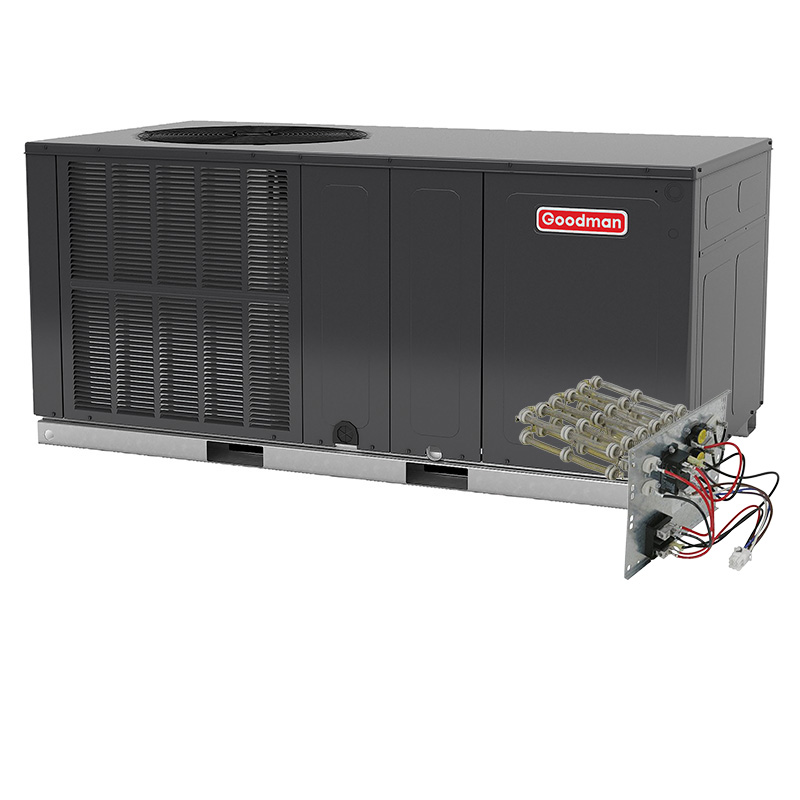
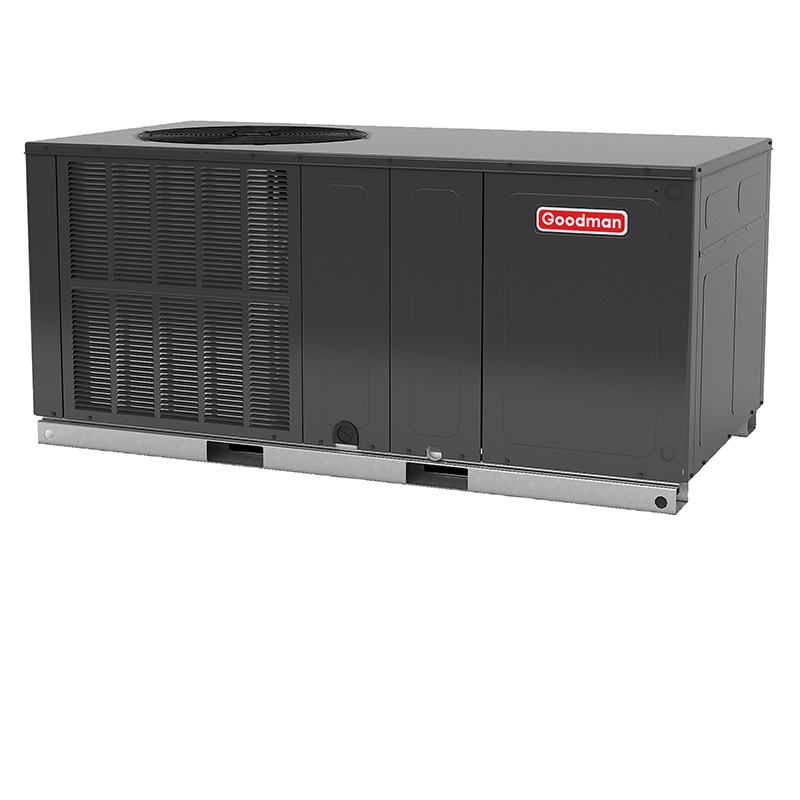
Goodman 3.5 Ton Package Unit Air Conditioning Cooling Only With Electric Heating | 13.4 SEER2 | Horizontal | R32
View on AC Direct see your lowest price →Check current price on AC Direct →
Key features
- 3.5-ton cooling capacity suited to approximately 1,600 to 2,100 sq ft depending on load conditions
- 13.4 SEER2 efficiency rating, meeting current federal minimums for most regions
- Horizontal discharge configuration designed for mobile homes and slab installations with side-entry ductwork
- R-32 refrigerant with lower global warming potential than R-410A and reduced charge weight
- Self-contained all-in-one cabinet houses cooling coil, compressor, blower, and electric heat strips
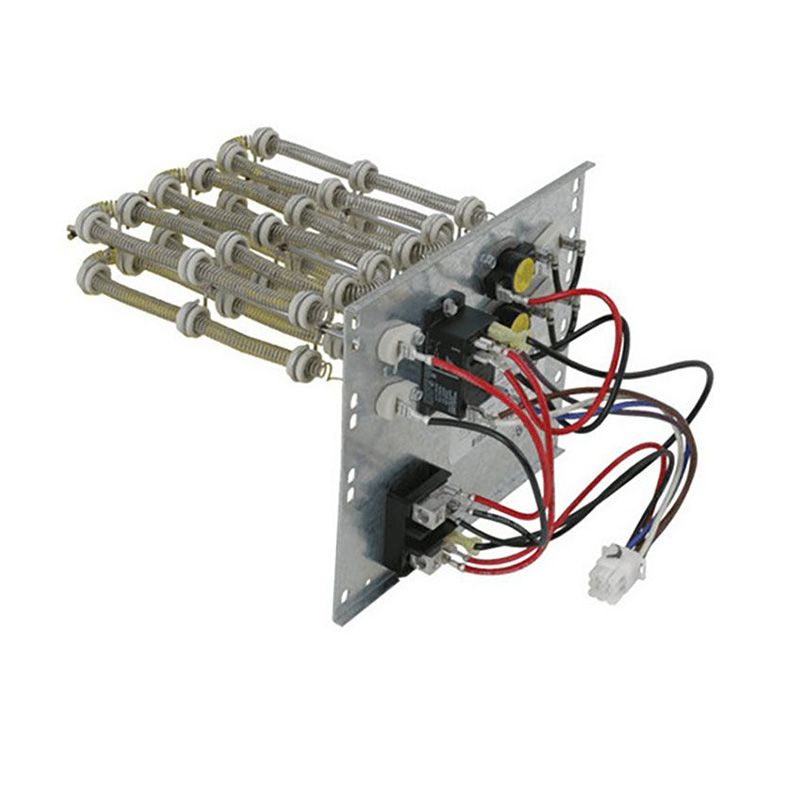
- Single-stage cooling operation with electric resistance heat, no gas line required
About this system
The Goodman 3.5-ton horizontal package unit covers roughly 1,600 to 2,100 square feet of cooling load depending on your climate, insulation, and ceiling height. As a self-contained package unit, the entire refrigerant circuit, blower, and electric heating elements are housed in one cabinet, making it the right choice for mobile homes, manufactured housing, and slab-on-grade or crawlspace homes where the ductwork connects directly to the unit from the side rather than the bottom. The horizontal discharge orientation is what makes it compatible with those installations, and swapping it for a standard split system is not straightforward once your duct layout is built for a package unit.
At 13.4 SEER2, this unit meets the current federal minimum efficiency standard for most U.S. climate zones and sits at the entry level of the efficiency range. That means operating costs will be higher than a 16 or 17 SEER2 system over the long run, though the lower purchase price can offset that gap for owners who plan a 7-to-10-year horizon. R-32 refrigerant is a meaningful upgrade over older R-410A systems: it has a lower global warming potential, requires less refrigerant charge by weight, and is becoming the industry standard going forward, so parts and service should remain readily available. The electric heat strips handle supplemental and backup heating without the need for a gas line, which suits all-electric homes but will carry higher monthly operating costs in cold climates compared to a heat pump or gas package unit.
This Goodman horizontal package unit is a practical, budget-conscious solution for mobile homes and manufactured housing that need a direct replacement without gas infrastructure. The 13.4 SEER2 rating keeps purchase costs down but will result in higher utility bills compared to mid-efficiency alternatives, and Goodman's track record means long-term reliability depends heavily on the quality of the installation and how consistently the unit is maintained. Buyers who prioritize upfront affordability over lifecycle cost and who have a reliable local HVAC technician will get the most from this system.
Overall score is the average of the five ratings above.
What we like
- Priced 15 to 25 percent below comparable Trane, Lennox, and Carrier package units, reducing initial outlay
- Horizontal orientation is a genuine fit for mobile home and manufactured housing duct layouts where alternatives are limited
- R-32 refrigerant is forward-looking, with lower environmental impact and growing technician familiarity
- All-electric design eliminates the need for a gas supply line, simplifying installation in all-electric homes
- Self-contained cabinet reduces refrigerant line set length and potential leak points compared to a split system
Trade-offs
- 13.4 SEER2 is the low end of available efficiency, so monthly cooling costs will be higher than mid- or high-efficiency alternatives over the system's life
- Single-stage operation runs at full capacity or off, which can create humidity control and comfort inconsistencies in shoulder seasons
- Goodman compressors average 10 to 14 years versus 15 to 20 for premium brands, meaning replacement may come sooner
- Documented failure modes including dual-run capacitor failures, evaporator coil leaks, and occasional first-year refrigerant leaks tied to install quality mean maintenance budgeting is important
What homeowners and pros say about Goodman
Homeowners shopping for a horizontal package unit replacement frequently cite Goodman’s price as the deciding factor, and that sentiment shows up clearly in Google dealer reviews, where the brand averages around 3.8 out of 5 across hundreds of reviews per location with affordability as the most repeated compliment. The picture on ConsumerAffairs is less flattering, where Goodman sits at roughly 2.5 out of 5 on a channel that skews toward dissatisfied customers. The pattern in those complaints is consistent: owners report that repair costs begin climbing noticeably after about year seven, often tied to the documented weak points of dual-run capacitor failures (a relatively affordable fix in the 300 to 600 dollar range), evaporator coil leaks, and compressor wear that arrives earlier than owners of premium-brand equipment experience.
HVAC technicians who work on Goodman equipment regularly tend to hold a pragmatic view: the equipment is not considered problematic to service, parts are widely stocked, and when the installation is done correctly with a proper refrigerant charge and airflow balance, many units run reliably for a decade or more. The concern technicians raise is that Goodman’s compressors average 10 to 14 years in real-world use compared to 15 to 20 years for Trane, Lennox, and Carrier, and a minority of early refrigerant leaks, usually tied to install or charge issues rather than manufacturing defects, can sour the ownership experience quickly. For this specific horizontal package unit, where the install environment of a mobile or manufactured home can introduce additional challenges like limited access and aging ductwork, finding an experienced local contractor matters as much as the brand choice itself.
Sources: ConsumerAffairs Goodman owner reviews, AHRI Directory of Certified Product Performance, U.S. DOE appliance and equipment efficiency standards, Goodman product specification sheets.
What it costs to run
At 13.4 SEER2, cooling this 3.5-ton system for a typical 1200-hour cooling season at the U.S. average electricity rate of $0.17/kWh works out to roughly $639 per year in cooling, about $0 less per year than a minimum-efficiency 13.4 SEER2 unit of the same size. Your real cost depends on your climate and local rate.
Method: (42,000 BTU/hr ÷ 13.4 SEER2) × 1200 hours ÷ 1000 × $0.17/kWh. Rate source: U.S. EIA average; cooling hours: moderate-climate estimate.
How it compares
| Brand | Comparable model | SEER2 | Stage | Price position |
|---|---|---|---|---|
| Goodman | 3.5-Ton Horizontal Package Unit (R-32) | 13.4 | Single-stage | Value pick |
| Carrier | WeatherMaster 50XC series | 13.4 to 14.0 | Single-stage | Typically 15 to 25 percent more than this Goodman |
| Trane | YCC series | 13.4 to 14.0 | Single-stage | Typically 15 to 25 percent more than this Goodman |
| Lennox | LRP14GE series | 14.0 | Single-stage | Typically 15 to 25 percent more than this Goodman |
Competitor rows are comparable single-stage units at similar efficiency; price is relative position, not a quote.
Questions about this system
Will this horizontal package unit fit my mobile home without modifying the existing duct opening?
Horizontal package units are built specifically for side-discharge duct connections common in mobile and manufactured homes, but cabinet width, duct collar dimensions, and curb or pad dimensions still vary by model. Always confirm the unit's physical dimensions and duct connection sizes match your existing opening before ordering, and have a technician verify electrical and duct compatibility on-site.
What does 13.4 SEER2 mean for my monthly electric bill compared to an older unit?
SEER2 is the updated efficiency testing standard, and 13.4 SEER2 is roughly equivalent to about 14 to 15 SEER under the older scale. If you are replacing a unit from the early 2000s rated at 10 SEER, you can expect a noticeable reduction in cooling energy use. If your existing unit is already a 14 or 15 SEER system, the savings will be modest.
What are the most common repairs I should budget for with a Goodman package unit?
Dual-run capacitor failure is the most frequently reported issue and typically costs between 300 and 600 dollars to repair. Evaporator coil leaks appear in a meaningful share of owner feedback and are more expensive to address. Keeping a maintenance contract or scheduling annual inspections can catch these issues before they become larger problems.
Does R-32 refrigerant require special handling or certification that my local technician may not have?
R-32 does require EPA Section 608 certification, which all licensed HVAC technicians should already hold. R-32 is mildly flammable (A2L classification), so technicians need to follow specific handling procedures, but the refrigerant is widely used in new residential equipment and most established HVAC shops are equipped for it. Confirm with your service contractor before scheduling work.
How does Goodman's warranty on this package unit compare to premium brands?
Goodman typically offers a 10-year parts limited warranty when the unit is registered within 60 days of installation, which is competitive on paper. However, warranty coverage requires using a licensed contractor for installation and service, and labor costs are not covered, meaning even a warranty repair can carry a significant out-of-pocket expense. Premium brands offer similar terms but their documented compressor and coil longevity means you may reach the warranty claim stage less often.
Specifications
| Cooling capacity | 3.5 Ton |
| Efficiency | 13.4 SEER2 |
| Configuration | Horizontal |
| Refrigerant | R-32 |