Goodman 3.5 Ton Package Unit Gas / Electric AC – 81% Efficiency 60000 BTU | 13.4 SEER2 Multi-Positional | R32
View on AC Direct see your lowest price →Check current price on AC Direct →
Key features
- 3.5-ton cooling capacity with 60,000 BTU gas heat in a single packaged cabinet
- 13.4 SEER2 cooling efficiency meets federal minimum standards for most climate zones
- 81% AFUE heating efficiency, typical for packaged gas/electric units with non-condensing heat exchangers
- R-32 refrigerant, a lower global-warming-potential alternative to R-410A
- Multi-positional cabinet supports horizontal or downflow duct connections
- Compatible with standard thermostat wiring, simplifying controls integration on replacement jobs
About this system
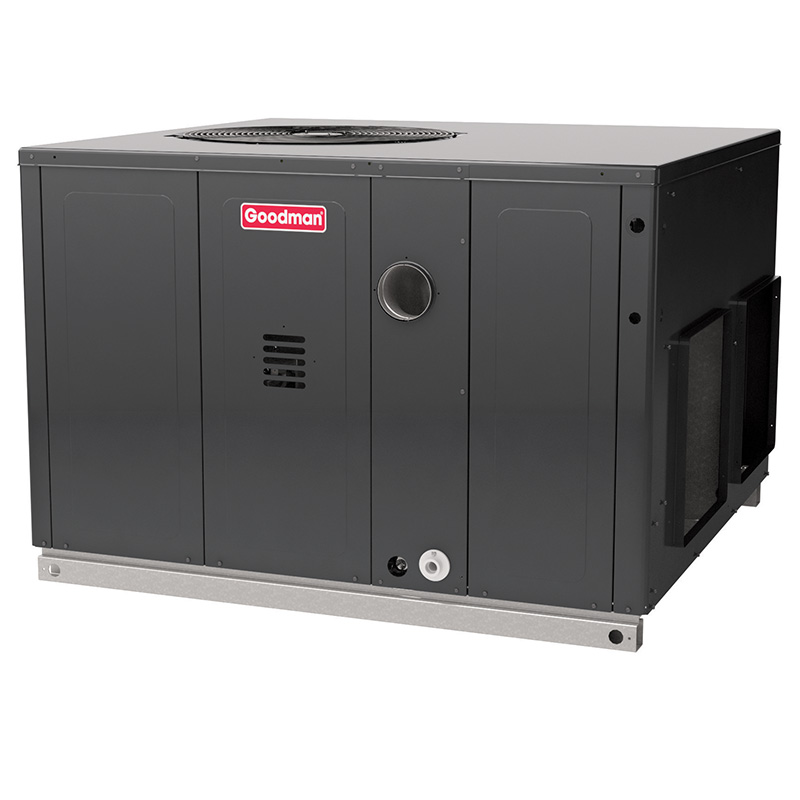
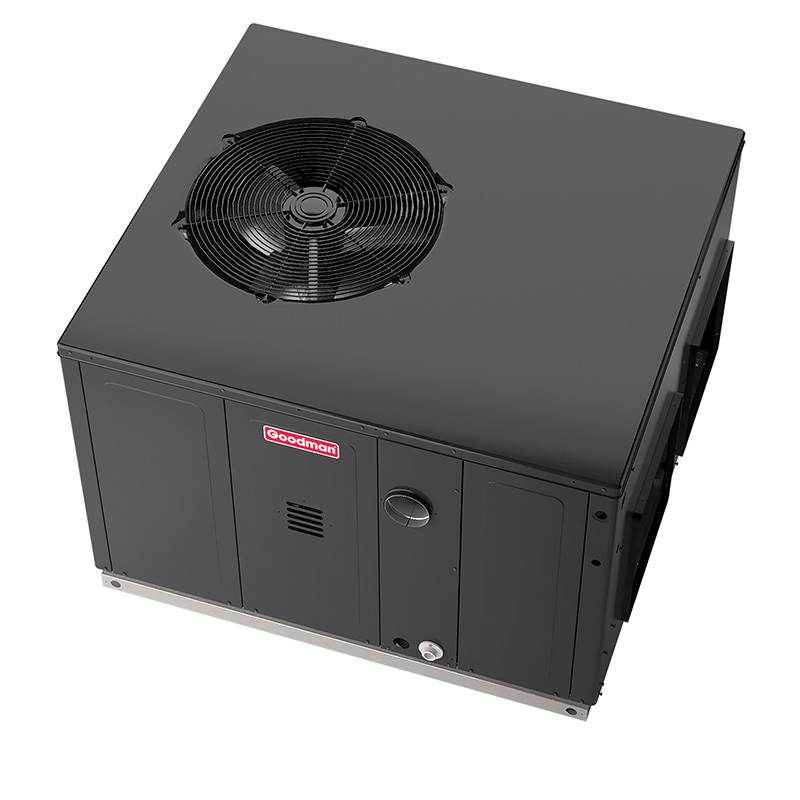
The Goodman GPGM34206031 is a 3.5-ton packaged gas/electric unit that combines a 60,000 BTU natural gas furnace section with a 13.4 SEER2 air conditioner in a single self-contained cabinet. Because the heating and cooling equipment share one outdoor enclosure, this configuration suits homes and light commercial spaces where there is no room for a separate indoor air handler or furnace, including manufactured housing, slab-on-grade construction, and rooftop installations. The multi-positional design means the unit can be set up in horizontal or downflow arrangements to match the duct configuration on site.
Running on R-32 refrigerant, the GPGM34206031 meets current EPA regulations and offers a moderate efficiency improvement over older R-410A systems in its class. At 13.4 SEER2 it sits right at the federal minimum threshold for most northern climate zones and just at or slightly above the minimum for southern zones depending on state, making it a functional baseline rather than an efficiency leader. The 81 percent AFUE furnace section is similarly straightforward: it satisfies code in most regions but falls well short of the 90-plus percent condensing furnaces found in split-system setups, a real trade-off inherent to all packaged gas/electric units where venting constraints limit combustion efficiency. This system is a practical, budget-conscious choice, not a premium one.
The Goodman GPGM34206031 delivers a workable combination of gas heat and electric cooling in one cabinet at a price point that undercuts comparable Carrier, Trane, and Lennox packaged units by roughly 15 to 25 percent. Efficiency at 13.4 SEER2 and 81 percent AFUE is adequate rather than impressive, and long-term reliability hinges heavily on installation quality and a willingness to budget for capacitor replacements and possible coil work after the first decade. Buyers who want lower operating costs or a longer worry-free service life should weigh those priorities honestly against the upfront savings.
Overall score is the average of the five ratings above.
What we like
- Lower purchase price than comparable Carrier, Trane, and Lennox packaged units
- Self-contained design simplifies installation where no indoor equipment space exists
- R-32 refrigerant reduces environmental impact compared to R-410A systems
- Multi-positional cabinet adds flexibility for different duct orientations
- Widely available replacement parts through Goodman's broad dealer and distributor network
Trade-offs
- 81% AFUE heating efficiency is among the lowest available and will cost more to operate than 90-plus percent condensing alternatives
- 13.4 SEER2 is the minimum threshold, not a meaningful efficiency upgrade, and energy savings over older equipment will be modest
- Compressor longevity averages 10 to 14 years versus 15 to 20 years documented for premium-brand compressors, raising lifecycle replacement risk
- Dual-run capacitor failures and evaporator coil leaks are the two most commonly reported service issues, and a minority of owners have reported refrigerant leaks in the first year tied to installation or factory charge problems
What homeowners and pros say about Goodman
Homeowners who post about their Goodman packaged units tend to cluster into two camps: those who had a careful installation and ran the unit without major problems for eight to ten years, and those who encountered early refrigerant issues or post-warranty coil and compressor repairs that made the upfront savings feel short-lived. On ConsumerAffairs, Goodman scores around 2.5 out of 5, and the complaint pattern is consistent: repair costs begin climbing noticeably around year seven, with capacitor failures being the most common but also the most manageable of those calls. Google dealer reviews paint a more moderate picture at roughly 3.8 out of 5 across several hundred reviews per location, where affordability comes up repeatedly as the reason buyers chose Goodman in the first place.
HVAC technicians tend to view Goodman packaged units as serviceable equipment that rewards attentive installation and penalizes shortcuts. The documented failure points, dual-run capacitors, evaporator coil leaks, and compressor lifespans that average 10 to 14 years rather than the 15 to 20 years seen in premium brands, are well known in the trade. Pros who work on these units regularly note that a minority of first-year refrigerant leak complaints trace back to charge or installation issues rather than factory defects, which reinforces the view that who installs this unit matters as much as the unit itself. For a rental property, a budget-constrained replacement, or a space where gas heat efficiency is less critical, the GPGM34206031 fits a real need; it just requires honest expectations about long-term service costs.
Sources: ConsumerAffairs Goodman owner reviews, AHRI Directory of Certified Product Performance, U.S. DOE appliance and equipment efficiency standards, Goodman product specification sheets.
What it costs to run
At 13.4 SEER2, cooling this 3.5-ton system for a typical 1200-hour cooling season at the U.S. average electricity rate of $0.17/kWh works out to roughly $639 per year in cooling, about $0 less per year than a minimum-efficiency 13.4 SEER2 unit of the same size. Your real cost depends on your climate and local rate.
Method: (42,000 BTU/hr ÷ 13.4 SEER2) × 1200 hours ÷ 1000 × $0.17/kWh. Rate source: U.S. EIA average; cooling hours: moderate-climate estimate.
How it compares
| Brand | Comparable model | SEER2 | Stage | Price position |
|---|---|---|---|---|
| Goodman | GPGM34206031 | 13.4 | Single-stage | Value pick |
| Carrier | WeatherMaster 48XC (base series) | 13.4 | Single-stage | Typically 15 to 25 percent more than the Goodman |
| Trane | YCC (precedent packaged series, base tier) | 13.4 | Single-stage | Typically 15 to 25 percent more than the Goodman |
| Lennox | LRP14GE (packaged gas/electric base series) | 13.4 | Single-stage | Typically 15 to 25 percent more than the Goodman |
Competitor rows are comparable single-stage units at similar efficiency; price is relative position, not a quote.
Questions about this system
Is 13.4 SEER2 going to save me money on my electric bill compared to my old unit?
It depends on what you are replacing. If your current packaged unit is rated below 10 SEER you will likely see a noticeable reduction in cooling costs. If you are replacing a 13 SEER unit from the last decade the real-world difference will be small, since 13.4 SEER2 is roughly equivalent to about 14.5 SEER under the older test standard.
Why is the heating efficiency only 81 percent when split-system furnaces go up to 98 percent?
Packaged gas/electric units use a non-condensing heat exchanger because the single cabinet design limits how exhaust gases can be managed. Getting above roughly 81 percent AFUE in a packaged format requires a condensing design that most manufacturers reserve for larger commercial packaged equipment. This is a structural trade-off of the product category, not specific to Goodman.
What is the most common repair I should budget for on a Goodman packaged unit?
Dual-run capacitor failure is the most frequently reported issue across Goodman owner reviews. The repair typically runs between 300 and 600 dollars including labor and is generally a quick fix. Evaporator coil leaks are the second most cited problem and are a more involved repair, so it is worth confirming your installer pressure-tests the system thoroughly at startup.
Will R-32 refrigerant be a problem to find a technician who can service it?
R-32 requires technicians to hold standard EPA Section 608 certification, the same credential required for R-410A work, so most licensed HVAC contractors can handle it. The key difference is that R-32 is mildly flammable, which means service procedures differ slightly from R-410A, and not every tech will have worked with it yet. Confirming your service contractor is familiar with A2L refrigerants before signing a maintenance contract is a reasonable precaution.
How important is the installer for a packaged unit like this compared to a split system?
Installation quality is consistently cited by HVAC technicians as the single largest factor in how a Goodman unit performs and how long it lasts. For a packaged unit specifically, correct refrigerant charge, proper airflow setup, and duct connections at the cabinet are critical because there are no separate indoor components to adjust later. Spending on a licensed, experienced installer rather than the lowest-bid option directly affects long-term reliability.
Specifications
| Cooling capacity | 3.5 Ton |
| Efficiency | 13.4 SEER2 |
| Furnace output | 60000 BTU |
| Configuration | Multi-Position |
| Refrigerant | R-32 |
| Model | GPGM34206031 |