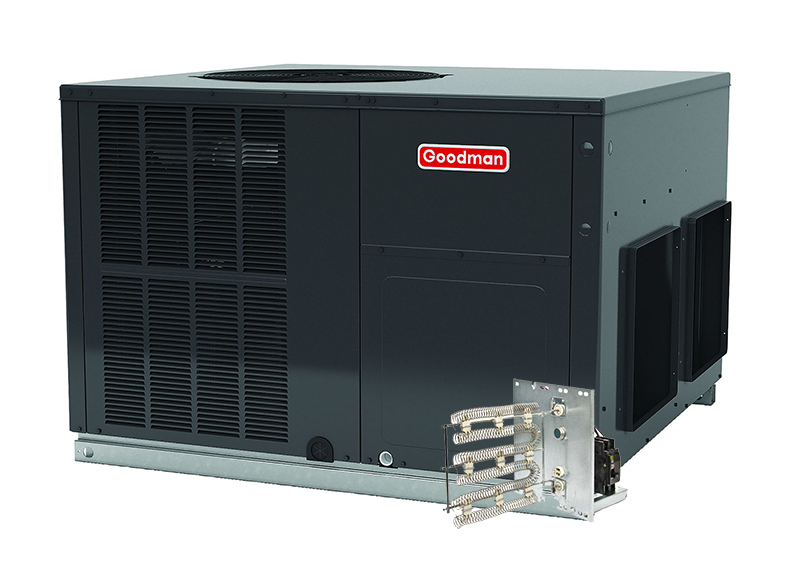
Goodman 3.5 Ton 13.4 SEER2 Heat Pump Package Unit Multiposition
View on AC Direct see your lowest price →Check current price on AC Direct →
Key features
- 3.5-ton all-in-one heat pump package unit for single-cabinet installation
- 13.4 SEER2 efficiency rating meets 2023 federal minimum standards
- Multiposition configuration supports varied airflow orientations
- Designed for manufactured homes, slab and crawl-space applications
- Single-stage compressor operation typical of this efficiency class
- Priced roughly 15 to 25 percent below comparable Trane, Lennox, and Carrier package units
About this system
The Goodman 3.5-ton 13.4 SEER2 heat pump package unit is an all-in-one outdoor cabinet that houses the compressor, air handler, and controls in a single chassis. That self-contained design makes it a natural fit for manufactured homes, slab-on-grade construction, crawl-space situations, and light commercial spaces where a split system would require more invasive ductwork runs or indoor unit placement. At 3.5 tons it is sized for roughly 1,600 to 2,100 square feet of conditioned space, depending on local climate, insulation quality, and ceiling height, though a proper Manual J load calculation should always confirm sizing before purchase.
A 13.4 SEER2 rating sits at the federal minimum efficiency threshold introduced in 2023, which means this unit meets current legal requirements but does not push into mid- or high-efficiency territory. For homeowners in moderate climates who heat and cool a few months per year, that trade-off is reasonable. In regions with long, hot summers or extended heating seasons, the lower efficiency translates into noticeably higher monthly utility bills compared with a 16-plus SEER2 unit. The multiposition labeling refers to the cabinet’s ability to be configured for different airflow orientations during installation, giving contractors some flexibility on the jobsite without requiring a separate model for each application.
This Goodman package unit is a serviceable, budget-conscious choice for buyers who need an affordable all-in-one heat pump and can pair it with a skilled installer. At 13.4 SEER2 it sits at the efficiency floor, so ongoing utility costs will be higher than mid-efficiency alternatives, and the brand's documented track record points to real maintenance costs after roughly year 7. It earns its place in the market through price, not performance leadership.
Overall score is the average of the five ratings above.
What we like
- Lower upfront cost than comparable Carrier, Trane, or Lennox package units by roughly 15 to 25 percent
- All-in-one cabinet simplifies installation in manufactured homes and slab applications
- Multiposition airflow design adds jobsite flexibility without additional SKUs
- Dual-run capacitor failures, the most common documented issue, are typically a straightforward low-cost repair
- Widely stocked by HVAC distributors, making parts and service technicians easier to find
Trade-offs
- 13.4 SEER2 is the minimum legal efficiency, meaning higher operating costs versus mid- or high-efficiency alternatives
- Compressor lifespan averages 10 to 14 years, shorter than the 15 to 20 years typical of premium-brand compressors
- Evaporator coil leaks appear in a meaningful share of owner reports and can be a costly repair outside warranty
- A minority of owners report refrigerant leaks within the first year, a sign that install quality has an outsized effect on long-term outcomes
What homeowners and pros say about Goodman
Goodman earns consistent praise for one thing above almost everything else: price. Across Google dealer reviews, where the brand scores around 3.8 out of 5, affordability is the most frequently mentioned reason buyers chose it over a Trane or Carrier. For a 3.5-ton package unit that already carries a lower sticker price than comparable premium-brand models, that cost advantage is real and meaningful at the point of purchase. The picture gets more complicated over time. On ConsumerAffairs, where Goodman sits at roughly 2.5 out of 5, the recurring pattern is owners who were satisfied early on but found repair costs climbing noticeably after about year 7. That timeline lines up with the brand’s documented compressor lifespan of 10 to 14 years and with the evaporator coil leak reports that show up across owner reviews.
HVAC technicians who service Goodman equipment consistently point to install quality as the single biggest variable in how long one of these units holds up. A correct refrigerant charge, proper airflow, and secure electrical connections at startup matter more here than with premium brands that have tighter factory tolerances. The most commonly reported failure on Goodman heat pumps, including package units in this class, is the dual-run capacitor, which is a known wear item and usually costs between 300 and 600 dollars to replace, a manageable repair. Refrigerant leaks in the first year are less common but do appear in owner reports, and technicians typically attribute those to installation or factory charge issues rather than component defects. If you go with this unit, investing in a thorough startup commissioning from a certified installer and budgeting for routine maintenance after year 5 are the steps most likely to push the system toward the longer end of its expected service life.
Sources: ConsumerAffairs Goodman owner reviews, AHRI Directory of Certified Product Performance, U.S. DOE appliance and equipment efficiency standards, Goodman product specification sheets.
What it costs to run
At 13.4 SEER2, cooling this 3.5-ton system for a typical 1200-hour cooling season at the U.S. average electricity rate of $0.17/kWh works out to roughly $639 per year in cooling, about $0 less per year than a minimum-efficiency 13.4 SEER2 unit of the same size. Your real cost depends on your climate and local rate.
Method: (42,000 BTU/hr ÷ 13.4 SEER2) × 1200 hours ÷ 1000 × $0.17/kWh. Rate source: U.S. EIA average; cooling hours: moderate-climate estimate.
How it compares
| Brand | Comparable model | SEER2 | Stage | Price position |
|---|---|---|---|---|
| Goodman | 3.5 Ton Heat Pump Package Unit 13.4 SEER2 Multiposition | 13.4 | Single-stage | Value pick |
| Carrier | WeatherMaster 50XC Series | 13.4–14 | Single-stage | Typically 15 to 25 percent more than this Goodman |
| Trane | Precedent TWE Series Package Heat Pump | 13.4–14 | Single-stage | Typically 15 to 25 percent more than this Goodman |
| Lennox | LRP16HP Series Package Heat Pump | 14–16 | Single-stage | Typically 15 to 25 percent more than this Goodman |
Competitor rows are comparable single-stage units at similar efficiency; price is relative position, not a quote.
Questions about this system
Is 13.4 SEER2 enough efficiency for a hot climate like Texas or Arizona?
It meets federal minimums but it is the lowest legal efficiency available, so in a climate with four to six months of heavy cooling you will pay more in electricity each month compared with a 16 or 17 SEER2 unit. Running the numbers on the energy cost difference over five to seven years often closes much of the price gap with a more efficient model.
What is a heat pump package unit and how is it different from a split system?
A package unit houses the compressor, coil, and air handler in one outdoor cabinet that connects directly to your ductwork through the wall or roof. A split system separates those components between an outdoor condenser and an indoor air handler. Package units are common in manufactured homes and slab foundations where there is no indoor mechanical closet.
What does multiposition mean on this unit, and does it affect what I can do with my ductwork?
Multiposition means the unit can be configured to discharge conditioned air in more than one direction, giving your installer options when connecting to existing ductwork. It does not mean you can point airflow anywhere without planning, so confirm with your contractor that the available positions match your home's duct layout before ordering.
How long should I realistically expect the compressor to last on a Goodman package unit?
Based on the brand's documented track record, Goodman compressors tend to average 10 to 14 years, compared with 15 to 20 years typical of premium-brand units. Regular maintenance, correct refrigerant charge at installation, and good airflow all push that number toward the higher end of the range.
Should I buy an extended warranty or service plan for this unit?
It is worth serious consideration. Goodman's documented failure modes include dual-run capacitor failures, evaporator coil leaks, and compressor wear that often surfaces after year 7, when the standard parts warranty may no longer apply. An extended labor warranty from a reputable local dealer can limit out-of-pocket exposure if any of those issues occur.
Specifications
| Cooling capacity | 3.5 Ton |
| Efficiency | 13.4 SEER2 |