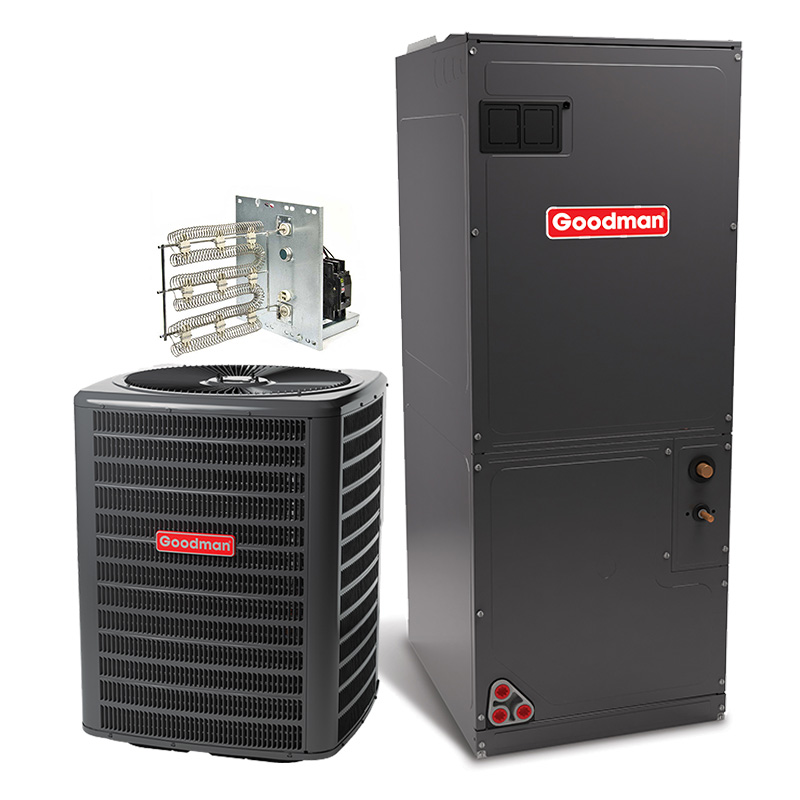
Goodman 3 Ton 13.4 SEER2 R32 Air Conditioner System With Electric Heat
View on AC Direct see your lowest price →Check current price on AC Direct →
Key features
- 3-ton cooling capacity sized for approximately 1,400 to 1,800 sq ft (pending Manual J verification)
- 13.4 SEER2 efficiency rating meets current federal minimum standards
- R-32 refrigerant with roughly 68% lower global warming potential than R-410A
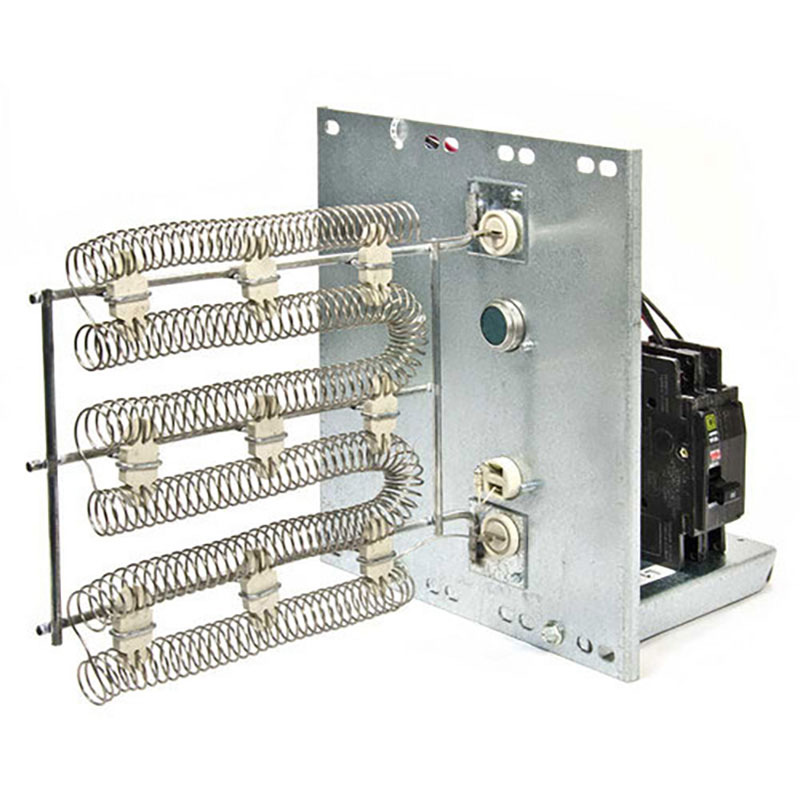
- Electric heat strips included, providing an all-electric heating solution
- Single-stage compressor operation for straightforward installation and servicing
- Goodman's parts warranty covers the compressor for 10 years with registration
About this system
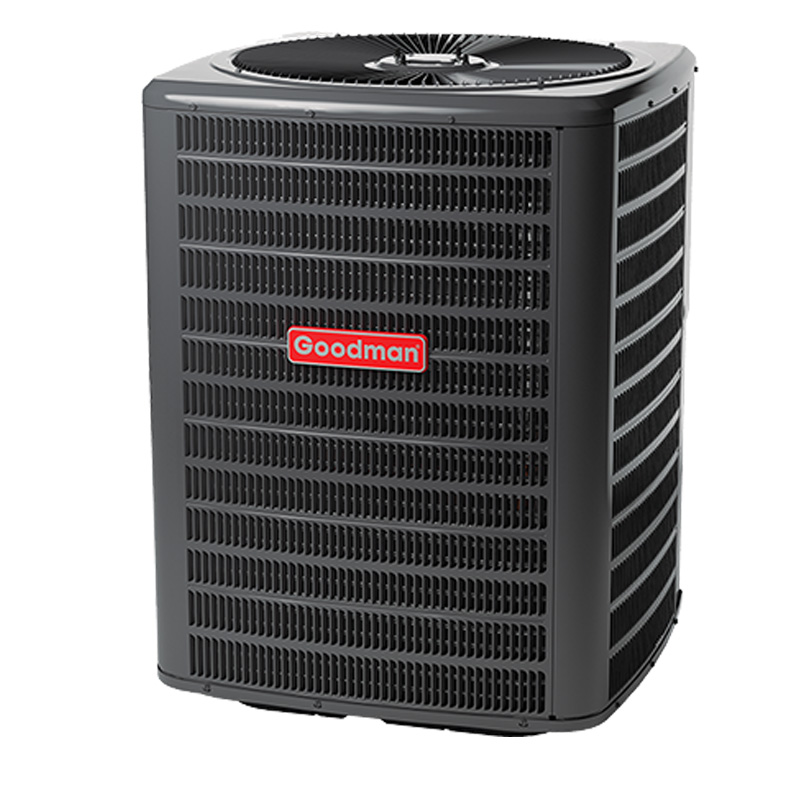
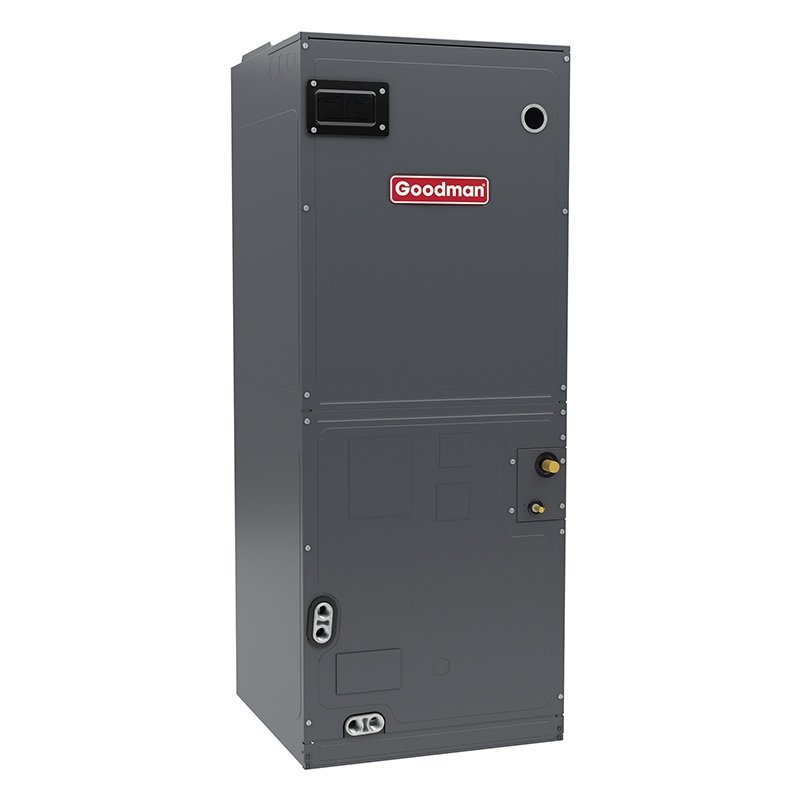
This Goodman 3-ton system pairs a 13.4 SEER2-rated air conditioner with an electric air handler, making it a straightforward cooling-plus-heat solution for homes in mild climates where a gas furnace is not practical or desired. At 3 tons it targets homes in the roughly 1,400 to 1,800 square foot range, though actual sizing must be confirmed with a Manual J load calculation based on your specific insulation, window area, and local climate. The R-32 refrigerant is a meaningful step forward: R-32 has a global warming potential roughly 68 percent lower than the R-410A it replaces, and it also operates at higher efficiency than R-410A at equivalent equipment cost, so this system is already compliant with refrigerant regulations that are phasing R-410A out of new equipment.
The 13.4 SEER2 rating sits at the federally mandated minimum efficiency tier for new equipment in most U.S. climate zones, which means this system meets the bar but does not exceed it. Homeowners whose priority is the lowest upfront cost will find that acceptable. Those running the system heavily through long cooling seasons may find that a higher-SEER2 unit pays back the cost difference in energy savings over several years. The electric heat configuration is common in all-electric homes, condominiums, or additions where ductwork connections to a central gas system are impractical. Heat strips are straightforward and inexpensive to service, but their operating cost is higher than a heat pump in most electricity markets, so buyers in colder climates who heat frequently should compare this against a heat pump alternative before purchasing.
The Goodman 3-ton 13.4 SEER2 R-32 system is a competent entry-level package that makes the most sense when upfront cost is the primary constraint and the installation is handled by a skilled technician. It delivers baseline efficiency and a modern refrigerant, but owners should budget for possible capacitor and coil maintenance after the first several years, and recognize that compressor longevity tends to trail premium brands. It is a workable system, not an exceptional one.
Overall score is the average of the five ratings above.
What we like
- Lowest upfront cost among major-brand split systems, typically 15 to 25 percent below Trane, Carrier, and Lennox equivalents
- R-32 refrigerant is future-proof against ongoing R-410A phase-out regulations
- Single-stage design means simple, well-understood servicing for most HVAC technicians
- 10-year parts warranty with registration provides meaningful coverage on major components
- Electric heat strips are uncomplicated to diagnose and inexpensive to replace
Trade-offs
- 13.4 SEER2 is the regulatory minimum and offers no energy savings advantage over higher-tier options in high-use climates
- Dual-run capacitors are the most commonly documented failure point and often need replacement around or before year 7
- Compressor lifespan averages 10 to 14 years versus 15 to 20 years reported for premium-brand compressors
- A minority of owners have reported refrigerant leaks in the first year, typically traced to installation or initial charge issues rather than the equipment itself
What homeowners and pros say about Goodman
Homeowners who review Goodman equipment through ConsumerAffairs give it roughly 2.5 out of 5 stars, and that channel skews heavily toward people who had a problem worth writing about. The recurring pattern in those complaints is repair costs that begin climbing after roughly year 7, which aligns with the documented tendency for dual-run capacitors to fail in that window. Capacitor replacement is generally a 300 to 600 dollar repair and not a catastrophe, but it is a predictable maintenance cost owners of this system should anticipate. Evaporator coil leaks are also cited in a meaningful share of owner accounts and represent a more disruptive and expensive fix when they occur. Compressor lifespan for Goodman units tends to land in the 10 to 14 year range, which is real and serviceable but shorter than the 15 to 20 years commonly associated with premium brands. A minority of owners also report refrigerant leaks in year one, and technicians generally attribute those to installation or initial charge quality rather than the equipment coming from the factory defective.
HVAC professionals who leave Google reviews at dealerships give Goodman an average closer to 3.8 out of 5, and affordability is the praise that comes up most often. Contractors who work with Goodman regularly point out that install quality is the single largest variable in how long one of these systems lasts, which is true of most equipment but especially pronounced here. A precisely charged, correctly matched, and carefully commissioned Goodman unit can outperform a carelessly installed premium unit. Buyers of this 3-ton R-32 system are getting a code-compliant product at a meaningful price discount relative to Trane, Lennox, and Carrier equivalents, and that trade is reasonable as long as expectations about long-term reliability and peak efficiency are set honestly going in.
Sources: ConsumerAffairs Goodman owner reviews, AHRI Directory of Certified Product Performance, U.S. DOE appliance and equipment efficiency standards, Goodman product specification sheets.
What it costs to run
At 13.4 SEER2, cooling this 3-ton system for a typical 1200-hour cooling season at the U.S. average electricity rate of $0.17/kWh works out to roughly $548 per year in cooling, about $0 less per year than a minimum-efficiency 13.4 SEER2 unit of the same size. Your real cost depends on your climate and local rate.
Method: (36,000 BTU/hr ÷ 13.4 SEER2) × 1200 hours ÷ 1000 × $0.17/kWh. Rate source: U.S. EIA average; cooling hours: moderate-climate estimate.
How it compares
| Brand | Comparable model | SEER2 | Stage | Price position |
|---|---|---|---|---|
| Goodman | 3-Ton 13.4 SEER2 R-32 AC with Electric Heat | 13.4 | Single-stage | Value pick |
| Carrier | Comfort Series (24ACC6) | 13.4 | Single-stage | Typically 15 to 25 percent more than Goodman |
| Trane | XR13B | 13.4 | Single-stage | Typically 15 to 25 percent more than Goodman |
| Lennox | Merit Series (14ACX) | 13.4 | Single-stage | Typically 15 to 25 percent more than Goodman |
Competitor rows are comparable single-stage units at similar efficiency; price is relative position, not a quote.
Questions about this system
Do I need to register the system to get the full warranty, and what does registration actually cover?
Yes, registration is required within a set period after installation to activate Goodman's 10-year parts warranty, which covers major components including the compressor, coil, and other functional parts. Without registration you typically fall back to a shorter base warranty, so completing registration promptly after install is important. Check the documentation that ships with the unit for the exact registration window and covered component list.
Will any HVAC technician be able to work on this system since it uses R-32 refrigerant?
R-32 requires a technician with proper EPA Section 608 certification, and because it is mildly flammable (classified A2L), some contractors have added R-32 specific training and updated their equipment. R-32 service is becoming more routine as equipment using it becomes common, but it is worth confirming your service contractor is set up for it before you need emergency repairs.
Is a 3-ton unit the right size for my home, or should I go up to a 3.5-ton system?
Tonnage should be determined by a Manual J load calculation, not square footage alone. Oversizing leads to short cycling, humidity problems, and premature wear, while undersizing leaves the system running constantly in peak heat. A qualified HVAC contractor should perform this calculation before any equipment is ordered.
How much should I budget for repairs over the first 10 years based on what other Goodman owners experience?
The most commonly reported repair is dual-run capacitor failure, which typically runs between 300 and 600 dollars including labor and is generally a straightforward same-day fix. Evaporator coil leaks show up in a meaningful share of owner reports and cost considerably more to address. Setting aside a few hundred dollars per year in a maintenance fund is a reasonable approach for any value-tier system.
Since this uses electric heat strips rather than a heat pump, will my heating bills be noticeably higher in winter?
Yes, electric resistance heat (strips) converts electricity to heat at roughly a 1-to-1 ratio, while a heat pump can deliver 2 to 3 units of heat per unit of electricity consumed. In climates with significant heating loads, the operating cost difference can be substantial over a winter season. This system is best suited to mild climates or situations where heating use is infrequent.
Specifications
| Cooling capacity | 3 Ton |
| Efficiency | 13.4 SEER2 |
| Refrigerant | R-32 |