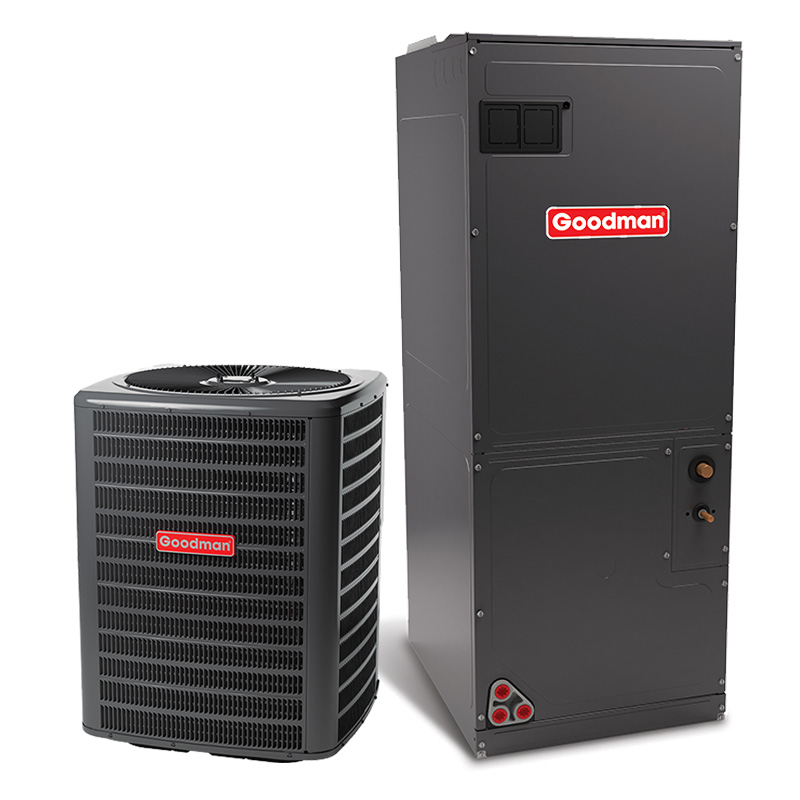
Goodman 3 Ton 13.4 SEER2 R32 Cooling Only System
View on AC Direct see your lowest price →Check current price on AC Direct →
Key features
- 3-ton capacity suited to roughly 1,400 to 1,900 sq ft depending on local climate and load calculation
- 13.4 SEER2 efficiency rating meets current federal minimum standards
- R-32 refrigerant with lower global warming potential than R-410A
- Single-stage cooling operation for straightforward, proven reliability
- Cooling-only design pairs with existing gas furnace or air handler
- Goodman factory warranty backed by the Daikin manufacturing group
About this system
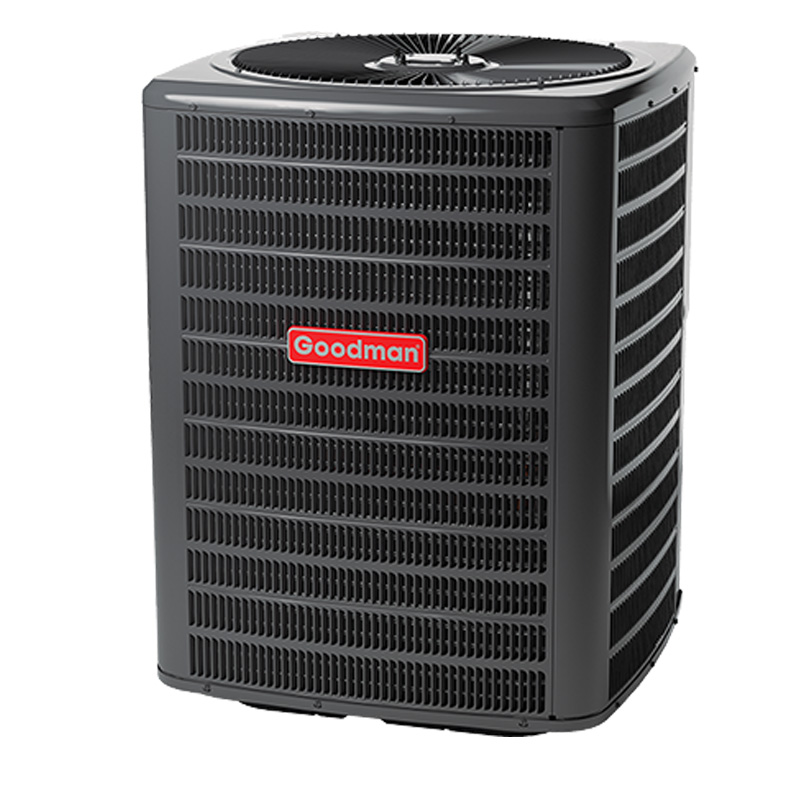
The Goodman 3-Ton 13.4 SEER2 Cooling Only system is a straightforward, single-stage air conditioner built around R-32 refrigerant, a lower global-warming-potential alternative to the R-410A that dominated the market for the past two decades. At 3 tons it is sized for homes roughly in the 1,400 to 1,900 square foot range, depending on climate zone, insulation, and window load. The 13.4 SEER2 rating meets current federal minimums and sits at the entry level of the efficiency spectrum, which keeps upfront cost down but means higher operating costs over time compared to mid-range or high-efficiency units.
This is a cooling-only configuration, so it pairs with a gas furnace or air handler already in the home rather than functioning as a heat pump. That makes it a direct replacement candidate for older R-22 or R-410A systems in climates where heating is handled separately. R-32 requires certified technicians familiar with the refrigerant, as it is mildly flammable (A2L classification), so not every installer in every market will be equally comfortable with it yet. Homeowners should confirm their chosen contractor has R-32 experience before scheduling installation.
The Goodman 3-Ton 13.4 SEER2 R-32 system delivers reliable entry-level cooling at a price point meaningfully below Carrier, Trane, and Lennox equivalents, making it a sensible choice for budget-conscious homeowners who prioritize upfront savings. The trade-off is a compressor lifespan and repair history that trails premium brands, and satisfaction over the long run depends heavily on quality installation and prompt attention to early maintenance. It is not the last AC you will ever buy, but it can be a practical one if your expectations are calibrated accordingly.
Overall score is the average of the five ratings above.
What we like
- Purchase price typically 15 to 25 percent lower than comparable Carrier, Trane, or Lennox units
- R-32 refrigerant is more environmentally responsible than R-410A and positions the system for near-term regulatory compliance
- Simple single-stage design means fewer components to fail and straightforward diagnosis for technicians
- Backed by Daikin manufacturing infrastructure, giving the brand more production consistency than it had as a standalone company
- Widely available parts network keeps capacitor and minor repair costs relatively low when issues do arise
Trade-offs
- Compressor longevity averages 10 to 14 years versus 15 to 20 years documented in premium brands, shortening the effective payback window
- Dual-run capacitor failures are the most frequently reported repair, typically needed between years 5 and 10 and costing 300 to 600 dollars per incident
- Evaporator coil leaks appear in a notable share of owner reviews, a potentially costly repair especially after the warranty period
- A minority of owners report refrigerant leaks within the first year, most often traced to installation or initial charge issues rather than the equipment itself
What homeowners and pros say about Goodman
On review platforms, Goodman occupies a familiar middle ground: praised loudly for its price and criticized when things go wrong. Google dealer reviews cluster around 3.8 out of 5, and the most consistent thread in positive feedback is that buyers got a working, code-compliant system installed for substantially less than competing brands would have cost. ConsumerAffairs tells a different story, averaging around 2.5 out of 5, though that channel skews toward owners who had a frustrating experience and took the time to write about it. The recurring complaint on that platform is repair costs climbing after roughly year 7, which aligns with the documented pattern of dual-run capacitor failures appearing in mid-life and evaporator coil leaks becoming more common as units age past their warranty periods.
HVAC technicians tend to have a measured view of Goodman. Many will install it without hesitation for clients on tight budgets, noting that a well-installed Goodman often outperforms a carelessly installed premium brand. At the same time, experienced techs flag compressor longevity as the honest concern: Goodman compressors are documented to average 10 to 14 years in real-world use versus 15 to 20 years for Trane or Carrier equivalents, which matters if you are doing a long-term cost-of-ownership calculation. The first-year refrigerant leaks that a minority of owners report are almost always attributed to installation or initial charge quality rather than a factory defect, which underscores how much the Goodman ownership experience hinges on who does the work and how carefully they do it.
Sources: ConsumerAffairs Goodman owner reviews, AHRI Directory of Certified Product Performance, U.S. DOE appliance and equipment efficiency standards, Goodman product specification sheets.
What it costs to run
At 13.4 SEER2, cooling this 3-ton system for a typical 1200-hour cooling season at the U.S. average electricity rate of $0.17/kWh works out to roughly $548 per year in cooling, about $0 less per year than a minimum-efficiency 13.4 SEER2 unit of the same size. Your real cost depends on your climate and local rate.
Method: (36,000 BTU/hr ÷ 13.4 SEER2) × 1200 hours ÷ 1000 × $0.17/kWh. Rate source: U.S. EIA average; cooling hours: moderate-climate estimate.
How it compares
| Brand | Comparable model | SEER2 | Stage | Price position |
|---|---|---|---|---|
| Goodman | GSX-H series 3-ton 13.4 SEER2 | 13.4 | Single-stage | Value pick |
| Carrier | Comfort 13 (24ACC3) series | 13.4 | Single-stage | Typically 15 to 25 percent more than Goodman |
| Trane | XR13 series | 13.4 | Single-stage | Typically 15 to 25 percent more than Goodman |
| Lennox | Merit ML14XC1 series | 13.4–14.3 | Single-stage | Typically 15 to 25 percent more than Goodman |
Competitor rows are comparable single-stage units at similar efficiency; price is relative position, not a quote.
Questions about this system
Is R-32 refrigerant safe, and will any HVAC technician be able to service this unit?
R-32 is classified A2L, meaning it is mildly flammable under specific conditions, and EPA rules require certified technicians to handle it. Most established HVAC companies are already trained on A2L refrigerants, but it is worth confirming your service contractor is comfortable with R-32 before purchase, particularly in smaller markets where exposure to the refrigerant may still be limited.
What is the most common repair on this type of Goodman condenser, and what does it cost?
Dual-run capacitor failure is the most frequently documented issue across Goodman condensers, typically surfacing between years 5 and 10 and generally running 300 to 600 dollars for parts and labor. It is a quick repair and one of the less expensive service calls in HVAC, but owners should budget for it as a likely occurrence rather than a surprise.
This is listed as cooling only. What do I need to complete the system?
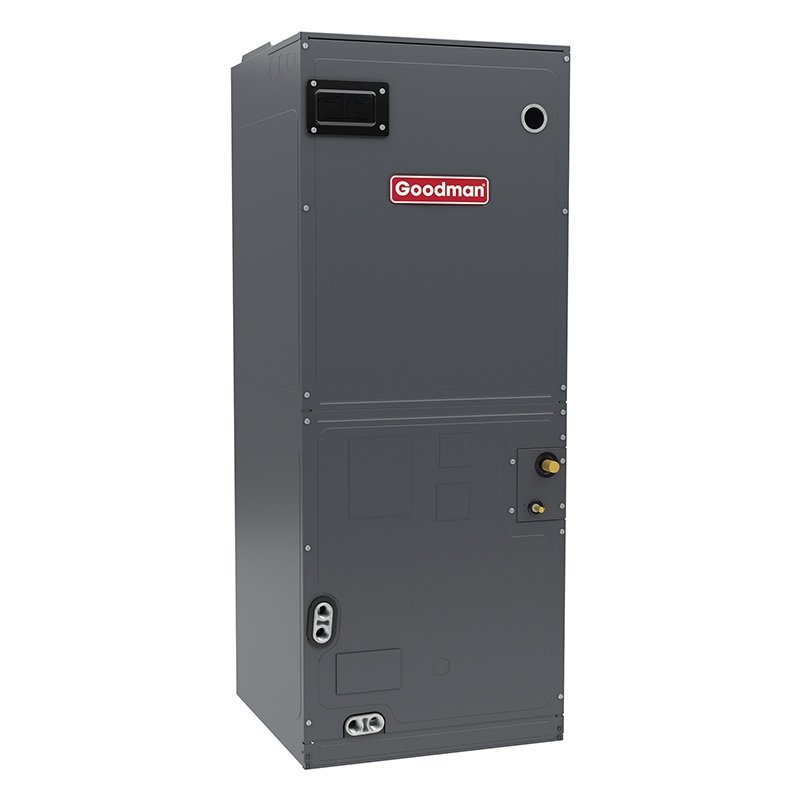
A cooling-only condenser requires a matching indoor coil (evaporator coil) and either an existing gas furnace with a compatible blower or a standalone air handler to move air across that coil. You will also need refrigerant line sets, electrical disconnect, and condensate drain routing. Your installer should verify that the indoor unit is compatible and properly sized before ordering.
How does 13.4 SEER2 affect my monthly electricity bill compared to a higher-efficiency unit?
A 13.4 SEER2 unit meets the federal minimum but will use noticeably more electricity than a 16 or 18 SEER2 system over the same run hours. For a 3-ton unit in a hot climate running 1,500 or more hours per cooling season, the annual operating cost difference versus a 16 SEER2 unit can be meaningful, and the higher-efficiency unit may recover its price premium over 8 to 12 years depending on local utility rates.
What warranty comes with this system, and are there any conditions that could void it?
Goodman typically offers a 10-year parts limited warranty when the unit is registered within a set window after installation, dropping to a shorter term if registration is missed. The warranty generally requires installation by a licensed contractor and may be affected by use of incompatible indoor components or refrigerants. Reading the specific warranty document for this model before purchase is the best way to understand exactly what is and is not covered.
Specifications
| Cooling capacity | 3 Ton |
| Efficiency | 13.4 SEER2 |
| Refrigerant | R-32 |