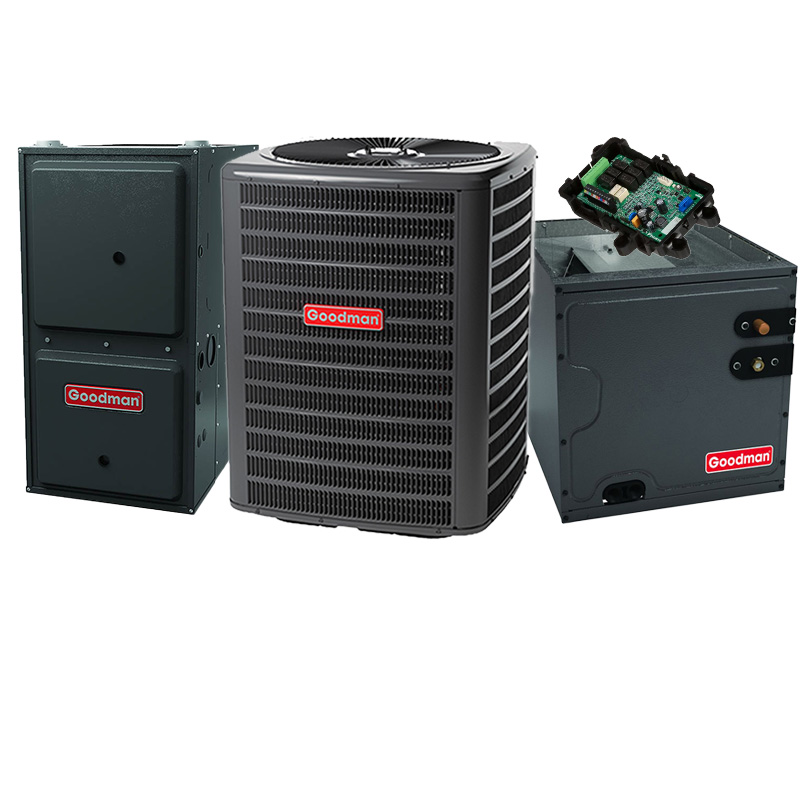
Goodman 3 Ton 13.6 SEER2 80000 BTU 96% AFUE Gas Furnace With R32 Air Condenser and Coil System – Downflow
View on AC Direct see your lowest price →Check current price on AC Direct →
Key features
- 3-ton cooling capacity suits homes roughly 1,400 to 1,800 sq ft depending on climate and insulation
- 13.6 SEER2 meets or exceeds current federal minimum efficiency standards for most U.S. regions
- 96% AFUE condensing furnace recovers nearly all combustion heat, reducing gas waste
- Downflow configuration designed for installations where supply ducts run below the unit
- R-32 refrigerant has a lower global warming potential than legacy R-410A systems
- Factory-matched coil and condenser simplify ARI certification and warranty compliance
About this system
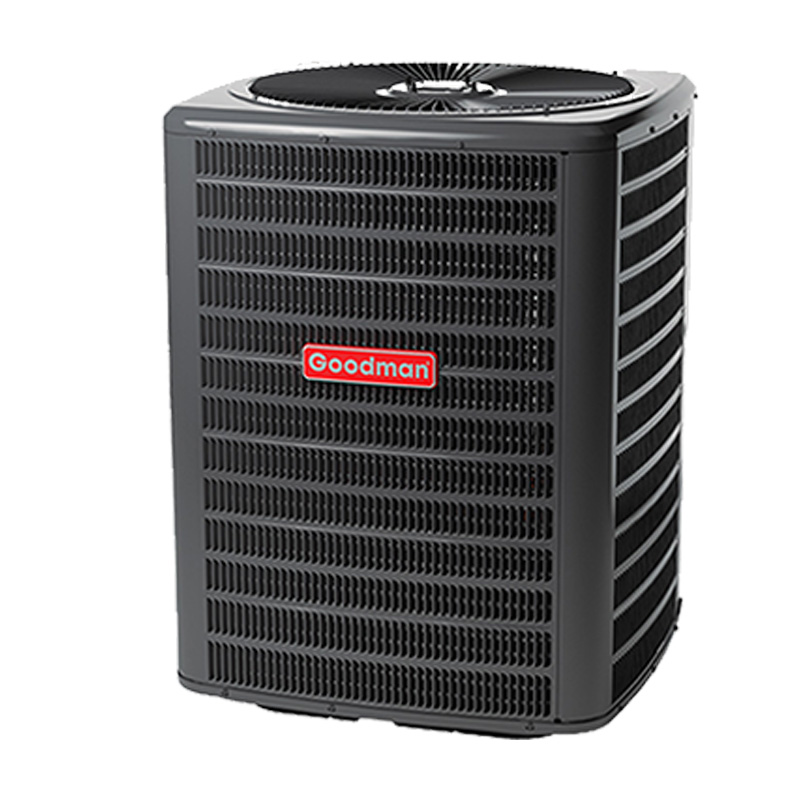
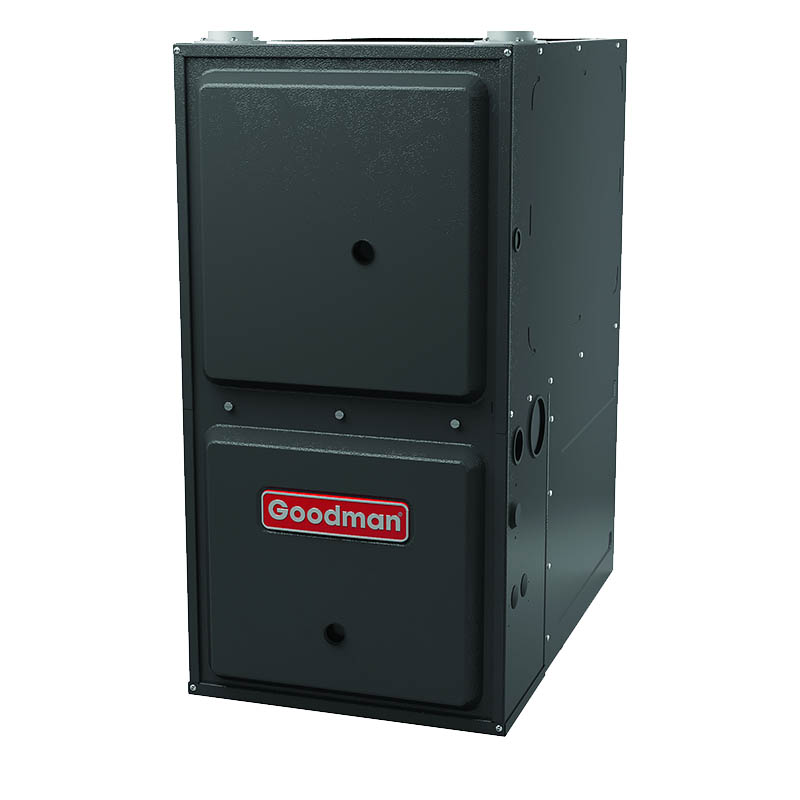
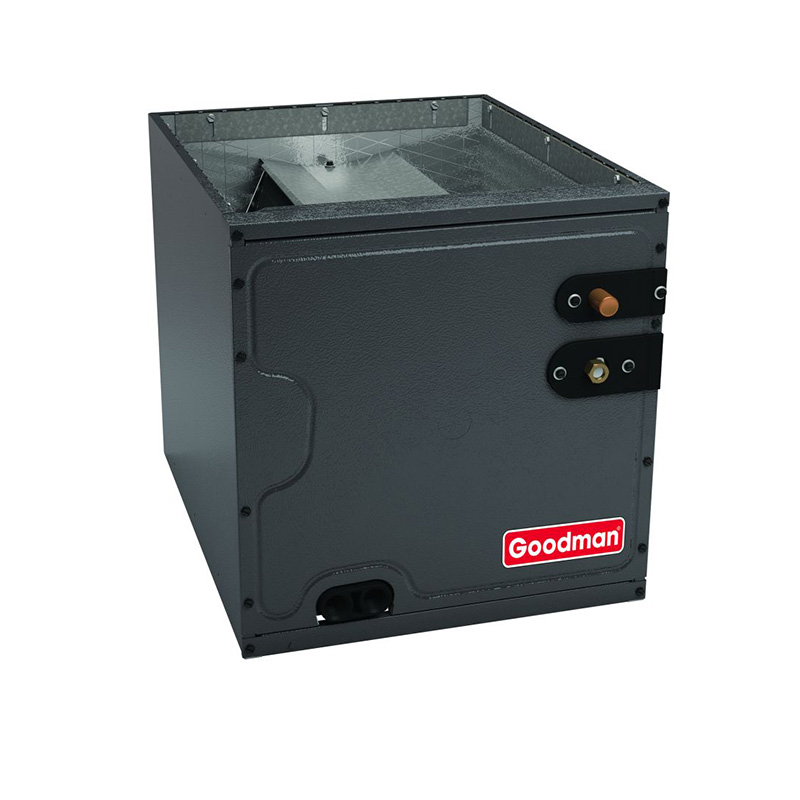
This Goodman downflow system pairs a 3-ton, 13.6 SEER2 R-32 air condenser and matching evaporator coil with an 80,000 BTU, 96% AFUE gas furnace. The downflow configuration means conditioned air exits the bottom of the air handler, making it the right choice for homes where the duct system runs beneath the unit, such as a garage or closet installation above a crawlspace or basement chase. At 13.6 SEER2, cooling efficiency just clears the federal minimum for many northern regions and sits modestly above minimums in the South and Southwest, so running costs will be average rather than exceptional compared with 16 SEER2 or higher systems.
The 96% AFUE furnace is a genuine strength of this bundle. Condensing furnaces at that efficiency level extract nearly all usable heat from combustion gas, and at this price point that rating is competitive with anything on the market. R-32 refrigerant carries a lower global warming potential than the R-410A it replaces, and it is now the industry direction, so parts and service support should remain accessible for the system’s service life. This package suits budget-conscious homeowners in moderate climates who want solid heating performance, acceptable cooling efficiency, and a lower upfront cost than premium brands can offer.
This Goodman bundle delivers genuine value if upfront cost is the priority and a qualified installer handles the work. The 96% AFUE furnace punches above its price class, but the 13.6 SEER2 cooling side is entry-level, and Goodman's documented track record of capacitor failures, coil leaks, and shorter compressor lifespan means total cost of ownership over 15-plus years can narrow the gap with premium brands.
Overall score is the average of the five ratings above.
What we like
- Factory-matched system simplifies permitting and warranty compliance
- 96% AFUE furnace is among the most efficient at this price tier
- R-32 refrigerant is forward-compatible with near-term industry direction
- Typically priced 15 to 25 percent below comparable Carrier, Trane, or Lennox systems
- Dual-run capacitor failures, the most common reported issue, are a relatively inexpensive repair at roughly $300 to $600
Trade-offs
- 13.6 SEER2 is entry-level cooling efficiency; higher SEER2 options exist at modest premium
- Evaporator coil leaks appear in a meaningful share of owner reviews and can be costly to address
- Compressor lifespan averages 10 to 14 years versus 15 to 20 years for premium-brand compressors
- A minority of owners have reported refrigerant leaks in the first year, typically linked to installation or charge issues rather than the equipment itself
What homeowners and pros say about Goodman
Homeowners who have lived with Goodman equipment tend to land in two camps. Those who had a careful, experienced installer and addressed small issues early often report years of trouble-free operation and point to the value they got relative to premium brands. Those who had rushed or lower-quality installs, or who deferred maintenance, are more likely to be behind the complaint-heavy reviews that pull Goodman’s ConsumerAffairs score down to around 2.5 out of 5. The pattern most often cited on that platform is repairs becoming more frequent and costly after roughly year seven, which aligns with the documented shorter compressor lifespan of 10 to 14 years compared with 15 to 20 for top-tier brands. Across Google dealer reviews, where the audience skews toward buyers rather than frustrated owners, the score sits closer to 3.8 out of 5, with affordability consistently cited as the reason people chose Goodman in the first place.
HVAC technicians tend to be pragmatic about Goodman. Many acknowledge it as a serviceable product whose longevity depends more on who puts it in and how it is maintained than on the nameplate. The dual-run capacitor is the component technicians see fail most often, and most will say it is a straightforward, low-cost swap when caught during annual maintenance. Evaporator coil leaks are a more serious concern that shows up in owner feedback and can mean a significant repair bill. The R-32 refrigerant in this specific system is a newer variable, and some technicians note they are still building experience with it compared to R-410A. For this downflow bundle specifically, pros emphasize that the tight space constraints common in downflow installations make proper brazing and refrigerant charging even more critical than usual, reinforcing the consistent industry message that installer quality is the single biggest factor in how a Goodman system performs over time.
Sources: ConsumerAffairs Goodman owner reviews, AHRI Directory of Certified Product Performance, U.S. DOE appliance and equipment efficiency standards, Goodman product specification sheets.
What it costs to run
At 13.6 SEER2, cooling this 3-ton system for a typical 1200-hour cooling season at the U.S. average electricity rate of $0.17/kWh works out to roughly $540 per year in cooling, about $8 less per year than a minimum-efficiency 13.4 SEER2 unit of the same size. Your real cost depends on your climate and local rate.
Method: (36,000 BTU/hr ÷ 13.6 SEER2) × 1200 hours ÷ 1000 × $0.17/kWh. Rate source: U.S. EIA average; cooling hours: moderate-climate estimate.
How it compares
| Brand | Comparable model | SEER2 | Stage | Price position |
|---|---|---|---|---|
| Goodman | 3 Ton 13.6 SEER2 96% AFUE Downflow Bundle (this system) | 13.6 | Single-stage | Value pick |
| Carrier | Comfort 24ACC636 condenser with 58CV gas furnace | 14.3 | Single-stage | Approximately 20 to 25 percent higher than this system |
| Trane | XR14 condenser with S9V2 96% AFUE furnace | 14.0 | Single-stage | Approximately 20 to 30 percent higher than this system |
| Lennox | Merit ML14XC1 condenser with ML196 96% AFUE furnace | 14.3 | Single-stage | Approximately 25 to 35 percent higher than this system |
Competitor rows are comparable single-stage units at similar efficiency; price is relative position, not a quote.
Questions about this system
Is a downflow furnace the right choice for my house, or do I need to verify my duct layout first?
Yes, you need to confirm your duct layout before ordering. Downflow units discharge air from the bottom, so they require the supply plenum and ductwork to run below the unit. If your ducts run above or to the side, you need an upflow or horizontal configuration instead. Getting this wrong means expensive modifications on installation day.
Does using R-32 refrigerant affect who can service this system?
Any EPA 608-certified HVAC technician can legally work on R-32 systems, but not every technician will have hands-on experience with it yet since the industry is still transitioning from R-410A. When scheduling service, it is worth confirming your technician has worked with R-32 equipment, particularly for any refrigerant handling tasks.
The 96% AFUE sounds great, but what does that actually mean for my gas bill?
It means 96 cents of every dollar of gas burned becomes usable heat, versus roughly 80 cents for an 80% AFUE furnace. For a home spending $1,200 a year on heating with an 80% furnace, upgrading to 96% AFUE could reduce that cost by roughly 15 to 20 percent, though actual savings depend heavily on local gas rates, home insulation, and climate.
Goodman's online reviews are pretty mixed. Should I be worried about reliability with this system?
The concern is real but context matters. Goodman scores around 2.5 out of 5 on ConsumerAffairs, a channel that skews heavily toward complaints, and around 3.8 out of 5 on Google dealer reviews. Documented weak points are dual-run capacitor failures (common but cheap to fix), evaporator coil leaks, and compressor lifespans that tend to run shorter than premium brands. A skilled installer and a service plan after year five can manage most of this risk proactively.
What warranty comes with this system, and are there any conditions I need to meet?
Goodman typically offers a 10-year parts warranty when the system is registered within a set window after installation, often 60 days. Registration is mandatory to receive the full term; failing to register usually drops coverage to five years. The warranty does not cover labor costs, which can be significant, so many owners pair it with a third-party labor warranty or service agreement.
Specifications
| Cooling capacity | 3 Ton |
| Efficiency | 13.6 SEER2 |
| Furnace output | 80000 BTU |
| Furnace efficiency | 96% AFUE |
| Configuration | Downflow |
| Refrigerant | R-32 |