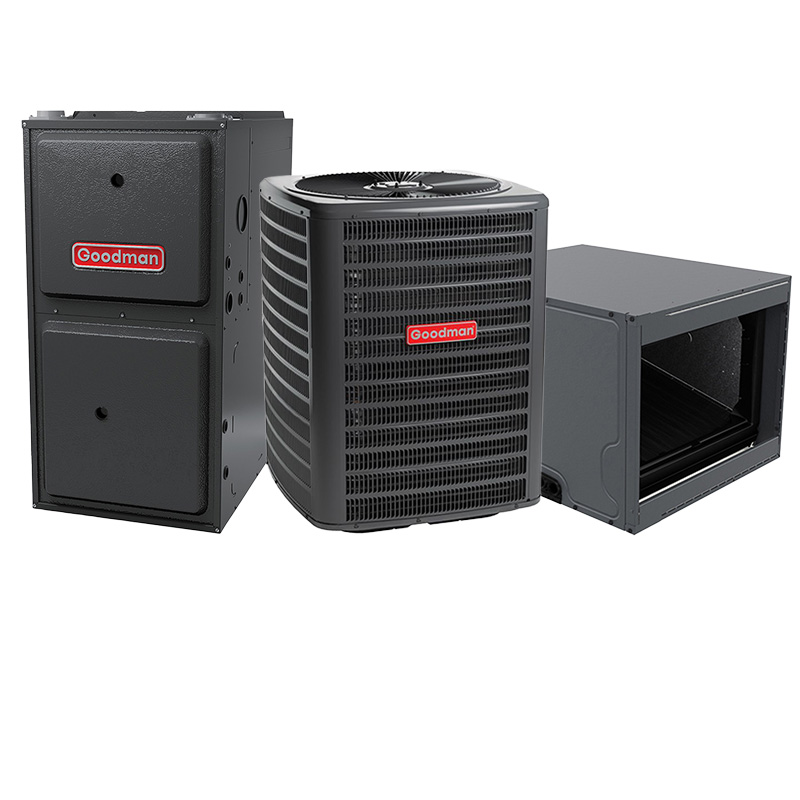
Goodman 3 Ton 13.8 SEER2 100000 BTU 96% AFUE Multi-Speed ECM Gas Furnace System – Horizontal | R32
View on AC Direct see your lowest price →Check current price on AC Direct →
Key features
- 3-ton cooling capacity with 13.8 SEER2 efficiency rating
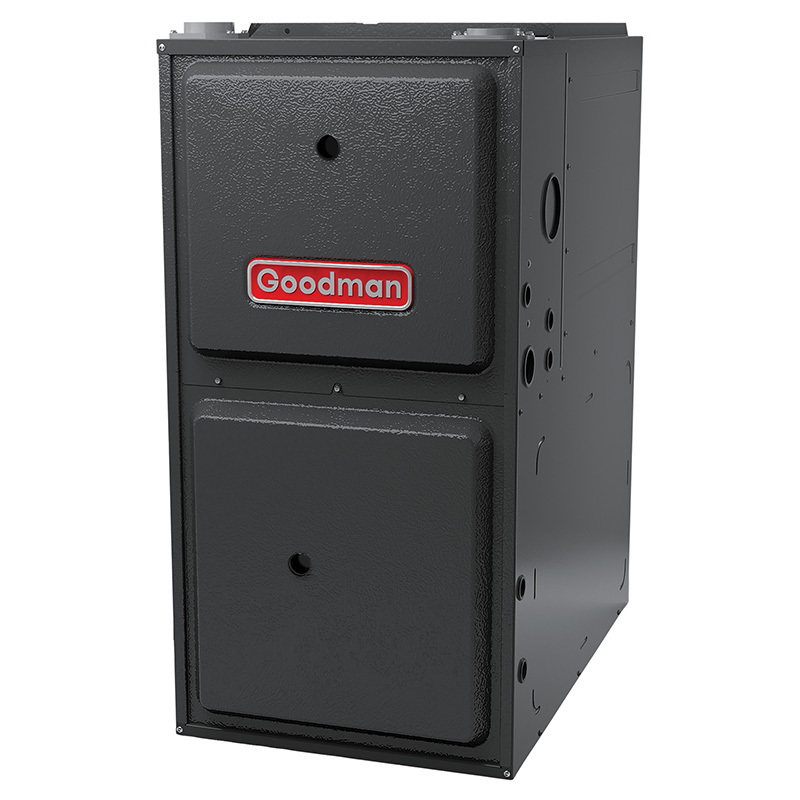
- 100,000 BTU, 96% AFUE two-stage or multi-speed gas furnace
- Horizontal configuration for attic, crawlspace, or side-discharge installs
- Multi-speed ECM blower motor for quieter operation and lower blower energy use
- R-32 refrigerant, a lower global-warming-potential alternative to R-410A
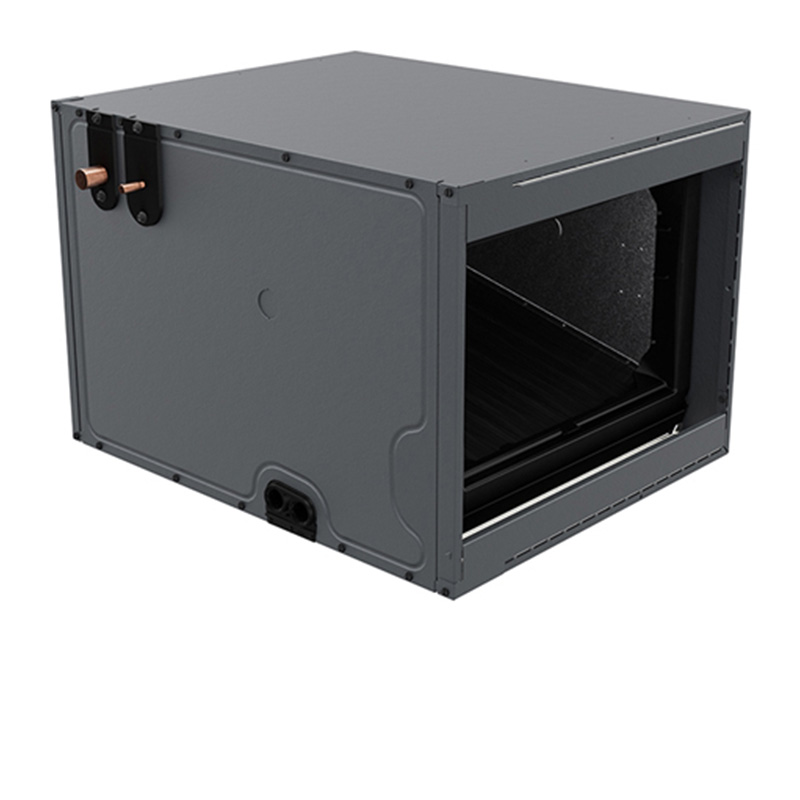
- Matched coil and air handler system designed for single-contractor installation
About this system
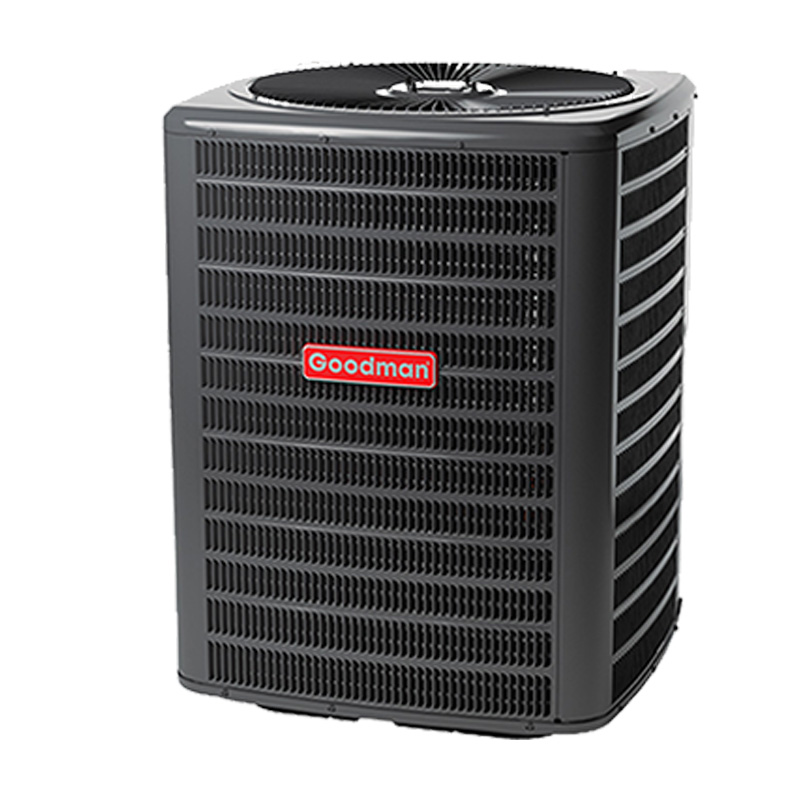
This Goodman 3-ton, 13.8 SEER2 system pairs a horizontal-configuration air conditioner with a 100,000 BTU, 96% AFUE multi-speed ECM gas furnace, making it a strong candidate for homes where ductwork runs through a crawlspace, attic, or utility closet oriented on its side. The R-32 refrigerant charge is a forward-looking choice: R-32 has a lower global-warming potential than the older R-410A it replaces, and it is the direction the industry is heading, which means parts and service should remain accessible for the foreseeable future. At 3 tons of cooling capacity, this system is generally sized for homes in the 1,400 to 1,900 square foot range, though local climate and insulation levels matter considerably.
The 96% AFUE furnace sits in the high-efficiency tier, meaning roughly 96 cents of every dollar of gas burned becomes usable heat. That is a meaningful step above the federal 80% minimum baseline and will reduce heating bills noticeably in colder climates. The multi-speed ECM blower motor runs at varying speeds rather than a simple on-or-off, which improves humidity control, lowers blower electricity draw, and moves air more quietly than a single-speed PSC motor. At 13.8 SEER2, the cooling side meets current federal minimums and is not a high-efficiency standout, but it is a reasonable baseline for budget-conscious buyers who want to keep upfront costs down.
This Goodman horizontal system offers a practical entry point for homeowners who need a high-efficiency furnace and code-compliant cooling without paying premium-brand prices. The 96% AFUE furnace and ECM blower are genuinely strong specs at this price tier, though the 13.8 SEER2 cooling side is baseline rather than impressive. Long-term satisfaction will depend heavily on installer quality and a willingness to budget for possible repairs after year seven.
Overall score is the average of the five ratings above.
What we like
- 96% AFUE furnace is a high-efficiency rating that cuts heating costs noticeably versus 80% AFUE units
- ECM multi-speed blower reduces electricity use and improves comfort compared to single-speed motors
- R-32 refrigerant is industry-forward and better for long-term service availability
- Horizontal configuration covers installs that vertical or upflow systems cannot handle
- Priced roughly 15 to 25 percent below comparable Carrier, Trane, and Lennox systems
Trade-offs
- 13.8 SEER2 cooling efficiency is at the federal minimum threshold, not a strong performer in hot climates with heavy cooling loads
- Compressor lifespan averages 10 to 14 years in owner experience, shorter than the 15 to 20 years more common with premium brands
- Dual-run capacitors are a documented frequent failure point, typically requiring a repair call and 300 to 600 dollars after the first few years
- A share of owners report evaporator coil leaks and early refrigerant loss, often linked to install or charge quality but still a real risk
What homeowners and pros say about Goodman
Homeowners who choose Goodman most often cite the upfront price as the deciding factor, and that holds for this horizontal system as well. On Google dealer reviews, where Goodman scores around 3.8 out of 5 across hundreds of reviews per location, buyers who had a smooth installation and a responsive contractor tend to report solid early-years performance. The story shifts on complaint-focused channels like ConsumerAffairs, where Goodman sits near 2.5 out of 5 and the recurring pattern is owners describing repair bills that start compounding around year seven or eight. Neither number tells the complete story, but together they point to a brand where the first several years often go fine and the back half of the system’s life is more variable than with premium competitors.
HVAC technicians who work on Goodman equipment regularly point to a few specific things to watch for with this type of system. Dual-run capacitors are the most commonly replaced component, a repair that typically runs between 300 and 600 dollars and can happen more than once over the system’s life. Evaporator coil leaks appear in a meaningful share of owner accounts, sometimes traced back to install issues and sometimes to the coil itself. Compressor longevity is another honest trade-off: Goodman compressors tend to average 10 to 14 years of service life, while premium-brand compressors more often reach 15 to 20 years. A minority of owners also report refrigerant loss in the first year, which technicians almost always attribute to an improper charge or a fitting left loose at install, reinforcing the point that who installs this system matters at least as much as the equipment itself.
Sources: ConsumerAffairs Goodman owner reviews, AHRI Directory of Certified Product Performance, U.S. DOE appliance and equipment efficiency standards, Goodman product specification sheets.
What it costs to run
At 13.8 SEER2, cooling this 3-ton system for a typical 1200-hour cooling season at the U.S. average electricity rate of $0.17/kWh works out to roughly $532 per year in cooling, about $16 less per year than a minimum-efficiency 13.4 SEER2 unit of the same size. Your real cost depends on your climate and local rate.
Method: (36,000 BTU/hr ÷ 13.8 SEER2) × 1200 hours ÷ 1000 × $0.17/kWh. Rate source: U.S. EIA average; cooling hours: moderate-climate estimate.
How it compares
| Brand | Comparable model | SEER2 | Stage | Price position |
|---|---|---|---|---|
| Goodman | This system (3 Ton 13.8 SEER2 / 96% AFUE Horizontal R-32) | 13.8 | Multi-speed | Value pick |
| Carrier | Comfort Series (24ACC / 59SC80) | 13.8-14.3 | Single-stage | Typically 15 to 25 percent more than Goodman |
| Trane | XR13 / S8X1 Series | 13.8-14.0 | Single-stage | Typically 15 to 25 percent more than Goodman |
| Lennox | Merit Series (13ACX / ML196) | 13.8-14.0 | Single-stage | Typically 15 to 25 percent more than Goodman |
Competitor rows are comparable single-stage units at similar efficiency; price is relative position, not a quote.
Questions about this system
Why does this system use R-32 instead of R-410A, and does that affect service costs?
R-32 is a newer refrigerant with a lower global-warming potential that the industry is adopting as R-410A is phased down under EPA regulations. Most HVAC technicians are already trained to handle it, and refrigerant availability should remain stable. Over time R-32 systems may actually be easier to service as R-410A becomes harder to source.
What does horizontal configuration mean, and can this system be installed in other orientations?
Horizontal means the air handler and coil are designed to lie on their side, which is necessary for attic platforms, low crawlspaces, or closets where a vertical unit will not fit. This specific system is configured for horizontal use, so it should not be field-converted to upflow or downflow without verifying with Goodman that the specific model supports alternate orientations.
The ConsumerAffairs score for Goodman is around 2.5 out of 5. Should that concern me?
ConsumerAffairs skews heavily toward dissatisfied owners, so a 2.5 there does not represent the average Goodman experience. The more balanced Google dealer reviews land around 3.8 out of 5, where affordability is the most common theme. The recurring concern worth taking seriously is repair costs climbing after roughly year seven, which makes a good installer relationship and a parts-and-labor warranty extension worth considering.
What is the most common repair I should budget for on a Goodman system like this?
Dual-run capacitors are the most frequently reported failure across Goodman owner reviews. They usually fail without warning, stop the system, and cost between 300 and 600 dollars to diagnose and replace. Keeping a service agreement with a local contractor is a practical way to catch this and other minor issues before they strand you in extreme weather.
Is 100,000 BTU too much furnace for a 3-ton cooling system in my home?
Furnace BTU sizing and cooling tonnage serve different loads, so a mismatch in the numbers does not automatically mean the system is oversized. A proper Manual J load calculation by your installer will confirm whether 100,000 BTU is appropriate for your home's heating demand, your climate zone, and your insulation levels. Running an oversized furnace short-cycles, which reduces comfort and accelerates wear, so getting that calculation done before install is worth the time.
Specifications
| Cooling capacity | 3 Ton |
| Efficiency | 13.8 SEER2 |
| Furnace output | 100000 BTU |
| Furnace efficiency | 96% AFUE |
| Configuration | Horizontal |
| Refrigerant | R-32 |