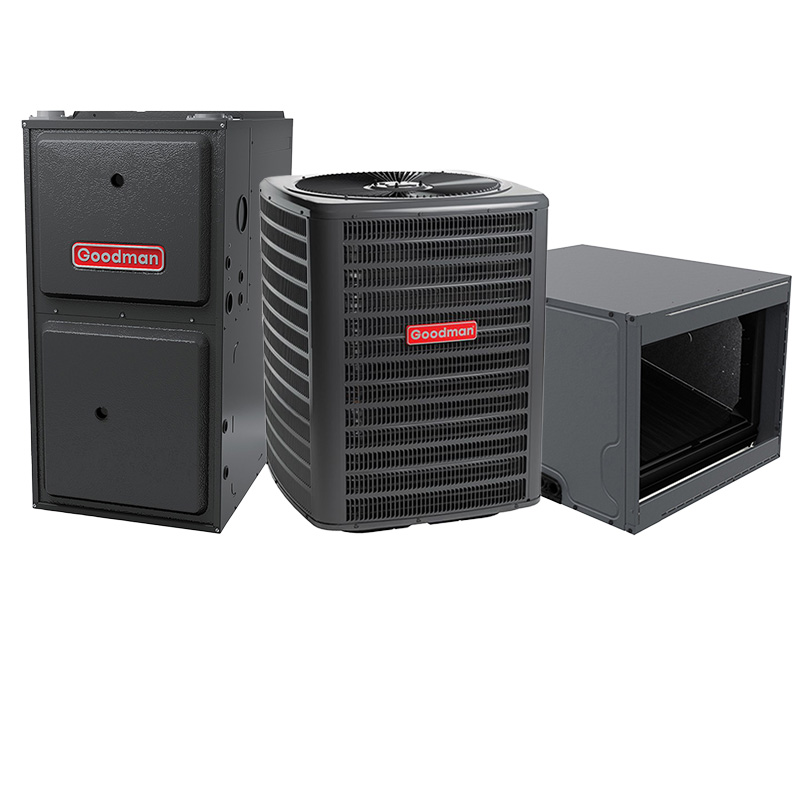
Goodman 3 Ton 13.8 SEER2 100000 BTU 96% AFUE Two Stage Multi-Speed ECM Gas Furnace System – Horizontal | R32
View on AC Direct see your lowest price →Check current price on AC Direct →
Key features
- 3-ton cooling capacity suited to roughly 1,400 to 1,900 sq ft
- 13.8 SEER2 cooling efficiency meets current federal minimum standards
- 96% AFUE two-stage gas furnace reduces fuel waste and temperature swings
- Multi-speed ECM blower motor lowers electricity use and improves comfort
- Horizontal configuration designed for attic or crawl space installations
- R-32 refrigerant with lower global-warming potential than R-410A
About this system
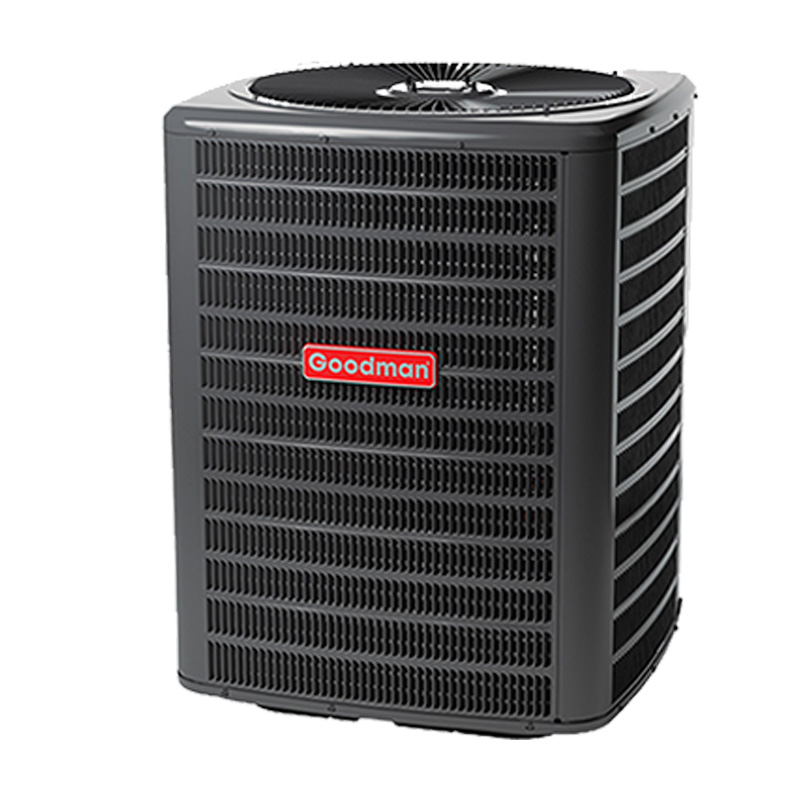
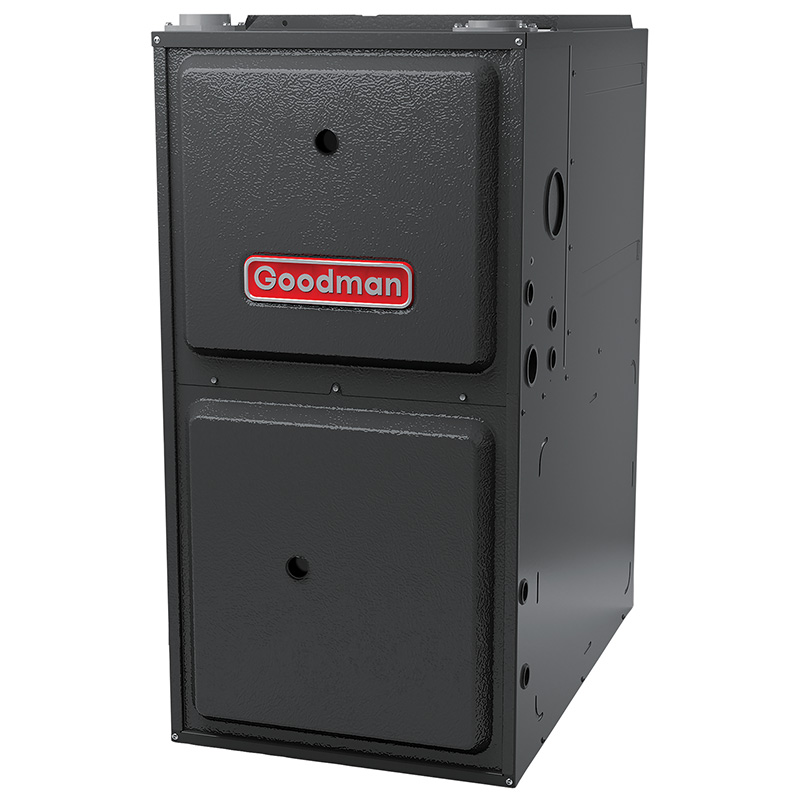
This Goodman 3-ton horizontal gas furnace and air conditioning system pairs a 13.8 SEER2 cooling unit with a 100,000 BTU, 96% AFUE two-stage furnace, making it a practical choice for homes in the 1,400 to 1,900 square foot range that need heating and cooling equipment mounted in a horizontal orientation, such as in a crawl space or attic. The two-stage furnace runs at a lower output most of the time, which reduces temperature swings and lowers fuel consumption compared to a single-stage unit, and the multi-speed ECM blower motor further trims electricity use and improves air distribution. Using R-32 refrigerant, the system reflects a shift toward a lower global-warming-potential option that is becoming standard as R-410A is phased down under current EPA rules.
The 13.8 SEER2 rating sits at the regulated minimum threshold for new equipment in most U.S. climate regions, so it is not a high-efficiency standout, but it clears the compliance bar for new installations. The 96% AFUE furnace is a genuinely strong efficiency figure, converting 96 cents of every fuel dollar into usable heat, which will matter most to homeowners in colder climates with long heating seasons. Together these specs land this system squarely in the middle of the market: better than bare-bones equipment on heating efficiency, adequate but not leading-edge on cooling efficiency, and priced to appeal to budget-conscious buyers who want a functional, code-compliant system without paying a premium for a marquee brand name.
This Goodman system delivers solid heating efficiency and adequate cooling performance at a price point that undercuts Trane, Carrier, and Lennox by a meaningful margin, making it a reasonable choice for buyers who are cost-focused and willing to invest in a skilled installation. The trade-off is a brand track record that shows higher long-term repair rates and shorter average compressor life than premium alternatives, so the upfront savings can narrow over a 12-to-15-year ownership horizon. It suits homeowners who want two-stage comfort features without the premium brand price, provided they choose an experienced installer.
Overall score is the average of the five ratings above.
What we like
- 96% AFUE furnace provides strong fuel efficiency for cold-climate heating seasons
- Two-stage heating reduces short-cycling and uneven temperatures compared to single-stage units
- Multi-speed ECM motor lowers blower electricity consumption and runs quieter at low stage
- R-32 refrigerant is future-ready as R-410A is phased down under EPA regulations
- Priced 15 to 25 percent below comparable Trane, Lennox, and Carrier systems
Trade-offs
- 13.8 SEER2 is only at the regulatory minimum for cooling, not a high-efficiency tier
- Compressor average lifespan of 10 to 14 years trails premium brands at 15 to 20 years
- Dual-run capacitor failures and evaporator coil leaks are documented recurring issues
- Overall longevity and reliability are heavily dependent on installation quality
What homeowners and pros say about Goodman
Homeowners who have lived with Goodman equipment for several years tend to echo what the numbers suggest: affordability is the standout at purchase, and the system works fine early on, but the experience can vary sharply depending on who installed it. On Google dealer review pages, where ratings across locations average around 3.8 out of 5, the most consistent praise is straightforward: the price made a full system replacement possible without financing stress. On ConsumerAffairs, where the brand averages closer to 2.5 out of 5 on a complaint-heavy channel, the frustrations that surface most often involve repair bills climbing after roughly year seven, with dual-run capacitor failures and evaporator coil leaks appearing as recurring themes. Neither picture is complete on its own, but together they sketch a brand that performs acceptably when conditions are right and shows its budget origins when they are not.
HVAC technicians tend to hold a more nuanced view than either set of online reviews. Many will note that Goodman capacitors are a predictable service call, usually resolved quickly and at modest cost, and that the brand’s two-stage furnace line, including the 96% AFUE units in this class, is genuinely well-regarded for heating comfort. The harder conversation among pros is about compressor longevity: documented averages of 10 to 14 years compare unfavorably to the 15 to 20 years commonly seen with Carrier, Trane, and Lennox equipment. For a horizontal-mount replacement in a crawl space or attic, where access for future service calls is already awkward, that gap in expected lifespan is worth weighing carefully against the upfront savings this system offers.
Sources: ConsumerAffairs Goodman owner reviews, AHRI Directory of Certified Product Performance, U.S. DOE appliance and equipment efficiency standards, Goodman product specification sheets.
What it costs to run
At 13.8 SEER2, cooling this 3-ton system for a typical 1200-hour cooling season at the U.S. average electricity rate of $0.17/kWh works out to roughly $532 per year in cooling, about $16 less per year than a minimum-efficiency 13.4 SEER2 unit of the same size. Your real cost depends on your climate and local rate.
Method: (36,000 BTU/hr ÷ 13.8 SEER2) × 1200 hours ÷ 1000 × $0.17/kWh. Rate source: U.S. EIA average; cooling hours: moderate-climate estimate.
How it compares
| Brand | Comparable model | SEER2 | Stage | Price position |
|---|---|---|---|---|
| Goodman | GSZH503610 / GMVC961005CN (this system) | 13.8 | two-stage | Value pick |
| Carrier | Performance 13 / 24ACC636A003 | 13.4 to 14.3 | single-stage | Typically 15 to 25 percent more than this Goodman system |
| Trane | XR13B series / S9X2 furnace | 13.8 to 14.3 | single-stage | Typically 15 to 25 percent more than this Goodman system |
| Lennox | Merit ML14XC1 / ML196E furnace | 14.3 | single-stage | Typically 15 to 25 percent more than this Goodman system |
Competitor rows are comparable single-stage units at similar efficiency; price is relative position, not a quote.
Questions about this system
Is 13.8 SEER2 going to cost me more to run than a higher-efficiency unit?
Yes, compared to a 16 or 17 SEER2 system, you will pay more in electricity each cooling season, with the gap most noticeable in hot climates with long summers. However, 13.8 SEER2 meets the current federal minimum, so it is legal and functional; the payback math on upgrading to a higher tier depends on your local utility rates and how many cooling hours you log each year.
Why does horizontal configuration matter and can this unit be installed in other orientations?
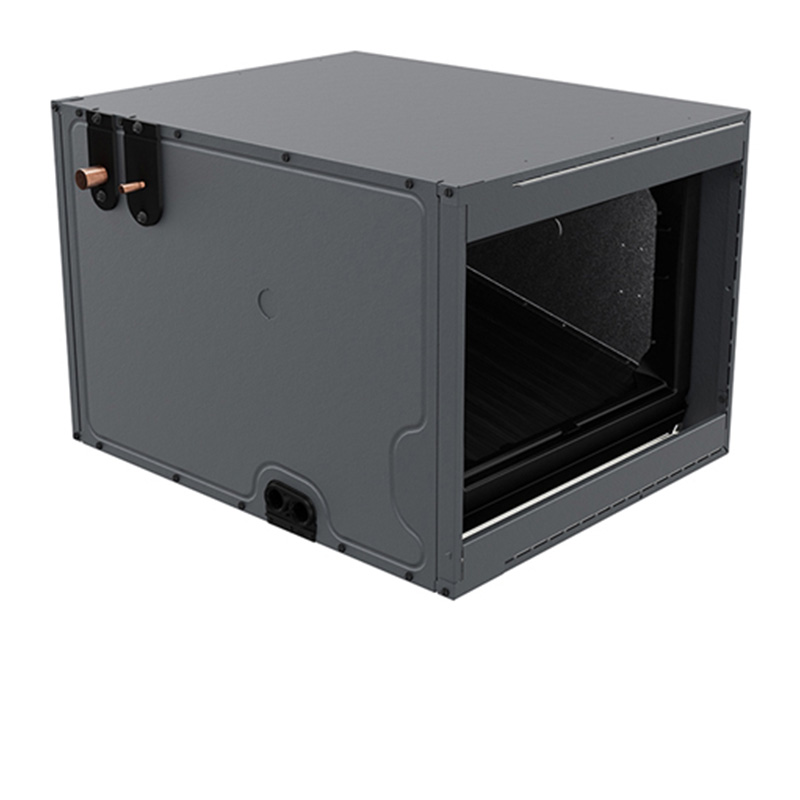
The horizontal designation means the air handler and coil are designed to mount on their side, as required in attics and crawl spaces where vertical clearance is limited. Installing equipment in the wrong orientation can cause drainage problems and void the warranty, so verify your specific model's approved configurations with your installer before purchase.
What does two-stage heating actually mean for day-to-day comfort?
The furnace operates at a lower capacity, around 65 to 70 percent of full output, for most mild heating days, which means longer, gentler heat cycles instead of short blasts of hot air. This results in more even temperatures room to room and quieter operation, with the second stage kicking in only during the coldest conditions.
R-32 refrigerant is new to me. Is it harder or more expensive to service?
R-32 is a single-component refrigerant that some technicians find easier to work with than R-410A blends, but not all HVAC technicians are yet equipped or certified to handle it, so you should confirm your service contractor has R-32 experience before the installation. It is widely available and its adoption is growing, so supply should not be an issue long-term.
Goodman has mixed reviews online. Should I be worried about reliability on this specific system?
Goodman's ConsumerAffairs rating sits around 2.5 out of 5, though that channel skews toward people who had problems; its Google dealer reviews average around 3.8 out of 5. The most documented issues are dual-run capacitor failures, which are typically a low-cost repair in the $300 to $600 range, evaporator coil leaks, and compressor lifespans that average 10 to 14 years rather than the 15 to 20 years seen with premium brands. Budgeting for a service contract or setting aside a repair fund is a reasonable precaution.
Specifications
| Cooling capacity | 3 Ton |
| Efficiency | 13.8 SEER2 |
| Furnace output | 100000 BTU |
| Furnace efficiency | 96% AFUE |
| Configuration | Horizontal |
| Refrigerant | R-32 |