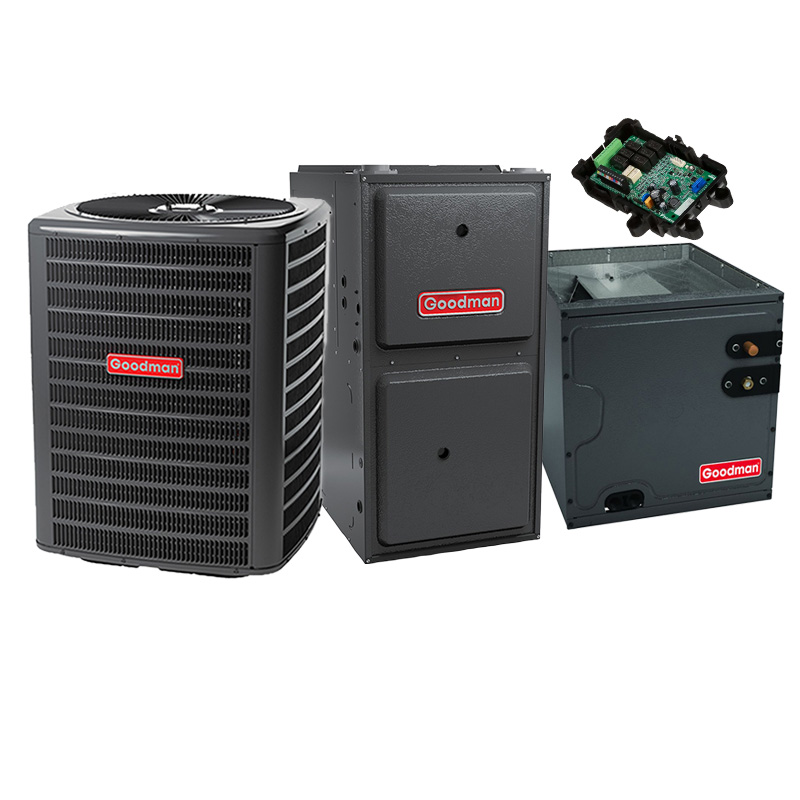
Goodman 3 Ton 14 SEER2 80000 BTU 96% AFUE Gas Furnace With R32 Air Condenser and Coil System – Upflow
View on AC Direct see your lowest price →Check current price on AC Direct →
Key features
- 3-ton cooling capacity with 14 SEER2 efficiency rating
- 80,000 BTU gas furnace at 96% AFUE high-efficiency rating
- Upflow configuration for basement or ground-level air handler installations
- R-32 refrigerant with lower global warming potential than R-410A
- Factory-matched condenser, coil, and furnace for rated system performance
- Compatible with most standard single-stage thermostats and existing ductwork
About this system
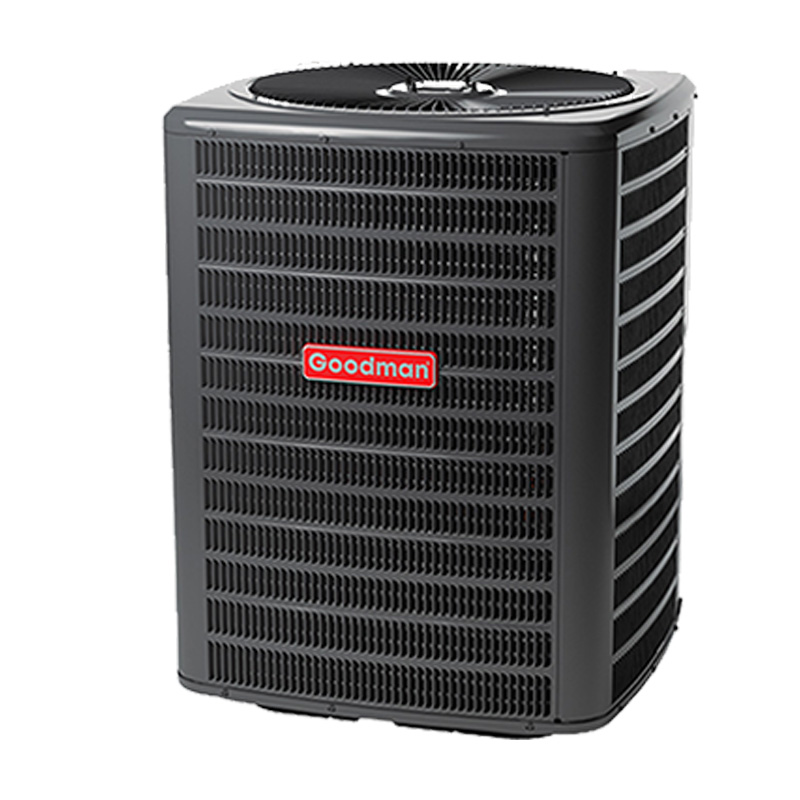
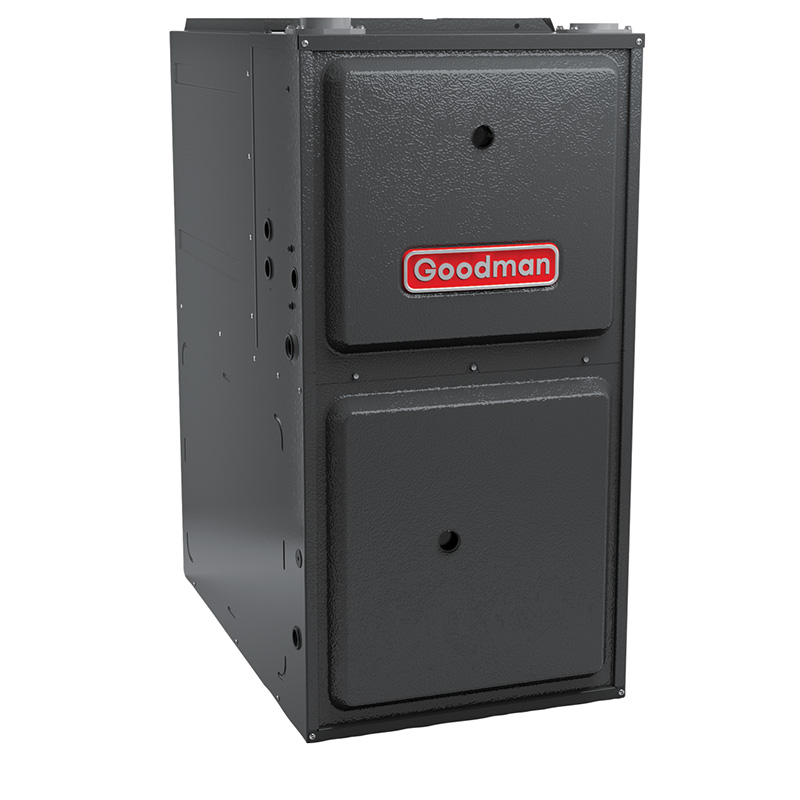
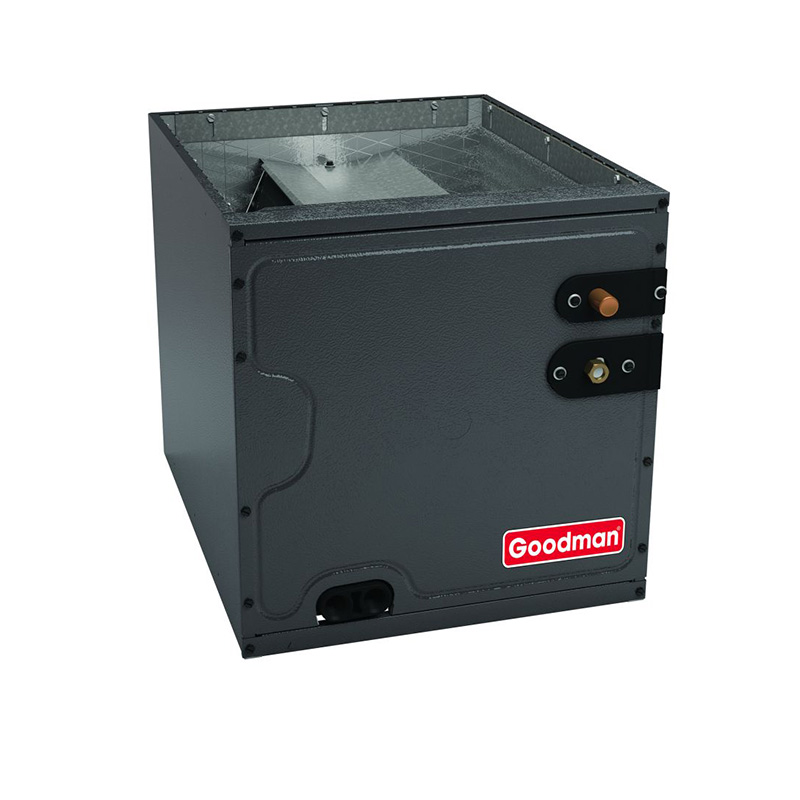
This Goodman upflow system pairs a 3-ton, 14 SEER2 R-32 air condenser and matching evaporator coil with an 80,000 BTU, 96% AFUE gas furnace. The 96% AFUE rating means the furnace converts 96 cents of every dollar of natural gas into usable heat, which puts it in the high-efficiency tier and makes it eligible for utility rebates in many regions. The 14 SEER2 cooling efficiency meets the current federal minimum for most U.S. climate zones, so you are not paying extra for efficiency headroom you may not need. R-32 refrigerant has a lower global warming potential than the older R-410A it is replacing and is becoming the new industry standard.
The upflow configuration is designed for basements, utility closets, and mechanical rooms where the furnace sits on the floor and conditioned air is delivered upward through overhead ductwork. This is one of the most common residential arrangements, and the system ships as a matched set, meaning the coil is factory-rated to work with this specific furnace and condenser. Proper sizing and a certified installation are critical with Goodman equipment in particular, because field reviews consistently show that performance and longevity track closely with how carefully the system is commissioned. This bundle suits budget-conscious homeowners replacing aging equipment in a 1,400 to 2,000 square-foot home who want a high-efficiency furnace without moving up to a premium brand price point.
This Goodman bundle delivers high-efficiency heating and code-compliant cooling at a price point that is genuinely hard to match among name-brand systems. The trade-off is a brand track record that shows more mid-life repair events than premium competitors, and long-term performance depends heavily on installation quality. It is a reasonable choice when budget is the primary constraint and a qualified installer is in the picture.
Overall score is the average of the five ratings above.
What we like
- 96% AFUE furnace keeps heating bills competitive with premium-brand high-efficiency units
- Priced roughly 15 to 25 percent below comparable Carrier, Trane, and Lennox systems
- R-32 refrigerant is forward-compatible as the industry moves away from R-410A
- Factory-matched components mean the system is pre-rated as a set, simplifying permitting
- 14 SEER2 meets federal minimums, which is sufficient efficiency for most moderate climates
Trade-offs
- Dual-run capacitors are the most frequently reported failure, typically after several years of use
- Evaporator coil leaks appear in a meaningful share of owner accounts, which can be a costly repair
- Compressor lifespan averages 10 to 14 years versus 15 to 20 years for premium-brand compressors
- A minority of owners report refrigerant leaks within the first year, usually tied to installation or charge issues
What homeowners and pros say about Goodman
Homeowners who purchased Goodman equipment cite affordability as the standout reason for choosing the brand, a pattern that shows up consistently in Google dealer reviews, which average around 3.8 out of 5 stars. Many owners report years of trouble-free operation, particularly when a careful installer set the system up correctly from day one. The picture darkens somewhat on ConsumerAffairs, where Goodman scores around 2.5 out of 5, a channel that skews toward frustrated owners rather than satisfied ones, but where a recurring theme is repair costs climbing after roughly year 7. The two scores together suggest the brand performs adequately when conditions are right, but carries more mid-life maintenance risk than premium alternatives.
HVAC technicians are direct about the specific weak points they see in the field. Dual-run capacitors are the most commonly reported failure mode on Goodman equipment, though that repair typically runs between 300 and 600 dollars and is considered a routine fix rather than a system-ending event. More concerning to pros are evaporator coil leaks, which appear in a meaningful share of owner accounts and can be significantly more expensive to address. On the cooling side, Goodman compressors tend to average 10 to 14 years of service life, compared to 15 to 20 years seen in premium brands, a gap that matters most for homeowners planning a long stay in the house. A small but noted group of first-year owners have reported refrigerant leaks, which technicians usually attribute to installation or initial charge problems rather than a defective component. For this specific system, with its 96% AFUE furnace doing the heavy lifting in colder months, a well-executed install and consistent annual maintenance represent the most effective way to get full value from the purchase.
Sources: ConsumerAffairs Goodman owner reviews, AHRI Directory of Certified Product Performance, U.S. DOE appliance and equipment efficiency standards, Goodman product specification sheets.
What it costs to run
At 14 SEER2, cooling this 3-ton system for a typical 1200-hour cooling season at the U.S. average electricity rate of $0.17/kWh works out to roughly $525 per year in cooling, about $23 less per year than a minimum-efficiency 13.4 SEER2 unit of the same size. Your real cost depends on your climate and local rate.
Method: (36,000 BTU/hr ÷ 14 SEER2) × 1200 hours ÷ 1000 × $0.17/kWh. Rate source: U.S. EIA average; cooling hours: moderate-climate estimate.
How it compares
| Brand | Comparable model | SEER2 | Stage | Price position |
|---|---|---|---|---|
| Goodman | GSXH503610 / CAPT / GMVC96 | 14 | Single-stage | Value pick |
| Carrier | Comfort 14 Series (24ACC4) | 14 | Single-stage | Typically 15 to 25 percent more than Goodman |
| Trane | XR14c Series | 14 | Single-stage | Typically 15 to 25 percent more than Goodman |
| Lennox | Merit 14ACX Series | 14 | Single-stage | Typically 15 to 25 percent more than Goodman |
Competitor rows are comparable single-stage units at similar efficiency; price is relative position, not a quote.
Questions about this system
Is the 14 SEER2 rating sufficient, or should I pay more for a higher-efficiency condenser?
For most homes in moderate climates, 14 SEER2 provides reasonable operating costs and meets current federal minimums. Upgrading to 16 or 18 SEER2 pays back faster in hot climates where the air conditioner runs for long stretches, but in milder regions the payback period on the higher upfront cost can stretch beyond 10 years.
How concerned should I be about the reported evaporator coil leaks?
Coil leaks are a documented pattern in Goodman owner reviews rather than an isolated complaint. If a leak develops outside the warranty period, refrigerant recovery, coil replacement, and recharge can run into the thousands of dollars. Confirming your warranty coverage and keeping up with annual maintenance checks is the best mitigation.
What does the warranty cover and for how long?
Goodman typically offers a 10-year parts limited warranty on registered equipment, including the compressor, heat exchanger, and coil. Registration must be completed within a set window after installation, and the warranty generally requires a licensed contractor to perform the original install. Read the actual warranty document before purchase, as terms can vary by model and region.
Can I install this system myself to save money?
No. Handling refrigerant requires EPA 608 certification, and gas furnace work requires a licensed HVAC contractor in virtually every jurisdiction. Beyond legality, Goodman's own track record shows that installation quality is the single biggest factor in how long the equipment lasts, so cutting corners here carries real risk to both safety and warranty validity.
My home uses R-410A in the existing system. Can I reuse the refrigerant lines?
Possibly, but it depends on line condition, diameter, and length. R-32 operates at similar pressures to R-410A, so existing copper line sets that are clean, correctly sized, and free of leaks are often reusable. Your installer should pressure-test and flush the existing lines before connecting them to the new R-32 system, since residual R-410A oil is not compatible with R-32 systems.
Specifications
| Cooling capacity | 3 Ton |
| Efficiency | 14 SEER2 |
| Furnace output | 80000 BTU |
| Furnace efficiency | 96% AFUE |
| Configuration | Upflow |
| Refrigerant | R-32 |