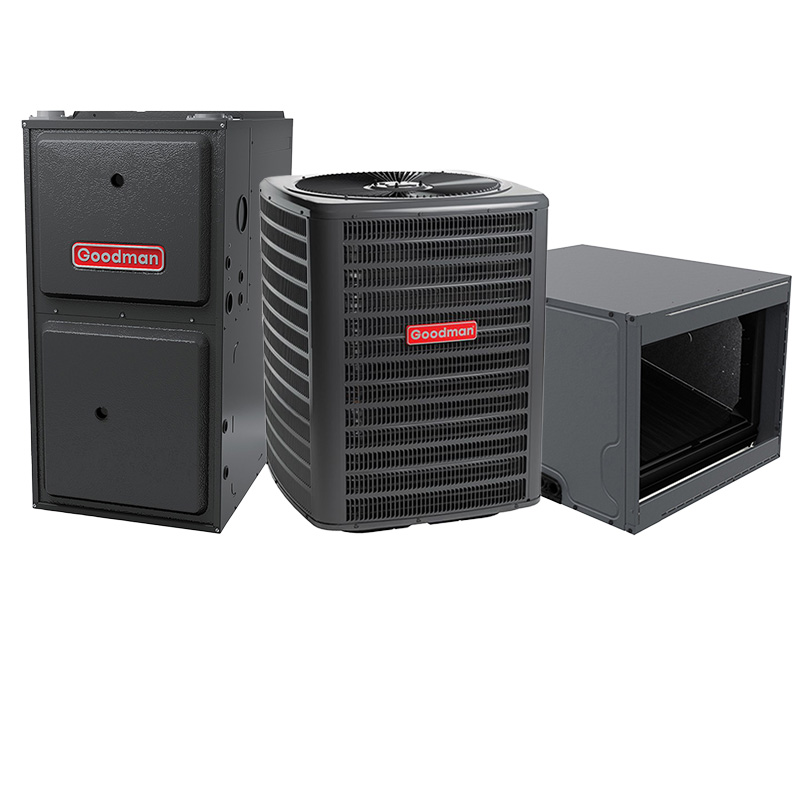
Goodman 3 Ton 13.8 SEER2 80000 BTU 96% AFUE Two Stage Multi-Speed ECM Gas Furnace System – Horizontal | R32
View on AC Direct see your lowest price →Check current price on AC Direct →
Key features
- 96% AFUE two-stage gas furnace reduces fuel waste and short cycling
- 13.8 SEER2 cooling efficiency meets current federal minimum standards
- Multi-speed ECM blower motor lowers electricity use and improves humidity control
- Horizontal configuration designed for attic, closet, or crawlspace installations
- R-32 refrigerant with lower global warming potential than R-410A
- 3-ton capacity suitable for approximately 1,500 to 2,100 sq ft depending on climate and insulation
About this system
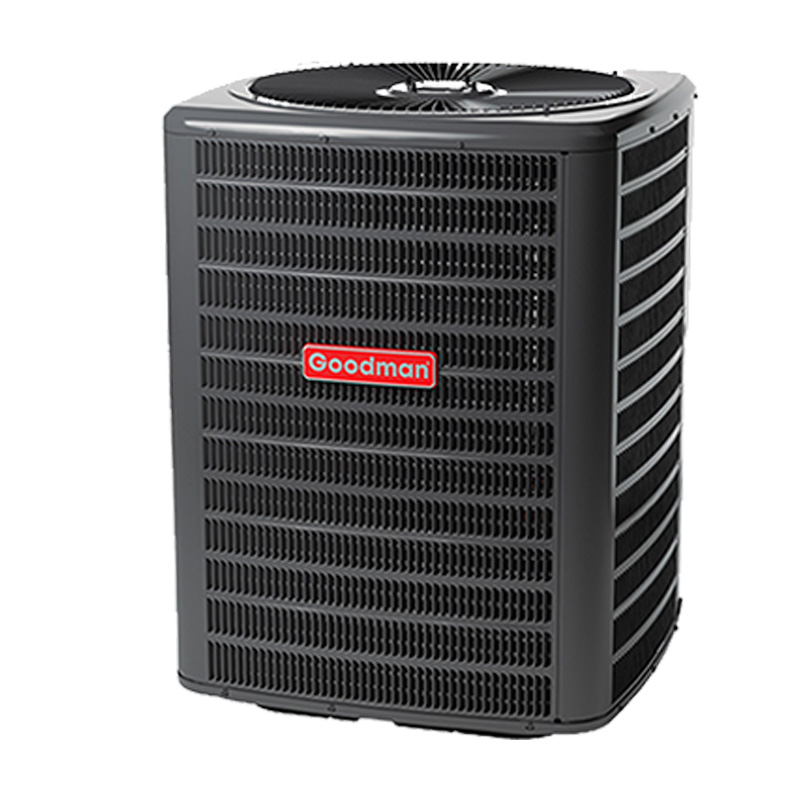
This Goodman 3-ton horizontal system pairs a 13.8 SEER2 cooling unit with an 80,000 BTU, 96% AFUE two-stage gas furnace, making it a strong candidate for homes in moderate to cold climates where both heating efficiency and summer comfort matter. The horizontal configuration is specifically suited to attic installations, crawlspace setups, or any mechanical space where a vertical unit simply will not fit. R-32 refrigerant carries a lower global warming potential than older R-410A, and several states are moving toward mandating it, so this system is positioned for regulatory longevity.
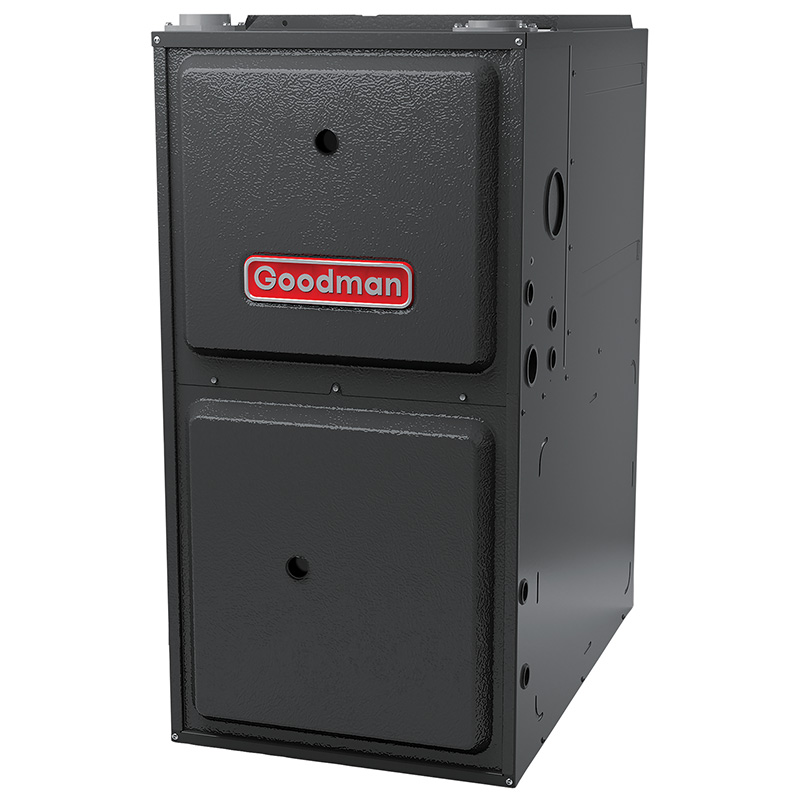
The two-stage furnace and multi-speed ECM blower are the real workhorses here. A two-stage gas valve runs at a lower fire rate most of the time, only stepping up on the coldest days, which improves temperature consistency and reduces short cycling compared to single-stage units. The ECM motor adjusts airflow in small increments rather than blasting at full speed every time, which cuts blower electricity consumption noticeably and improves humidity control. These are genuine comfort upgrades, not marketing language. At 96% AFUE, almost none of the fuel you pay for goes up the flue. For a budget-oriented brand, this spec sheet is genuinely competitive.
Buyers should understand that Goodman prices itself 15 to 25 percent below Trane, Lennox, and Carrier for comparable equipment, and that gap is real money on a system like this. The trade-off is a compressor that historically averages 10 to 14 years versus 15 to 20 years for premium-brand counterparts, and a brand reputation that sits closer to functional than exceptional. This system suits cost-conscious homeowners who want high-efficiency specs without the premium-brand price tag, provided they use a careful installer and stay current on maintenance.
This Goodman system delivers genuinely high-efficiency specs at a price point premium brands cannot match, and the two-stage furnace with ECM blower is a real comfort upgrade over entry-level equipment. The trade-offs are a compressor that may not last as long as top-tier brands and a brand track record that depends heavily on who installs it and how well it is maintained. For budget-aware buyers willing to vet their installer carefully, it is a reasonable buy.
Overall score is the average of the five ratings above.
What we like
- 96% AFUE furnace keeps heating costs low in cold climates
- Two-stage operation reduces temperature swings and noisy cycling
- ECM blower motor cuts electrical draw compared to PSC motors
- R-32 refrigerant is forward-looking as regulations tighten
- Priced 15 to 25 percent below comparable Trane, Lennox, and Carrier systems
Trade-offs
- Dual-run capacitors are the most frequently reported failure, typically in years 4 to 8
- Compressor lifespan averages 10 to 14 years versus 15 to 20 for premium brands
- Evaporator coil leaks appear in a meaningful share of owner reports over time
- A minority of owners report refrigerant leaks within the first year, often traced to installation rather than the equipment itself
What homeowners and pros say about Goodman
Homeowners who have lived with Goodman equipment tend to land in two camps. Those who had a careful installation and keep up with annual maintenance often report years of trouble-free operation and point to the lower purchase price as money well spent. Those who run into problems more often cite repair costs climbing after year 7, a pattern that tracks directly with the brand’s ConsumerAffairs score of roughly 2.5 out of 5, a channel where dissatisfied owners are heavily overrepresented but where the repair-cost complaints are consistent enough to take seriously. Google dealer reviews, which capture a broader cross-section of buyers, come in around 3.8 out of 5, and affordability is the praise that shows up most often there.
HVAC technicians who work on Goodman equipment regularly tend to view it as serviceable but maintenance-dependent. The dual-run capacitor is widely cited as the brand’s most predictable weak point, a low-stakes repair when caught on a tune-up but an uncomfortable surprise when it fails mid-July. Evaporator coil leaks are the more serious documented concern, since a leaking coil means lost refrigerant and potentially a costly coil replacement several years into ownership. Compressor lifespan averaging 10 to 14 years versus the 15 to 20 years seen with Trane and Carrier is a real long-term cost consideration. Pros who recommend Goodman typically do so with the explicit caveat that install quality is the single biggest variable in how long any unit lasts, and that caveat applies here more than it does with premium brands that carry more built-in tolerance for imperfect conditions.
Sources: ConsumerAffairs Goodman owner reviews, AHRI Directory of Certified Product Performance, U.S. DOE appliance and equipment efficiency standards, Goodman product specification sheets.
What it costs to run
At 13.8 SEER2, cooling this 3-ton system for a typical 1200-hour cooling season at the U.S. average electricity rate of $0.17/kWh works out to roughly $532 per year in cooling, about $16 less per year than a minimum-efficiency 13.4 SEER2 unit of the same size. Your real cost depends on your climate and local rate.
Method: (36,000 BTU/hr ÷ 13.8 SEER2) × 1200 hours ÷ 1000 × $0.17/kWh. Rate source: U.S. EIA average; cooling hours: moderate-climate estimate.
How it compares
| Brand | Comparable model | SEER2 | Stage | Price position |
|---|---|---|---|---|
| Goodman | GSZH503610 / GMVC960803BN (this system) | 13.8 | Two-stage | Value pick |
| Carrier | Performance 13 / 58TP Series | 13.8 | Single-stage | Typically 15 to 25 percent more than this Goodman system |
| Trane | XR13B / S9X1 Series | 13.8 | Single-stage | Typically 15 to 25 percent more than this Goodman system |
| Lennox | Merit 13ACX / ML196 Series | 13.8 | Single-stage | Typically 15 to 25 percent more than this Goodman system |
Competitor rows are comparable single-stage units at similar efficiency; price is relative position, not a quote.
Questions about this system
Why does this system require a horizontal configuration and can I install it vertically?
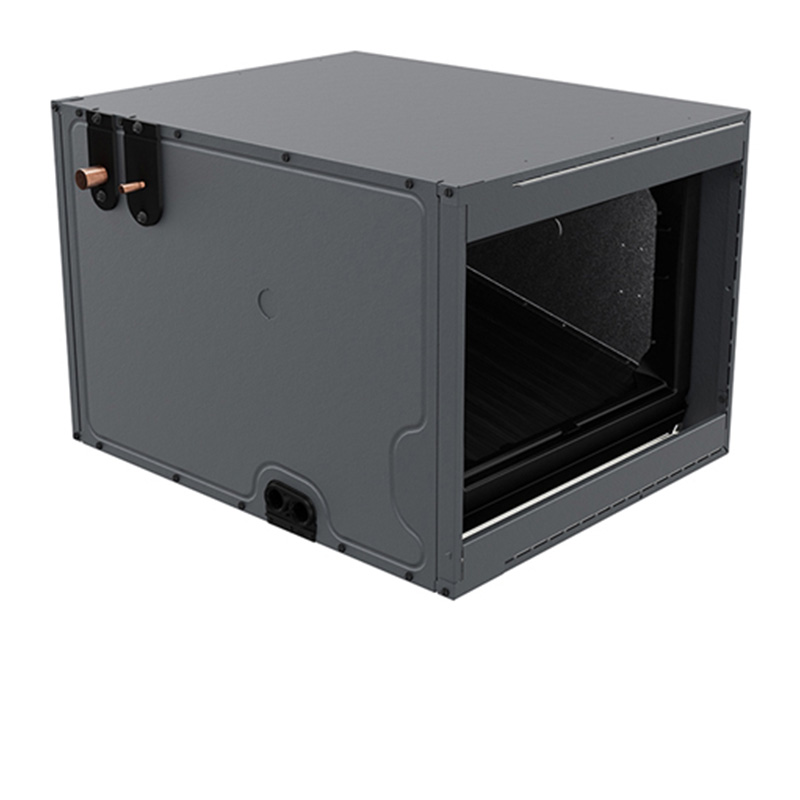
Horizontal models have the coil and drain pan oriented for side-discharge airflow, which is correct for attic or crawlspace installs where the unit lies on its side. Using a horizontal coil in a vertical application will cause condensate drainage problems and possible water damage. If you need vertical installation, you would need a different model configured for that orientation.
What does two-stage mean on the furnace, and will I actually notice it day to day?
Two-stage means the gas valve has a low-fire setting, typically around 65 percent of capacity, and a high-fire setting at full capacity. On most heating calls the furnace runs on low fire, which produces longer, quieter cycles and more even temperatures throughout the house. Most homeowners with two-stage furnaces report noticeably fewer hot and cold spots compared to their old single-stage equipment.
Is R-32 refrigerant harder or more expensive to service than R-410A?
R-32 requires technicians who are certified to handle mildly flammable refrigerants, since it has a low flammability rating that R-410A does not. In most markets qualified technicians are available, but you should confirm your service contractor is certified for R-32 before committing. Refrigerant costs are broadly comparable to R-410A at this point, though pricing can vary by region and supplier.
How worried should I be about the capacitor failures mentioned in Goodman reviews?
Dual-run capacitor failure is the most frequently documented issue with Goodman equipment and typically shows up somewhere between years 4 and 8. The repair itself is generally low-cost, usually in the 300 to 600 dollar range including labor, and a competent technician can complete it in under an hour. Budgeting for this possibility and scheduling annual preventive maintenance checks are the most practical ways to stay ahead of it.
Does Goodman's warranty cover labor costs if something fails in year two or three?
Goodman's standard registered warranty covers parts only, not labor. Labor costs on a compressor or coil replacement can exceed the part cost itself, so many homeowners add an extended labor warranty through their installer or a third-party service plan. This is worth pricing out at installation time, particularly given the documented coil leak and compressor failure patterns in owner reports.
Specifications
| Cooling capacity | 3 Ton |
| Efficiency | 13.8 SEER2 |
| Furnace output | 80000 BTU |
| Furnace efficiency | 96% AFUE |
| Configuration | Horizontal |
| Refrigerant | R-32 |