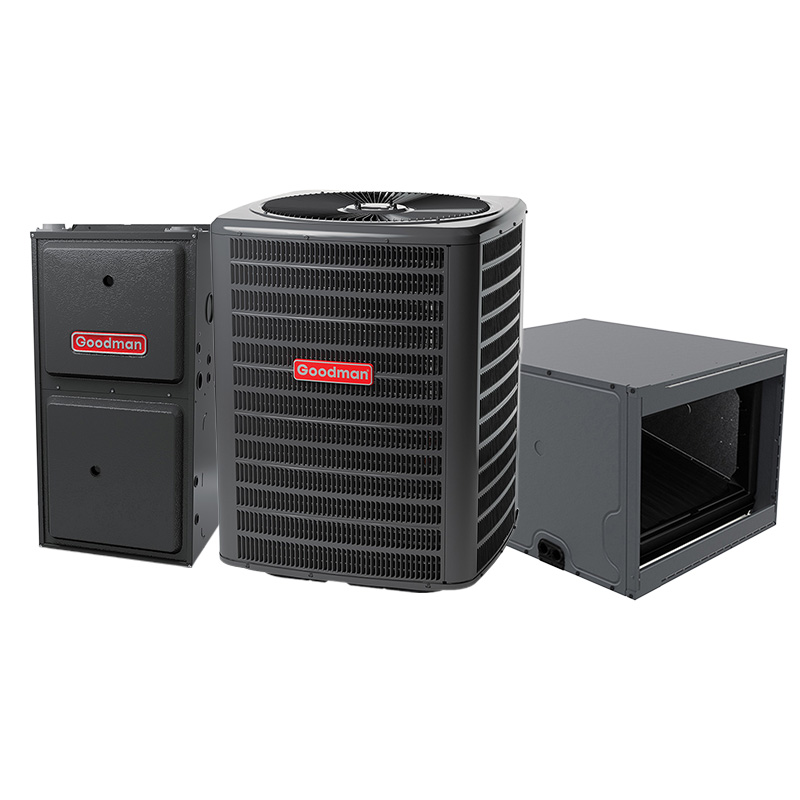
Goodman 3 Ton 13.8 SEER2 AC & Gas Furnace System – Multi-Speed, 100000 BTU Gas Furnace, 92% AFUE, Horizontal, R32
View on AC Direct see your lowest price →Check current price on AC Direct →
Key features
- 3-ton cooling capacity, 13.8 SEER2 efficiency rating
- 100,000 BTU gas furnace at 92% AFUE, non-condensing
- Horizontal configuration for attic, crawl space, or side-discharge installs
- Multi-speed blower motor for quieter, more even airflow than single-speed
- R-32 refrigerant with lower global-warming potential than R-410A
- Matched system eligible for Goodman's parts and labor warranty when registered
About this system
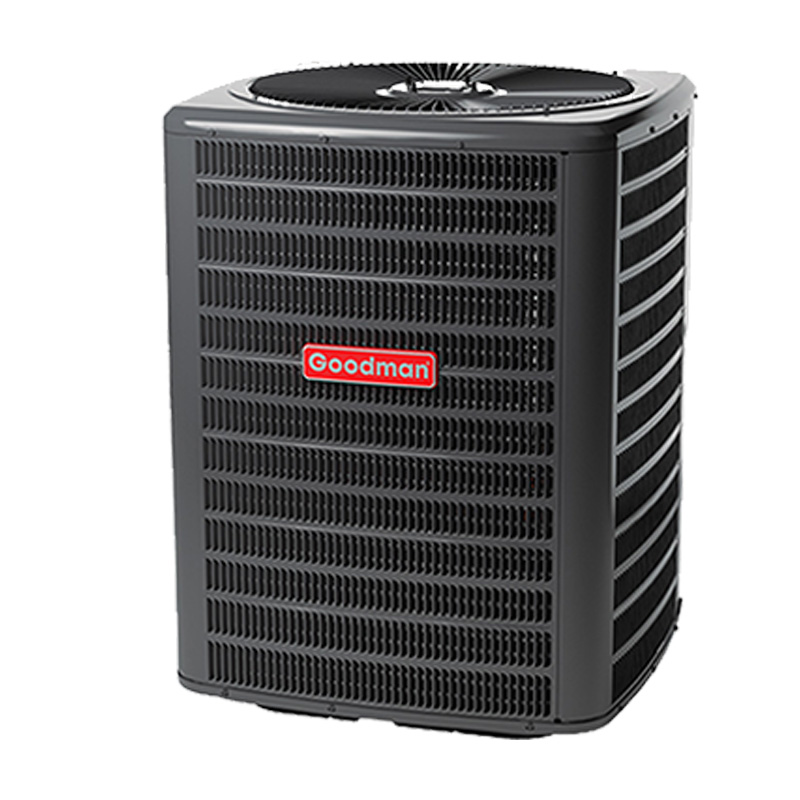
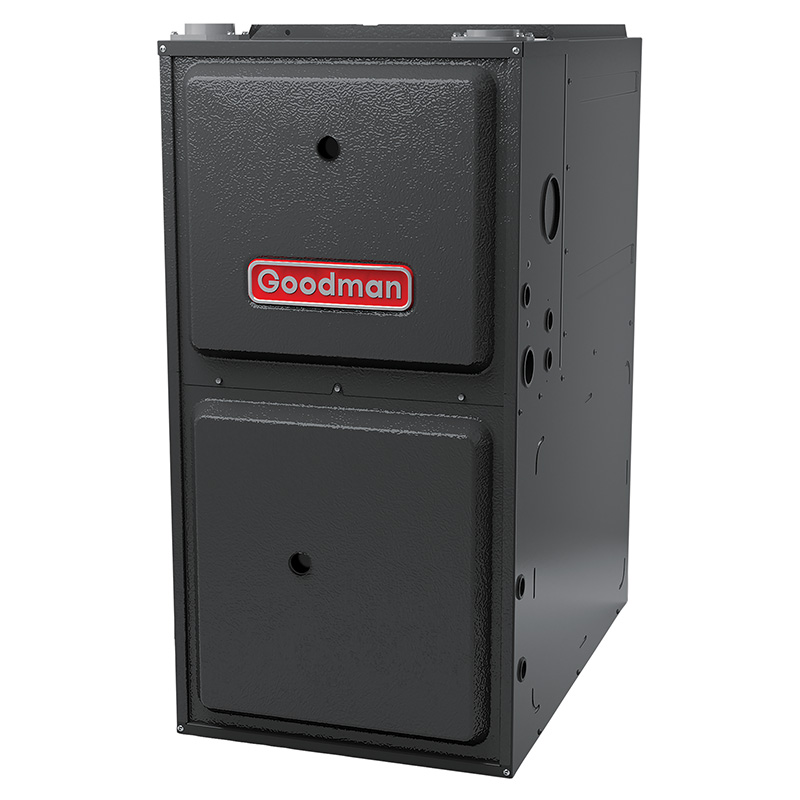
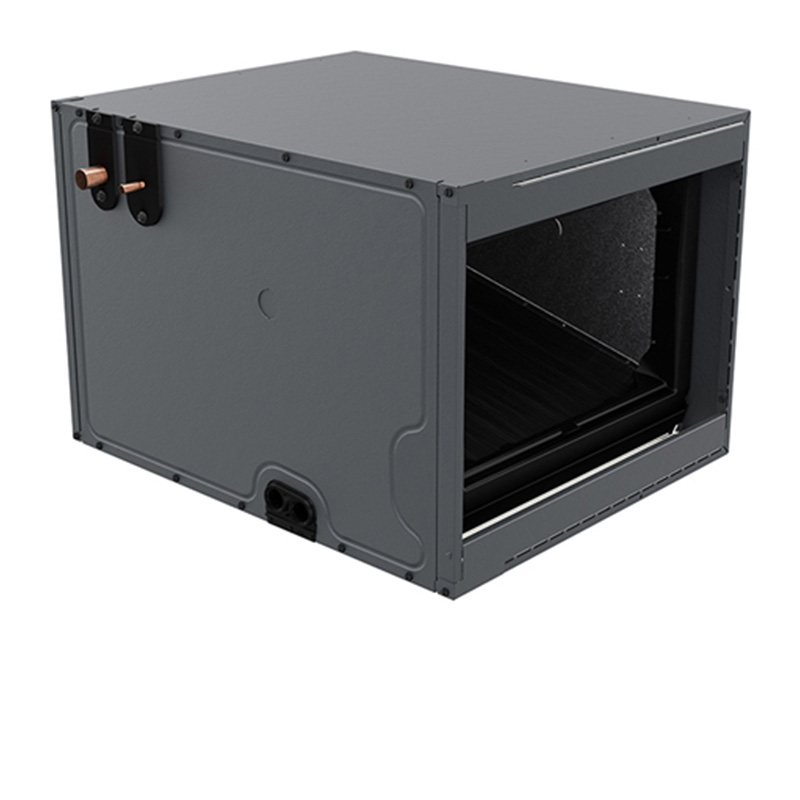
The Goodman GLXS3BN3610D pairs a 3-ton, 13.8 SEER2 central air conditioner with a 100,000 BTU, 92% AFUE multi-speed gas furnace in a horizontal configuration, making it a practical choice for homes where the air handler sits in a crawl space, attic, or utility closet with a side-discharge layout. The R-32 refrigerant charge is a forward-looking detail: R-32 carries a lower global-warming potential than the R-410A it replaces, and most HVAC technicians are already certified to work with it, so service availability is not a concern in most markets.
At 13.8 SEER2 this system clears the current federal minimum efficiency thresholds for most U.S. climate zones but sits at the lower end of the mid-efficiency range. Expect meaningful savings over an older 8 to 10 SEER system, though homeowners in hot southern climates who run the AC four or five months a year may find that stepping up to a 16 or 17 SEER2 unit pays back the price difference within five to eight years. The 92% AFUE furnace is a solid non-condensing choice: it avoids the PVC condensate drain plumbing that a 96% or higher unit requires, which can simplify horizontal installations considerably. The multi-speed blower delivers quieter, more even airflow than a single-speed motor without the full cost of a variable-speed system.
The GLXS3BN3610D is a competent entry-level system that delivers reliable heating and cooling at a price point 15 to 25 percent below comparable Trane, Lennox, and Carrier equipment. It suits budget-conscious homeowners who prioritize upfront cost and plan to stay on top of routine maintenance, understanding that some components, particularly capacitors and evaporator coils, have a documented history of earlier-than-premium wear. Install quality matters more with Goodman than with most competing brands, so contractor selection is as important as the equipment choice itself.
Overall score is the average of the five ratings above.
What we like
- Purchase price typically 15 to 25 percent below Trane, Lennox, and Carrier equivalents at this efficiency tier
- Horizontal configuration covers install scenarios that upflow-only units cannot serve
- 92% AFUE avoids condensate plumbing complexity of higher-efficiency condensing furnaces
- R-32 refrigerant is already widely serviceable and meets near-term regulatory direction
- Multi-speed blower improves comfort and reduces noise over basic single-speed alternatives
Trade-offs
- Compressor lifespan averages 10 to 14 years, shorter than the 15 to 20 years reported for premium brands
- Dual-run capacitor failures are the most commonly documented repair, typically appearing after year 5 to 7
- A minority of owners report refrigerant leaks in the first year, usually tied to install or charge quality
- Evaporator coil leaks appear in a meaningful share of long-term owner reviews, adding potential repair costs after year 7
What homeowners and pros say about Goodman
Homeowners who have lived with a Goodman system for several years tend to land in one of two camps. Those who had a careful installation and kept up with annual maintenance report years of unremarkable, functional service and consistently point to the lower purchase price as the reason they chose the brand. Those who ran into trouble more often trace it back to capacitor failures, which Goodman owners cite as the most common repair and which typically cost between 300 and 600 dollars to address, or to evaporator coil leaks that surface further into the system’s life. A small minority report refrigerant leaks in the first year, a pattern that technicians generally attribute to install or initial charge problems rather than a factory defect. On ConsumerAffairs, where unhappy owners are overrepresented, Goodman scores around 2.5 out of 5, with repair cost escalation after year 7 as the recurring theme. Google reviews aggregated across dealer locations tell a more balanced story, averaging around 3.8 out of 5, with affordability cited most often as the deciding factor.
HVAC professionals have a nuanced take on Goodman. Many installers are comfortable recommending it to cost-conscious buyers, provided they are also honest about the trade-offs: compressor lifespan averaging 10 to 14 years versus 15 to 20 for premium equipment, and component quality that demands a clean, precise installation to reach its potential. Technicians who see the most Goodman callbacks point to rushed installs, under- or overcharged refrigerant, and skipped startup checks as the common thread. For this horizontal-configuration system specifically, pros note that horizontal installs add one more variable, proper slope and drain management, that a less experienced crew can get wrong. The consensus is that Goodman represents fair value when the installer is skilled and the buyer enters with realistic expectations about long-term repair costs.
Sources: ConsumerAffairs Goodman owner reviews, AHRI Directory of Certified Product Performance, U.S. DOE appliance and equipment efficiency standards, Goodman product specification sheets.
What it costs to run
At 13.8 SEER2, cooling this 3-ton system for a typical 1200-hour cooling season at the U.S. average electricity rate of $0.17/kWh works out to roughly $532 per year in cooling, about $16 less per year than a minimum-efficiency 13.4 SEER2 unit of the same size. Your real cost depends on your climate and local rate.
Method: (36,000 BTU/hr ÷ 13.8 SEER2) × 1200 hours ÷ 1000 × $0.17/kWh. Rate source: U.S. EIA average; cooling hours: moderate-climate estimate.
How it compares
| Brand | Comparable model | SEER2 | Stage | Price position |
|---|---|---|---|---|
| Goodman | GLXS3BN3610D | 13.8 | Single-stage | Value pick |
| Carrier | Comfort Series (24ACC636) | 13.8–14.3 | Single-stage | Typically 15 to 25 percent more than Goodman |
| Trane | XR13 Series | 13.8–14.0 | Single-stage | Typically 15 to 25 percent more than Goodman |
| Lennox | Merit Series (13ACX) | 13.8–14.0 | Single-stage | Typically 15 to 25 percent more than Goodman |
Competitor rows are comparable single-stage units at similar efficiency; price is relative position, not a quote.
Questions about this system
Is the horizontal configuration the only option for this model, or can it be installed in an upflow orientation?
This specific model (GLXS3BN3610D) is rated for horizontal installation. If your home requires an upflow furnace, Goodman offers separate models designed for that orientation, and mixing configurations is not recommended as it affects heat exchanger drainage and airflow performance.
What does R-32 refrigerant mean for me as a homeowner, and will local technicians be able to service it?
R-32 is a single-component refrigerant with a lower global-warming potential than R-410A and is already in wide use in mini-split systems across the U.S. Most licensed HVAC technicians have or can easily obtain the certification to handle it, so service availability is not a practical concern in the vast majority of markets.
How do Goodman's warranty terms work, and what do I need to do to activate the full coverage?
Goodman requires product registration within a set window after installation, typically 60 days, to unlock the extended parts and labor warranty on matched systems. Without registration the coverage defaults to a shorter base period, so confirming registration with your installer immediately after the job is important.
Goodman has lower consumer ratings than some other brands. Should that concern me?
The ConsumerAffairs score for Goodman runs around 2.5 out of 5, which reflects a channel where dissatisfied owners are far more likely to post than happy ones, and recurring complaints center on repair costs climbing after roughly year 7. Google dealer reviews average closer to 3.8 out of 5, with affordability as the most common praise. The realistic picture is that Goodman performs adequately when installed correctly but has documented weak points, particularly capacitors and evaporator coils, that are worth factoring into your long-term cost estimate.
Why does install quality matter more with Goodman than with premium brands?
Technicians consistently note that Goodman's performance and lifespan are more sensitive to proper refrigerant charge, airflow calibration, and electrical connections than higher-tier equipment, which tends to have tighter manufacturing tolerances and more robust components that can tolerate minor installation imperfections. Choosing an experienced, licensed contractor and verifying they pull permits and perform a commissioning check is especially important with this brand.
Specifications
| Cooling capacity | 3 Ton |
| Efficiency | 13.8 SEER2 |
| Furnace output | 100000 BTU |
| Furnace efficiency | 92% AFUE |
| Configuration | Horizontal |
| Refrigerant | R-32 |
| Model | GLXS3BN3610D |