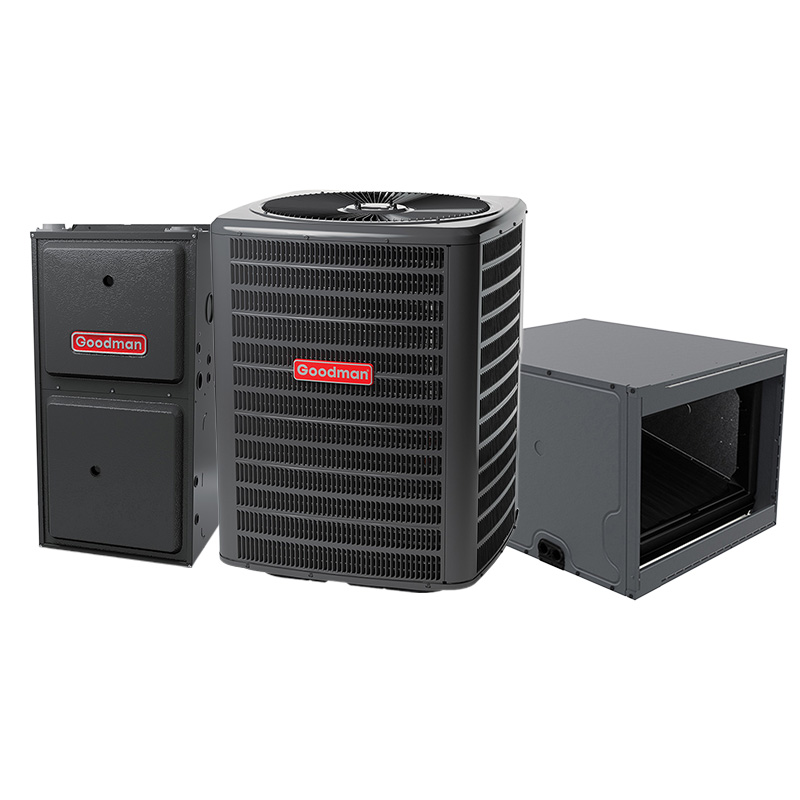
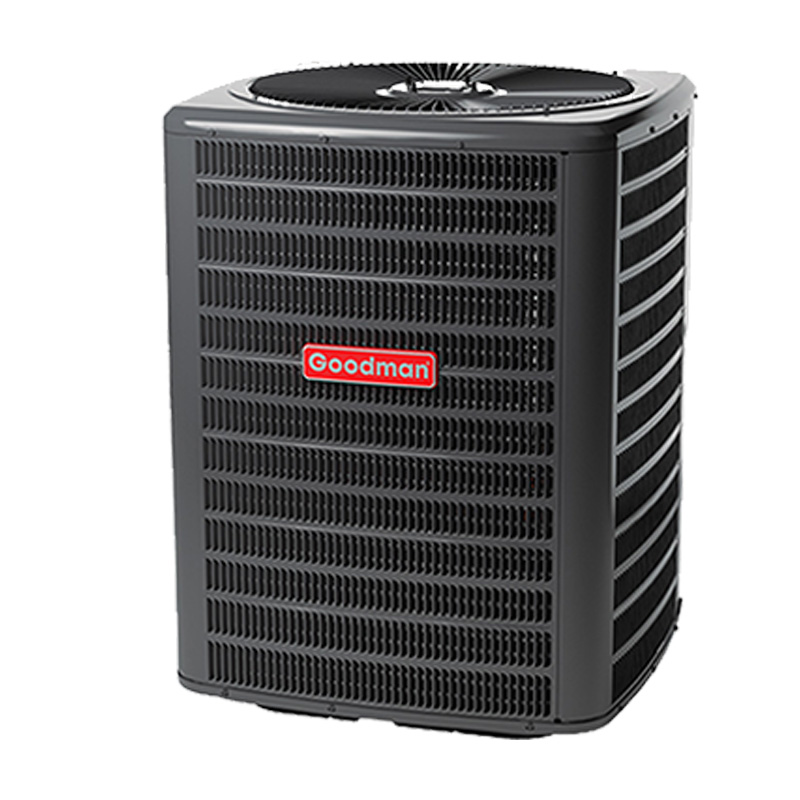
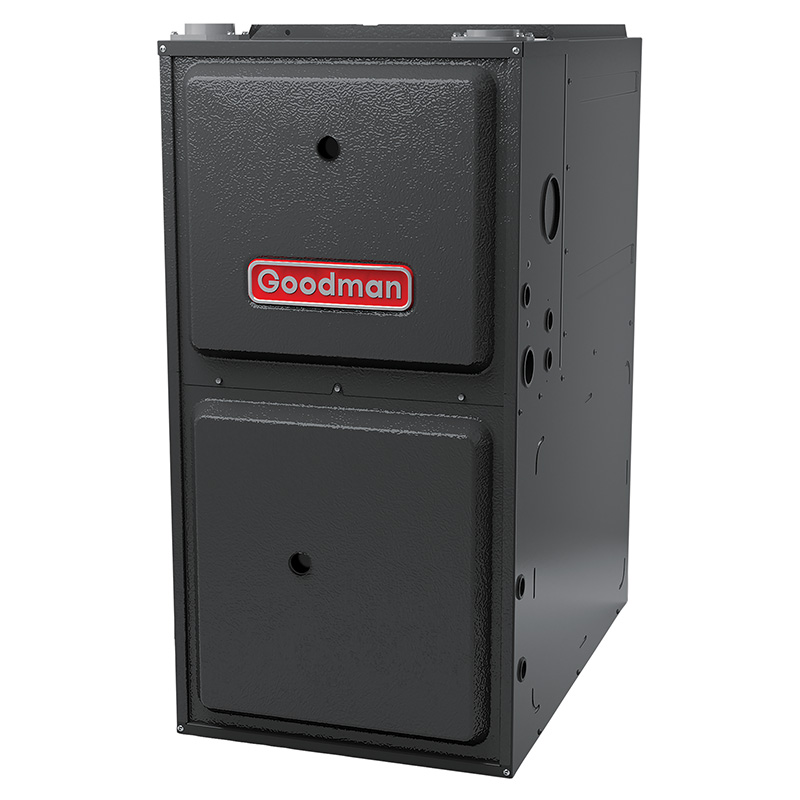
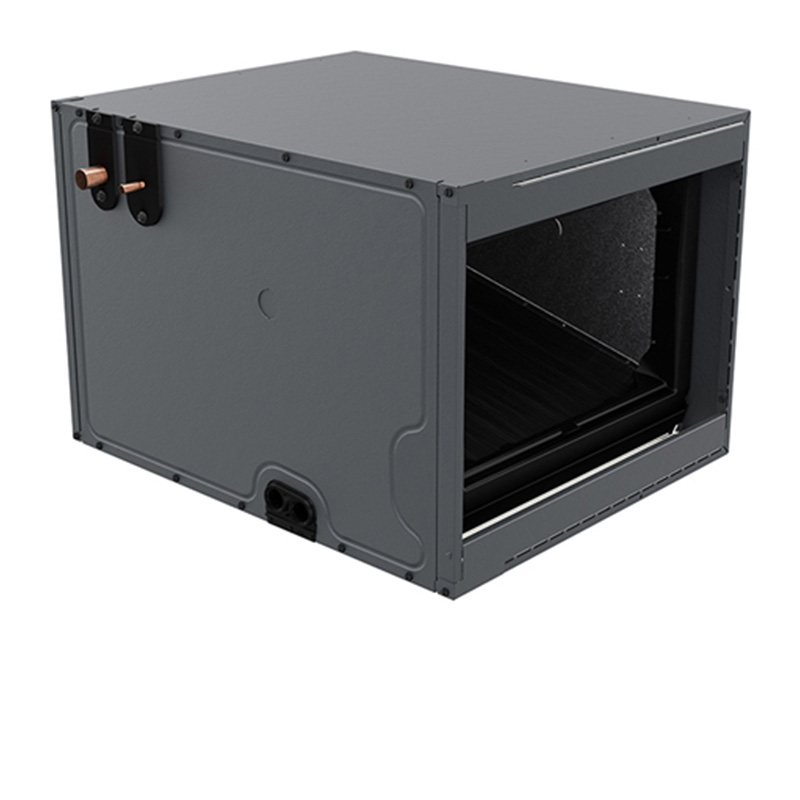
Goodman 3 Ton 13.8 SEER2 AC & Gas Furnace System – Multi-Speed, 80000 BTU Gas Furnace, 92% AFUE, Horizontal, R32
View on AC Direct see your lowest price →Check current price on AC Direct →
Key features
- 3-ton cooling capacity with 13.8 SEER2 efficiency rating
- 80,000 BTU gas furnace at 92% AFUE for mid-tier fuel efficiency
- Horizontal configuration designed for attic, crawl space, or side-discharge installations
- R-32 refrigerant with lower global-warming potential than R-410A
- Multi-speed blower motor for more consistent airflow on heating cycles
- Matched system sold as a single SKU for straightforward parts sourcing and warranty alignment
About this system
The Goodman GLXS3BN3610D pairs a 3-ton, 13.8 SEER2 central air conditioner with an 80,000 BTU, 92% AFUE gas furnace in a horizontal configuration, making it a practical choice for homes where the air handler sits in a crawl space, attic, or tight mechanical room rather than a standard upright closet. The R-32 refrigerant charge keeps the global-warming potential lower than older R-410A systems, and the multi-speed blower gives the furnace side more flexibility than a single-speed motor when it comes to balancing airflow across different heat demands.
At 13.8 SEER2 and 92% AFUE, this system sits at the entry tier of current federal efficiency minimums rather than at the top. Homeowners in mild climates or those replacing an aging 8 to 10 SEER system will see a real reduction in cooling and heating bills, but buyers in hot, humid regions who run their AC heavily from May through September may find that stepping up to a 16 or 17 SEER2 unit pays back the difference in three to five years. The 92% AFUE furnace is a solid mid-efficiency choice that avoids the condensate drain complexity of 96%+ units while still recovering most of the fuel you burn.
This system suits budget-conscious homeowners replacing a failed system on a timeline, rental property owners looking for reliable baseline performance without overspending, and anyone in a moderate climate who simply needs dependable heating and cooling at a lower upfront cost. Proper sizing and a quality installation are not optional extras here; Goodman’s real-world track record makes those two factors the dominant predictors of how long this system will serve you.
The Goodman GLXS3BN3610D is a serviceable entry-level system that delivers adequate efficiency at a price point meaningfully below premium brands, making it a reasonable choice when budget is the primary constraint. Its real-world longevity depends heavily on installation quality and routine maintenance, and owners should budget for capacitor replacement around years five to seven and watch for coil-related issues as the system ages. It is not the longest-lasting or most efficient system in its class, but it does what it says on paper for buyers who understand the trade-offs.
Overall score is the average of the five ratings above.
What we like
- Upfront price is typically 15 to 25 percent below equivalent Carrier, Trane, and Lennox systems
- 92% AFUE is a meaningful step above 80% furnaces without the added drain complexity of condensate systems above 96%
- R-32 refrigerant is more environmentally responsible and increasingly well-supported by technicians
- Horizontal configuration covers install scenarios that many standard systems cannot accommodate
- Multi-speed blower improves airflow consistency on heating cycles compared to single-speed alternatives at this price
Trade-offs
- Dual-run capacitors are a documented early failure point, typically requiring a 300 to 600 dollar service call within the first several years
- Compressor lifespan averages 10 to 14 years versus 15 to 20 for premium-brand compressors, meaning earlier replacement costs
- Evaporator coil leaks appear in a meaningful share of owner reviews and can be expensive to diagnose and repair
- 13.8 SEER2 is at the efficiency floor; heavy-use climates will see less operational savings than owners of 16+ SEER2 systems
What homeowners and pros say about Goodman
Homeowners who choose Goodman most often point to the lower upfront cost as the deciding factor, and dealer Google reviews averaging around 3.8 out of 5 reflect that satisfaction when the system is properly installed and serviced. The picture on ConsumerAffairs is less encouraging, sitting near 2.5 out of 5, and the recurring thread in those complaints is repair costs that begin climbing after roughly year seven. For the GLXS3BN3610D specifically, the two failure modes that come up most consistently in owner accounts are dual-run capacitor failure and evaporator coil leaks. The capacitor issue is usually a quick, affordable fix in the 300 to 600 dollar range; coil leaks are a more expensive problem that can require significant labor and parts cost to resolve.
HVAC technicians tend to have a pragmatic view of Goodman: the equipment works adequately when sized correctly and charged to spec, but they are candid that compressor longevity runs shorter than premium brands, averaging 10 to 14 years compared to 15 to 20 for Trane, Carrier, or Lennox compressors. A minority of first-year refrigerant leak reports are also on record, and pros consistently attribute those to installation or initial charge errors rather than factory defects, which underscores why contractor selection matters as much as brand selection when buying at this price point. For the GLXS3BN3610D’s horizontal configuration in particular, technicians note that confirming proper drain slope and coil access before the install begins can prevent headaches that are otherwise difficult to fix after the unit is in place.
Sources: ConsumerAffairs Goodman owner reviews, AHRI Directory of Certified Product Performance, U.S. DOE appliance and equipment efficiency standards, Goodman product specification sheets.
What it costs to run
At 13.8 SEER2, cooling this 3-ton system for a typical 1200-hour cooling season at the U.S. average electricity rate of $0.17/kWh works out to roughly $532 per year in cooling, about $16 less per year than a minimum-efficiency 13.4 SEER2 unit of the same size. Your real cost depends on your climate and local rate.
Method: (36,000 BTU/hr ÷ 13.8 SEER2) × 1200 hours ÷ 1000 × $0.17/kWh. Rate source: U.S. EIA average; cooling hours: moderate-climate estimate.
How it compares
| Brand | Comparable model | SEER2 | Stage | Price position |
|---|---|---|---|---|
| Goodman | GLXS3BN3610D | 13.8 | Single-stage | Value pick |
| Carrier | Comfort Series (24ACC636) | 13.8–14.3 | Single-stage | Typically 15 to 25 percent more than Goodman |
| Trane | XR14 Series | 14.0–14.5 | Single-stage | Typically 15 to 25 percent more than Goodman |
| Lennox | Merit ML14XC1 Series | 14.0 | Single-stage | Typically 15 to 25 percent more than Goodman |
Competitor rows are comparable single-stage units at similar efficiency; price is relative position, not a quote.
Questions about this system
Why does this system use R-32 instead of R-410A, and does it affect service costs?
R-32 has a lower global-warming potential than R-410A and is being adopted broadly as the industry phases out older refrigerants. Most HVAC technicians are already certified to handle it, so service availability is generally good, though you should confirm your local contractor has R-32 equipment before booking. Refrigerant costs can vary, so ask for a per-pound price upfront when scheduling any leak repair.
What does the horizontal configuration mean, and is it harder to install or service?
Horizontal means the air handler is designed to lie on its side, which is required for attic platforms, certain crawl space setups, and some manufactured-home installations where vertical clearance is limited. It is not inherently harder to install than a vertical unit, but access for annual maintenance and coil cleaning can be tighter depending on where it sits, so discuss access panels and drain routing with your installer before the job starts.
Goodman gets mixed reviews online. Should I be worried about reliability?
Goodman scores roughly 2.5 out of 5 on ConsumerAffairs, a channel that tends to attract complaints, and around 3.8 out of 5 across Google dealer reviews where affordability is the most common praise. The documented failure modes worth watching are dual-run capacitor failure (usually a low-cost fix), evaporator coil leaks, and compressor lifespan that averages shorter than premium brands. A quality install, correct refrigerant charge, and annual maintenance address most early failures, so vet your installer as carefully as you evaluate the equipment.
Is 92% AFUE worth choosing over an 80% furnace, or should I go higher to 96%?
At 92% AFUE, 92 cents of every dollar of gas burned becomes heat, versus 80 cents at 80% AFUE, a difference that adds up meaningfully in cold climates with long heating seasons. Going above 96% AFUE requires a condensate drain line because those units extract enough heat to produce liquid water in the exhaust, adding installation complexity and one more maintenance item. For most homes, 92% hits a reasonable balance between efficiency gain and installation simplicity.
What maintenance should I plan for to get the most years out of this system?
Replace the air filter every one to three months depending on household dust and pet hair, schedule a professional tune-up each spring for the AC side and each fall for the furnace, and have the technician check the dual-run capacitor during every visit since it is the most commonly reported failure point on Goodman equipment. Keeping the outdoor coil clean and ensuring the condensate drain flows freely will also reduce the risk of the evaporator coil issues that show up in owner reviews.
Specifications
| Cooling capacity | 3 Ton |
| Efficiency | 13.8 SEER2 |
| Furnace output | 80000 BTU |
| Furnace efficiency | 92% AFUE |
| Configuration | Horizontal |
| Refrigerant | R-32 |
| Model | GLXS3BN3610D |