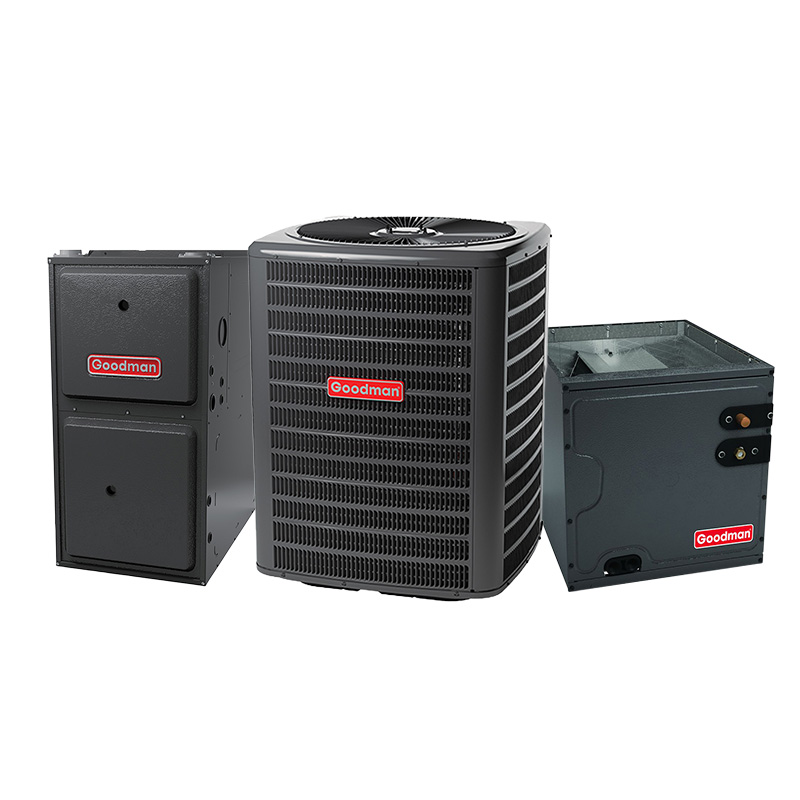
Goodman 3 Ton 14.3 SEER2 Dual Fuel Heat Pump & Gas Furnace Hybrid System – Modulating, Variable-Speed, 60000 BTU Gas Furnace, 97% AFUE, Upflow, R32
View on AC Direct see your lowest price →Check current price on AC Direct →
Key features
- 14.3 SEER2 variable-speed heat pump with dual-fuel hybrid switching for year-round efficiency
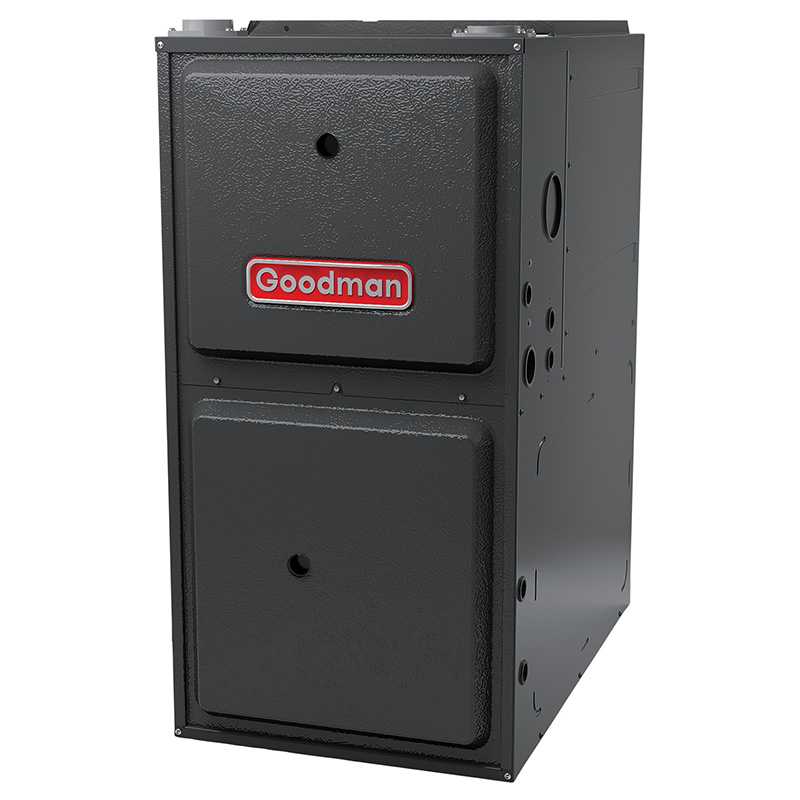
- 97% AFUE modulating gas furnace with 60,000 BTU output for high-efficiency heat in cold snaps
- R-32 refrigerant with lower global warming potential than R-410A
- Variable-speed blower motor for quieter operation and tighter humidity control
- Upflow configuration compatible with standard basement or closet installs
- Modulating gas valve adjusts heat output in small increments to reduce temperature swings
About this system
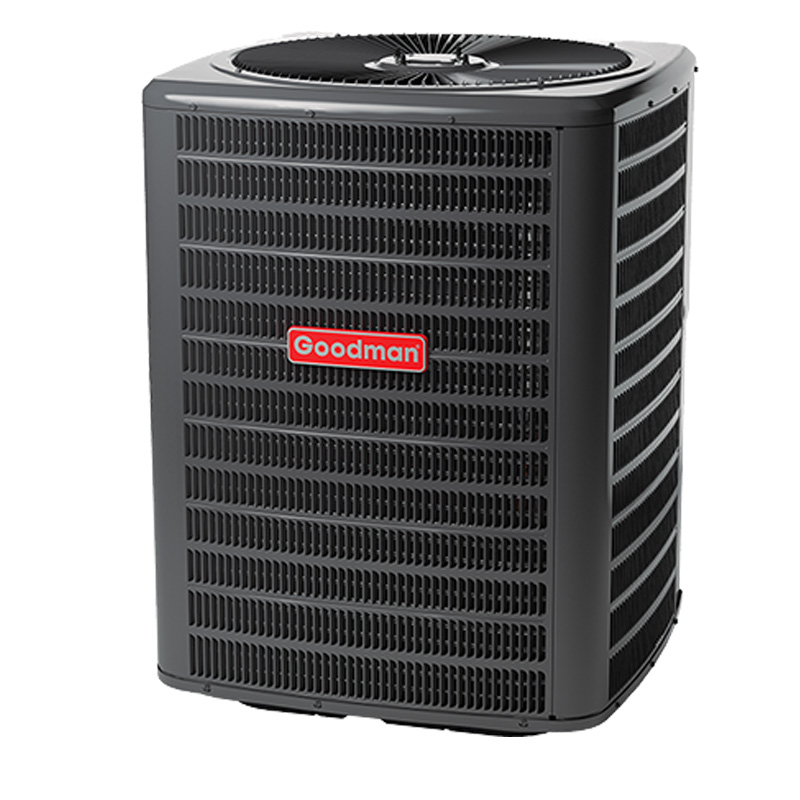
The Goodman GLXS5BA3610D is a 3-ton dual-fuel hybrid system pairing a 14.3 SEER2 variable-speed heat pump with a 97% AFUE modulating gas furnace rated at 60,000 BTU. The hybrid setup means the system automatically switches between electric heat pump operation and gas furnace heat depending on outdoor temperatures and fuel costs, which can produce meaningful savings in climates where winters are cold enough to reduce heat pump efficiency but not brutal enough to demand gas heat around the clock. The R-32 refrigerant used here has a lower global warming potential than legacy R-410A, which is increasingly relevant as regulations tighten.
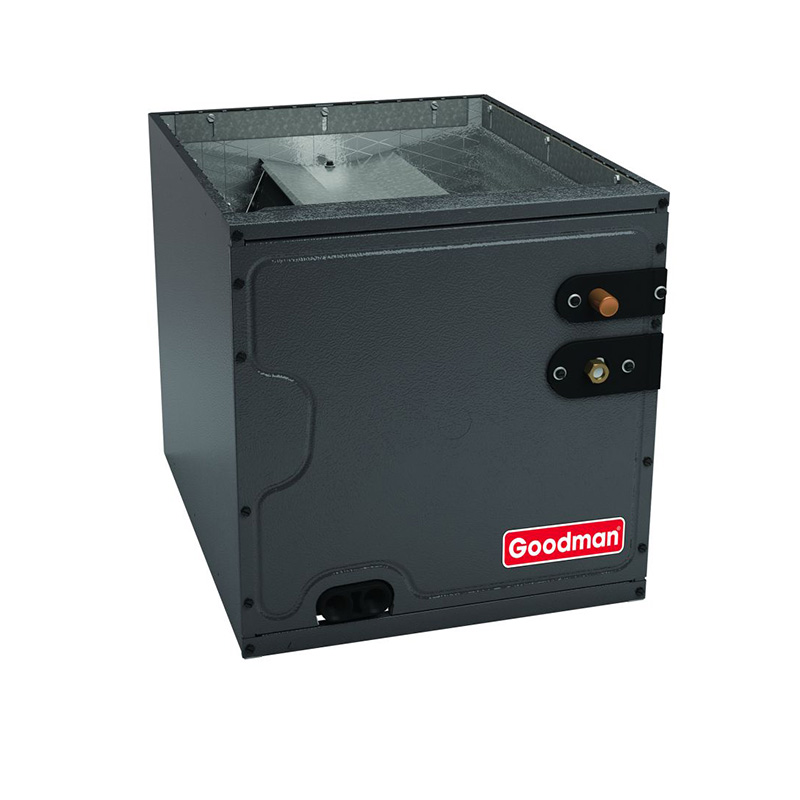
The modulating furnace and variable-speed air handler are the real performance story. Rather than cycling on and off at full capacity, the system ramps output up or down to match actual load, which smooths out temperature swings, reduces humidity spikes, and lowers operating noise compared with single-stage equipment. The upflow configuration suits the majority of residential installations where the furnace sits in a basement or closet and supply air is delivered overhead. This system is best suited to homeowners in mixed-climate zones who want high efficiency without paying Trane, Lennox, or Carrier prices, and who either have a trusted installer or are willing to invest in a careful, quality-focused installation.
The GLXS5BA3610D offers a genuinely capable hybrid system at a price point that undercuts premium brands by 15 to 25 percent, making high-efficiency dual-fuel operation accessible without a luxury-brand budget. The specs are strong on paper, but Goodman's real-world track record is uneven and the system's long-term performance depends more on the quality of the installation than it does with most competitors. Buyers who prioritize upfront cost savings and have a skilled installer lined up will find real value here; those who want premium build quality and longer compressor life should compare the price gap against the alternatives.
Overall score is the average of the five ratings above.
What we like
- 97% AFUE furnace is among the highest efficiency tiers available and reduces gas consumption meaningfully versus 80% units
- Modulating and variable-speed operation delivers better comfort and humidity control than single- or two-stage systems in this price range
- R-32 refrigerant positions the system for regulatory compliance as R-410A is phased out
- Dual-fuel logic allows the system to choose the cheaper energy source automatically, which can lower annual utility costs in the right climate
- Priced 15 to 25 percent below comparable Carrier, Trane, and Lennox systems, making premium-spec equipment more accessible
Trade-offs
- Dual-run capacitors are the most frequently reported failure point; budget 300 to 600 dollars for a likely repair somewhere in years 5 through 10
- Compressor lifespan averages 10 to 14 years versus 15 to 20 years for premium brands, which matters over a 15-year ownership horizon
- A minority of owners report refrigerant leaks within the first year, typically tied to install or charge quality rather than the unit itself
- Evaporator coil leaks appear in a meaningful share of owner reviews and can be costly to address if the system is out of warranty
What homeowners and pros say about Goodman
Owners and HVAC professionals generally agree that a Goodman unit installed carefully by an experienced technician performs well in its early years. On Google dealer reviews, the brand averages around 3.8 out of 5, and the most consistent praise is about affordability relative to what you get on paper. For a system like this one, where the specs include a 97% AFUE modulating furnace and variable-speed operation, that price gap compared to Carrier, Trane, or Lennox is genuinely significant. Technicians who work on Goodman equipment regularly point out that dual-run capacitor failures are the most common service call, typically a quick fix in the 300 to 600 dollar range, but one that owners of units past the seven-year mark should anticipate.
The more sobering feedback comes from ConsumerAffairs, where Goodman sits at roughly 2.5 out of 5. That channel skews toward people who had problems rather than people who are satisfied, but the recurring theme of repair costs climbing after year 7 is worth taking seriously. Evaporator coil leaks appear with enough frequency in owner accounts to be a known risk, and the compressor longevity data suggests an average lifespan of 10 to 14 years rather than the 15 to 20 years typical of premium brands. A small number of owners also report refrigerant leaks within the first year, which professionals attribute to installation or charging errors rather than a factory defect. The takeaway from both groups is consistent: this system can deliver strong value, but it rewards buyers who invest in a quality installation and budget realistically for maintenance over a 10-plus-year ownership period.
Sources: ConsumerAffairs Goodman owner reviews, AHRI Directory of Certified Product Performance, U.S. DOE appliance and equipment efficiency standards, Goodman product specification sheets.
What it costs to run
At 14.3 SEER2, cooling this 3-ton system for a typical 1200-hour cooling season at the U.S. average electricity rate of $0.17/kWh works out to roughly $514 per year in cooling, about $34 less per year than a minimum-efficiency 13.4 SEER2 unit of the same size. Your real cost depends on your climate and local rate.
Method: (36,000 BTU/hr ÷ 14.3 SEER2) × 1200 hours ÷ 1000 × $0.17/kWh. Rate source: U.S. EIA average; cooling hours: moderate-climate estimate.
How it compares
| Brand | Comparable model | SEER2 | Stage | Price position |
|---|---|---|---|---|
| Goodman | GLXS5BA3610D | 14.3 | Variable | Value pick |
| Carrier | Performance 14 Heat Pump (25HCB6) paired with 59MN7 gas furnace | 14.3–15 | Two-stage | Typically 15 to 25 percent more than this Goodman system |
| Trane | XR14c Heat Pump paired with S9V2 gas furnace | 14.3–15 | Two-stage | Typically 15 to 25 percent more than this Goodman system |
| Lennox | Merit ML14XC1 Heat Pump paired with EL296V gas furnace | 14–15 | Two-stage | Typically 15 to 25 percent more than this Goodman system |
Competitor rows are comparable single-stage units at similar efficiency; price is relative position, not a quote.
Questions about this system
How does the dual-fuel switching actually work, and do I have to control it manually?
No manual control is required. The system's controls monitor outdoor temperature and, depending on setup, can factor in relative fuel costs to decide automatically whether the heat pump or the gas furnace is the more efficient heat source at any given moment. Your installer will set the balance point temperature during commissioning, which is the outdoor temperature below which the system favors gas over electric heat.
Is R-32 refrigerant harder or more expensive to service than R-410A?
R-32 requires technicians to use specific tools and follow updated safety procedures because it is mildly flammable, but it is not significantly more expensive to purchase than R-410A at current prices. Most HVAC companies are already training their technicians on R-32 as the industry transitions away from R-410A, so finding qualified service should not be difficult in most metro areas.
What is the warranty on this system, and what does it actually cover?
Goodman typically offers a 10-year parts warranty when the system is registered within 60 days of installation, covering components including the compressor, heat exchanger, and other functional parts. Labor is not covered under the manufacturer warranty, and the warranty is generally voided if the unit is not installed by a licensed contractor or if it is installed improperly, which is worth keeping in mind given how heavily Goodman's reliability depends on install quality.
My house is about 1,400 square feet. Is 3 tons the right size?
Equipment sizing depends on more than square footage alone. Climate zone, insulation levels, window area, ceiling height, and duct design all factor in. A proper Manual J load calculation is the only reliable way to confirm sizing; a 3-ton unit in a well-insulated 1,400-square-foot home in a mild climate could easily be oversized, which leads to short-cycling and humidity problems even with modulating equipment.
Goodman has mixed reviews online. Should I be worried about long-term reliability?
The concern is legitimate. Goodman scores around 2.5 out of 5 on ConsumerAffairs, where the recurring theme is repair costs rising after roughly year 7, and about 3.8 out of 5 across Google dealer reviews where affordability is consistently praised. The documented weak points are dual-run capacitors, which are an inexpensive fix at 300 to 600 dollars but do tend to fail, and evaporator coil leaks, which are costlier. Compressor longevity averages 10 to 14 years versus 15 to 20 years for premium brands. Budgeting for a service agreement or setting aside a repair fund is a reasonable approach.
Specifications
| Cooling capacity | 3 Ton |
| Efficiency | 14.3 SEER2 |
| Furnace output | 60000 BTU |
| Furnace efficiency | 97% AFUE |
| Configuration | Upflow |
| Refrigerant | R-32 |
| Model | GLXS5BA3610D |