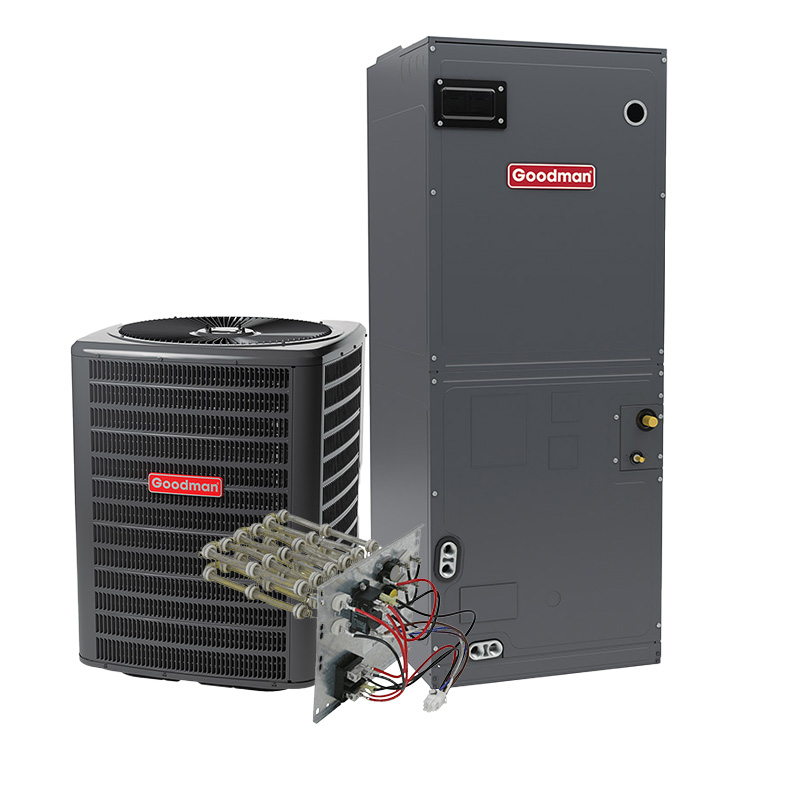
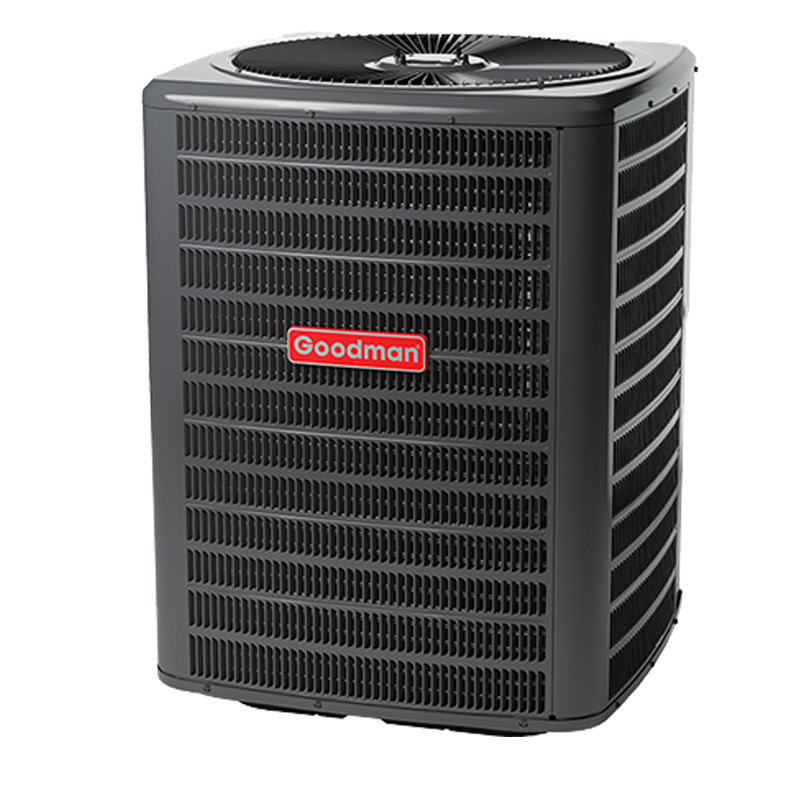
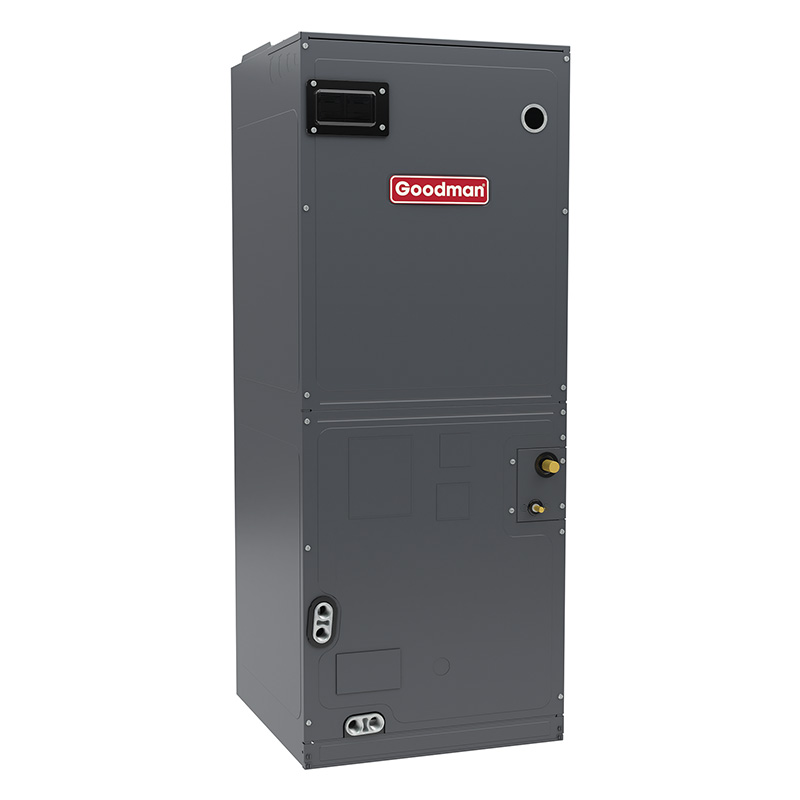
Goodman 3 Ton 14.3 SEER2 R32 Air Conditioner Split System With Electric Heat
View on AC Direct see your lowest price →Check current price on AC Direct →
Key features
- 3-ton cooling capacity suited to homes roughly 1,400 to 1,800 sq ft (load calc required)
- 14.3 SEER2 efficiency rating meets current federal minimum standards
- R-32 refrigerant with lower global warming potential than legacy R-410A systems
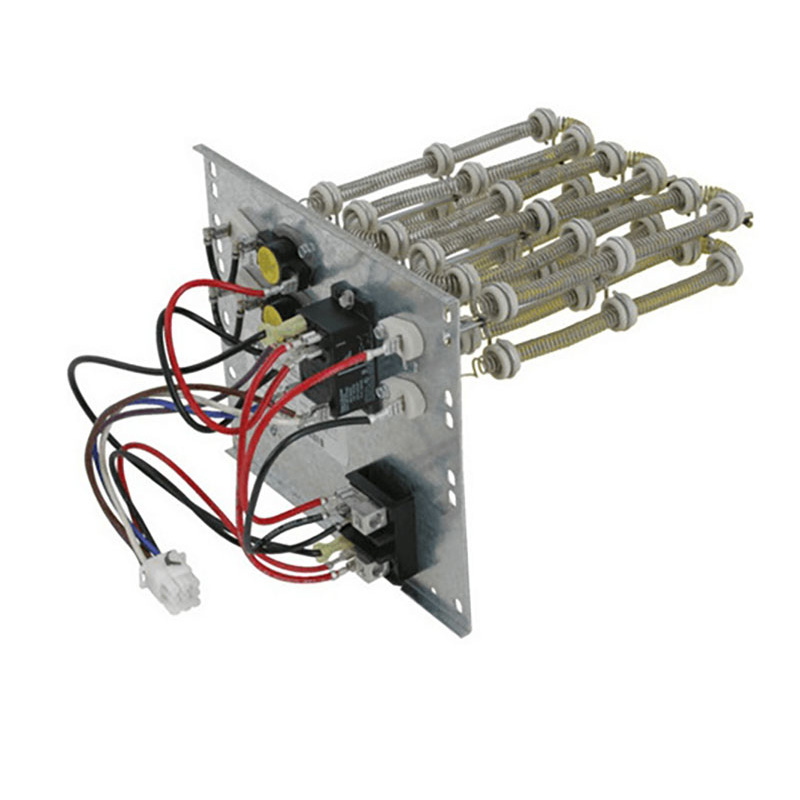
- Electric heat strips included, eliminating the need for a separate gas furnace
- Single-stage compressor operation for straightforward installation and service
- Goodman's 10-year parts limited warranty available with online product registration
About this system
The Goodman 3-ton 14.3 SEER2 R-32 split system with electric heat is an entry-level cooling and heating package aimed at homeowners who want reliable climate control without stretching the budget toward premium brands. At 3 tons it is sized for homes roughly in the 1,400 to 1,800 square foot range, though actual sizing should always be confirmed with a Manual J load calculation before purchase. The electric heat component means no separate gas furnace or heat pump reversing valve is required, making this a straightforward option in mild climates where a small strip heat backup is all that is needed on cooler days.
The 14.3 SEER2 rating sits right at the federal minimum efficiency threshold for most of the United States, so this is not a unit buyers should choose for long-term energy savings. It will cool reliably, but a homeowner in a hot climate running the system heavily will notice meaningfully higher utility bills compared to a 16 or 17 SEER2 alternative. The shift to R-32 refrigerant is a genuine forward-looking feature: R-32 has a lower global warming potential than the R-410A it replaces, and it is likely to remain serviceable as refrigerant regulations tighten over the next decade.
This Goodman split system delivers honest, no-frills cooling and basic electric heat at a price point 15 to 25 percent below comparable Carrier, Trane, or Lennox equipment. Efficiency sits at the federal minimum, so the upfront savings can be partially offset by higher monthly energy bills in demanding climates. Long-term performance depends heavily on installation quality and whether documented weak points like capacitors and evaporator coils hold up past the seven-year mark.
Overall score is the average of the five ratings above.
What we like
- Purchase price is typically 15 to 25 percent lower than comparable Carrier, Trane, or Lennox single-stage systems
- R-32 refrigerant is more environmentally responsible than R-410A and is well-positioned for upcoming regulatory requirements
- 10-year parts limited warranty (with registration) is competitive for a value-tier brand
- Single-stage design means widespread technician familiarity and straightforward service calls
- Electric heat strips included make this a complete system in climates that need only minimal heating capacity
Trade-offs
- 14.3 SEER2 is the federal minimum, so energy bills will be higher than with a 16 or 17 SEER2 alternative over the system's life
- Dual-run capacitor failures are the most commonly reported issue, typically showing up before the 10-year mark and costing $300 to $600 to repair
- Evaporator coil leaks appear in a meaningful share of owner reviews, and a small minority report refrigerant leaks within the first year, often tied to installation
- Compressor lifespan averages 10 to 14 years versus 15 to 20 years reported for premium brands, which matters if you plan to stay in the home long-term
What homeowners and pros say about Goodman
Homeowners who choose Goodman most often point to the upfront cost as the deciding factor, and that sentiment shows up consistently in Google dealer reviews, which average around 3.8 out of 5 stars. Buyers who had a skilled contractor handle the installation and who caught small issues early tend to report solid satisfaction, especially in the first five to seven years. After that window, the picture gets more complicated. On ConsumerAffairs, where the audience skews toward people with something to complain about, Goodman sits at roughly 2.5 out of 5, with a recurring pattern of repair costs climbing in the later years of ownership. The capacitor is the most-cited culprit, a part that typically fails before the 10-year mark and runs $300 to $600 to replace. Evaporator coil leaks appear often enough in owner accounts to be a known risk rather than a rare outlier.
HVAC technicians tend to have a pragmatic view of Goodman equipment. They will note that the parts are widely available, the systems are straightforward to service, and the brand is not uniquely bad for its price tier. What they emphasize most strongly is that a Goodman unit installed carelessly will underperform and fail earlier than the same unit put in by a careful technician. The early refrigerant leaks that show up in a minority of first-year complaints are almost always traced to installation errors rather than factory defects. Pros also point out that the compressor lifespan tends to average 10 to 14 years, a shorter window than the 15 to 20 years they associate with premium brands, which factors into whether the lower purchase price is truly a long-term saving.
Sources: ConsumerAffairs Goodman owner reviews, AHRI Directory of Certified Product Performance, U.S. DOE appliance and equipment efficiency standards, Goodman product specification sheets.
What it costs to run
At 14.3 SEER2, cooling this 3-ton system for a typical 1200-hour cooling season at the U.S. average electricity rate of $0.17/kWh works out to roughly $514 per year in cooling, about $34 less per year than a minimum-efficiency 13.4 SEER2 unit of the same size. Your real cost depends on your climate and local rate.
Method: (36,000 BTU/hr ÷ 14.3 SEER2) × 1200 hours ÷ 1000 × $0.17/kWh. Rate source: U.S. EIA average; cooling hours: moderate-climate estimate.
How it compares
| Brand | Comparable model | SEER2 | Stage | Price position |
|---|---|---|---|---|
| Goodman | 3-Ton 14.3 SEER2 R-32 Split System with Electric Heat | 14.3 | Single-stage | Value pick |
| Carrier | Comfort Series (24ACC6) | 14.3-15 | Single-stage | Typically 15 to 25 percent more than this Goodman |
| Trane | XR14 Series | 14.3-15 | Single-stage | Typically 15 to 25 percent more than this Goodman |
| Lennox | Merit ML14XC1 Series | 14.3-15 | Single-stage | Typically 15 to 25 percent more than this Goodman |
Competitor rows are comparable single-stage units at similar efficiency; price is relative position, not a quote.
Questions about this system
Is 14.3 SEER2 going to cost me significantly more to operate than a higher-efficiency unit?
Yes, in a meaningful way over time. A 16 or 17 SEER2 system can cut cooling energy use by 10 to 15 percent annually compared to 14.3 SEER2. In a hot climate with long cooling seasons, that gap compounds over years and can outweigh the lower purchase price of this system.
Why does Goodman have such mixed reviews online?
Goodman scores around 2.5 out of 5 on ConsumerAffairs, which is a complaint-heavy channel where unhappy owners are far more likely to post than satisfied ones. Google dealer reviews average closer to 3.8 out of 5, with affordability as the most common praise. The honest read is that Goodman is a capable value brand whose longevity is more sensitive to install quality than premium competitors.
What are the most likely repairs I should budget for over the life of this unit?
Dual-run capacitor replacement is the most frequently reported issue with Goodman equipment and typically runs $300 to $600 including labor. Evaporator coil leaks appear in a meaningful share of owner reports and are more costly to address. A small number of owners have also reported refrigerant leaks within the first year, which is usually traced back to installation rather than a manufacturing defect.
Does R-32 refrigerant cause any service or safety concerns compared to R-410A?
R-32 is mildly flammable (classified A2L), so technicians need to be certified and equipped to handle it safely. Most modern HVAC contractors are already trained for A2L refrigerants as the industry has shifted in that direction. From a homeowner standpoint there is no meaningful day-to-day difference, and R-32 is expected to remain available and legal well into the future.
How important is it that I use an experienced installer with this system?
It is critical. Technicians consistently identify installation quality as the single biggest factor in how long a Goodman unit lasts. Improper refrigerant charge, poor brazing, and inadequate airflow setup are directly linked to the early coil leaks and compressor issues that show up in owner complaints. Getting multiple quotes and verifying contractor credentials is time well spent with this brand.
Specifications
| Cooling capacity | 3 Ton |
| Efficiency | 14.3 SEER2 |
| Refrigerant | R-32 |