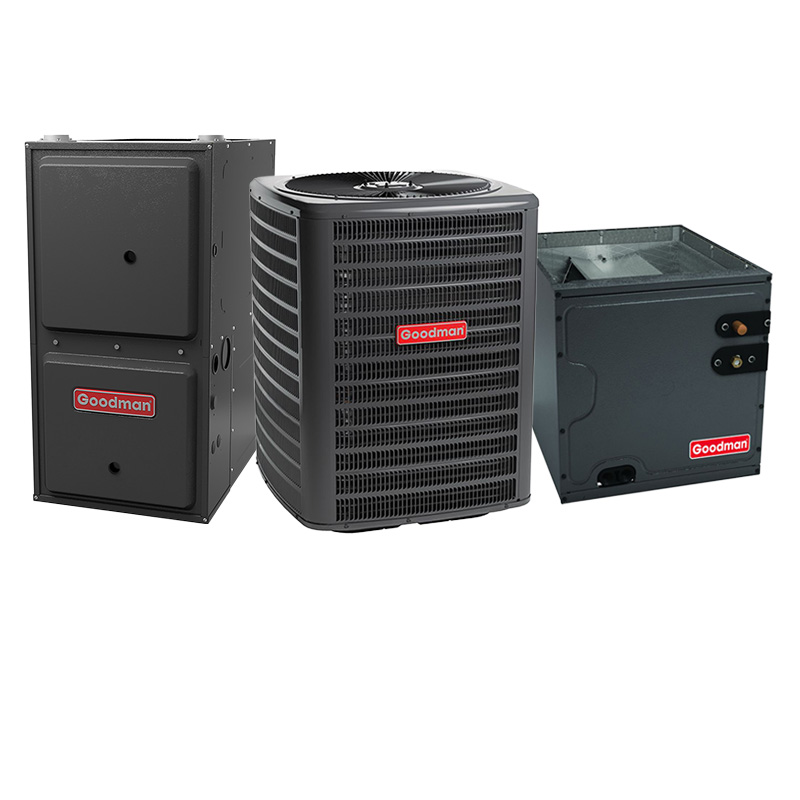
Goodman 3 Ton 14.5 SEER2 80000 BTU 80% AFUE Multi-Speed ECM Gas Furnace System – Downflow | R32
View on AC Direct see your lowest price →Check current price on AC Direct →
Key features
- 3-ton cooling capacity with 14.5 SEER2 rating, meeting current federal minimum efficiency standards
- 80,000 BTU gas furnace at 80% AFUE for moderate-climate heating applications
- Multi-speed ECM blower motor reduces electricity use and noise compared to standard PSC motors
- Downflow configuration designed for closet or platform installations blowing air downward
- R-32 refrigerant charge with lower global warming potential than legacy R-410A systems
- Priced approximately 15 to 25 percent below comparable Trane, Lennox, and Carrier equipment
About this system
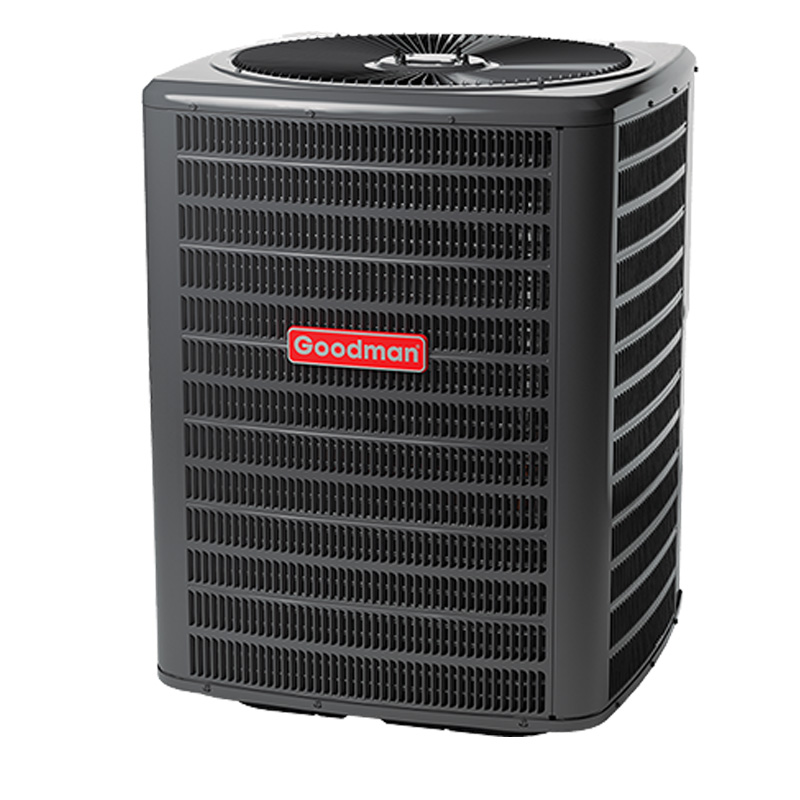
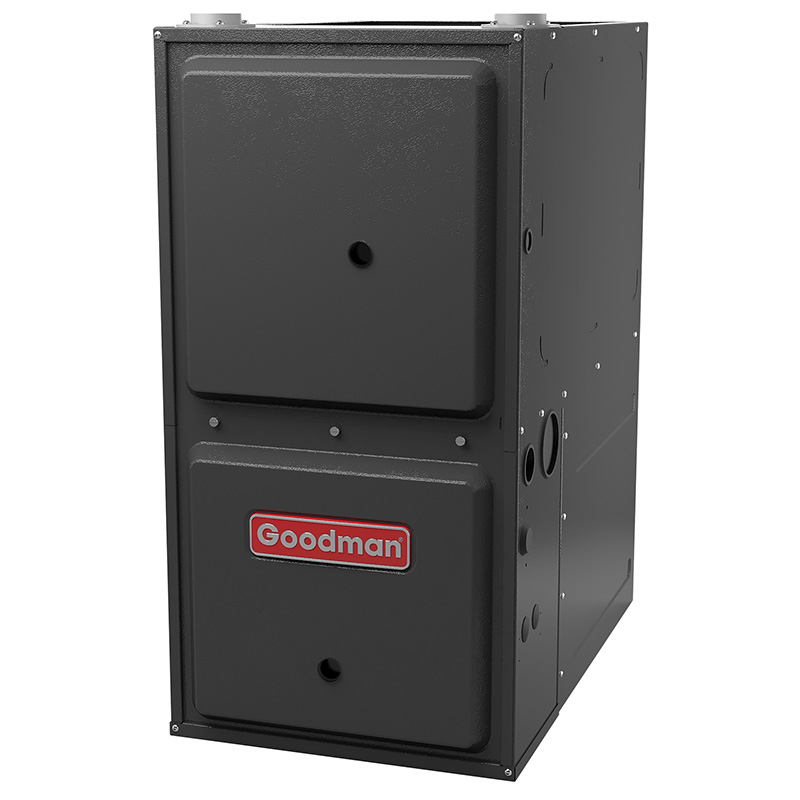
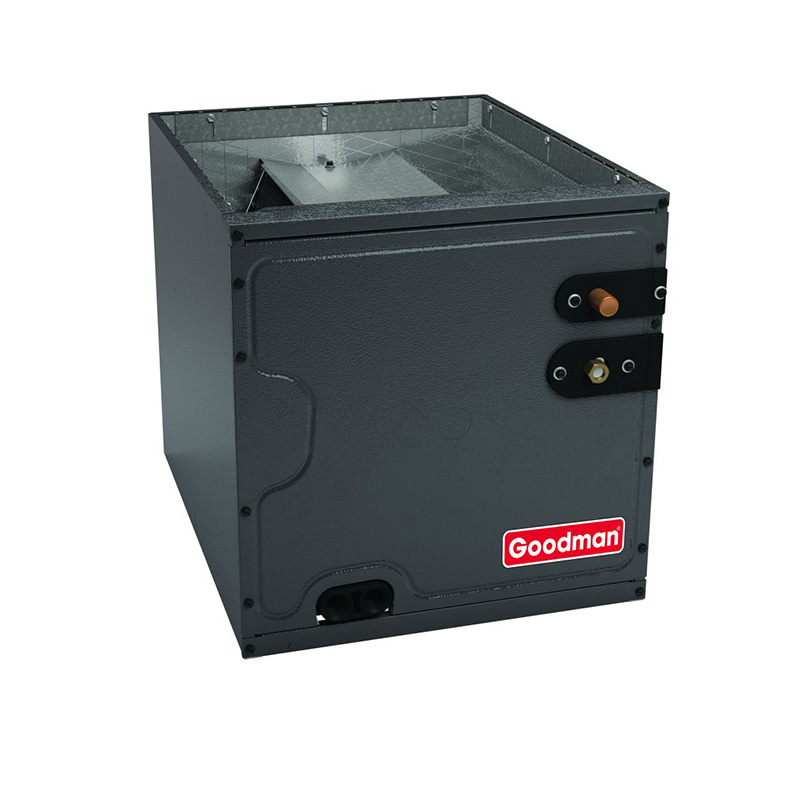
This Goodman package pairs a 3-ton, 14.5 SEER2 split-system air conditioner with an 80,000 BTU, 80% AFUE multi-speed ECM gas furnace in a downflow configuration. The downflow setup is designed for homes where the furnace sits in an upper-floor closet or a platform above a crawlspace, blowing conditioned air downward into the duct system. The R-32 refrigerant charge is a notable forward-looking choice: R-32 has a lower global warming potential than the older R-410A it replaces, and it is what the industry is broadly moving toward, meaning parts and service technicians will be increasingly familiar with it over the life of the system.
The 14.5 SEER2 rating sits at the current federal minimum efficiency threshold for many U.S. climate regions, so this is an entry-level-efficiency system rather than a high-efficiency one. The 80% AFUE furnace means one-fifth of the fuel burned exits as exhaust, which is acceptable for mild-to-moderate heating climates but will cost more to operate annually than a 96% AFUE alternative in colder regions. The multi-speed ECM blower motor is a meaningful upgrade over a single-speed PSC motor: it ramps airflow to match demand, runs quieter at lower speeds, and draws significantly less electricity during long blower cycles. This system suits a straightforward replacement or new-construction project where the budget is the primary driver and the ductwork and installation conditions are already well-configured for downflow.
This Goodman system delivers an honest entry point into a new split system at a price most competing brands cannot match at this efficiency tier. The trade-off is a compressor and coil track record that lags premium brands, and a repair cost curve that tends to steepen after year seven. Buyers who prioritize upfront savings and use a highly rated installer will get the most out of it.
Overall score is the average of the five ratings above.
What we like
- Significantly lower purchase price than Carrier, Trane, or Lennox at equivalent efficiency
- Multi-speed ECM blower provides better comfort and lower operating electricity cost than a basic single-speed motor
- R-32 refrigerant is the industry direction, easing future service and parts availability
- Downflow configuration is purpose-built for specific installation scenarios where alternatives would require adaptation
- Goodman backs the equipment with a parts warranty that is competitive at this price level when registered
Trade-offs
- 80% AFUE furnace will cost noticeably more to operate than a 95 to 96% AFUE unit in cold climates
- Compressor longevity averages 10 to 14 years versus 15 to 20 years typical of premium brands, per owner experience
- Dual-run capacitor failures and evaporator coil leaks are the most documented failure modes, adding to long-term repair budgets
- Performance is heavily dependent on installation quality, meaning a poor install can erase any cost savings quickly
What homeowners and pros say about Goodman
Homeowners reviewing Goodman equipment on ConsumerAffairs give the brand roughly 2.5 out of 5 stars, a score pulled down by a recurring pattern of repair costs that climb after around year seven, particularly around compressor and coil issues. Google dealer reviews land higher, around 3.8 out of 5, where the most consistent praise is straightforward: the equipment costs less than the name brands and, when installed well, cools and heats reliably for a reasonable run of years. The gap between those two scores reflects something real about Goodman ownership. Early years tend to go smoothly; it is the mid-life period where owners start to feel the difference in component quality compared to premium lines.
HVAC technicians generally have a pragmatic view of Goodman. They note that dual-run capacitor failures are the single most common service call on these systems, a repair that is relatively quick and inexpensive when caught early but can cascade into compressor damage if ignored. Evaporator coil leaks are the other documented weak point, and compressor lifespan on Goodman equipment averages 10 to 14 years in real-world conditions, compared to 15 to 20 years that technicians associate with Carrier, Trane, and Lennox compressors. Pros consistently emphasize that installation quality shapes Goodman outcomes more than almost any other variable: a careful, properly commissioned install on this downflow system with correct refrigerant charge will perform meaningfully better over its life than a rushed one, regardless of what the nameplate says.
Sources: ConsumerAffairs Goodman owner reviews, AHRI Directory of Certified Product Performance, U.S. DOE appliance and equipment efficiency standards, Goodman product specification sheets.
What it costs to run
At 14.5 SEER2, cooling this 3-ton system for a typical 1200-hour cooling season at the U.S. average electricity rate of $0.17/kWh works out to roughly $506 per year in cooling, about $42 less per year than a minimum-efficiency 13.4 SEER2 unit of the same size. Your real cost depends on your climate and local rate.
Method: (36,000 BTU/hr ÷ 14.5 SEER2) × 1200 hours ÷ 1000 × $0.17/kWh. Rate source: U.S. EIA average; cooling hours: moderate-climate estimate.
How it compares
| Brand | Comparable model | SEER2 | Stage | Price position |
|---|---|---|---|---|
| Goodman | 14.5 SEER2 / 80% AFUE Multi-Speed ECM Downflow System (this unit) | 14.5 | Single-stage / Multi-speed ECM blower | Value pick |
| Carrier | Comfort 14 / Performance 80 Series (24ACC4 + 58TP) | 14.3 to 15.0 | Single-stage | Typically 15 to 25 percent more than this Goodman system |
| Trane | XR14c / S8B1 80% Gas Furnace | 14.3 to 15.2 | Single-stage | Typically 15 to 25 percent more than this Goodman system |
| Lennox | Merit ML14XC1 / Merit Series 80 (ML180) | 14.3 to 15.0 | Single-stage | Typically 15 to 25 percent more than this Goodman system |
Competitor rows are comparable single-stage units at similar efficiency; price is relative position, not a quote.
Questions about this system
Is a downflow furnace harder to find an installer for than a standard upflow unit?
Not meaningfully so. Downflow configurations are less common than upflow, so confirm your installer has experience with this layout and that your existing platform or closet space meets the clearance requirements in the installation manual. A mismatch between the cabinet orientation and your ductwork is one of the more avoidable install errors.
Does R-32 refrigerant require any special handling compared to R-410A?
R-32 is mildly flammable, which means technicians need to be trained and certified for A2L refrigerants before working on it. Most professional HVAC technicians are completing this training as the industry transitions, but it is worth confirming your service company is R-32 qualified before scheduling work.
How much does the multi-speed ECM blower actually save on electricity versus a standard motor?
ECM motors are generally 60 to 75 percent more efficient than older PSC motors during blower-only operation. The savings vary by how many hours per year the blower runs in fan-only or low-speed modes, but households that run the fan continuously for air quality purposes will see the difference on their utility bills most clearly.
What are the most likely repair costs I should budget for over the first ten years?
Based on documented owner experience, dual-run capacitor replacement is the most common early repair at roughly 300 to 600 dollars. Evaporator coil leaks are a meaningful secondary concern and can run considerably more depending on the coil and labor cost in your area. Setting aside a modest annual service budget and keeping the system under a maintenance agreement can catch capacitor wear before it causes a compressor failure.
Will 80% AFUE be enough for my climate, or should I step up to a higher-efficiency furnace?
In the South and much of the coastal West where winters are mild and the heating season is short, 80% AFUE is a reasonable fit. In the Midwest, Plains states, or anywhere heating degree days are high, the annual fuel savings from a 95 to 96% AFUE furnace typically recover the price difference within a few years, making the higher-efficiency option a stronger long-term value.
Specifications
| Cooling capacity | 3 Ton |
| Efficiency | 14.5 SEER2 |
| Furnace output | 80000 BTU |
| Furnace efficiency | 80% AFUE |
| Configuration | Downflow |
| Refrigerant | R-32 |