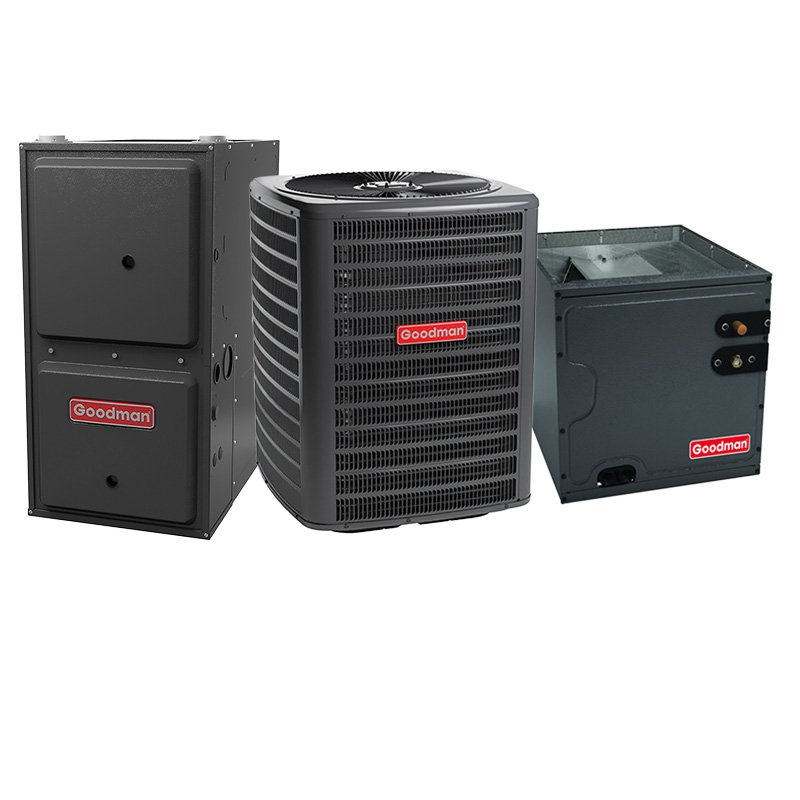
Goodman 3 Ton 14.5 SEER2 80000 BTU 80% AFUE Two Stage Multi-Speed ECM Gas Furnace System – Low NOX For California Downflow | R32
View on AC Direct see your lowest price →Check current price on AC Direct →
Key features
- 3-ton cooling capacity with 14.5 SEER2 efficiency rating
- 80,000 BTU two-stage gas furnace at 80% AFUE
- Multi-speed ECM blower motor for steadier airflow and lower operating costs
- Downflow configuration for closet or crawl-space duct installations
- California Low NOX certified and R-32 refrigerant compatible
- Two-stage heating reduces short-cycling and temperature swings on mild days
About this system
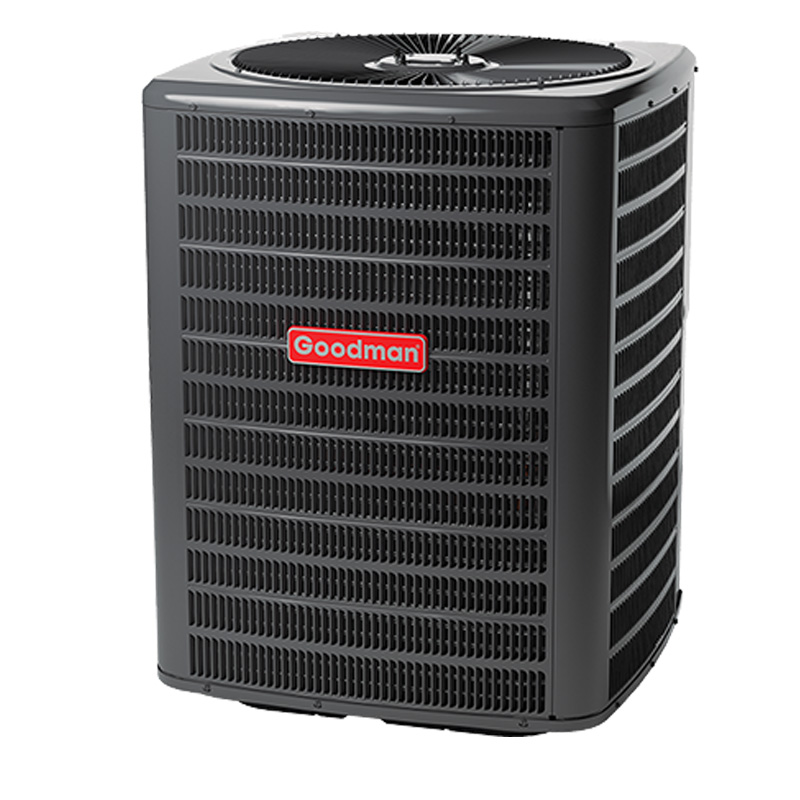
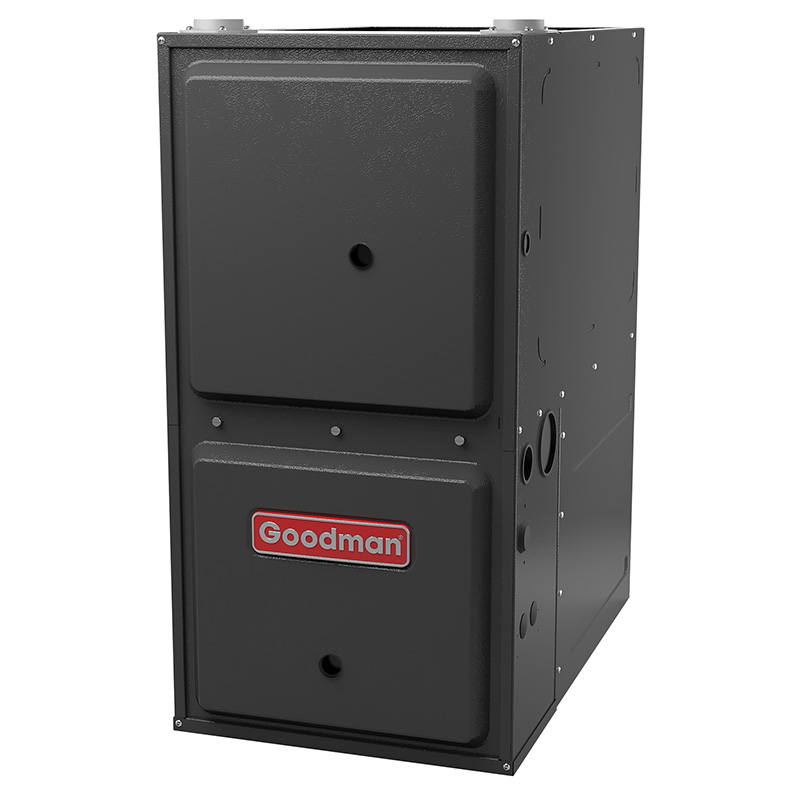
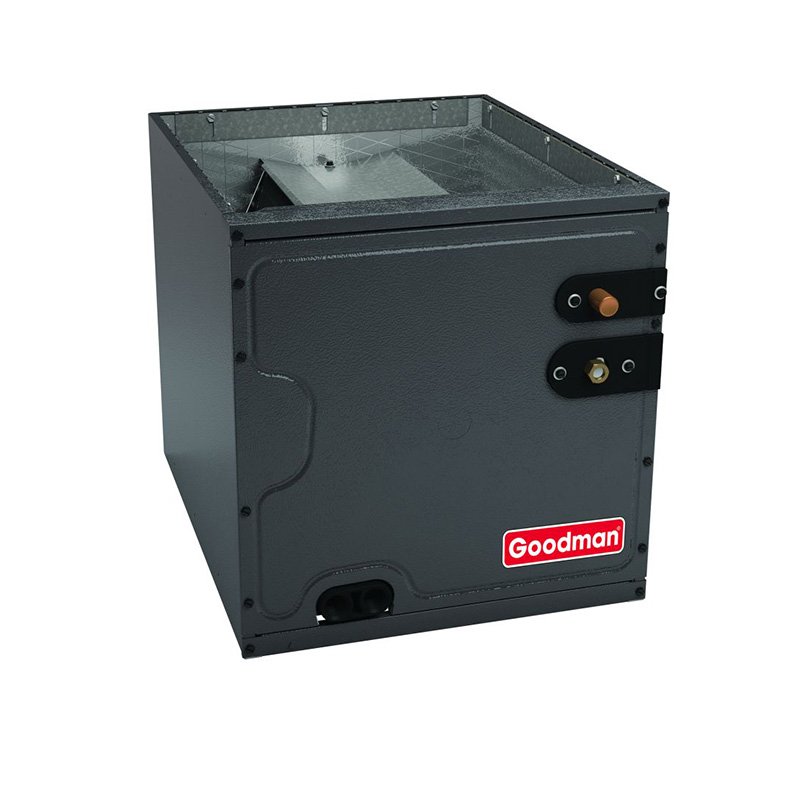
The Goodman GLXS4BA3610 is a 3-ton, 14.5 SEER2 split system paired with an 80,000 BTU, 80% AFUE two-stage gas furnace in a downflow configuration. It is built specifically to meet California’s Low NOX emissions requirements and uses R-32 refrigerant, a lower global-warming-potential option that is becoming more common as the industry moves away from R-410A. The downflow setup means the air discharge points toward the floor, which suits homes where ductwork runs beneath the unit, typically in closets over a crawl space or in a first-floor mechanical room.
The two-stage furnace runs at a lower capacity most of the time, ramping up only on the coldest days. Combined with the multi-speed ECM blower motor, this helps maintain steadier indoor temperatures, reduces short-cycling, and trims electricity use compared with a single-stage, PSC-motor alternative. At 14.5 SEER2, the cooling efficiency clears California’s current minimum threshold without reaching premium inverter-driven territory. This system is a practical middle-ground choice for homeowners who want better-than-entry-level comfort and efficiency without the price premium of a variable-speed or high-AFUE system.
This package makes the most sense for California homeowners replacing aging equipment in homes with existing downflow ductwork, where budget is a real constraint and the goal is a reliable, code-compliant upgrade. It is not the ideal pick for buyers chasing maximum long-term energy savings or those who want the quietest, most even comfort a modern system can deliver.
The GLXS4BA3610 delivers a solid combination of California-compliant specs, two-stage comfort, and Goodman's well-known price advantage over major premium brands. It is a sensible choice when budget is the primary driver, but buyers should go in knowing that long-term reliability depends heavily on a quality installation and that out-of-warranty repair costs have been a recurring complaint from Goodman owners past the seven-year mark. At this price tier it competes honestly, as long as expectations are set accordingly.
Overall score is the average of the five ratings above.
What we like
- Priced roughly 15 to 25 percent below comparable Carrier, Trane, and Lennox systems
- Two-stage furnace and ECM blower provide noticeably more even heating than single-stage alternatives
- Meets California Low NOX standards out of the box, avoiding compliance headaches
- R-32 refrigerant is lower-GWP and positions the system ahead of eventual R-410A phase-out
- Downflow configuration fills a specific installation need that not every manufacturer covers at this price point
Trade-offs
- 80% AFUE is the lowest efficiency tier available; a 96% AFUE furnace would cut heating bills meaningfully in colder California climates
- Dual-run capacitor failures and evaporator coil leaks are documented recurring issues across Goodman owner reports
- Compressor longevity averages 10 to 14 years versus 15 to 20 years typical of premium-brand compressors
- ConsumerAffairs reviews average around 2.5 out of 5, with repair cost complaints concentrated after year seven
What homeowners and pros say about Goodman
Homeowners who have lived with Goodman equipment tend to split into two camps, and both camps show up clearly in the data. Google dealer reviews land around 3.8 out of 5, where the most consistent praise is straightforward: the price made a new system possible when a premium brand quote was not. ConsumerAffairs tells a harder story, averaging about 2.5 out of 5, with the loudest complaints clustering after the seven-year mark when repair bills start accumulating. Those reviews name the same failure modes that show up in technician feedback: dual-run capacitors that need replacing, evaporator coil leaks that can turn into a costly refrigerant and coil replacement job, and compressors that tend to run out of useful life between 10 and 14 years rather than the 15 to 20 years owners of premium-brand equipment often report.
HVAC technicians who work on Goodman equipment regularly tend to echo a consistent point: the brand performs closer to its potential when the installation is done carefully and completely. Refrigerant charge errors, airflow issues from undersized ductwork, and skipped startup checks are disproportionately likely to surface as early failures, and they can look like product defects when the root cause is the install. For the GLXS4BA3610 specifically, the R-32 refrigerant adds one more reason to be selective about your installer, since A2L-certified technicians with hands-on R-32 experience are the right choice for both the initial install and any future service calls.
Sources: ConsumerAffairs Goodman owner reviews, AHRI Directory of Certified Product Performance, U.S. DOE appliance and equipment efficiency standards, Goodman product specification sheets.
What it costs to run
At 14.5 SEER2, cooling this 3-ton system for a typical 1200-hour cooling season at the U.S. average electricity rate of $0.17/kWh works out to roughly $506 per year in cooling, about $42 less per year than a minimum-efficiency 13.4 SEER2 unit of the same size. Your real cost depends on your climate and local rate.
Method: (36,000 BTU/hr ÷ 14.5 SEER2) × 1200 hours ÷ 1000 × $0.17/kWh. Rate source: U.S. EIA average; cooling hours: moderate-climate estimate.
How it compares
| Brand | Comparable model | SEER2 | Stage | Price position |
|---|---|---|---|---|
| Goodman | GLXS4BA3610 | 14.5 | two-stage | Value pick |
| Carrier | Comfort Series (24ACC6) | 14.3 to 15 | single-stage | Typically 15 to 25 percent more than Goodman |
| Trane | XR14 Series | 14.3 to 15 | single-stage | Typically 15 to 25 percent more than Goodman |
| Lennox | Merit Series (ML14XC1) | 14.3 to 15 | single-stage | Typically 15 to 25 percent more than Goodman |
Competitor rows are comparable single-stage units at similar efficiency; price is relative position, not a quote.
Questions about this system
Is this system actually legal to install in California, and does it meet the Low NOX rule?
Yes. This unit carries the Low NOX certification required by the South Coast and other California air quality districts that restrict NOX emissions from residential furnaces. Always confirm with your installer that both the furnace and the full system configuration meet your specific district's current standards.
Why does this furnace only have 80% AFUE? Will that cost me more to run than a higher-efficiency option?
An 80% AFUE furnace means 20 cents of every dollar in gas is lost through the flue. In moderate California climates where heating loads are lower, the payback gap between 80% and 96% AFUE can stretch to a decade or more, so 80% AFUE is defensible on cost alone in mild regions. In mountain-adjacent or high-elevation California homes with real heating seasons, upgrading to a 95 or 96% AFUE furnace is worth pricing out.
What does the downflow configuration mean, and how do I know if my home needs it?
In a downflow system the furnace sits above the air handler and pushes conditioned air downward into ductwork running beneath it, most commonly in a floor-level plenum or crawl space. If your existing furnace discharges air through the bottom, you need a downflow unit. Installing an upflow unit in a downflow application is not safe or code-compliant, so confirm your current configuration with a technician before ordering.
R-32 refrigerant is new to me. Will it be easy to service, and is it safe?
R-32 is mildly flammable (A2L classification), which means technicians need specific training and tools to handle it, but it is not a niche refrigerant. It is already widely used in mini-split systems and is being adopted broadly across the industry. Availability should not be an issue with any certified HVAC contractor, though you should confirm your installer is A2L certified before scheduling.
Goodman's reviews online are mixed. What are the most common real-world problems I should watch for?
The most frequently documented failure points in Goodman equipment are dual-run capacitor failures (typically a 300 to 600 dollar repair and a straightforward fix), evaporator coil refrigerant leaks, and compressor wear that tends to surface between years 10 and 14. A small share of owners have also reported refrigerant leaks in the first year, which is almost always an installation or initial charge issue rather than a factory defect. Choosing an experienced, licensed installer is the single biggest factor in avoiding early problems.
Specifications
| Cooling capacity | 3 Ton |
| Efficiency | 14.5 SEER2 |
| Furnace output | 80000 BTU |
| Furnace efficiency | 80% AFUE |
| Configuration | Downflow |
| Refrigerant | R-32 |
| Model | GLXS4BA3610 |