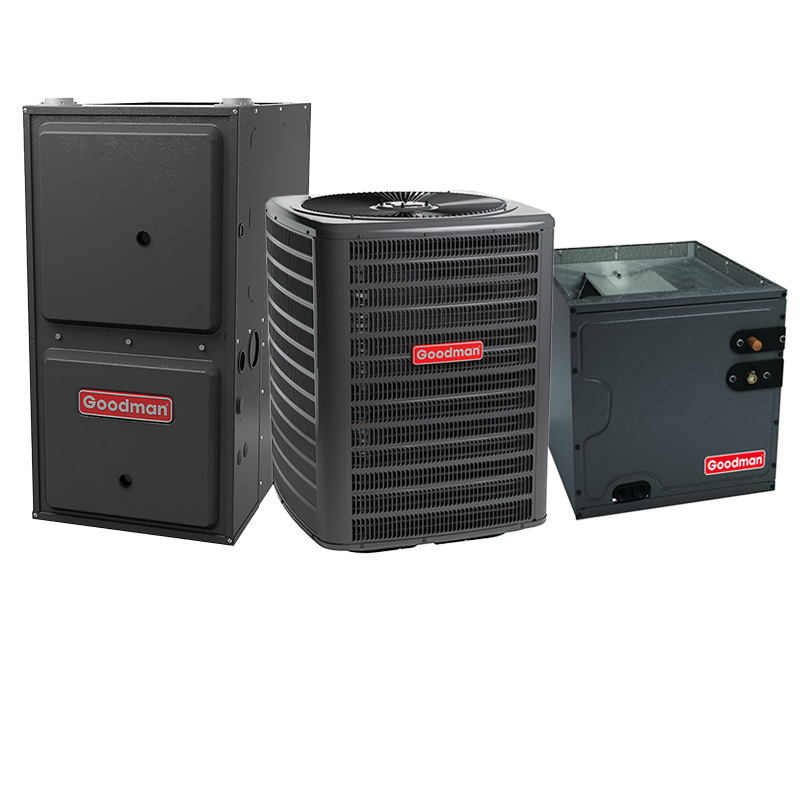
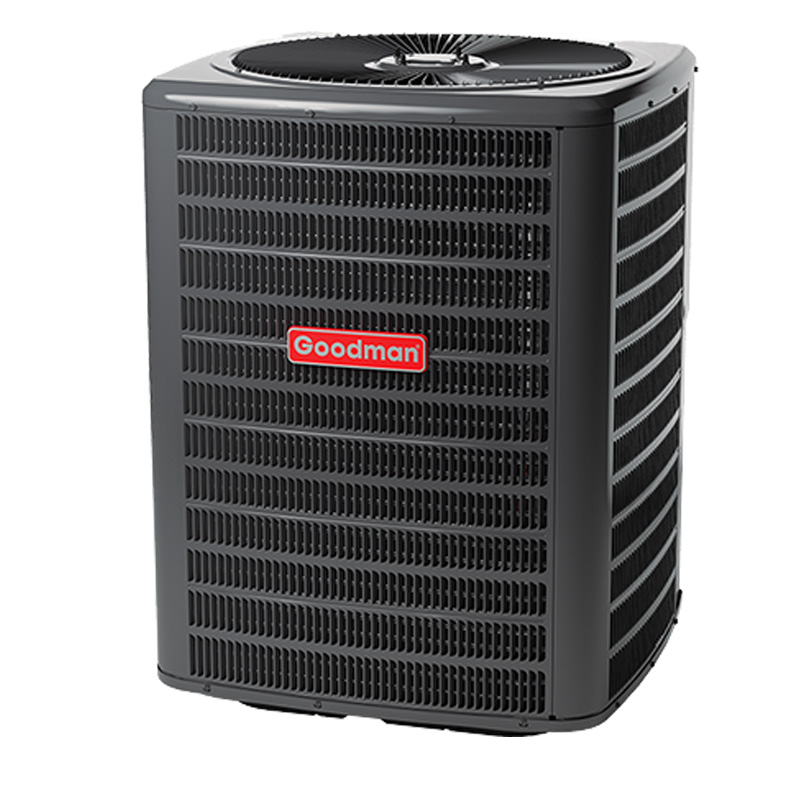
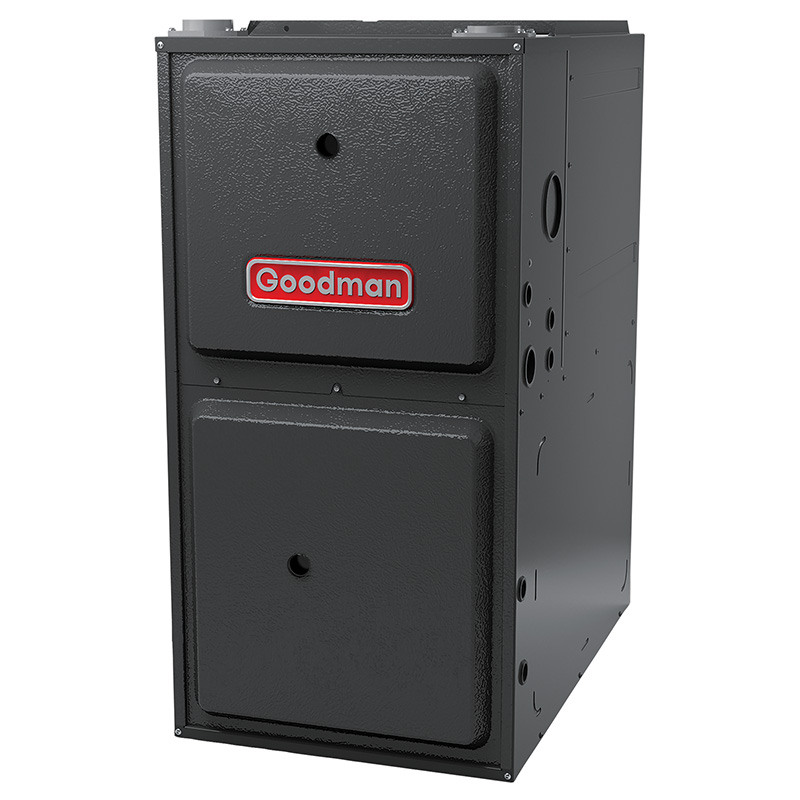
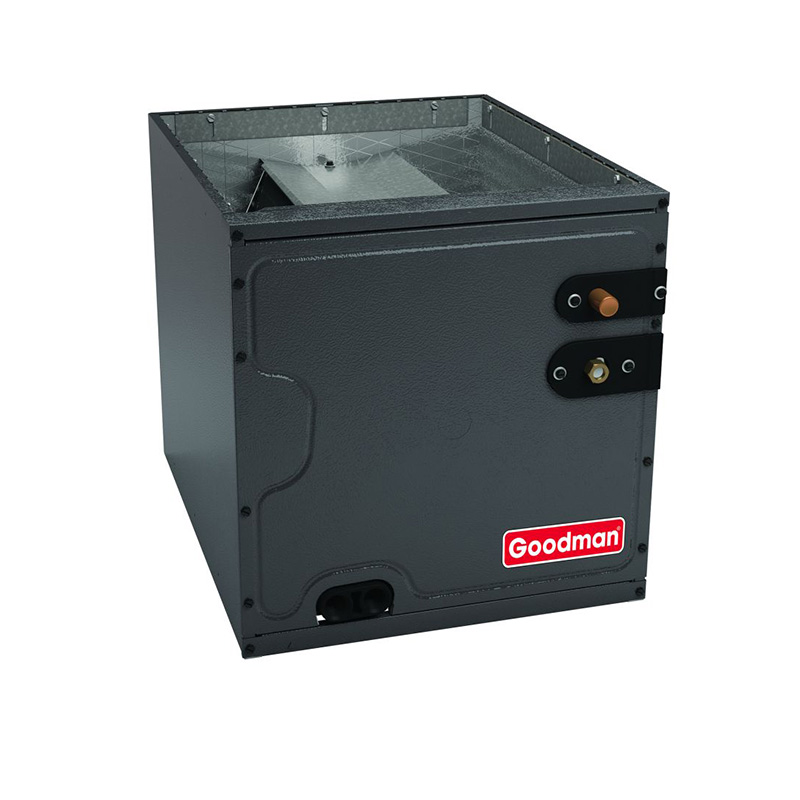
Goodman 3 Ton 14.5 SEER2 R32 AC System with 60,000 BTU 96% AFUE Gas Furnace – California & Colorado Ultra Low NOx, Upflow, Multi-Speed ECM
View on AC Direct see your lowest price →Check current price on AC Direct →
Key features
- 14.5 SEER2 cooling efficiency meets 2023 federal minimum standards for most U.S. regions
- 96% AFUE gas furnace converts 96 cents of every fuel dollar into usable heat
- R-32 refrigerant charge meets California CARB and Colorado Ultra Low NOx regulations
- Multi-speed ECM blower motor reduces electrical consumption and improves humidity management vs. single-speed PSC motors
- Upflow configuration designed for basement or ground-floor installations with ductwork above the unit
- Dual-capacitor and contactor components are widely stocked, keeping repair turnaround times short if a failure occurs
About this system
The Goodman 3 Ton 14.5 SEER2 R-32 air conditioning and 96% AFUE gas furnace bundle is a straightforward, code-compliant system aimed at homeowners who want reliable heating and cooling without paying a premium brand markup. The 14.5 SEER2 rating sits right at the federal efficiency minimum for most of the country, so you are not getting the lowest operating costs possible, but you are not overpaying for efficiency headroom you may never use. The 96% AFUE furnace is a genuine high-efficiency unit, meaning nearly all of the gas burned becomes usable heat, which matters in Colorado winters and in California homes that actually use a furnace.
The R-32 refrigerant is worth noting: it has a lower global warming potential than the R-410A it replaces and is increasingly required in California and Colorado market installs. The upflow configuration suits homes with a basement or a ground-floor mechanical closet where supply air flows up into the living space. The multi-speed ECM blower motor is a real upgrade over basic single-speed motors, offering quieter part-load operation, better humidity control, and modestly lower electrical draw on the air handler side. This system is specifically certified to meet California Air Resources Board and Colorado Ultra Low NOx requirements, which is a legal prerequisite for sale and installation in those states, not a bonus feature.
Who this system suits: buyers replacing an older system on a budget, landlords and builders looking for a reliable entry-level install, and homeowners in mild climates where the AC runs a moderate number of hours per year. It is less compelling for someone in a hot desert climate running the system hard for six or more months, where a higher SEER2 rating would pay back faster and where compressor longevity becomes a bigger financial variable.
This Goodman bundle delivers a code-compliant, regulation-ready system at a price point roughly 15 to 25 percent below comparable Carrier, Trane, and Lennox offerings, making the purchase decision relatively low-risk on paper. The 96% AFUE furnace and ECM blower are genuinely strong specs at this price tier, but the overall package carries the brand's known trade-offs: a compressor lifespan that trends shorter than premium competitors and component failure rates that climb noticeably after year seven. It is a reasonable choice when installation quality is high and budget is the primary driver.
Overall score is the average of the five ratings above.
What we like
- Entry price is meaningfully lower than Carrier, Trane, and Lennox equivalents at this efficiency level
- 96% AFUE furnace is a high-efficiency rating that will reduce monthly gas bills versus 80% AFUE alternatives
- ECM multi-speed blower improves comfort and humidity control compared to basic single-speed motors
- R-32 refrigerant compliance means no retrofitting or permitting headaches in California or Colorado
- Capacitors and other common failure parts are widely available and inexpensive, keeping service calls affordable
Trade-offs
- Compressor lifespan averages 10 to 14 years versus 15 to 20 years for premium-brand competitors, potentially accelerating replacement costs
- Evaporator coil leaks appear in a notable share of owner reports, which can be a costly mid-life repair
- A minority of owners have reported refrigerant leaks in the first year, a flag for units that leave the factory with marginal charges or connections
- 14.5 SEER2 is the efficiency floor, not a selling point, so operating costs will be higher than mid- or high-efficiency alternatives over a full system lifespan
What homeowners and pros say about Goodman
Homeowners who have lived with Goodman equipment tend to split into two camps. Those who had a careful, experienced installer and kept up with annual maintenance often report years of uninterrupted service and point to the lower purchase price as the obvious win. Those who run into trouble usually encounter it after the seven-year mark, and the ConsumerAffairs score of around 2.5 out of 5 reflects that reality: the complaints cluster around repair bills that start to add up and feel disproportionate for a system that is not yet old by HVAC standards. Google dealer reviews tell a somewhat more balanced story at around 3.8 out of 5, where the most common praise is simply that the system does its job at a price that did not strain the household budget.
HVAC technicians who service Goodman equipment regularly point to a predictable list of issues with this product line. Dual-run capacitors are the most routine call, and most pros consider them a quick, low-cost fix in the $300 to $600 range that is almost expected around years five to eight. Evaporator coil leaks are a more significant concern, showing up in enough owner accounts to be considered a real risk rather than a fluke. Compressor longevity is the longer-term trade-off: Goodman compressors tend to reach the end of their useful life somewhere between 10 and 14 years, compared to 15 to 20 years that premium brands more reliably deliver. For this specific R-32 system, a small percentage of early owners across the Goodman lineup have reported refrigerant leaks in the first year, which technicians generally attribute to charge or connection issues at install rather than a manufacturing defect, reinforcing the point that who puts this system in matters as much as what system you buy.
Sources: ConsumerAffairs Goodman owner reviews, AHRI Directory of Certified Product Performance, U.S. DOE appliance and equipment efficiency standards, Goodman product specification sheets.
What it costs to run
At 14.5 SEER2, cooling this 3-ton system for a typical 1200-hour cooling season at the U.S. average electricity rate of $0.17/kWh works out to roughly $506 per year in cooling, about $42 less per year than a minimum-efficiency 13.4 SEER2 unit of the same size. Your real cost depends on your climate and local rate.
Method: (36,000 BTU/hr ÷ 14.5 SEER2) × 1200 hours ÷ 1000 × $0.17/kWh. Rate source: U.S. EIA average; cooling hours: moderate-climate estimate.
How it compares
| Brand | Comparable model | SEER2 | Stage | Price position |
|---|---|---|---|---|
| Goodman | GSXN5 / GMVC96 bundle (this system) | 14.5 | Single-stage | Value pick |
| Carrier | Comfort 14 (24ACC4) with 58MCA gas furnace | 14.5 | Single-stage | Typically 15 to 25 percent more than this Goodman bundle |
| Trane | XR14c (4TTR4) with S9X2 gas furnace | 14.5 | Single-stage | Typically 15 to 25 percent more than this Goodman bundle |
| Lennox | Merit 14ACX with ML96 gas furnace | 14.3 to 14.5 | Single-stage | Typically 15 to 25 percent more than this Goodman bundle |
Competitor rows are comparable single-stage units at similar efficiency; price is relative position, not a quote.
Questions about this system
Is this system actually legal to install in California and Colorado right now, or do I need additional equipment?
Yes, this specific configuration is certified to meet both California CARB Ultra Low NOx and Colorado Ultra Low NOx requirements, so it can be permitted and installed as-is in those states. Always confirm your local jurisdiction's current permit requirements with your installer, since some municipalities layer additional rules on top of state standards.
What does the multi-speed ECM blower actually do differently from a standard furnace motor?
An ECM motor can run at lower speeds during mild conditions rather than cycling fully on and off, which reduces noise, lowers electricity use on the blower side, and allows the system to move air more continuously for better humidity removal. It does not change the cooling or heating output capacity, but comfort and energy use at part-load improve compared to a single-speed PSC motor.
Goodman has mixed reviews online. How worried should I be about reliability on this unit?
Goodman scores around 2.5 out of 5 on ConsumerAffairs, a channel that skews toward complaints, and around 3.8 out of 5 on Google dealer reviews, where affordability is the most common positive. The documented failure points to watch are dual-run capacitors (a common but low-cost fix in the $300 to $600 range), evaporator coil leaks in the mid-life of the system, and compressors that tend to average 10 to 14 years rather than the 15 to 20 years seen with premium brands. A professional install and a maintenance plan that catches refrigerant charge issues early will do more to extend the life of this unit than any other single factor.
Why does the system use R-32 instead of R-410A, and does that affect service costs?
R-32 has a significantly lower global warming potential than R-410A and is being adopted as the industry moves away from older refrigerants under updated EPA and state-level regulations. Service availability is growing quickly, but R-32 certified technicians and equipment are not yet as universally available as R-410A tooling, so in rural areas you may want to confirm your local HVAC contractors are already equipped for it before purchasing.
The furnace is 60,000 BTU and the AC is 3 tons. How do I know that sizing is right for my home?
These are common sizes for homes roughly in the 1,400 to 2,000 square foot range, but actual sizing depends on your local climate, insulation levels, window area, ceiling height, and other factors. A proper Manual J load calculation from a licensed HVAC contractor is the only reliable way to confirm this bundle is sized correctly for your specific home. Oversizing or undersizing either component will hurt both comfort and equipment longevity.
Specifications
| Cooling capacity | 3 Ton |
| Efficiency | 14.5 SEER2 |
| Furnace output | 60,000 BTU |
| Furnace efficiency | 96% AFUE |
| Configuration | Upflow |
| Refrigerant | R-32 |