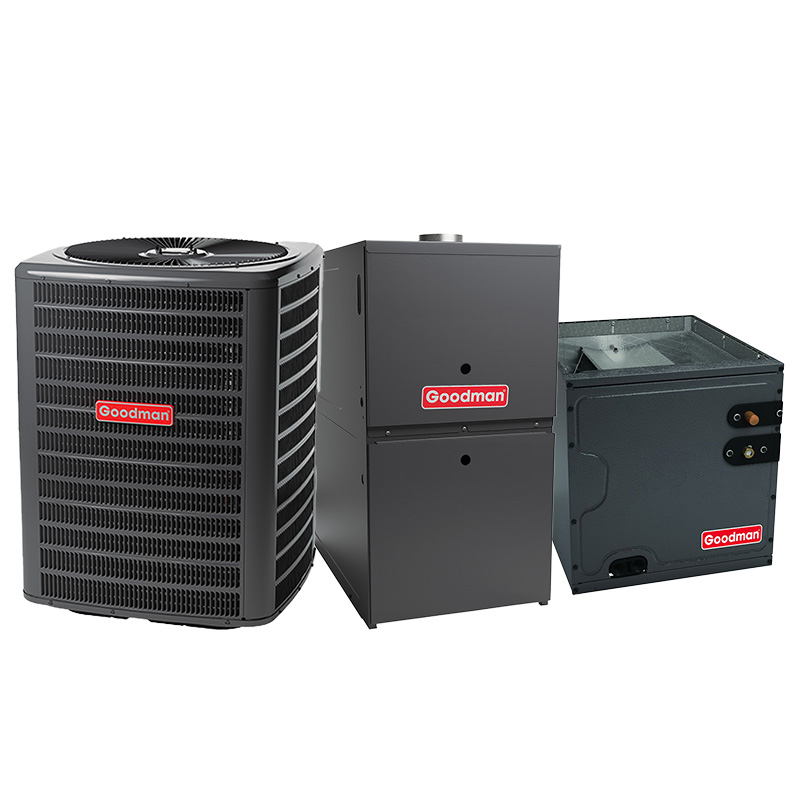
Goodman 3 Ton 14.5 SEER2 AC & Gas Furnace System – Two Stage Variable-Speed, 100000 BTU Gas Furnace, 80% AFUE, Upflow, R32
View on AC Direct see your lowest price →Check current price on AC Direct →
Key features
- 3-ton two-stage compressor reduces short-cycling and improves humidity control on mild days
- Variable-speed ECM blower motor for quieter operation and more consistent room-to-room temperatures
- 100,000 BTU upflow gas furnace rated at 80% AFUE, meets federal minimum efficiency for non-condensing units
- R-32 refrigerant with lower global-warming potential than R-410A, requires certified technician for service
- Upflow configuration designed for basement or ground-level installs with overhead ductwork
- Goodman factory warranty covers the compressor and heat exchanger, with parts coverage on registered systems
About this system
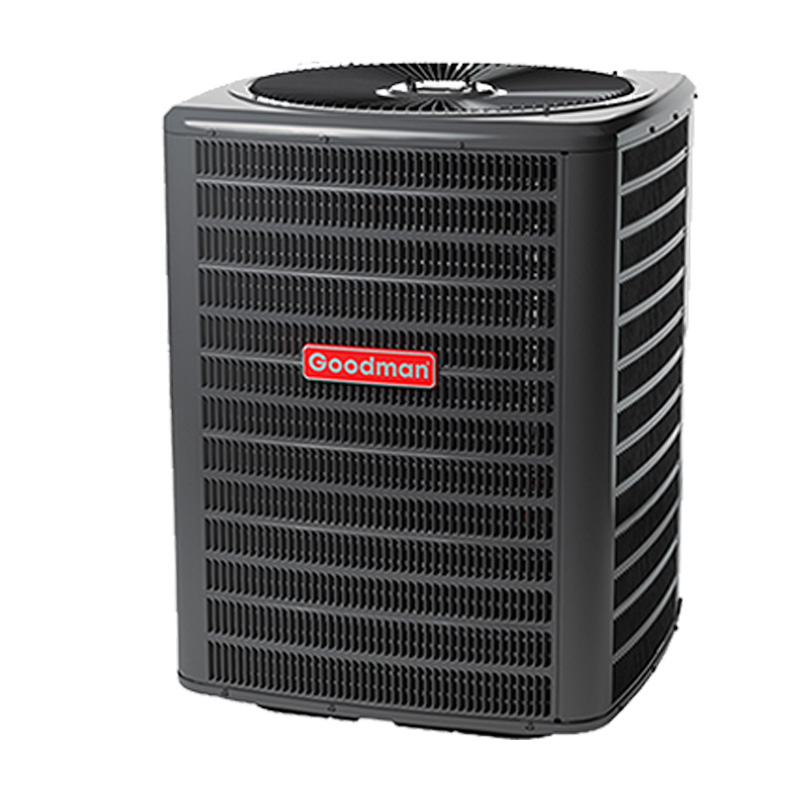
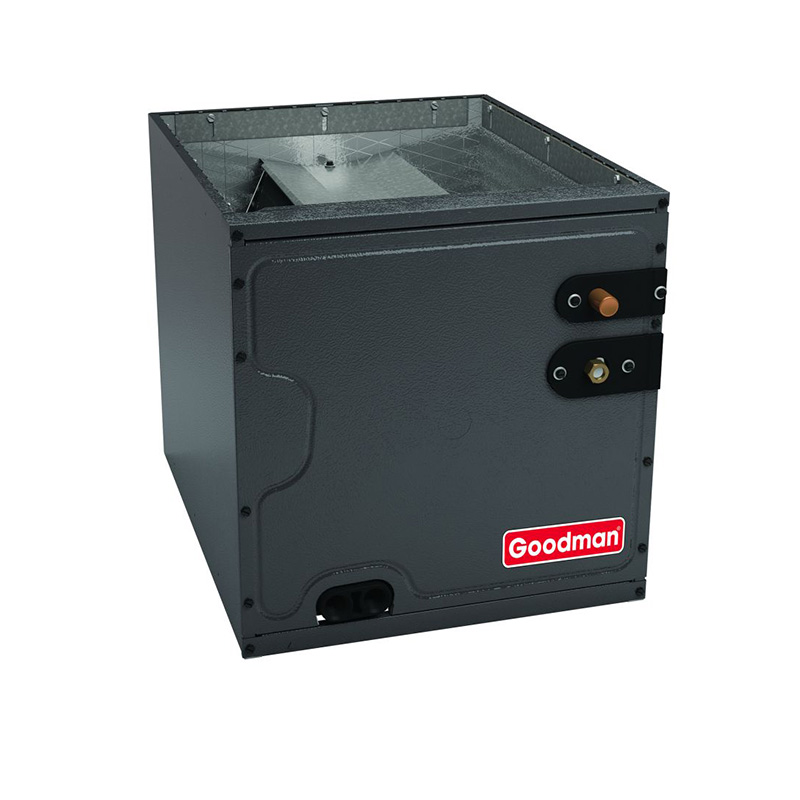
The Goodman 3-ton 14.5 SEER2 two-stage, variable-speed system pairs a split air conditioner with a 100,000 BTU upflow gas furnace running at 80% AFUE. The two-stage compressor runs at a lower capacity on mild days, reducing short-cycling and improving humidity control compared to a single-stage unit. The variable-speed air handler motor adjusts airflow continuously, which means quieter operation and more even temperatures room to room. R-32 refrigerant has a lower global-warming potential than the R-410A it replaces and is becoming the industry standard for new residential equipment.
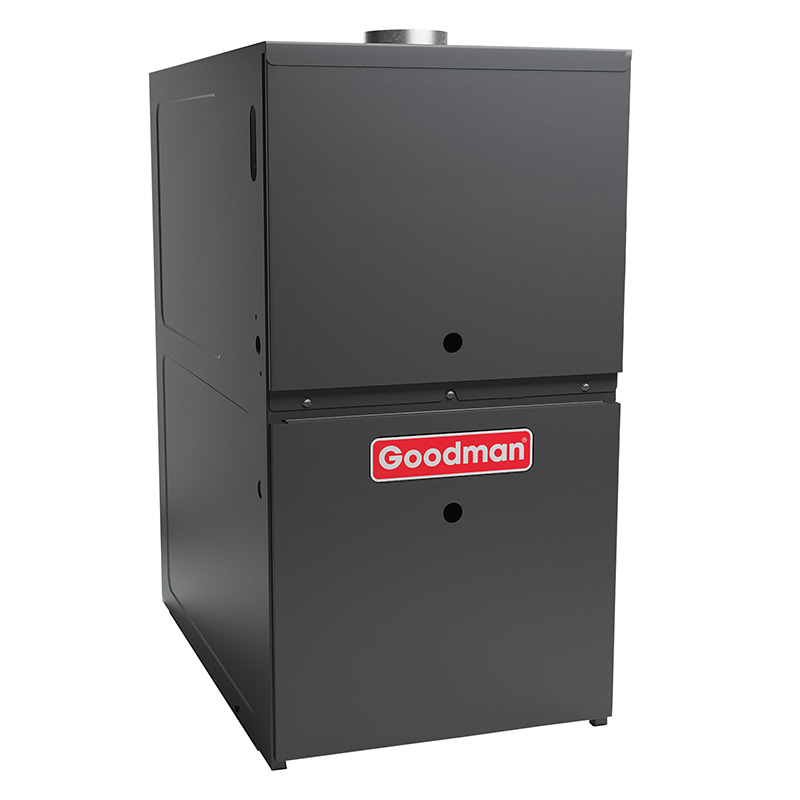
An 80% AFUE furnace converts 80 cents of every gas dollar into usable heat, with the remaining 20% lost through the flue. That is the federal minimum for non-condensing furnaces and is well suited to mild-to-moderate heating climates where a high-efficiency 96% or 97% AFUE unit would have a very long payback period. Upflow configuration means the system pulls return air from the bottom and discharges conditioned air upward, making it the standard choice for installations in a basement, utility closet, or ground-level mechanical room with ductwork above.
This system lands in value territory, typically priced 15 to 25 percent below equivalent Trane, Carrier, or Lennox configurations. It suits homeowners who want two-stage comfort and variable-speed airflow without stretching to a premium brand, provided they hire an experienced installer and budget for routine maintenance. The R-32 refrigerant requires a certified technician for any service involving the refrigerant circuit, so verifying local availability of qualified techs before purchase is a practical step.
This Goodman system delivers genuine two-stage, variable-speed comfort at a price point that undercuts premium brands by a meaningful margin, making it a reasonable choice for budget-conscious homeowners who prioritize upfront savings. The trade-off is a shorter average compressor lifespan, documented coil leak issues in a subset of units, and a reliability record that sits below Trane, Carrier, and Lennox at similar efficiency tiers. Outcome leans heavily on installer quality and consistent annual maintenance.
Overall score is the average of the five ratings above.
What we like
- Two-stage compressor improves humidity control and comfort versus single-stage at the same price tier
- Variable-speed ECM blower reduces energy use on the air distribution side and operates noticeably quieter
- Priced 15 to 25 percent below comparable Carrier, Trane, and Lennox systems, lowering the total install cost
- R-32 refrigerant is forward-compatible with tightening environmental regulations on refrigerants
- 80% AFUE furnace is appropriate and cost-effective for mild-to-moderate heating climates with lower annual heating loads
Trade-offs
- Compressor lifespan averages 10 to 14 years versus 15 to 20 years documented for premium brands, meaning earlier replacement costs are a real possibility
- Evaporator coil leaks appear in a meaningful share of owner reviews and can be an expensive repair outside warranty
- Dual-run capacitors are the most commonly reported failure, typically appearing after year 5 to 7 at a cost of 300 to 600 dollars per service call
- 80% AFUE loses 20% of fuel as exhaust heat, making this furnace less cost-efficient than condensing units in cold climates with high annual heating hours
What homeowners and pros say about Goodman
Homeowners who bought Goodman equipment and left reviews through Google dealer channels rate the brand around 3.8 out of 5, with affordability and upfront cost savings cited most often as the reason they chose it. That score reflects a real segment of satisfied owners, most of whom had systems installed by attentive contractors and kept up with annual tune-ups. The picture is less flattering on ConsumerAffairs, where Goodman sits around 2.5 out of 5, a channel that skews toward people who had a problem worth writing about. The recurring complaint on that platform is repair costs climbing after roughly year 7, which aligns with the documented pattern of dual-run capacitor failures and, in some cases, evaporator coil leaks appearing in the second half of the first decade of ownership.
HVAC technicians who work across multiple brands tend to view Goodman as a solid value proposition when the installation is done carefully, and a frustrating one when it is not. They point to the dual-run capacitor as the most predictable failure on the cooling side, a low-cost repair on its own but a signal to start watching the system more closely. Compressor longevity is the longer-run concern: Goodman compressors on average reach 10 to 14 years, versus the 15 to 20 years more commonly seen on premium brands, which means owners of this system should factor a potential compressor replacement or full system swap into their long-term budget. For this specific two-stage, variable-speed configuration, pros also note that R-32 servicing requires the right certification and equipment, so verifying that local technicians are set up for it before the first service call is a practical step worth taking at install time.
Sources: ConsumerAffairs Goodman owner reviews, AHRI Directory of Certified Product Performance, U.S. DOE appliance and equipment efficiency standards, Goodman product specification sheets.
What it costs to run
At 14.5 SEER2, cooling this 3-ton system for a typical 1200-hour cooling season at the U.S. average electricity rate of $0.17/kWh works out to roughly $506 per year in cooling, about $42 less per year than a minimum-efficiency 13.4 SEER2 unit of the same size. Your real cost depends on your climate and local rate.
Method: (36,000 BTU/hr ÷ 14.5 SEER2) × 1200 hours ÷ 1000 × $0.17/kWh. Rate source: U.S. EIA average; cooling hours: moderate-climate estimate.
How it compares
| Brand | Comparable model | SEER2 | Stage | Price position |
|---|---|---|---|---|
| Goodman | GSZ2 / GMVC8 Series (this system) | 14.5 | Two-stage | Value pick |
| Carrier | Comfort 14 (CA14NA) with 80% furnace | ~14.3 | Single-stage | Typically 15 to 25 percent more than this Goodman system |
| Trane | XR14 with S8X1 80% furnace | ~14.3 | Single-stage | Typically 15 to 25 percent more than this Goodman system |
| Lennox | Merit 14ACX with 80% ML180 furnace | ~14.3 | Single-stage | Typically 15 to 25 percent more than this Goodman system |
Competitor rows are comparable single-stage units at similar efficiency; price is relative position, not a quote.
Questions about this system
Why does this system use R-32 instead of R-410A, and does that affect servicing?
R-32 has roughly one-third the global-warming potential of R-410A and is now the predominant refrigerant in new residential split systems. It does require a technician certified to handle mildly flammable refrigerants, so confirm that your local HVAC service companies are already equipped for R-32 work before purchasing.
Is 80% AFUE enough for my area, or should I step up to a high-efficiency furnace?
In the southern third of the country and many parts of the mid-Atlantic and Pacific Coast, 80% AFUE is often the right economic choice because heating hours are low and the payback on a condensing unit stretches to 12 or more years. In the upper Midwest, Mountain West, or New England where heating season is long and gas prices are high, a 95% or 96% AFUE condensing furnace usually pays back within 6 to 8 years.
What is the most likely repair I should budget for over the first 10 years?
Based on documented owner experience, dual-run capacitors are the most common failure on Goodman AC equipment, typically showing up after year 5 and running 300 to 600 dollars for a service call and part. Evaporator coil leaks also appear in a notable share of reviews and cost significantly more to address. Budgeting for an annual maintenance contract helps catch capacitor wear before it becomes a no-cool call.
Does the two-stage compressor actually make a difference in humidity control compared to single-stage?
Yes, in a meaningful way. A single-stage unit runs at full capacity or not at all, often satisfying the thermostat quickly on mild days before it has had time to pull much moisture out of the air. A two-stage compressor running at low stage runs longer cycles at lower capacity, which gives the coil more contact time with indoor air and removes more humidity per cooling cycle.
What warranty does this Goodman system carry, and do I need to register it?
Goodman provides a 10-year parts warranty on registered systems, including the compressor, coils, and heat exchanger, when registered within a set window after installation. Without registration the warranty typically drops to 5 years, so registering promptly after install is important. Labor is not covered by the manufacturer warranty and must be arranged separately through your installer or a service plan.
Specifications
| Cooling capacity | 3 Ton |
| Efficiency | 14.5 SEER2 |
| Furnace output | 100000 BTU |
| Furnace efficiency | 80% AFUE |
| Configuration | Upflow |
| Refrigerant | R-32 |