Goodman 3 Ton 14.5 SEER2 AC & Gas Furnace System – Two Stage Variable-Speed, 60000 BTU Gas Furnace, 96% AFUE, Upflow, R32
View on AC Direct see your lowest price →Check current price on AC Direct →
Key features
- 3-ton two-stage compressor for better humidity control and quieter part-load operation
- 14.5 SEER2 seasonal efficiency rating meets current federal minimums with moderate energy savings
- 96% AFUE gas furnace converts 96 cents of every fuel dollar into usable heat
- Variable-speed ECM blower motor reduces electricity use and improves airflow consistency
- R-32 refrigerant with lower global warming potential than outgoing R-410A
- Upflow configuration designed for basement or ground-level closet installations
About this system
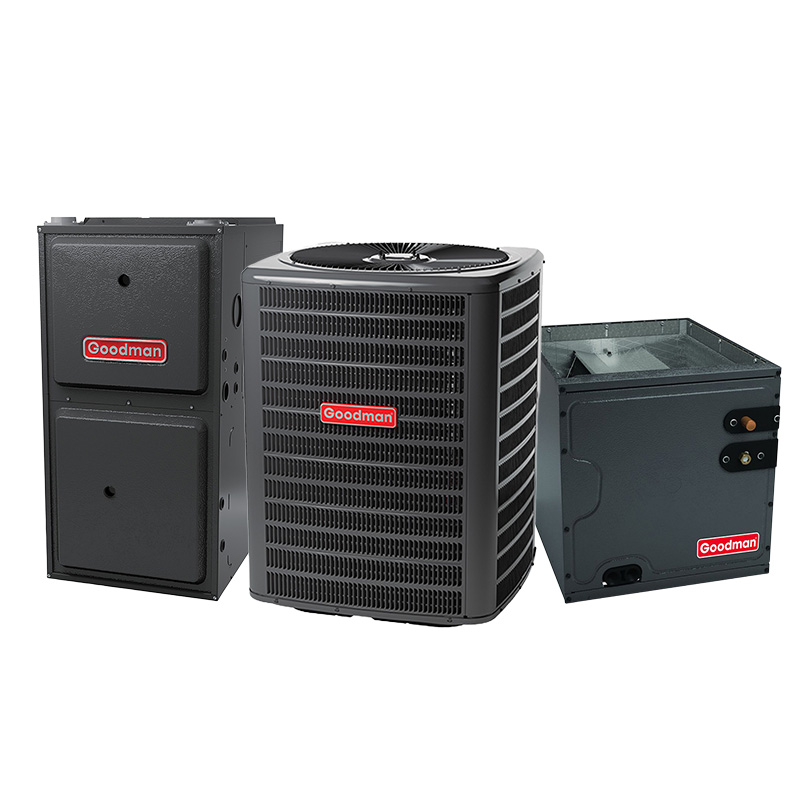
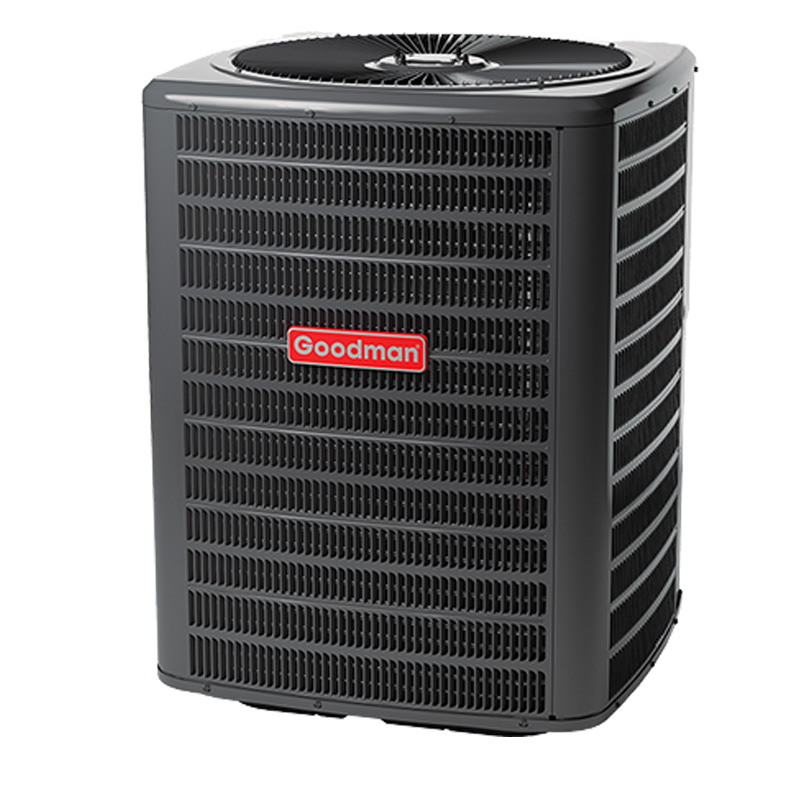
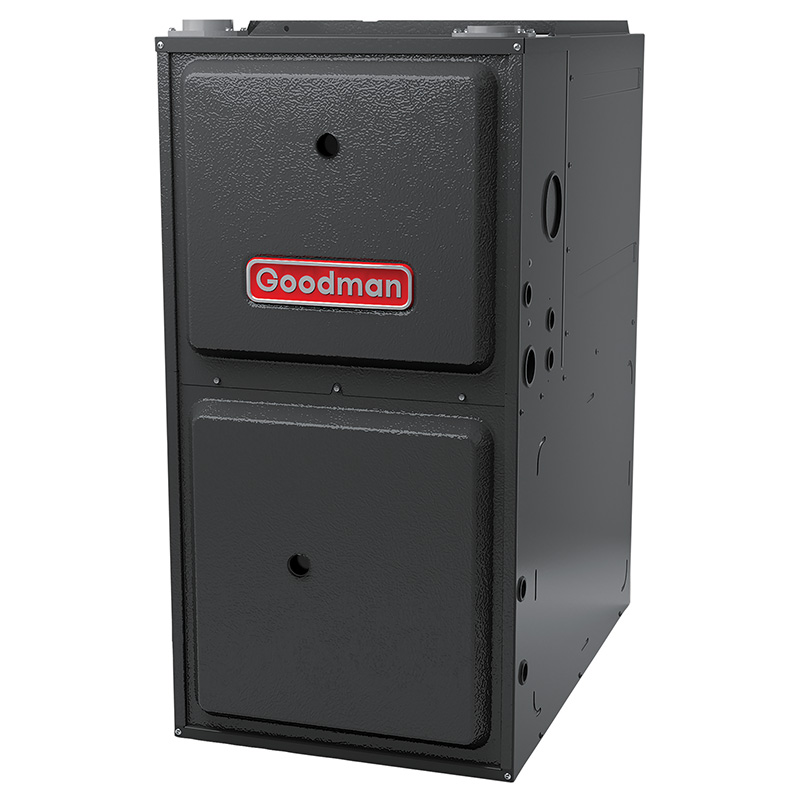
The Goodman GLXS4BA3610 pairs a 3-ton, 14.5 SEER2 two-stage air conditioner with a 60,000 BTU, 96% AFUE variable-speed upflow gas furnace in an R-32 refrigerant package. That combination puts it firmly in the entry-to-mid efficiency tier: the 14.5 SEER2 rating clears the federal minimum for most U.S. climate zones while stopping short of premium 17-plus SEER2 territory, and the 96% AFUE furnace is a genuinely high-efficiency rating that will cut gas bills noticeably compared to an 80% unit.
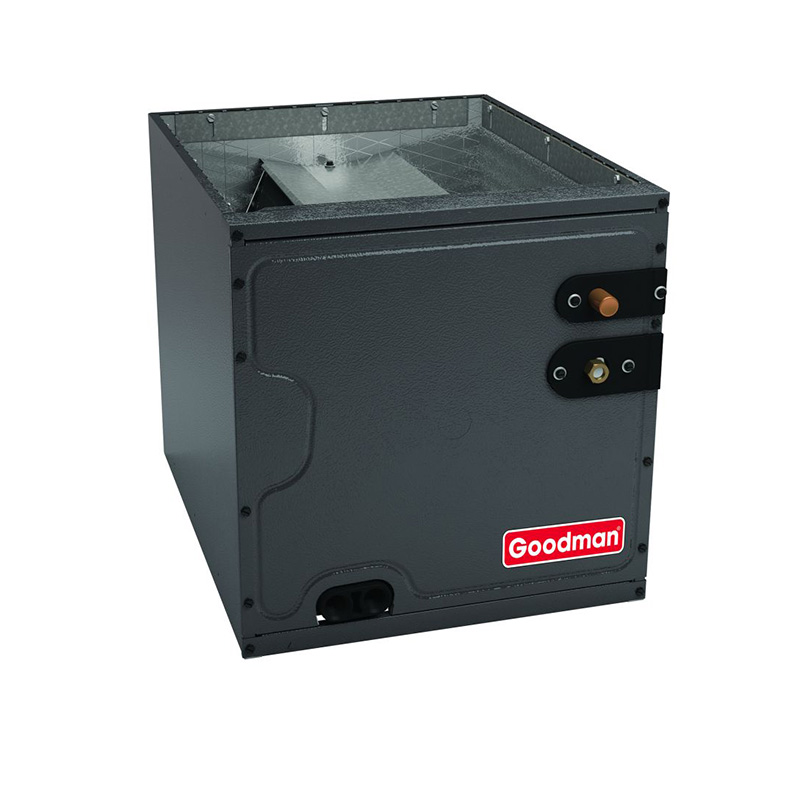
Two-stage cooling means the compressor runs at a lower capacity on moderate days and ramps to full capacity only when the load demands it. Paired with a variable-speed air handler, that translates to longer, quieter run cycles, better humidity control, and more even temperatures room to room compared to a single-stage system. The upflow configuration suits homes where the air handler sits in a basement or ground-level closet and blows conditioned air upward into the duct system. R-32 refrigerant has a lower global warming potential than the R-410A it is replacing across the industry, and it is the direction most manufacturers are moving, so parts and refrigerant supply should remain stable for the life of this equipment.
This system suits a budget-conscious homeowner in a roughly 1,500 to 2,200 square foot home who wants meaningful efficiency upgrades over a builder-grade replacement without paying the premium commanded by Carrier, Trane, or Lennox. The savings realized on purchase price can be redirected toward a solid installation by a licensed contractor, which is the single factor most likely to determine how long the equipment lasts and how reliably it performs.
The GLXS4BA3610 delivers a genuinely capable two-stage cooling and high-efficiency heating package at a price point roughly 15 to 25 percent below comparable Carrier, Trane, and Lennox systems. The trade-off is a documented history of capacitor failures and coil leaks after several years of use, and compressor longevity that typically trails premium brands. Buyers who invest in a skilled installation and keep up with maintenance can get solid performance from this system; those expecting the longevity of a premium brand at a budget price may be disappointed.
Overall score is the average of the five ratings above.
What we like
- Purchase price is 15 to 25 percent below comparable premium-brand systems, leaving budget for quality installation
- Two-stage operation improves comfort and humidity control over single-stage alternatives at this price
- 96% AFUE is a high-efficiency furnace rating that meaningfully reduces gas consumption
- Variable-speed blower lowers electricity use and reduces temperature swings between cycles
- R-32 refrigerant is the industry's forward direction, supporting long-term parts and service availability
Trade-offs
- Dual-run capacitors are the most commonly reported failure point, typically requiring a 300 to 600 dollar repair
- Evaporator coil leaks appear in a meaningful share of owner reviews, particularly after year 7
- Compressor lifespan averages 10 to 14 years versus 15 to 20 years for premium-brand compressors
- A minority of owners report refrigerant leaks within the first year, most often traced to installation or initial charge issues
What homeowners and pros say about Goodman
Goodman sits at roughly 3.8 out of 5 stars across Google dealer reviews, where the most consistent praise is straightforward: the equipment costs less than the big-name alternatives and, when installed correctly, it works. That last qualifier matters. HVAC technicians consistently point to installation quality as the dominant variable in how long any Goodman system lasts and how few headaches it causes. ConsumerAffairs scores are lower, around 2.5 out of 5, though that platform skews heavily toward owners who had a problem worth writing about. The recurring pattern in those reviews is repair costs climbing after roughly year 7, which lines up with the documented failure modes for this brand.
The specific issues that come up repeatedly in owner and technician feedback on Goodman equipment are worth knowing before you buy. Dual-run capacitor failures are the most commonly reported repair, typically a quick fix in the 300 to 600 dollar range and not a sign of deeper trouble if caught early. Evaporator coil leaks show up in a meaningful share of longer-term owner accounts. Compressor longevity is the bigger picture concern: Goodman compressors average roughly 10 to 14 years of service life, compared to 15 to 20 years that premium brands tend to achieve. A smaller group of owners report refrigerant leaks in the first year, which technicians generally attribute to installation or initial charge problems rather than a factory defect in the unit itself. None of these issues are deal-breakers for a cost-conscious buyer, but they are real trade-offs worth weighing against the upfront savings.
Sources: ConsumerAffairs Goodman owner reviews, AHRI Directory of Certified Product Performance, U.S. DOE appliance and equipment efficiency standards, Goodman product specification sheets.
What it costs to run
At 14.5 SEER2, cooling this 3-ton system for a typical 1200-hour cooling season at the U.S. average electricity rate of $0.17/kWh works out to roughly $506 per year in cooling, about $42 less per year than a minimum-efficiency 13.4 SEER2 unit of the same size. Your real cost depends on your climate and local rate.
Method: (36,000 BTU/hr ÷ 14.5 SEER2) × 1200 hours ÷ 1000 × $0.17/kWh. Rate source: U.S. EIA average; cooling hours: moderate-climate estimate.
How it compares
| Brand | Comparable model | SEER2 | Stage | Price position |
|---|---|---|---|---|
| Goodman | GLXS4BA3610 | 14.5 | Two-stage | Value pick |
| Carrier | Comfort 14 (24ACC4) | 14.3 | Single-stage | Typically 15 to 25 percent more than the Goodman |
| Trane | XR14S | 14.3 | Single-stage | Typically 15 to 25 percent more than the Goodman |
| Lennox | Merit ML14XC1 | 14.3 | Single-stage | Typically 15 to 25 percent more than the Goodman |
Competitor rows are comparable single-stage units at similar efficiency; price is relative position, not a quote.
Questions about this system
Does the 14.5 SEER2 rating qualify for a federal tax credit?
As of 2025, the federal 25C tax credit requires a minimum of 16 SEER2 for split-system central air conditioners in most regions. At 14.5 SEER2, this unit does not meet that threshold, so you should not count on a federal tax credit for the cooling equipment. The 96% AFUE furnace does meet the 97% AFUE threshold in some interpretations depending on model certification, so verify with your tax professional and current IRS guidance before filing.
Will R-32 refrigerant be hard to find for future service calls?
R-32 is one of the primary replacements for R-410A across the HVAC industry and is already widely stocked by major distributors. Availability is expected to improve rather than tighten as more manufacturers ship R-32 equipment, so this should not be a practical concern over the equipment's lifespan.
How serious is the documented capacitor failure issue, and what does it cost to fix?
Dual-run capacitor failures are the most commonly reported repair on Goodman equipment and are considered a routine, low-stakes fix by most HVAC technicians. Parts typically cost under 50 dollars and a service call with labor usually lands in the 300 to 600 dollar range. Keeping a scheduled maintenance contract helps catch a weakening capacitor before it takes the compressor down with it.
My house uses a horizontal air handler in the attic. Will this upflow system work?
No. This furnace is configured specifically for upflow installations, meaning it draws return air from the bottom and discharges supply air from the top. A horizontal attic application requires a unit rated for horizontal or multi-position installation. Installing an upflow-only unit in a horizontal position voids the warranty and creates a safety hazard.
What warranty does this system carry, and what do I need to do to activate it?
Goodman typically offers a 10-year parts limited warranty on registered equipment, including the compressor and heat exchanger, provided the system is installed by a licensed contractor and registered within 60 days of installation. Failing to register usually drops coverage to 5 years on parts. The warranty covers parts only, not labor, so a service call will still carry a technician charge even within the warranty period.
Specifications
| Cooling capacity | 3 Ton |
| Efficiency | 14.5 SEER2 |
| Furnace output | 60000 BTU |
| Furnace efficiency | 96% AFUE |
| Configuration | Upflow |
| Refrigerant | R-32 |
| Model | GLXS4BA3610 |