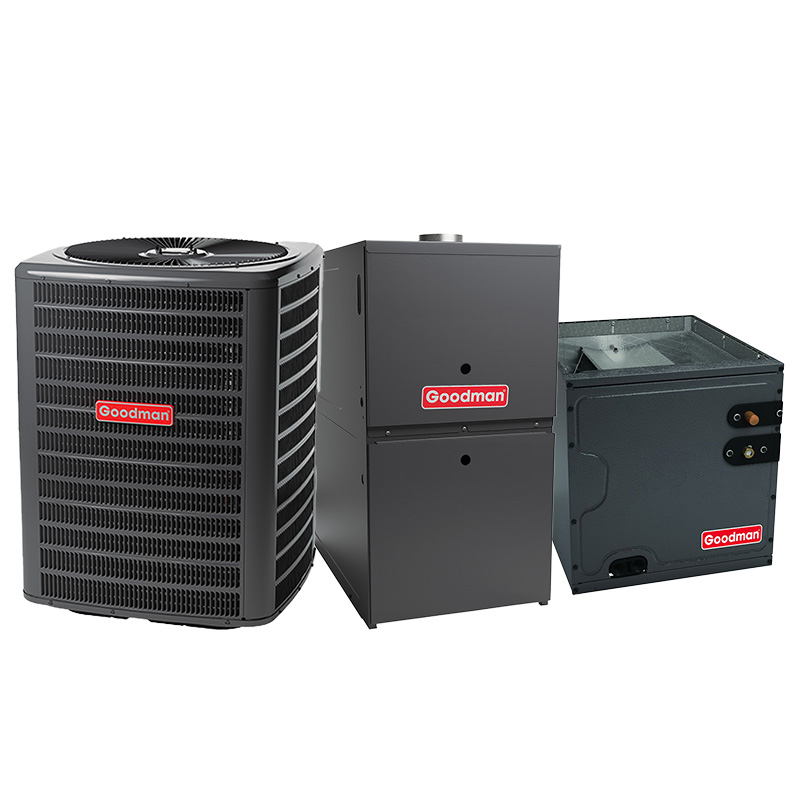
Goodman 3 Ton 14.5 SEER2 AC & Gas Furnace System – Two Stage Variable-Speed, 80000 BTU Gas Furnace, 80% AFUE, Upflow, R32
View on AC Direct see your lowest price →Check current price on AC Direct →
Key features
- Two-stage compressor runs at reduced capacity on mild days to cut short-cycling and improve humidity control
- Variable-speed ECM blower motor adjusts airflow continuously for quieter, more even comfort
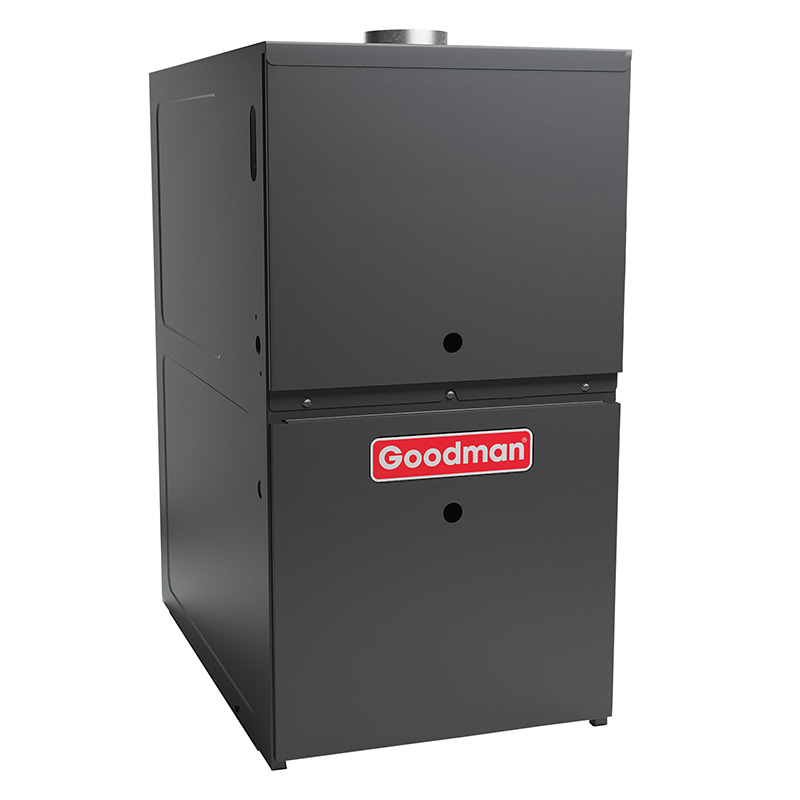
- 80,000 BTU upflow gas furnace rated at 80% AFUE for standard-efficiency heating
- R-32 refrigerant with lower global warming potential than R-410A
- 3-ton cooling capacity suited to roughly 1,500 to 2,000 sq ft depending on climate and insulation
- 14.5 SEER2 efficiency rating meets federal minimum standards and qualifies in most utility rebate tiers
About this system
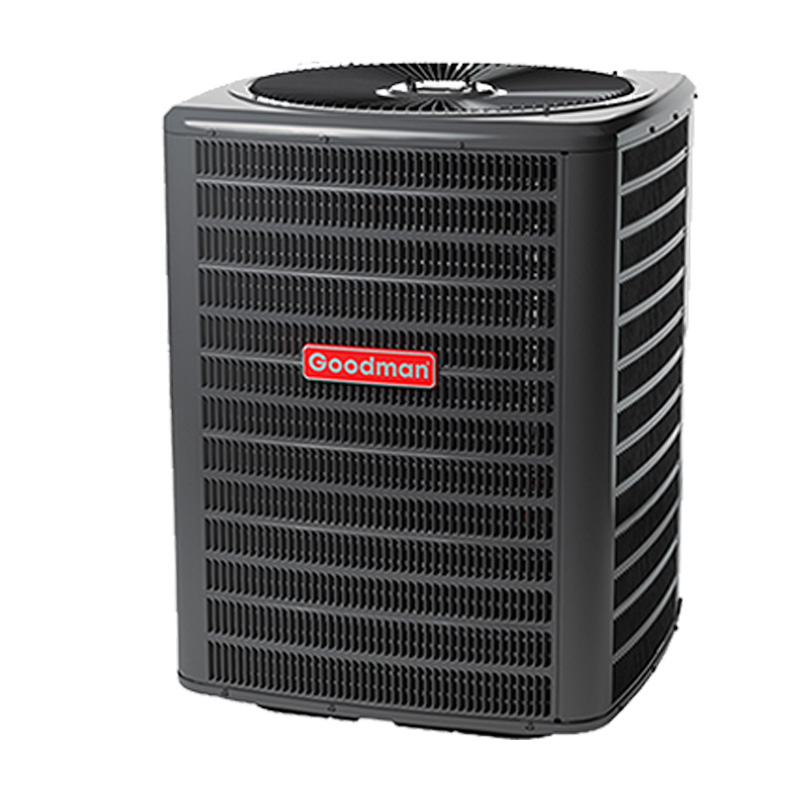
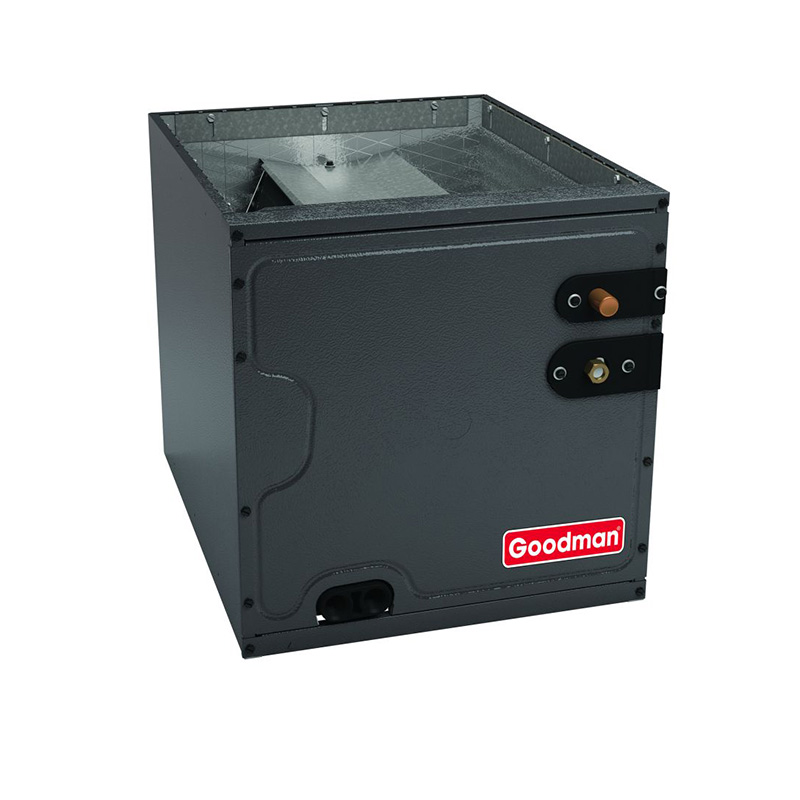
The Goodman 3-ton 14.5 SEER2 two-stage, variable-speed system pairs a split-system air conditioner with an 80,000 BTU upflow gas furnace rated at 80% AFUE. The two-stage compressor runs at a lower capacity on milder days, which reduces short-cycling, lowers humidity, and keeps indoor temperatures more consistent than a single-stage unit. The variable-speed air handler fan ramps up and down slowly rather than blasting on and off, which contributes to quieter operation and better air circulation throughout the home.
The furnace side delivers 80% AFUE, meaning 80 cents of every dollar of gas burned becomes usable heat. That is the code-minimum threshold in most U.S. climate zones, so buyers in colder northern regions should weigh whether a 96% AFUE two-stage furnace would recover its higher upfront cost through fuel savings. For moderate climates or homes already hitting efficiency targets, 80% AFUE is a practical and affordable choice. The system uses R-32 refrigerant, which carries a lower global warming potential than the R-410A it is displacing industry-wide, and the upflow cabinet configuration suits the most common basement and closet installations where supply air exits the top of the unit.
This system suits homeowners who want a meaningful comfort upgrade over entry-level single-stage equipment but are not ready to pay the premium that Carrier, Trane, or Lennox charge for comparable staging. It rewards buyers who invest in a careful installation by a reputable local contractor, because Goodman’s real-world longevity tracks closely with how well the system was set up on day one.
This Goodman system delivers genuine two-stage comfort at a price point that is realistically 15 to 25 percent below comparable Carrier, Trane, or Lennox configurations, making it a strong value for budget-conscious buyers who prioritize upfront cost. The 80% AFUE furnace and 14.5 SEER2 rating clear regulatory minimums but leave room on the table for homeowners in harsh climates who run their systems hard. Long-term satisfaction depends heavily on installation quality and a willingness to budget for component repairs, particularly capacitors and coil maintenance, as the unit ages past year seven.
Overall score is the average of the five ratings above.
What we like
- Two-stage cooling improves humidity control and temperature consistency over single-stage alternatives at a similar price
- Variable-speed ECM blower operates quietly and efficiently compared to fixed-speed motors
- R-32 refrigerant is more environmentally responsible and is becoming the industry standard going forward
- Priced 15 to 25 percent below Trane, Lennox, and Carrier for comparable staging and efficiency
- Widely stocked by HVAC distributors nationwide, keeping parts accessible and replacement component costs relatively low
Trade-offs
- Dual-run capacitors are the most commonly reported failure point, typically requiring a repair call within the first decade
- Compressor lifespan averages 10 to 14 years versus 15 to 20 years reported for premium-brand compressors
- 80% AFUE furnace is a code-minimum choice that will cost more to operate than 90%-plus units in cold climates
- A minority of owners report refrigerant leaks in the first year, usually tied to installation or initial charge issues rather than the equipment itself
What homeowners and pros say about Goodman
Homeowners reviewing Goodman equipment on ConsumerAffairs give the brand roughly 2.5 out of 5 stars, and that channel skews toward people who had problems worth writing about. The recurring theme there is repair costs climbing after about year seven, with evaporator coil leaks and compressor issues cited most often. Google reviews collected across dealer locations tell a somewhat different story, averaging around 3.8 out of 5, where affordability and workable performance are the most common reasons buyers say they are satisfied. The gap between those two numbers is real, and it largely reflects the fact that people who got a careful installation and stayed current on maintenance tend to report better outcomes than those who bought on price alone and skipped annual tune-ups.
HVAC technicians who service Goodman equipment regularly point to dual-run capacitor failure as the most predictable repair on these systems, typically a straightforward fix in the $300 to $600 range. Evaporator coil leaks show up in a meaningful share of owner accounts and represent a more significant expense. Compressor lifespan on Goodman units tends to average 10 to 14 years, which is a real gap compared to the 15 to 20 years technicians associate with premium brands. A small but documented share of first-year refrigerant leak reports are attributed to installation or charge issues rather than defective equipment, which underscores the consistent pro advice: the installer you choose matters as much as the equipment itself when it comes to this brand.
Sources: ConsumerAffairs Goodman owner reviews, AHRI Directory of Certified Product Performance, U.S. DOE appliance and equipment efficiency standards, Goodman product specification sheets.
What it costs to run
At 14.5 SEER2, cooling this 3-ton system for a typical 1200-hour cooling season at the U.S. average electricity rate of $0.17/kWh works out to roughly $506 per year in cooling, about $42 less per year than a minimum-efficiency 13.4 SEER2 unit of the same size. Your real cost depends on your climate and local rate.
Method: (36,000 BTU/hr ÷ 14.5 SEER2) × 1200 hours ÷ 1000 × $0.17/kWh. Rate source: U.S. EIA average; cooling hours: moderate-climate estimate.
How it compares
| Brand | Comparable model | SEER2 | Stage | Price position |
|---|---|---|---|---|
| Goodman | This system (GSX / GMVC80 series) | 14.5 | Two-stage | Value pick |
| Carrier | Comfort 14 / Performance 80 Furnace (24ACC / 58SB series) | 14.5 | Single-stage | Typically 15 to 25 percent more than this Goodman system |
| Trane | XR14 / S8X1 80% Furnace series | 14.5 | Single-stage | Typically 15 to 25 percent more than this Goodman system |
| Lennox | Merit 14 / ML180 Furnace series | 14.5 | Single-stage | Typically 15 to 25 percent more than this Goodman system |
Competitor rows are comparable single-stage units at similar efficiency; price is relative position, not a quote.
Questions about this system
Will R-32 refrigerant be hard to get serviced, and do I need a special technician?
R-32 requires technicians to have standard EPA Section 608 certification, the same credential already required for R-410A work, so no special licensing is needed. Availability is expanding rapidly as manufacturers shift to R-32, but in some rural areas you may want to confirm your chosen contractor has worked with it before. It is mildly flammable, so proper handling matters, but it is not unusually hazardous in normal service conditions.
What does 80% AFUE actually cost me compared to a 96% AFUE furnace?
At 80% AFUE, 20 cents of every gas dollar exits as exhaust rather than heating your home. On an $800 annual gas bill, that is roughly $160 per year more than a 96% AFUE unit would cost to run. Whether the fuel savings justify the higher upfront price of a high-efficiency furnace depends on your local gas rates, climate zone, and how long you plan to stay in the home.
How likely is a capacitor failure, and what does it cost to fix?
Dual-run capacitor failure is the most commonly reported repair issue across Goodman air conditioning systems. It typically shows up after several years of use and is one of the simpler, lower-cost HVAC repairs, usually falling in the $300 to $600 range including the service call. Keeping a maintenance contract with your installer so the capacitor gets checked annually can catch early signs of wear before it causes a no-cool call in July.
Does the two-stage compressor really make a noticeable difference in a 3-ton system?
Yes, particularly for humidity control in humid climates. Running at lower capacity for longer cycles allows the evaporator coil more time to pull moisture from the air, which a single-stage unit cycling on and off quickly does not accomplish as well. The difference is most noticeable on days when outdoor temperatures are mild rather than at peak summer heat.
What warranty does Goodman include, and what should I watch out for?
Goodman typically offers a 10-year parts limited warranty when registered within a specified window after installation, covering major components including the compressor and heat exchanger. Labor is not covered, which means repair bills after the first year fall on the homeowner even if the part itself is replaced free. Read the registration deadline carefully and confirm your installer submits it, because missing that window can reduce coverage significantly.
Specifications
| Cooling capacity | 3 Ton |
| Efficiency | 14.5 SEER2 |
| Furnace output | 80000 BTU |
| Furnace efficiency | 80% AFUE |
| Configuration | Upflow |
| Refrigerant | R-32 |