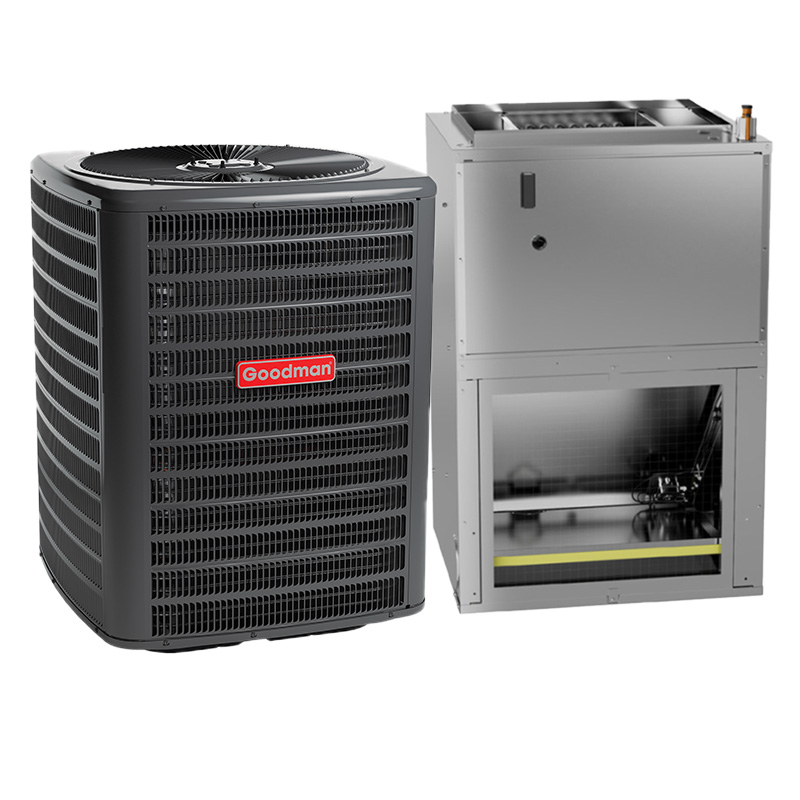
Goodman 3 Ton 14.5 SEER2 R32 Heat Pump Split System With 10kW Heater Built-In Wall-Mounted Air Handler
View on AC Direct see your lowest price →Check current price on AC Direct →
Key features
- 14.5 SEER2 efficiency rating meets current federal minimum standards for most U.S. climate zones
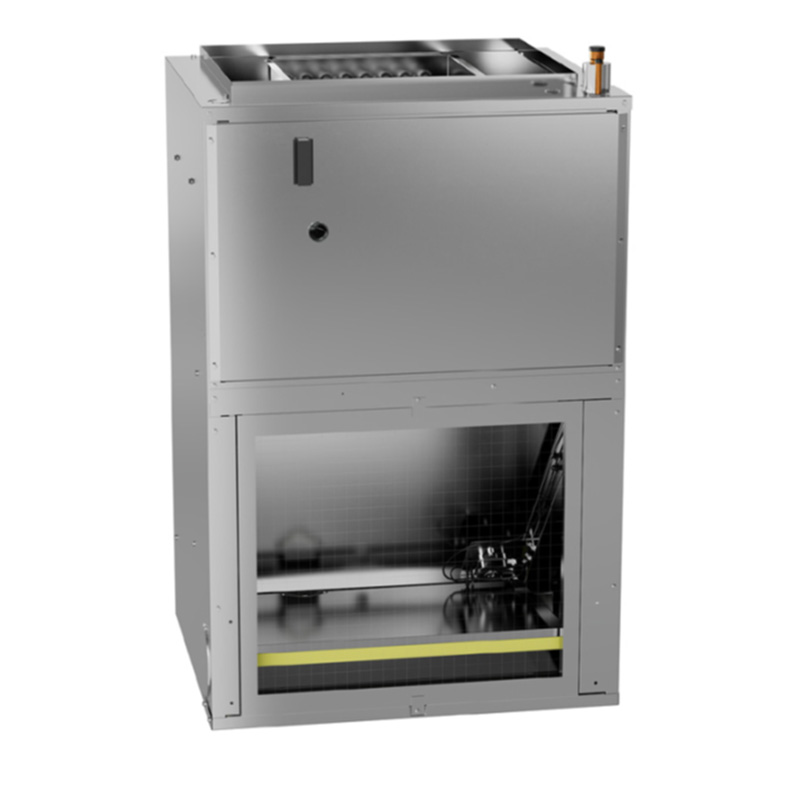
- Wall-mounted air handler suits garages, additions, and spaces where ceiling or floor installation is not feasible
- 10 kW electric strip heater built in, eliminating the need for a separate supplemental heat source
- R-32 refrigerant with lower global-warming potential than the R-410A it replaces
- 3-ton capacity sized for roughly 1,200 to 1,800 square feet depending on local load conditions
- Goodman factory warranty covers the compressor and parts, requiring registration within 60 days of install
About this system
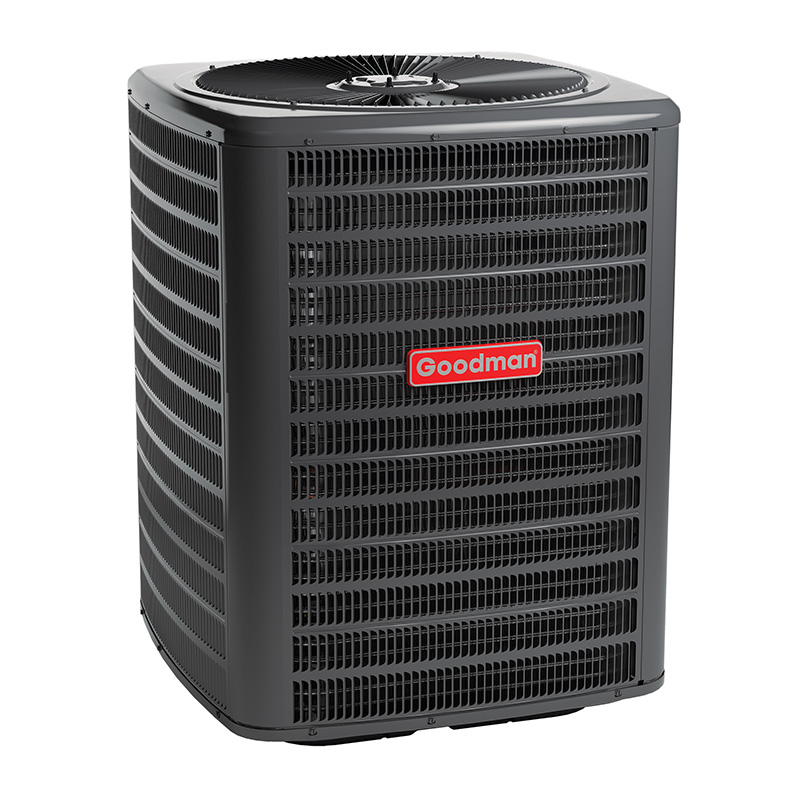
This Goodman 3-ton heat pump split system pairs a 14.5 SEER2-rated outdoor unit with a wall-mounted air handler that has a 10 kW electric heater built in, making it a self-contained heating and cooling solution that does not require a separate gas furnace or a standalone electric strip kit. The wall-mount configuration suits spaces where a traditional floor or attic-mounted air handler is not practical, such as garages, workshops, additions, server rooms, or ductless-style zone setups where the handler feeds a very short duct run. R-32 refrigerant gives it a lower global-warming potential than the R-410A it replaces, and at 14.5 SEER2 it meets current federal minimum efficiency standards for most U.S. climate zones without crossing into the premium-efficiency price tier.
A 3-ton rating covers roughly 1,200 to 1,800 square feet of well-insulated living space, though actual sizing depends on local climate, ceiling height, window area, and insulation quality. The 10 kW strip heater provides supplemental resistance heat when outdoor temperatures drop below the heat pump’s efficient operating range, which typically means below about 35 to 40 degrees Fahrenheit for a standard-efficiency unit like this one. Buyers who live in mild to moderate climates and want straightforward split-system cooling with backup heat in a wall-hung package will find this configuration practical. Those in very cold climates should weigh whether a higher-efficiency cold-climate heat pump would reduce their long-term electric bills enough to justify the added upfront cost.
This Goodman system is a cost-effective entry point for homeowners who need a wall-mount heat pump with built-in backup heat and are working with a tighter budget. At 14.5 SEER2 it is efficient enough to meet code but will not deliver the utility savings of a higher-SEER2 or <a href="https://hvac.best/glossary/variable-speed/">variable-speed</a> unit. Long-term satisfaction depends heavily on professional installation and proactive maintenance, because Goodman's documented track record shows reliability begins to soften past the seven-year mark.
Overall score is the average of the five ratings above.
What we like
- Priced 15 to 25 percent below comparable Carrier, Trane, and Lennox equipment, reducing upfront cost
- Wall-mount air handler opens installation options in non-traditional spaces where ducted systems are impractical
- 10 kW heater built in means no separate strip kit purchase or additional wiring coordination
- R-32 refrigerant is more environmentally responsible than R-410A and increasingly supported by service technicians
- 14.5 SEER2 meets current federal efficiency standards, keeping it eligible for standard utility rebates in most regions
Trade-offs
- Compressor lifespan averages 10 to 14 years based on owner reports, shorter than the 15 to 20 years typical of premium brands
- Dual-run capacitors are the most commonly reported failure point and, while relatively inexpensive to fix, add to ownership cost over time
- Evaporator coil leaks appear in a meaningful share of owner reviews and can become costly if refrigerant loss goes undetected
- A minority of owners report refrigerant leaks within the first year, a pattern that points to installation or factory charge issues rather than long-term durability
What homeowners and pros say about Goodman
Homeowners who review Goodman equipment on platforms like ConsumerAffairs give the brand roughly 2.5 out of 5 stars, though that channel skews toward people motivated to complain rather than to praise. The recurring theme in those reviews is not immediate failure but a gradual increase in repair costs starting around year seven, which aligns with the documented compressor lifespan of 10 to 14 years versus the 15 to 20 years owners of premium brands tend to report. Google dealer reviews, which capture a broader cross-section of buyers, land closer to 3.8 out of 5, with affordability as the most consistent praise. For this wall-mount heat pump specifically, the wall-hung air handler configuration adds a layer of complexity that makes finding an installer with experience in that exact setup worth the extra phone call.
HVAC technicians who work on Goodman equipment regularly point to dual-run capacitors as the component they replace most often on these systems, a repair that usually runs between 300 and 600 dollars and is straightforward for any competent technician. More serious are the evaporator coil leaks that show up in a meaningful share of owner accounts, which can mean refrigerant loss, reduced efficiency, and a repair bill that climbs quickly. A smaller but documented group of owners also report refrigerant leaks in the first year of ownership, something pros generally attribute to the quality of the original installation and line set connections rather than a flaw in the unit itself. The takeaway from the field is consistent: a Goodman installed carefully by an experienced technician and maintained annually performs reasonably well for its price point, while one that is rushed into service or left without routine attention tends to confirm the lower end of the brand’s reputation.
Sources: ConsumerAffairs Goodman owner reviews, AHRI Directory of Certified Product Performance, U.S. DOE appliance and equipment efficiency standards, Goodman product specification sheets.
What it costs to run
At 14.5 SEER2, cooling this 3-ton system for a typical 1200-hour cooling season at the U.S. average electricity rate of $0.17/kWh works out to roughly $506 per year in cooling, about $42 less per year than a minimum-efficiency 13.4 SEER2 unit of the same size. Your real cost depends on your climate and local rate.
Method: (36,000 BTU/hr ÷ 14.5 SEER2) × 1200 hours ÷ 1000 × $0.17/kWh. Rate source: U.S. EIA average; cooling hours: moderate-climate estimate.
How it compares
| Brand | Comparable model | SEER2 | Stage | Price position |
|---|---|---|---|---|
| Goodman | 3-Ton 14.5 SEER2 R-32 Wall-Mount Heat Pump with 10 kW Air Handler | 14.5 | Single-stage | Value pick |
| Carrier | Comfort Series (24ACC6) | 14.5-15 | Single-stage | Typically 15 to 25 percent more than the Goodman |
| Trane | XR15 Heat Pump | 15-15.5 | Single-stage | Typically 15 to 25 percent more than the Goodman |
| Lennox | Merit Series (ML14XP1) | 14.5-15 | Single-stage | Typically 15 to 25 percent more than the Goodman |
Competitor rows are comparable single-stage units at similar efficiency; price is relative position, not a quote.
Questions about this system
Can I use this system as the only heat source in a cold climate, or do I need the 10 kW strip heater to carry the load when it gets very cold?
At 14.5 SEER2, this is a standard-efficiency heat pump that loses heating capacity noticeably below about 35 to 40 degrees Fahrenheit. The built-in 10 kW strip heater is intended to fill that gap, but resistance heat is more expensive to run than heat pump output. In climates with extended hard winters, your electric bills during heating season can climb significantly, and a cold-climate heat pump might be worth the added upfront investment.
What does the wall-mount air handler actually look like, and how does it connect to ductwork?
A wall-mounted air handler is a vertically oriented cabinet that attaches to an interior wall, typically in a utility area, garage, or mechanical room. It can connect to a short duct run or, in some configurations, discharge air directly into the space. It is not the same as a ductless mini-split head unit and still requires refrigerant line sets and electrical connections run by a licensed HVAC technician.
How important is the installer choice for a Goodman system specifically?
Extremely important. Technicians and owner reviews consistently identify installation quality as the single biggest factor in how long a Goodman unit lasts and how reliably it runs. The documented pattern of refrigerant leaks in the first year, for example, is almost always traced back to improper line set connections or an incorrect factory charge at startup, not a defect in the equipment itself.
What are the most likely repair bills I should plan for over a 10-year ownership period?
The most common reported failure is the dual-run capacitor, which typically costs between 300 and 600 dollars to diagnose and replace. Evaporator coil leaks, which appear in a meaningful share of Goodman owner reviews, are more expensive and can run well over a thousand dollars depending on refrigerant costs and labor. Setting aside a small annual maintenance budget and getting the system checked every year helps catch these issues before they become emergency repairs.
Does this system qualify for the federal energy efficiency tax credit?
Federal tax credits under current law generally require a heat pump to meet specific efficiency thresholds, and a 14.5 SEER2 single-stage unit may or may not qualify depending on additional ratings such as HSPF2. You should pull the AHRI certificate for this specific model combination and check it against current IRS guidance or consult a tax professional before assuming eligibility.
Specifications
| Cooling capacity | 3 Ton |
| Efficiency | 14.5 SEER2 |
| Refrigerant | R-32 |