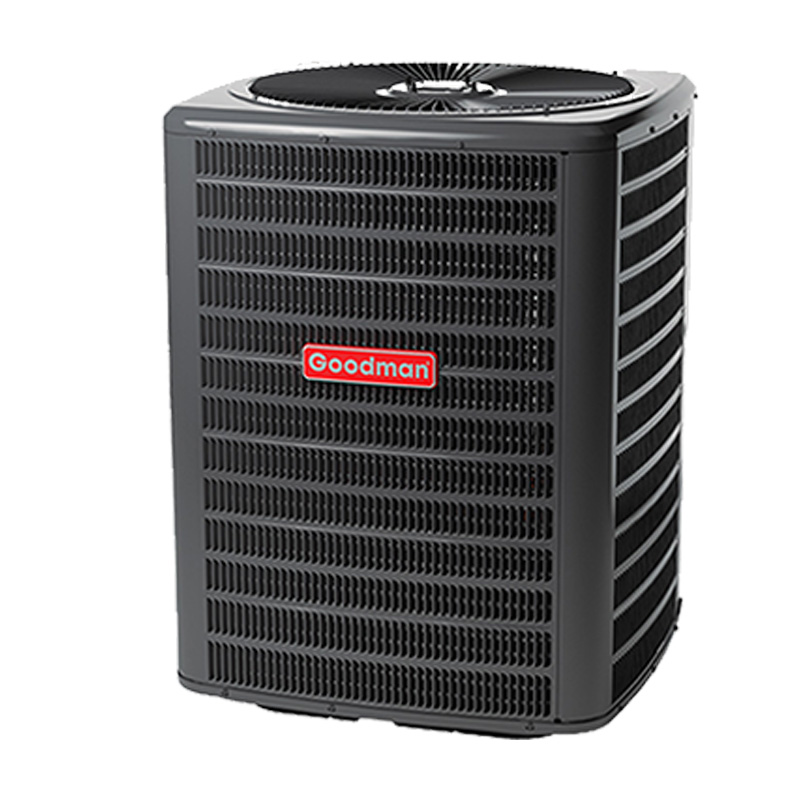
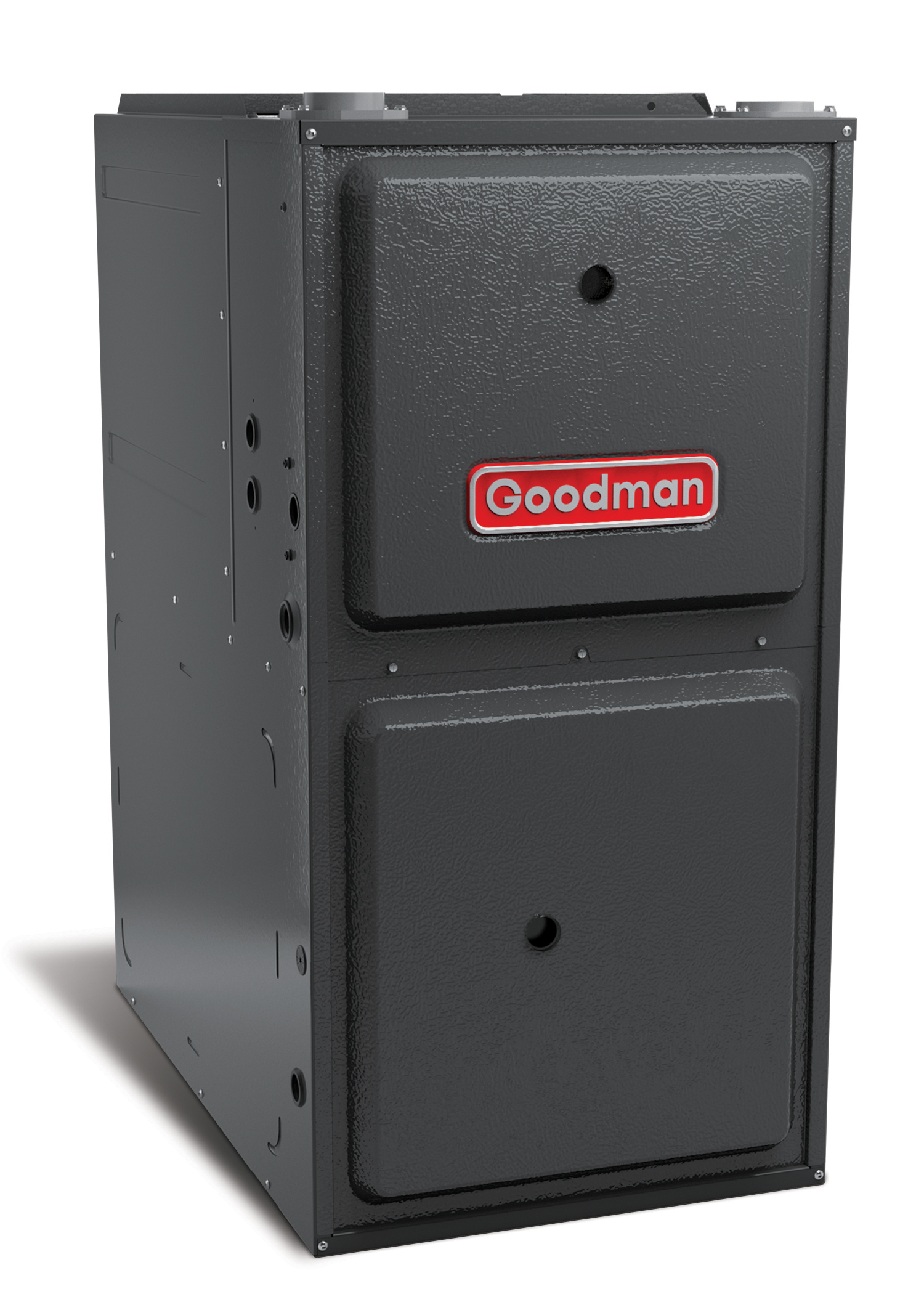
Goodman 3 Ton 14 SEER2 100000 BTU 96% AFUE Two-Stage Gas Furnace With R32 Air Condenser and Coil System – Upflow
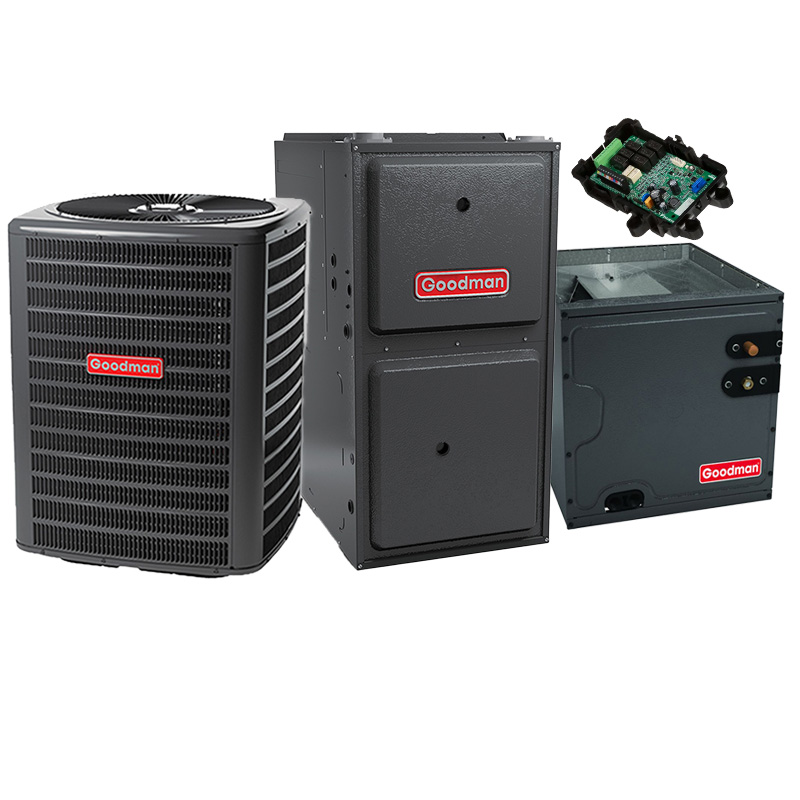
View on AC Direct see your lowest price →Check current price on AC Direct →
Key features
- Two-stage 100,000 BTU furnace at 96% AFUE for high-efficiency gas heating
- 3-ton 14 SEER2 air condenser using R-32 low-GWP refrigerant
- Upflow configuration suited to basement and closet air handler installations
- Two-stage operation reduces short-cycling, temperature swings, and noise
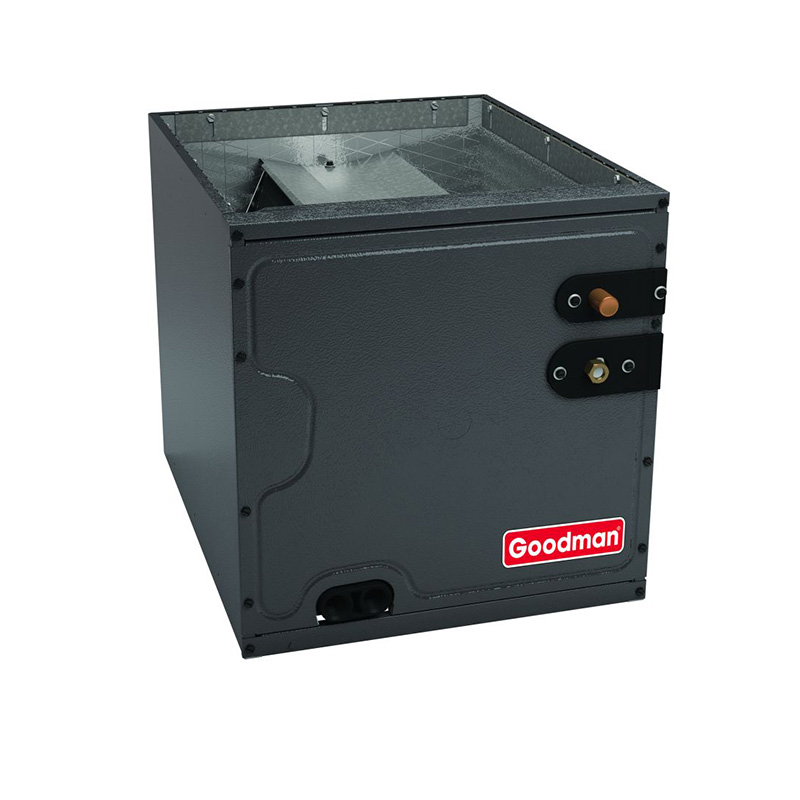
- Matched coil included, simplifying the selection of a properly sized system
- Priced roughly 15 to 25 percent below comparable Carrier, Trane, and Lennox systems
About this system
This Goodman system pairs a 3-ton, 14 SEER2 R-32 air condenser and matching coil with a 100,000 BTU, 96% AFUE two-stage gas furnace in an upflow configuration. The combination is sized for homes roughly in the 1,500 to 2,200 square foot range, depending on climate zone and insulation, and the upflow orientation suits basement or main-floor air handler installations where supply air rises into the duct system. R-32 refrigerant has a lower global warming potential than older R-410A and is becoming the industry standard, which means parts and refrigerant availability should remain strong for the foreseeable future.
The two-stage furnace is the standout specification here. Running on low fire roughly 80 percent of the time, it cycles less aggressively than a single-stage unit, which reduces temperature swings, lowers noise, and can meaningfully cut gas consumption on mild days. At 96% AFUE it qualifies as a high-efficiency furnace, meaning nearly all combustion energy becomes usable heat rather than flue loss. The 14 SEER2 cooling side sits at the entry point of current federal minimum efficiency requirements for most northern regions, so buyers in hot southern climates may want to weigh a higher-SEER2 option. As a Goodman system, the price is positioned well below Trane, Carrier, and Lennox equivalents, which makes it a credible choice for budget-conscious buyers who can secure a quality installation.
This Goodman combo delivers genuinely strong furnace efficiency and the comfort benefits of two-stage heating at a price that undercuts the major premium brands by a meaningful margin. The trade-off is a cooling efficiency floor, a compressor lifespan that historically trails the premium tier, and reliability outcomes that depend heavily on who installs it. Buyers who prioritize upfront cost and invest in professional installation will likely get solid years of service; those expecting premium-brand longevity at a budget price should temper expectations.
Overall score is the average of the five ratings above.
What we like
- 96% AFUE two-stage furnace is genuinely high-efficiency, not a marketing stretch
- Two-stage operation improves comfort and reduces gas use on moderate heating days
- R-32 refrigerant is future-proofed relative to legacy R-410A systems
- Complete matched system simplifies permitting, warranty compliance, and sizing
- Significant upfront cost savings versus Carrier, Trane, and Lennox equivalents
Trade-offs
- 14 SEER2 is the efficiency floor for northern climates and below average for hot southern regions
- Dual-run capacitors and evaporator coil leaks are documented repeat failure points
- Compressor lifespan averages 10 to 14 years versus 15 to 20 for premium brands
- Reliability outcomes vary sharply with install quality, making contractor selection critical
What homeowners and pros say about Goodman
Homeowners discussing Goodman equipment online tend to split along a familiar line. Those who had a careful installation and kept up with basic maintenance, annual filter changes, coil cleaning, and a capacitor check every few years, generally report satisfactory service life and point to the lower purchase price as a win. On ConsumerAffairs, Goodman scores around 2.5 out of 5, but that platform over-represents frustrated owners, and the recurring complaint is repair costs climbing after roughly year 7, not catastrophic early failure. Google dealer reviews paint a more balanced picture at around 3.8 out of 5, where affordability is the most consistent praise from buyers who feel they got reasonable equipment without overpaying.
HVAC technicians are candid about where Goodman systems tend to need attention. Dual-run capacitors are the most common service call, usually a straightforward fix in the 300 to 600 dollar range that does not indicate a deeper problem. Evaporator coil leaks show up in enough owner accounts to be worth factoring into long-term cost planning, and compressor lifespan on Goodman equipment tends to average 10 to 14 years rather than the 15 to 20 years more common in premium-brand compressors. A small share of owners encounter refrigerant leaks within the first year, which technicians almost universally attribute to installation or initial charge issues. The consistent advice from the pro side is that with this brand, installer selection is at least as important as equipment selection.
Sources: ConsumerAffairs Goodman owner reviews, AHRI Directory of Certified Product Performance, U.S. DOE appliance and equipment efficiency standards, Goodman product specification sheets.
What it costs to run
At 14 SEER2, cooling this 3-ton system for a typical 1200-hour cooling season at the U.S. average electricity rate of $0.17/kWh works out to roughly $525 per year in cooling, about $23 less per year than a minimum-efficiency 13.4 SEER2 unit of the same size. Your real cost depends on your climate and local rate.
Method: (36,000 BTU/hr ÷ 14 SEER2) × 1200 hours ÷ 1000 × $0.17/kWh. Rate source: U.S. EIA average; cooling hours: moderate-climate estimate.
How it compares
| Brand | Comparable model | SEER2 | Stage | Price position |
|---|---|---|---|---|
| Goodman | 3 Ton 14 SEER2 / 96% AFUE Two-Stage Upflow System | 14 | Two-stage (furnace), Single-stage (condenser) | Value pick |
| Carrier | Performance 14 Series (24ACC6 condenser + 59TP6 two-stage furnace) | 14 | Two-stage | Roughly 20 to 25 percent higher than this Goodman system |
| Trane | XR14c condenser + XC95m two-stage furnace | 14-15 | Two-stage | Roughly 20 to 30 percent higher than this Goodman system |
| Lennox | Merit ML14XC1 condenser + ML196E two-stage furnace | 14 | Two-stage | Roughly 15 to 25 percent higher than this Goodman system |
Competitor rows are comparable single-stage units at similar efficiency; price is relative position, not a quote.
Questions about this system
Is 14 SEER2 enough for my climate, or should I step up?
14 SEER2 meets current federal minimums for northern regions and will run acceptably in moderate climates. If you are in a hot-summer southern state, stepping to 16 SEER2 or higher will reduce cooling bills noticeably over the system's life and is often worth the incremental cost.
What does two-stage heating actually mean for my day-to-day comfort?
The furnace starts on low fire and only ramps to full output when temperatures drop sharply. This means fewer blasts of hot air, steadier room temperatures, and quieter operation on most days. It also extends burner and heat exchanger life compared to a single-stage unit cycling on and off more frequently.
How does R-32 refrigerant affect me as an owner?
R-32 has a lower global warming potential than R-410A and is increasingly common in new residential equipment, so service technicians and refrigerant supply should not be hard to find. One practical note: R-32 is mildly flammable, so any refrigerant service must be done by a certified technician, which is already the legal requirement regardless of refrigerant type.
Goodman has mixed reviews online. What are the most common things that go wrong?
The most frequently reported failure is the dual-run capacitor, which typically runs 300 to 600 dollars to diagnose and replace and is a manageable repair. Evaporator coil leaks appear in a meaningful share of owner accounts and are more disruptive. A minority of owners report refrigerant leaks in the first year, which most technicians attribute to installation or initial charge issues rather than the equipment itself.
What warranty does this system come with, and are there conditions I need to know about?
Goodman typically offers a 10-year parts warranty when the system is registered online within a set window after installation, often 60 days. Failure to register usually drops coverage to a shorter base period. The warranty covers parts but not labor, so budget for service call costs separately. Always confirm current warranty terms at registration since Goodman periodically updates them.
Specifications
| Cooling capacity | 3 Ton |
| Efficiency | 14 SEER2 |
| Furnace output | 100000 BTU |
| Furnace efficiency | 96% AFUE |
| Configuration | Upflow |
| Refrigerant | R-32 |