Goodman 3 Ton 14 SEER2 100000 BTU 96% AFUE Two Stage Multi-Speed ECM Gas Furnace System – Upflow | R32
View on AC Direct see your lowest price →Check current price on AC Direct →
Key features
- 14 SEER2 / 96% AFUE efficiency: meets federal minimums with margin, no federal tax credit territory
- Two-stage gas valve: low-fire operation on mild days, full capacity when temperatures drop hard
- Multi-speed ECM blower: lower electricity draw and better airflow control than standard PSC motors
- R-32 refrigerant: lower global-warming potential than R-410A, smaller charge volume required
- Upflow configuration: designed for basement or ground-level installs with overhead duct supply
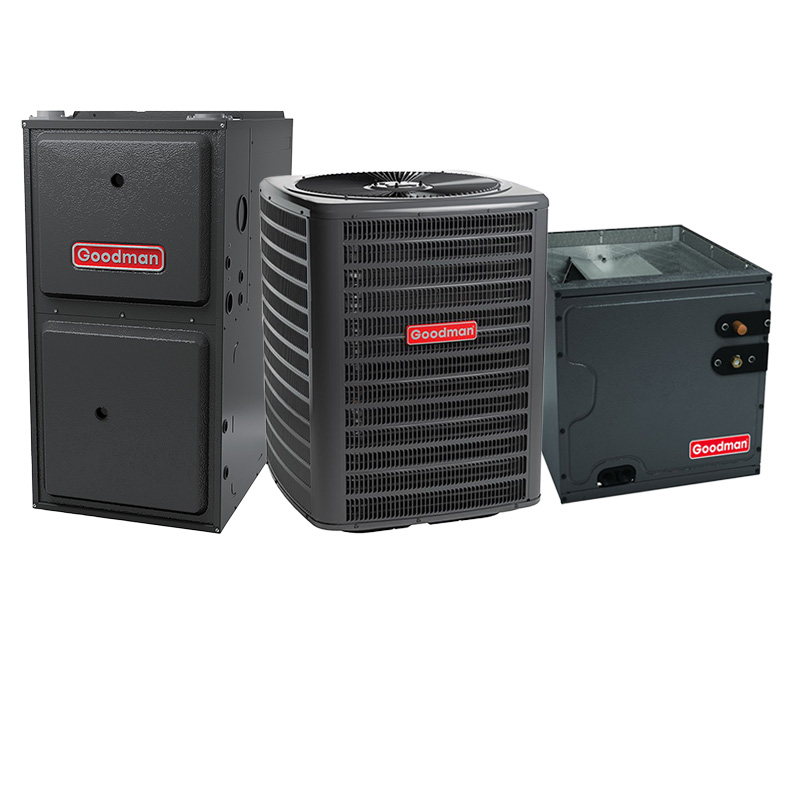
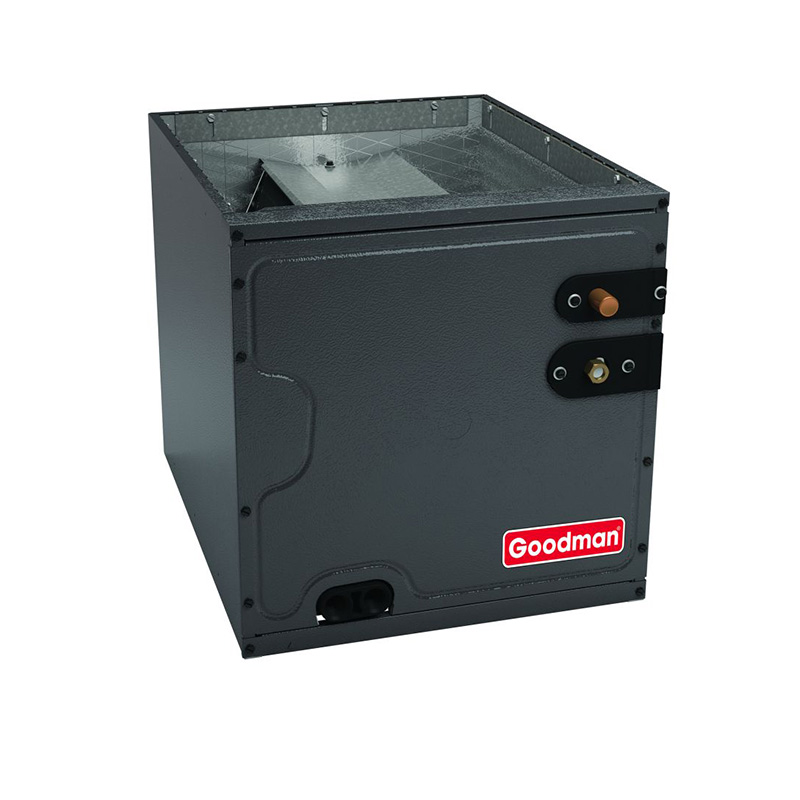
- Matched system bundle: coil, furnace, and condenser sized together for consistent warranty coverage
About this system
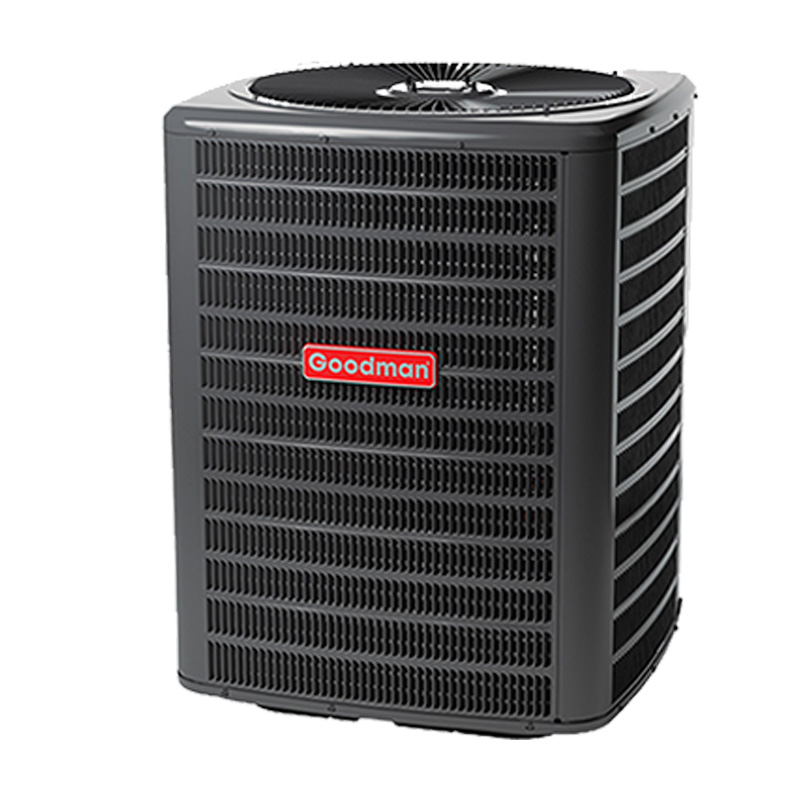
This Goodman bundle pairs a 3-ton, 14 SEER2 air conditioner with a 100,000 BTU, 96% AFUE two-stage gas furnace in an upflow configuration, making it a practical choice for homes in the 1,400 to 2,000 square foot range that need solid heating and cooling without the price premium of top-tier brands. The R-32 refrigerant charge is a forward-looking detail: R-32 has a lower global-warming potential than the R-410A it is replacing across the industry, and its higher efficiency per unit means slightly smaller refrigerant charges are needed. That is a genuine environmental and regulatory benefit, not just marketing language.
The two-stage furnace and multi-speed ECM blower motor are the real workhorses here. Two-stage heating means the furnace runs on a lower flame most of the time, cycling up to full capacity only on the coldest days. That translates to more even temperatures, quieter operation, and better humidity control compared to a single-stage unit. The ECM motor adjusts airflow continuously and draws significantly less electricity than a standard PSC motor, which helps offset the system’s otherwise entry-level efficiency rating. At 14 SEER2 and 96% AFUE, this system clears federal minimums comfortably but sits below the 16 SEER2 and higher tiers that qualify for federal tax credits under current Inflation Reduction Act thresholds, so buyers should confirm incentive eligibility in their region before purchasing.
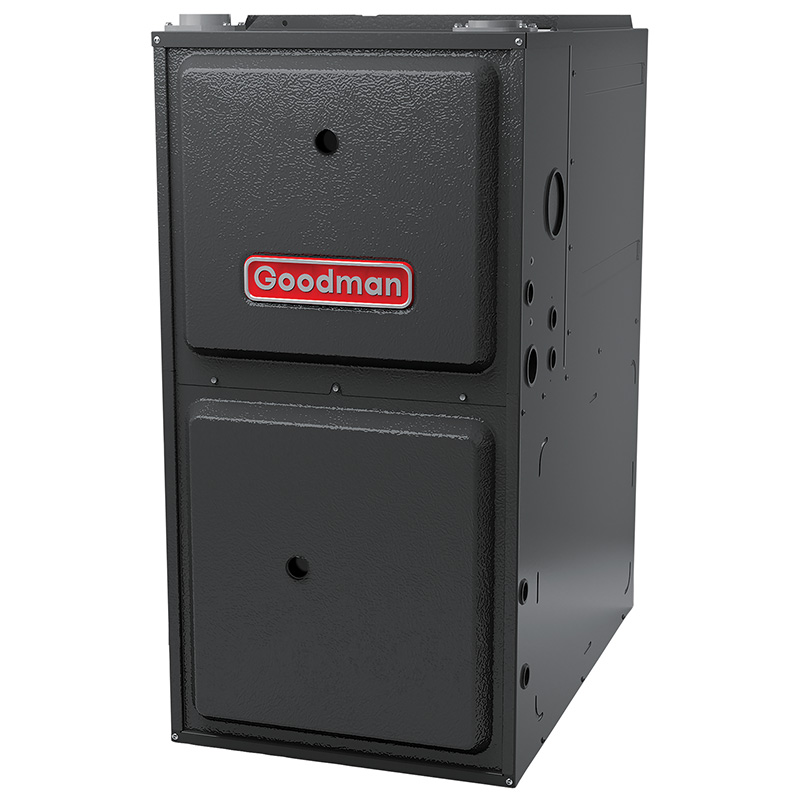
Upflow configuration means the furnace pulls return air from the bottom and discharges conditioned air upward, which suits the most common residential ductwork layouts where the unit sits in a basement, utility closet, or ground-level mechanical room. The system ships as a matched assembly, which simplifies sizing and helps ensure the manufacturer warranty applies cleanly to both the coil and the condensing unit.
This Goodman system delivers genuine two-stage heating and ECM blower technology at a price point that is hard to argue with for budget-conscious buyers. The trade-off is a brand track record that shows more repair frequency after year seven than premium competitors, and an efficiency tier that stops short of current tax credit thresholds. For homeowners who want a capable system without the Trane or Carrier markup, and who are willing to budget for maintenance, it is a reasonable choice.
Overall score is the average of the five ratings above.
What we like
- Two-stage furnace and ECM blower deliver noticeably better comfort and humidity control than single-stage alternatives at this price
- 96% AFUE is a legitimately high heating efficiency and will reduce gas bills versus 80% AFUE systems
- R-32 refrigerant is the industry direction and avoids near-term phase-down concerns tied to R-410A
- Matched system bundle simplifies warranty claims and ensures coil-to-condenser compatibility
- Street pricing runs 15 to 25 percent below comparable Carrier, Trane, and Lennox configurations
Trade-offs
- Dual-run capacitors are the most frequently reported failure on Goodman equipment, typically surfacing within the first decade and costing $300 to $600 per service call
- Evaporator coil leaks appear with meaningful frequency in owner reviews, a more expensive repair than capacitor replacement
- Compressor lifespan averages 10 to 14 years on Goodman units versus 15 to 20 years reported for premium brands, meaning earlier replacement costs are a real possibility
- At 14 SEER2 this system does not qualify for federal Inflation Reduction Act tax credits, reducing its long-term value advantage for buyers who would otherwise capture that incentive
What homeowners and pros say about Goodman
Homeowners who purchased Goodman equipment and took the time to leave feedback land in two fairly distinct groups. Those who got a careful install from an experienced technician and kept up with annual tune-ups often describe the system as unremarkable in the best possible way: it runs, it heats, it cools, and the bill is manageable. That sentiment lines up with the roughly 3.8 out of 5 average seen across Google dealer reviews, where the most repeated praise is simply that the equipment delivers adequate performance at a price that did not require financing. The ConsumerAffairs score of about 2.5 out of 5 tells a different story, but that platform captures a disproportionate share of owners who came looking because something went wrong, and the recurring theme there is repair bills that start accumulating somewhere around year seven or eight.
HVAC technicians who service Goodman equipment professionally tend to be pragmatic about it. The dual-run capacitor is widely cited as the most predictable failure point, a part that is inexpensive to stock and usually straightforward to swap, though the service call itself still costs $300 to $600. Evaporator coil leaks are considered a more serious concern given the labor involved in replacing a coil, and a minority of technicians flag first-year refrigerant loss as a red flag that almost always traces back to installation quality rather than the unit itself. Compressor longevity is the longer-run question: the documented range of 10 to 14 years for Goodman falls meaningfully short of the 15 to 20 years associated with Carrier, Trane, and Lennox, which is a real consideration for buyers expecting to stay in a home for more than a decade.
Sources: ConsumerAffairs Goodman owner reviews, AHRI Directory of Certified Product Performance, U.S. DOE appliance and equipment efficiency standards, Goodman product specification sheets.
What it costs to run
At 14 SEER2, cooling this 3-ton system for a typical 1200-hour cooling season at the U.S. average electricity rate of $0.17/kWh works out to roughly $525 per year in cooling, about $23 less per year than a minimum-efficiency 13.4 SEER2 unit of the same size. Your real cost depends on your climate and local rate.
Method: (36,000 BTU/hr ÷ 14 SEER2) × 1200 hours ÷ 1000 × $0.17/kWh. Rate source: U.S. EIA average; cooling hours: moderate-climate estimate.
How it compares
| Brand | Comparable model | SEER2 | Stage | Price position |
|---|---|---|---|---|
| Goodman | 3 Ton 14 SEER2 / 100K BTU 96% AFUE Two-Stage ECM Bundle | 14 | Two-stage | Value pick |
| Carrier | Comfort 14 Series (CA14NA / 58TP) | 14 | Single-stage | Typically 15 to 25 percent more than Goodman |
| Trane | XR14 / S9X1 Series | 14 | Single-stage | Typically 15 to 25 percent more than Goodman |
| Lennox | Merit ML14XC1 / ML196E Series | 14 | Single-stage | Typically 15 to 25 percent more than Goodman |
Competitor rows are comparable single-stage units at similar efficiency; price is relative position, not a quote.
Questions about this system
Does this system qualify for the federal Inflation Reduction Act tax credit?
Not at 14 SEER2. The current federal tax credit for central air conditioners generally requires 16 SEER2 or higher. The 96% AFUE furnace may qualify separately as a gas heating component, but you should verify current IRS guidance and any applicable state incentives with your installer before purchasing.
Why does Goodman have a lower ConsumerAffairs rating if the system has good specs on paper?
ConsumerAffairs sits at about 2.5 out of 5 for Goodman, and the platform skews heavily toward owners who experienced problems. The recurring complaint pattern points to repair costs climbing after roughly year seven, particularly capacitor failures and evaporator coil issues. Google dealer reviews average around 3.8 out of 5, where affordability is the most common positive, suggesting the brand performs adequately for many owners but has a higher service frequency tail than premium brands.
What does R-32 refrigerant mean for service costs if I ever need a recharge?
R-32 requires smaller charge volumes than R-410A for equivalent capacity, which can modestly reduce material costs on a recharge. It is also the refrigerant most new residential equipment is moving toward, so availability through HVAC suppliers should remain stable. The important caveat is that a first-year refrigerant leak is almost always an installation or factory charge issue, not a refrigerant-type issue, so getting the startup done by an experienced technician is the best protection.
Is the upflow configuration the right choice for my house, and can it be converted?
Upflow works for installs where return air enters the furnace from the bottom and supply air exits the top into overhead ductwork, which covers the majority of basement and main-floor utility closet setups in the U.S. If your ductwork runs below the unit or in a crawl space, you would need a downflow or horizontal configuration instead. Some Goodman furnaces can be converted, but this specific model is rated for upflow only, so confirm your duct layout before ordering.
How long should I realistically expect the compressor to last?
Based on documented owner experience, Goodman compressors tend to average 10 to 14 years, compared to the 15 to 20 years more commonly reported for Carrier, Trane, and Lennox equipment. Annual maintenance, keeping the condenser coil clean, and replacing the dual-run capacitor at the first sign of weakness are the practical steps most likely to push the compressor toward the higher end of that range.
Specifications
| Cooling capacity | 3 Ton |
| Efficiency | 14 SEER2 |
| Furnace output | 100000 BTU |
| Furnace efficiency | 96% AFUE |
| Configuration | Upflow |
| Refrigerant | R-32 |