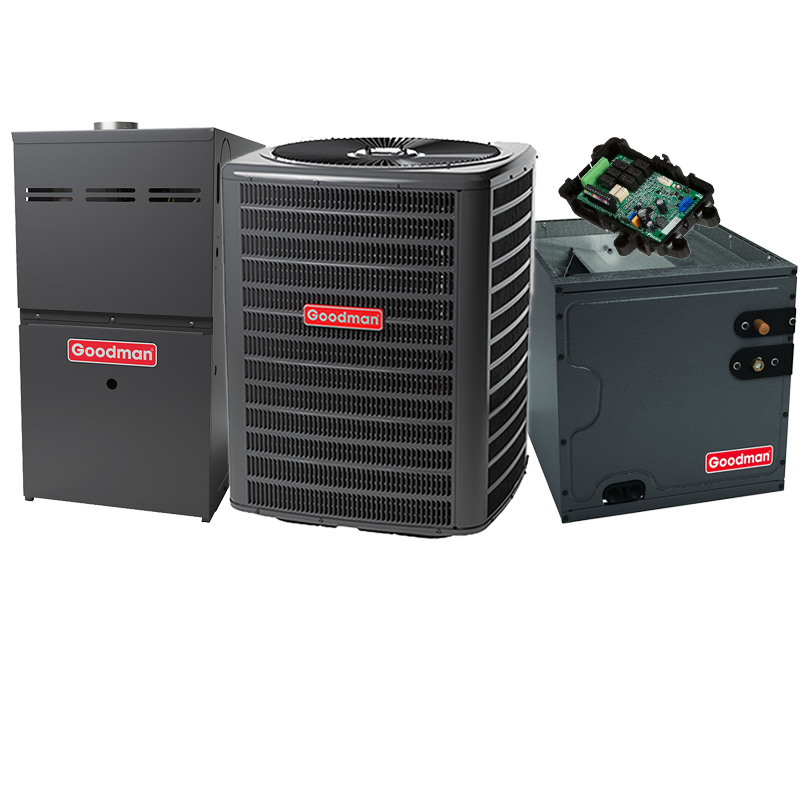
Goodman 3 Ton 14 SEER2 60000 BTU 80% Two-Stage Gas Furnace With R32 Air Conditioner Condenser And Coil System – Upflow
View on AC Direct see your lowest price →Check current price on AC Direct →
Key features
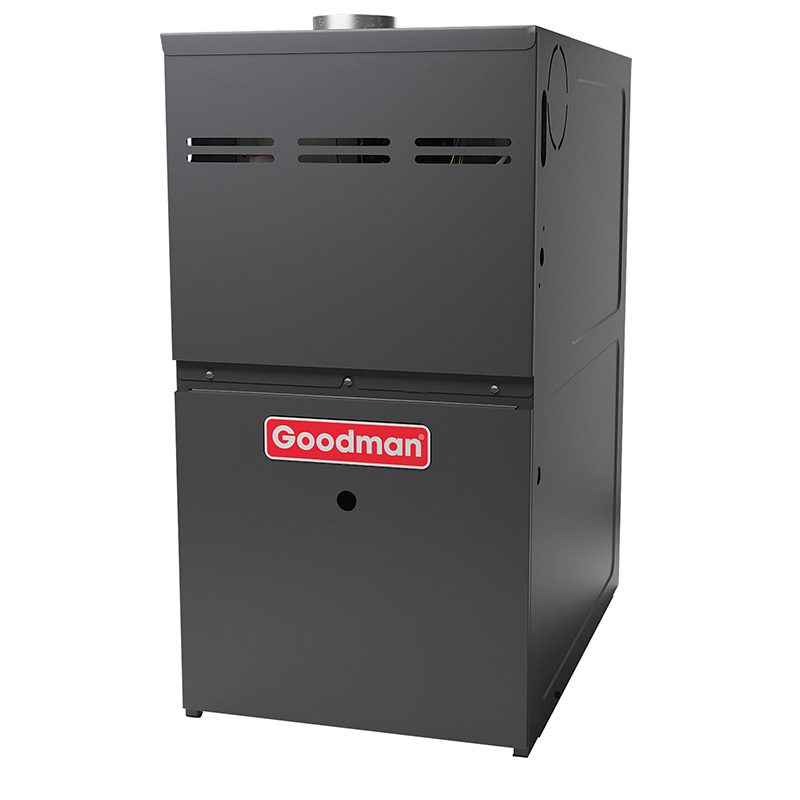
- Two-stage 60,000 BTU gas furnace for more consistent heating and fewer on/off cycles
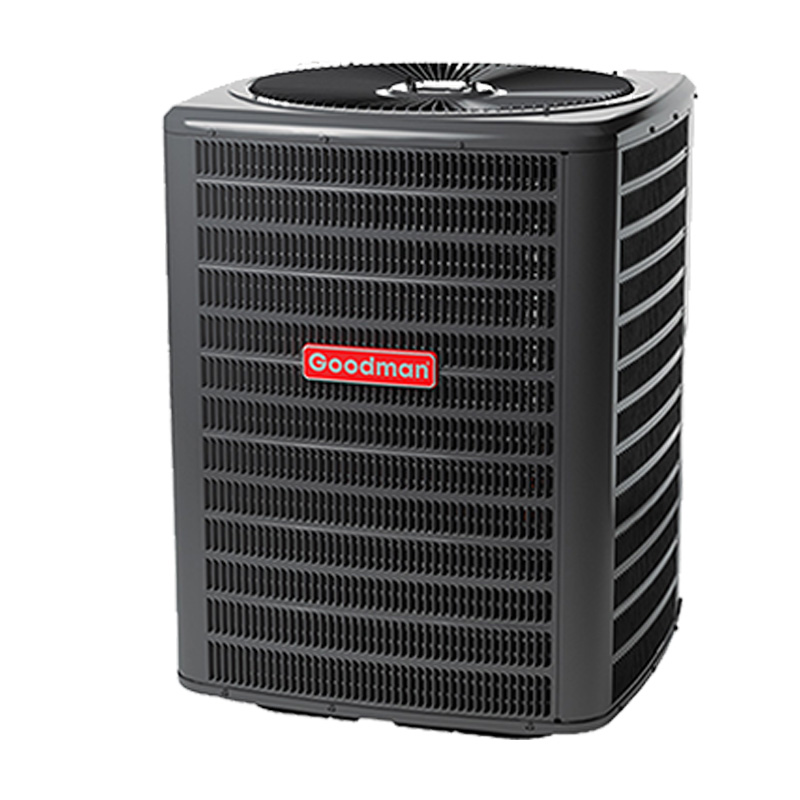
- 3-ton, 14 SEER2 air conditioner at the federal minimum efficiency threshold
- R-32 refrigerant with lower global warming potential than legacy R-410A systems
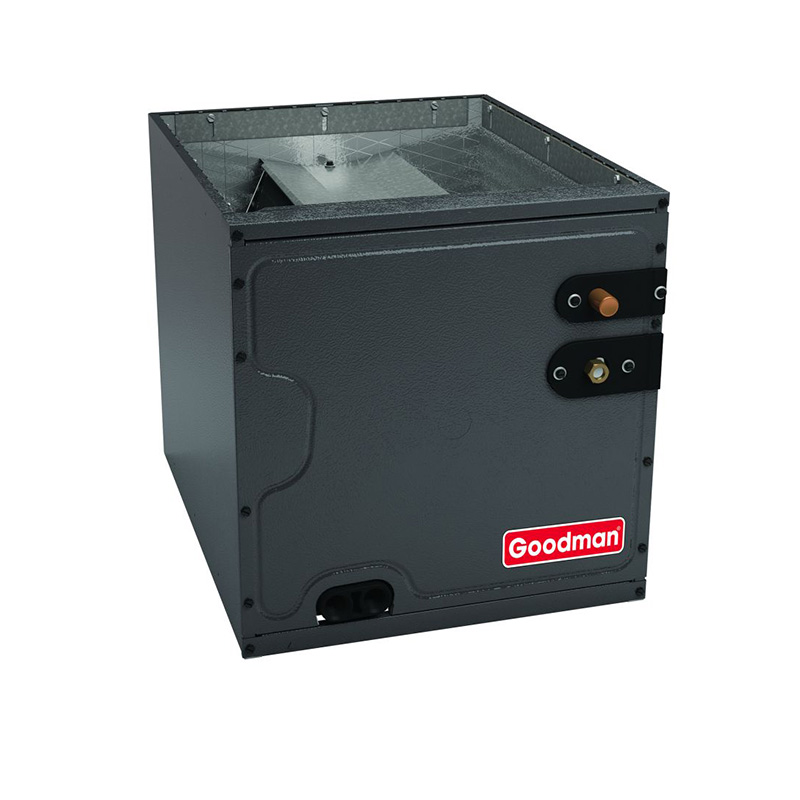
- Factory-matched condenser, evaporator coil, and furnace for guaranteed compatibility
- Upflow configuration designed for basement or closet installations with overhead ductwork
- Value pricing typically 15 to 25 percent below comparable Trane, Lennox, and Carrier equipment
About this system
This Goodman upflow system bundles a 3-ton, 14 SEER2 air conditioner condenser with a matched evaporator coil and a 60,000 BTU two-stage gas furnace into a single purchase. The 14 SEER2 rating sits right at the federal minimum efficiency floor for most U.S. climate zones, which keeps the upfront cost low but means operating costs will run higher than mid- or high-efficiency alternatives over the life of the equipment. The two-stage furnace is a genuine comfort upgrade over single-stage models: the unit runs on a lower fire most of the time, cycling on and off less frequently, which helps maintain steadier indoor temperatures and reduces temperature swings in rooms farthest from the supply registers.
R-32 refrigerant is a forward-looking choice. It has a lower global warming potential than the R-410A it replaces and is becoming the industry standard, so finding service technicians familiar with it should be straightforward. The upflow configuration suits homes where the furnace sits in a basement or closet with ductwork running upward, which is the most common arrangement in single-story and two-story homes across the northern and central U.S. Buyers in the market for affordable whole-home HVAC who want a factory-matched system rather than mixing components from different manufacturers will find this bundle appealing, provided they budget for quality installation.
This Goodman bundle delivers a functional, factory-matched HVAC system at a price point that meaningfully undercuts the major premium brands, making it a reasonable choice for budget-conscious buyers who understand the trade-offs. The two-stage furnace and R-32 refrigerant are genuine positives, but 14 SEER2 efficiency and Goodman's documented repair history after year 7 mean total cost of ownership may close the gap with pricier competitors over a full system life. Install quality is the single largest variable in how well this unit performs long-term.
Overall score is the average of the five ratings above.
What we like
- Factory-matched components reduce compatibility guesswork and simplify installation
- Two-stage furnace improves comfort and temperature consistency versus single-stage alternatives
- R-32 refrigerant is lower-GWP and is the emerging industry standard for residential systems
- Upfront price is 15 to 25 percent below comparable Trane, Lennox, and Carrier systems
- Widely available parts and service network across the U.S. given Goodman's market share
Trade-offs
- 14 SEER2 is the minimum efficiency floor, so monthly cooling costs will be higher than mid-efficiency units over time
- Dual-run capacitors are the most commonly reported failure point, typically appearing in years 5 through 10
- Compressor lifespan averages 10 to 14 years versus 15 to 20 years for premium-brand compressors, per owner reports
- Evaporator coil leaks and first-year refrigerant leaks appear in a meaningful share of owner reviews, often tied to install quality
What homeowners and pros say about Goodman
Homeowners who have lived with Goodman equipment tend to land in two camps, and that split shows up clearly in the data. On ConsumerAffairs, Goodman scores around 2.5 out of 5, a platform where dissatisfied owners are far more likely to leave feedback than satisfied ones. The recurring theme there is repair costs that begin climbing after roughly year 7, with dual-run capacitor failures being the most commonly cited nuisance repair and evaporator coil leaks drawing the sharpest frustration. Google dealer reviews tell a more balanced story, averaging around 3.8 out of 5 across hundreds of reviews per location, with affordability the most frequently praised attribute. The gap between those two scores reflects both the self-selection of complainers online and the reality that Goodman systems can perform reliably for a decade or more when installed correctly.
HVAC professionals give Goodman mixed but pragmatic reviews for a bundle like this one. Most technicians acknowledge the compressor longevity gap, putting Goodman compressors at roughly 10 to 14 years of typical service life versus 15 to 20 for premium-brand units. They also point to a minority of units that arrive with refrigerant issues in the first year, almost always traced back to installation or shipping rather than factory defect. The consistent professional advice is that installation quality matters more with Goodman than with premium brands: a well-installed Goodman outperforms a poorly installed Carrier every time. For this specific upflow bundle, pros note that matching the coil and furnace at the factory removes one common install variable, which is a modest but real advantage over field-assembled systems.
Sources: ConsumerAffairs Goodman owner reviews, AHRI Directory of Certified Product Performance, U.S. DOE appliance and equipment efficiency standards, Goodman product specification sheets.
What it costs to run
At 14 SEER2, cooling this 3-ton system for a typical 1200-hour cooling season at the U.S. average electricity rate of $0.17/kWh works out to roughly $525 per year in cooling, about $23 less per year than a minimum-efficiency 13.4 SEER2 unit of the same size. Your real cost depends on your climate and local rate.
Method: (36,000 BTU/hr ÷ 14 SEER2) × 1200 hours ÷ 1000 × $0.17/kWh. Rate source: U.S. EIA average; cooling hours: moderate-climate estimate.
How it compares
| Brand | Comparable model | SEER2 | Stage | Price position |
|---|---|---|---|---|
| Goodman | This system (3T 14 SEER2 / 60K BTU 2-stage furnace, R-32) | 14 | Two-stage furnace / single-stage condenser | Value pick |
| Carrier | Performance 14 Series (24ACC636 condenser with 59TP6 furnace) | 14-15 | Two-stage | Typically 15 to 25 percent higher than Goodman |
| Trane | XR14c condenser with S9V2 two-stage furnace | 14-15 | Two-stage | Typically 20 to 30 percent higher than Goodman |
| Lennox | Merit ML14XC1 condenser with ML296V furnace | 14-15 | Two-stage | Typically 20 to 30 percent higher than Goodman |
Competitor rows are comparable single-stage units at similar efficiency; price is relative position, not a quote.
Questions about this system
Does the 14 SEER2 rating meet current federal efficiency requirements in my region?
14 SEER2 meets or exceeds the federal minimum for most northern U.S. climate zones, but some southern regions now require 15 SEER2 for new installations. Check your local requirements or ask your installing contractor before purchasing, as installing a non-compliant unit can create issues with permits and utility rebates.
What furnace AFUE rating does the included gas furnace carry?
The product listing specifies this is an 80% AFUE furnace, meaning 80 cents of every dollar of gas burned becomes usable heat. That is the standard efficiency tier; homeowners in cold climates who run the furnace heavily from October through April may want to compare the long-term fuel savings of a 96% AFUE alternative before deciding.
How does R-32 refrigerant affect maintenance and service costs?
R-32 is increasingly common and most licensed HVAC technicians are now certified to handle it, so finding service should not be difficult. It requires slightly different handling procedures than R-410A, so confirm your servicing technician has R-32 experience, particularly for leak repairs or recharging.
What is the most common repair issue owners report with Goodman systems like this one?
Dual-run capacitor failures are the most frequently cited repair, typically surfacing somewhere between years 5 and 10 and usually costing between 300 and 600 dollars to fix. Evaporator coil leaks are the second most common complaint in owner reviews and tend to be more costly to address, so some owners opt for an extended service plan.
Does this system require a new thermostat or air handler communication wiring?
The two-stage furnace will work with most standard multi-wire thermostats, but to take full advantage of two-stage operation you need a thermostat that supports two-stage heating. Confirm wiring compatibility with your installer before scheduling, particularly if your existing thermostat is older or a basic single-stage model.
Specifications
| Cooling capacity | 3 Ton |
| Efficiency | 14 SEER2 |
| Furnace output | 60000 BTU |
| Configuration | Upflow |
| Refrigerant | R-32 |