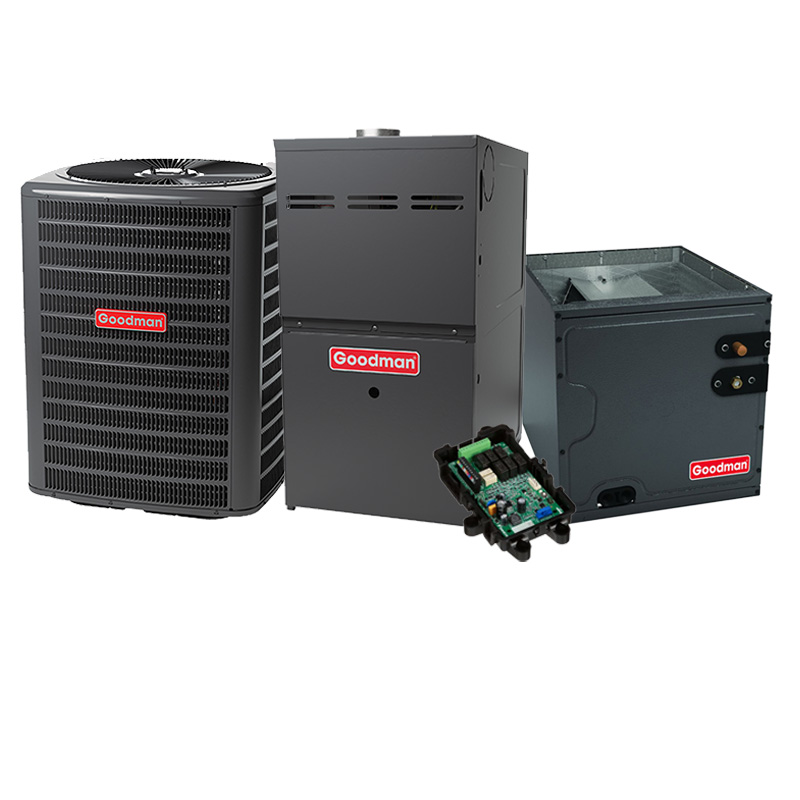
Goodman 3 Ton 14 SEER2 60000 BTU 80% Gas Furnace With R32 Air Conditioning Condenser And Coil System – Upflow
View on AC Direct see your lowest price →Check current price on AC Direct →
Key features
- 3-ton cooling capacity with 14 SEER2 rated efficiency
- 60,000 BTU gas furnace at 80% AFUE heating efficiency
- Upflow configuration for basement or closet installations with overhead ductwork
- R-32 refrigerant, lower global warming potential than R-410A
- Matched condenser and evaporator coil sold as a complete system
- Priced 15 to 25 percent below comparable Carrier, Trane, and Lennox systems
About this system
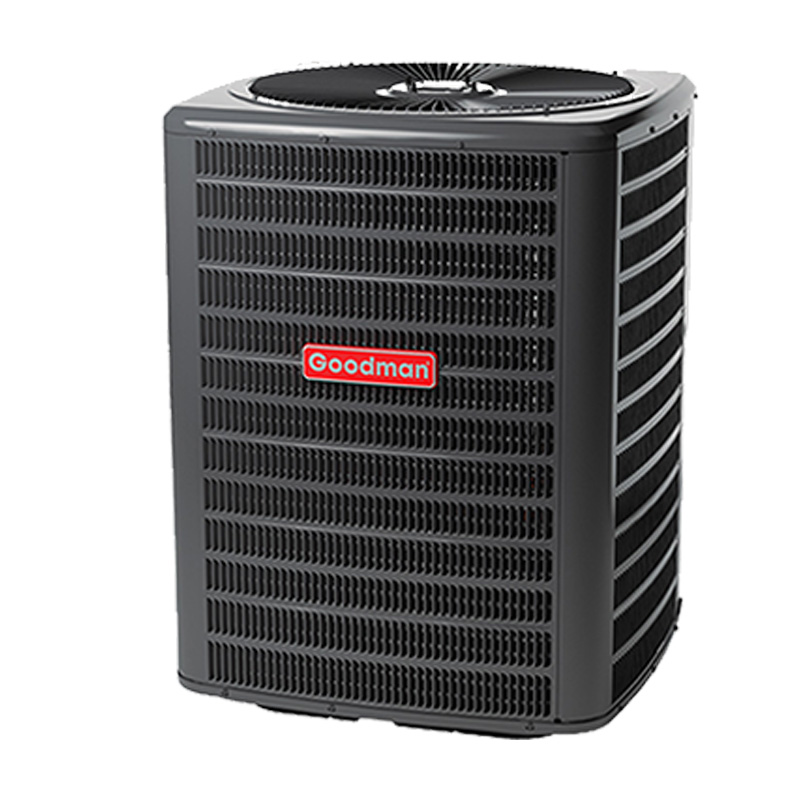
This Goodman upflow system pairs a 3-ton, 14 SEER2 air conditioning condenser and coil with a 60,000 BTU 80% AFUE gas furnace, making it a practical choice for homes in moderate climates where heating loads are real but not extreme. The 14 SEER2 rating sits at the current federal minimum efficiency threshold for most regions, which keeps equipment costs down without reaching for mid-tier or high-efficiency savings. R-32 refrigerant, which has a lower global warming potential than the R-410A it replaces, is now standard across Goodman’s newer lineup and should not add to long-term service costs as the industry transitions away from older refrigerants.
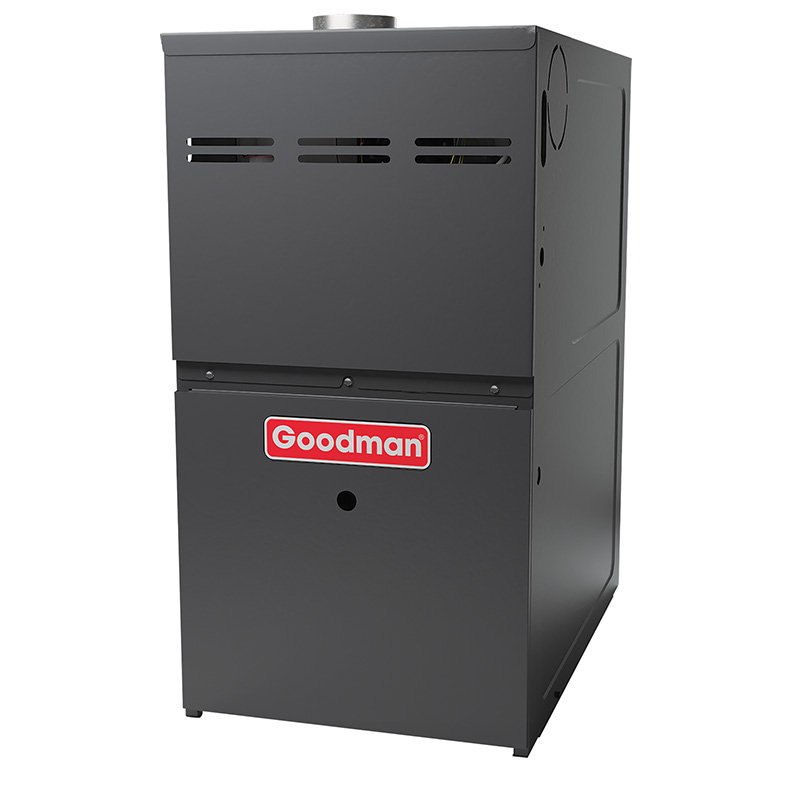
The upflow configuration routes conditioned air upward from the furnace into overhead ductwork, which suits homes with basement or closet-mounted equipment and ducts running through the ceiling or attic. At 3 tons and 60,000 BTU, this system is sized for roughly 1,400 to 1,800 square feet depending on climate zone, insulation quality, and window exposure. Goodman prices this category of system 15 to 25 percent below comparable Trane, Lennox, and Carrier equipment, making it one of the more accessible ways to replace an aging split system without stepping down to a stripped-down brand with limited dealer support.
This Goodman system delivers a functional, code-compliant heating and cooling setup at a price point that meaningfully undercuts major premium brands, but it comes with real trade-offs in long-term reliability and compressor lifespan. It is a reasonable choice for budget-conscious buyers who commit to proper professional installation and routine maintenance, understanding that some components, particularly capacitors and evaporator coils, carry a higher-than-average failure history. Buyers expecting the same longevity as a Trane or Lennox system should temper expectations accordingly.
Overall score is the average of the five ratings above.
What we like
- Priced well below premium brands, reducing upfront replacement cost significantly
- R-32 refrigerant is future-ready and already transitioning away from phased-out R-410A
- 14 SEER2 meets current federal minimums, keeping equipment cost low without performance penalty for moderate climates
- Matched coil and condenser system reduces compatibility guesswork and supports warranty compliance
- Wide dealer and parts network across the U.S. makes service calls relatively straightforward
Trade-offs
- Compressor lifespan averages 10 to 14 years, shorter than the 15 to 20 years typical of premium brands
- Dual-run capacitors are the most commonly reported failure point, often needing replacement within the first several years
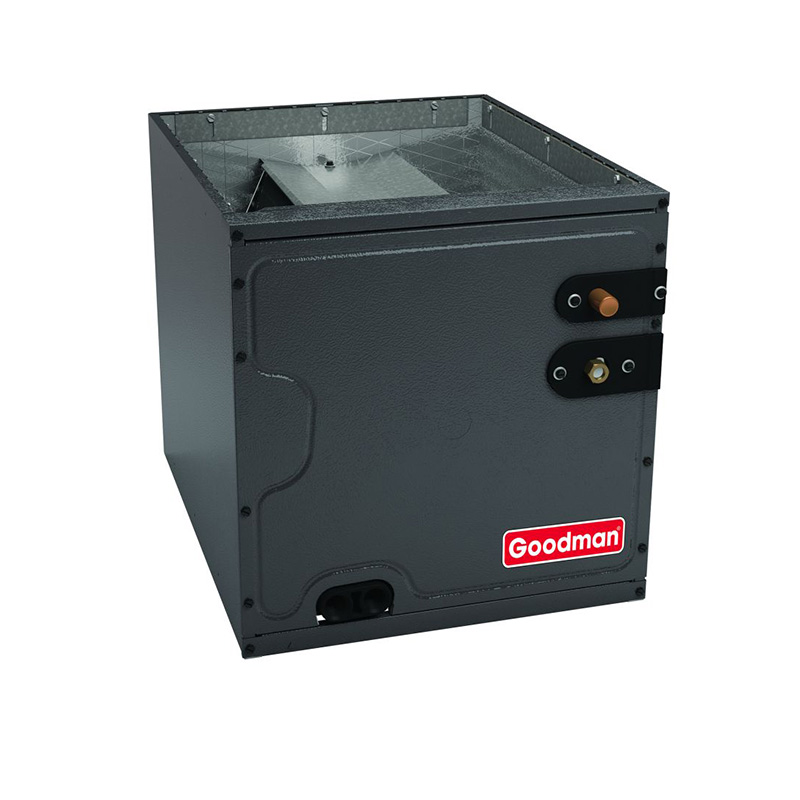
- Evaporator coil leaks appear in a meaningful share of owner reports, which can lead to refrigerant loss and costly repairs
- ConsumerAffairs rating of roughly 2.5 out of 5 reflects recurring complaints about repair costs rising noticeably after year 7
What homeowners and pros say about Goodman
Homeowners who chose Goodman most often point to the upfront price as the deciding factor, and that sentiment is consistent with the brand’s Google dealer review average of around 3.8 out of 5 stars, where affordability is the most frequently cited reason for satisfaction. The picture on ConsumerAffairs is rougher, sitting at roughly 2.5 out of 5, which reflects that platform’s complaint-heavy nature but also surfaces a real pattern: repair costs that feel manageable in the first several years tend to climb noticeably after year 7, with dual-run capacitors being the most commonly reported failure. That repair is usually in the 300 to 600 dollar range and is considered a routine fix by most HVAC technicians, but it is still a cost premium-brand buyers encounter less often in the same time frame.
HVAC professionals tend to hold a more nuanced view of Goodman than either camp of online reviewers. Many installers note that the system performs reliably when installed correctly and that Goodman’s wide parts availability makes service calls straightforward. Where they flag concern is in two areas specific to this product category: evaporator coil leaks, which appear in a notable portion of owner reports and can escalate if not caught early, and compressor longevity that tends to average 10 to 14 years rather than the 15 to 20 years technicians associate with Trane or Carrier compressors. The consistent professional advice is that install quality matters more with Goodman than with premium brands, and that skimping on the installation to save more money on top of the equipment discount is the fastest route to the outcomes that drive the negative reviews.
Sources: ConsumerAffairs Goodman owner reviews, AHRI Directory of Certified Product Performance, U.S. DOE appliance and equipment efficiency standards, Goodman product specification sheets.
What it costs to run
At 14 SEER2, cooling this 3-ton system for a typical 1200-hour cooling season at the U.S. average electricity rate of $0.17/kWh works out to roughly $525 per year in cooling, about $23 less per year than a minimum-efficiency 13.4 SEER2 unit of the same size. Your real cost depends on your climate and local rate.
Method: (36,000 BTU/hr ÷ 14 SEER2) × 1200 hours ÷ 1000 × $0.17/kWh. Rate source: U.S. EIA average; cooling hours: moderate-climate estimate.
How it compares
| Brand | Comparable model | SEER2 | Stage | Price position |
|---|---|---|---|---|
| Goodman | 3 Ton 14 SEER2 / 60,000 BTU 80% Gas Furnace Upflow System | 14 | Single-stage | Value pick |
| Carrier | Comfort 24ACC636 condenser with 58TP furnace | 14-15 | Single-stage | Priced roughly 20 to 25 percent above this Goodman system |
| Trane | XR14c condenser with S9X1 furnace | 14-15 | Single-stage | Priced roughly 20 to 30 percent above this Goodman system |
| Lennox | Merit ML14XC1 condenser with ML193 furnace | 14-15 | Single-stage | Priced roughly 25 to 35 percent above this Goodman system |
Competitor rows are comparable single-stage units at similar efficiency; price is relative position, not a quote.
Questions about this system
Does the 14 SEER2 rating meet the new federal minimum efficiency standards in my region?
14 SEER2 meets the current federal minimum for the northern U.S. climate regions, but some southern and southwestern states now require 15 SEER2 or higher for new installations. Check your local requirements before purchasing, as an undersized efficiency rating can fail a permit inspection.
What does the upflow configuration mean and will it work in my home?
Upflow means the furnace draws return air in at the bottom and discharges heated or cooled air upward into supply ducts. It is the correct choice for systems installed in a basement or a ground-level closet with ductwork running through ceilings or the attic. If your existing system is a downflow or horizontal setup, this unit will not be a direct swap.
The specs list the furnace as 80% AFUE. Is that efficient enough or should I upgrade to a 96% model?
An 80% AFUE furnace is a reasonable choice in mild to moderate climates where heating season is short. In colder climates like the upper Midwest or Northeast where the furnace runs heavily for four to five months, the roughly 16-percentage-point efficiency gap versus a 96% AFUE unit can add up to noticeable annual fuel savings, and a higher-AFUE furnace may pay back its cost difference over time.
How concerned should I be about the documented evaporator coil leak issue with Goodman?
Coil leaks show up in a meaningful share of Goodman owner reviews and are worth monitoring. Having your installer perform a standing pressure test on the coil before startup, and scheduling an annual refrigerant pressure check during the first few years, can catch a slow leak before it causes compressor damage. If Goodman's warranty covers the coil, a confirmed leak within the warranty period should be covered for parts.
Is R-32 refrigerant harder or more expensive to service than R-410A?
R-32 requires technicians with updated EPA 608 certification and equipment rated for its slightly higher operating pressures, but it is not significantly more expensive to service than R-410A and is increasingly common in the field. The bigger practical point is that R-410A is being phased out under current regulations, so R-32 or similar low-GWP refrigerants are where the industry is heading, meaning parts and service availability should improve over time rather than shrink.
Specifications
| Cooling capacity | 3 Ton |
| Efficiency | 14 SEER2 |
| Furnace output | 60000 BTU |
| Configuration | Upflow |
| Refrigerant | R-32 |