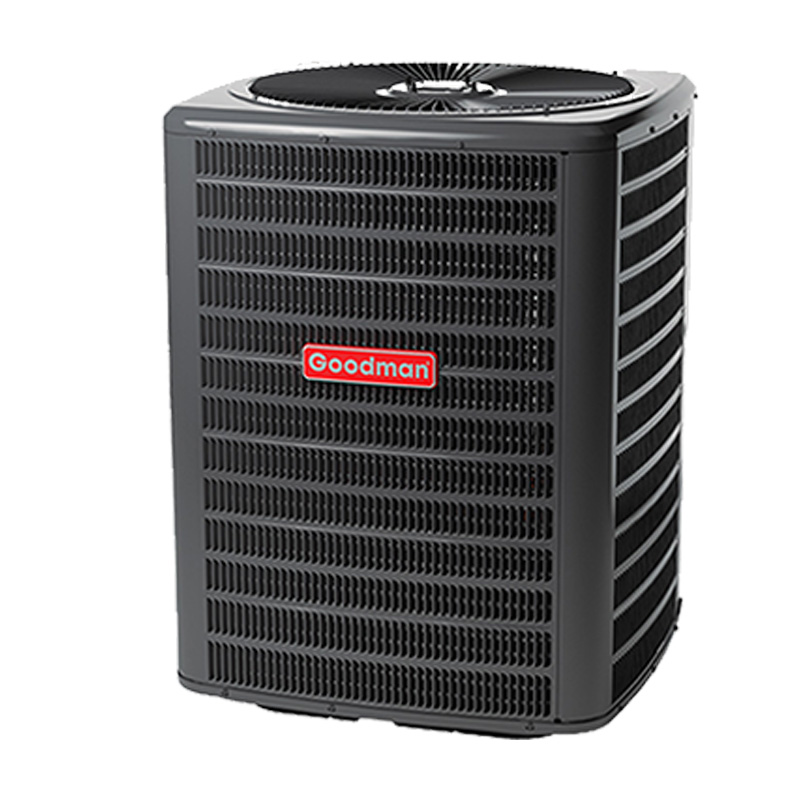
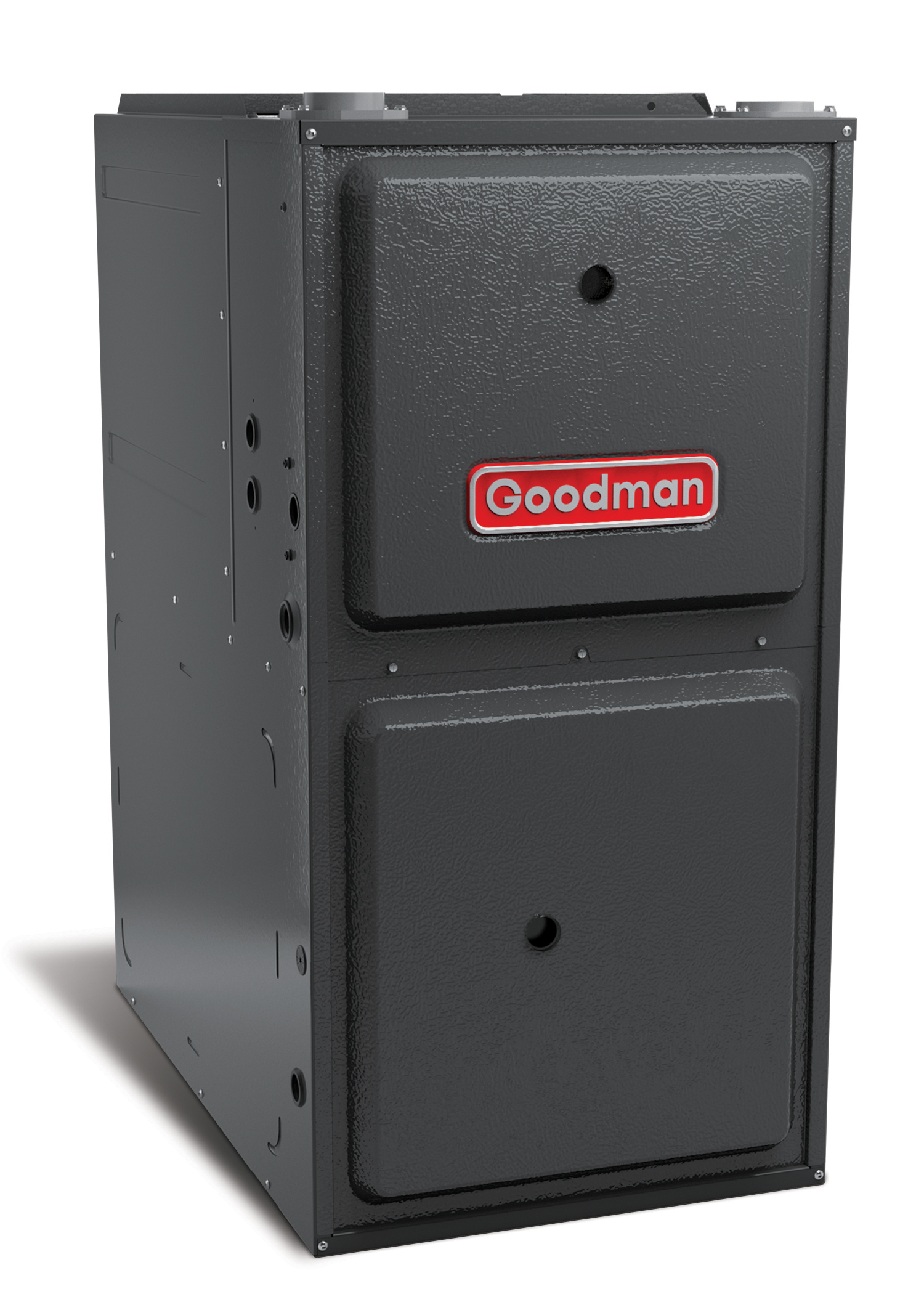
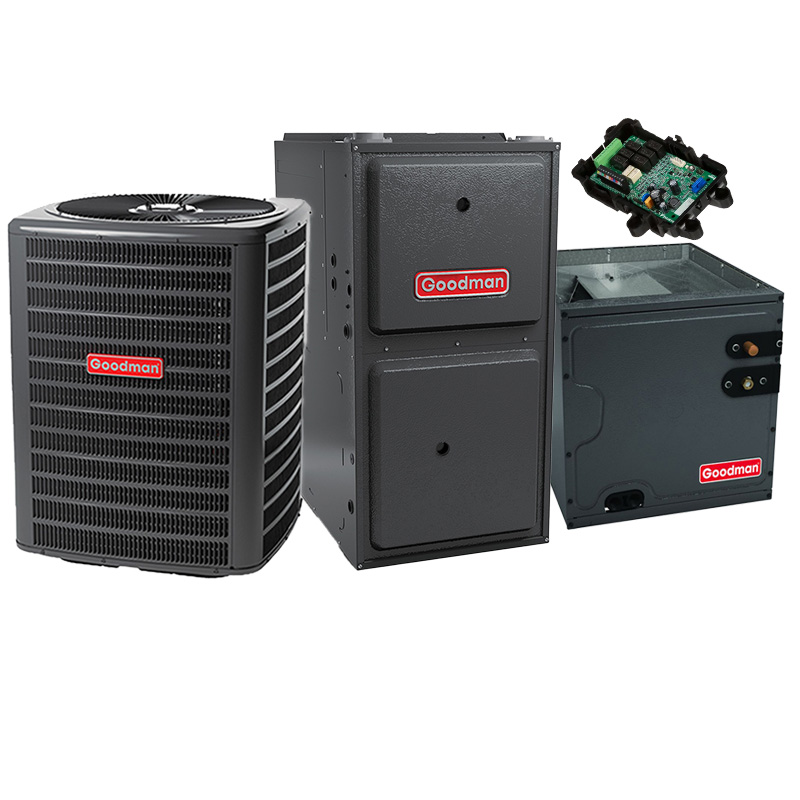
Goodman 3 Ton 14 SEER2 60000 BTU 96% AFUE Two-Stage Gas Furnace With R32 Air Condenser and Coil System – Upflow
View on AC Direct see your lowest price →Check current price on AC Direct →
Key features
- 96% AFUE two-stage condensing gas furnace, upflow configuration
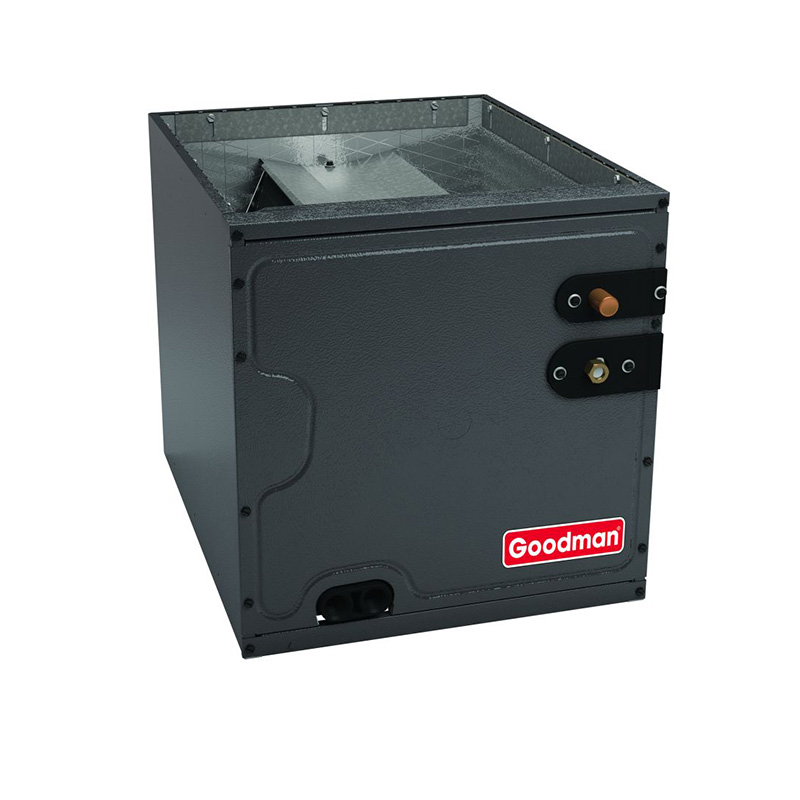
- 3-ton 14 SEER2 R-32 air condenser with matching evaporator coil included
- Two-stage heating reduces short cycling and improves temperature consistency
- R-32 refrigerant offers lower global warming potential than R-410A
- Matched coil-and-condenser system simplifies equipment selection and AHRI rating
- Condensing furnace requires PVC vent pipe and condensate drain, not a B-vent flue
About this system
This Goodman three-ton system pairs a 14 SEER2 R-32 air condenser with a 96% AFUE two-stage gas furnace in an upflow configuration, making it a practical full-system replacement for homes in the 1,400 to 1,900 square foot range with existing ductwork designed for upflow airflow. The two-stage furnace runs at a lower firing rate on milder days, which reduces temperature swings, lowers fuel consumption compared to single-stage units, and cuts down on the short cycling that wears components faster. At 96% AFUE, nearly all of the gas burned becomes usable heat, putting this furnace in the condensing tier where a secondary heat exchanger captures exhaust gases before they exit the flue.
The R-32 refrigerant used in the condenser is worth noting. R-32 has a lower global warming potential than the R-410A it is replacing across the industry, and it operates at similar pressures, so most existing line sets can be reused with a proper flush and verification. What this means practically is that future refrigerant service calls may cost less than equivalent R-410A work as R-32 supply grows. The 14 SEER2 rating sits at the federal minimum efficiency floor for most northern U.S. climate zones and just above the floor for southern zones, so this system meets code in the majority of residential applications without paying for efficiency you may not recover in utility savings over a typical ownership period.
This Goodman system delivers solid efficiency specs and a genuinely useful two-stage furnace at a price point that undercuts comparable Carrier, Trane, and Lennox bundles by a meaningful margin. The trade-off is a brand track record that shows capacitor and evaporator coil issues more frequently than premium competitors, and compressor longevity that averages shorter than top-tier brands. It is a reasonable choice for budget-conscious buyers who use a quality installer and treat the savings as a buffer for potential mid-life repairs.
Overall score is the average of the five ratings above.
What we like
- Priced 15 to 25 percent below comparable Trane, Lennox, and Carrier systems
- 96% AFUE condensing furnace keeps heating bills lower than 80% AFUE alternatives
- Two-stage operation improves comfort and reduces wear from constant full-blast cycling
- R-32 refrigerant is industry-forward and may reduce future service costs
- Matched coil and condenser ship together, simplifying installation and warranty coverage
Trade-offs
- Dual-run capacitors are the most frequently reported failure, typically between years 5 and 10
- Evaporator coil leaks appear in a notable share of owner reviews, a recurring Goodman pattern
- Compressor lifespan averages 10 to 14 years versus 15 to 20 years for premium brands
- A minority of owners report refrigerant leaks within year one, usually tied to install quality or charge issues
What homeowners and pros say about Goodman
Homeowners who share feedback about Goodman equipment online tend to fall into two camps, and both are reflected in the brand’s ratings. On Google dealer reviews, where the score sits around 3.8 out of 5, affordability is the most consistent praise, with many buyers noting the system performed well for the first several years. ConsumerAffairs tells a different story, with Goodman averaging roughly 2.5 out of 5 on a platform that skews toward people motivated by frustration. The pattern that emerges from that channel is repair costs that begin climbing noticeably after year seven, which lines up with known failure modes: dual-run capacitors failing and evaporator coil leaks showing up in a meaningful share of units over time.
HVAC technicians who work across multiple brands tend to have a consistent view of Goodman: the equipment is not inherently poor, but it rewards a quality installation more than premium brands do, and punishes a careless one more sharply. The compressor longevity gap is real, with Goodman compressors averaging 10 to 14 years against the 15 to 20 years commonly cited for Trane and Carrier units. Refrigerant leaks within the first year are documented, though technicians attribute most of those to install or charge errors rather than factory defects. For this specific two-stage R-32 system, the consensus from the field is clear: hire an experienced installer who is already working with R-32, confirm the line set is properly flushed, and set aside a modest repair fund for the back half of the system’s life.
Sources: ConsumerAffairs Goodman owner reviews, AHRI Directory of Certified Product Performance, U.S. DOE appliance and equipment efficiency standards, Goodman product specification sheets.
What it costs to run
At 14 SEER2, cooling this 3-ton system for a typical 1200-hour cooling season at the U.S. average electricity rate of $0.17/kWh works out to roughly $525 per year in cooling, about $23 less per year than a minimum-efficiency 13.4 SEER2 unit of the same size. Your real cost depends on your climate and local rate.
Method: (36,000 BTU/hr ÷ 14 SEER2) × 1200 hours ÷ 1000 × $0.17/kWh. Rate source: U.S. EIA average; cooling hours: moderate-climate estimate.
How it compares
| Brand | Comparable model | SEER2 | Stage | Price position |
|---|---|---|---|---|
| Goodman | 3-Ton 14 SEER2 / 96% AFUE Two-Stage Bundle (this system) | 14 | Two-stage | Value pick |
| Carrier | Comfort 24ACC636 condenser with 58TP two-stage furnace | 14-15 | Two-stage | Moderately higher than this system |
| Trane | XR14 condenser with S9V2 two-stage furnace | 14 | Two-stage | Higher than this system |
| Lennox | Merit ML14XC1 condenser with ML196 two-stage furnace | 14 | Two-stage | Higher than this system |
Competitor rows are comparable single-stage units at similar efficiency; price is relative position, not a quote.
Questions about this system
Can I reuse my existing R-410A line set with the R-32 condenser?
In most cases yes, provided the line set is the correct diameter, in good condition, and properly flushed before the R-32 charge is introduced. Your installer should verify line set sizing and integrity before reuse, since residual R-410A oil is not compatible with R-32 systems.
What venting does the 96% AFUE furnace require, and does it change my existing setup?
A 96% AFUE condensing furnace uses PVC plastic pipe for combustion air intake and exhaust, not a metal B-vent flue. If your current furnace uses a B-vent, the installer will need to run new PVC vent pipes, typically through a side wall, and add a condensate drain line. Budget for this additional labor when comparing total installed costs.
How significant is the two-stage furnace upgrade over a single-stage unit at this price tier?
Two-stage operation is a real comfort and efficiency improvement, not just a marketing distinction. The lower firing stage handles most heating days without blasting the home to temperature and shutting off, which reduces cold spots, lowers fuel use on mild days, and puts less wear on the heat exchanger and blower over time.
What is covered under Goodman's warranty for this system, and what activates it?
Goodman offers a 10-year parts limited warranty on registered systems, which requires homeowner registration within a set window after installation. Without registration the coverage typically drops to five years. The compressor carries a separate limited warranty, and labor is not covered, meaning service call costs come out of pocket even during the warranty period.
Is the capacitor failure issue serious, and what does it cost to fix?
Dual-run capacitor failure is the most commonly reported Goodman repair and is typically a straightforward fix that runs between 300 and 600 dollars including a service call. It is not a catastrophic failure, but it is worth factoring into your long-term ownership cost estimate, particularly after year seven.
Specifications
| Cooling capacity | 3 Ton |
| Efficiency | 14 SEER2 |
| Furnace output | 60000 BTU |
| Furnace efficiency | 96% AFUE |
| Configuration | Upflow |
| Refrigerant | R-32 |