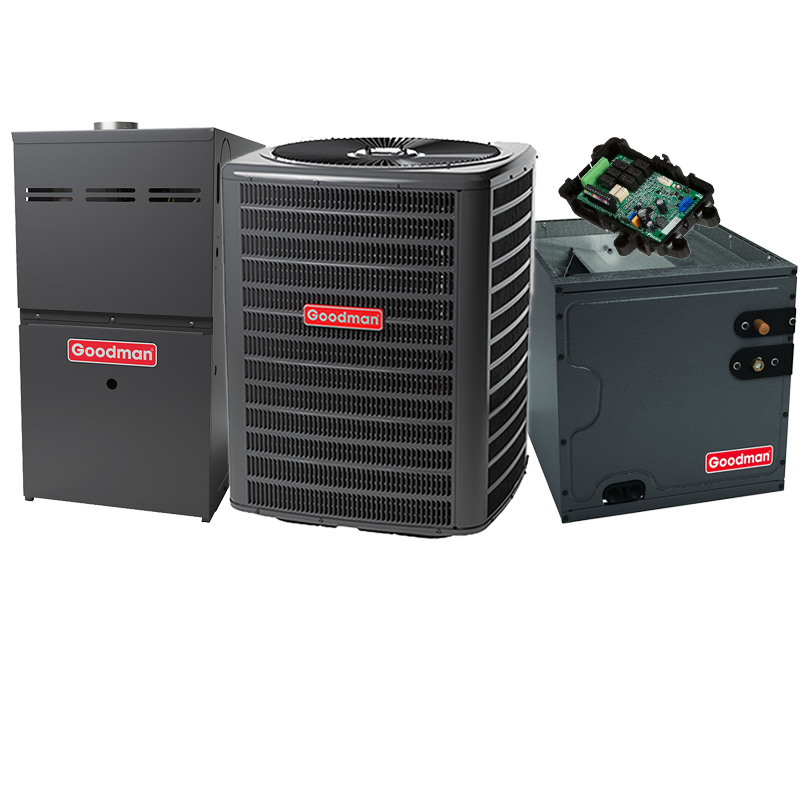
Goodman 3 Ton 14 SEER2 80000 BTU 80% Two-Stage Gas Furnace With R32 Air Conditioner Condenser And Coil System – Upflow
View on AC Direct see your lowest price →Check current price on AC Direct →
Key features
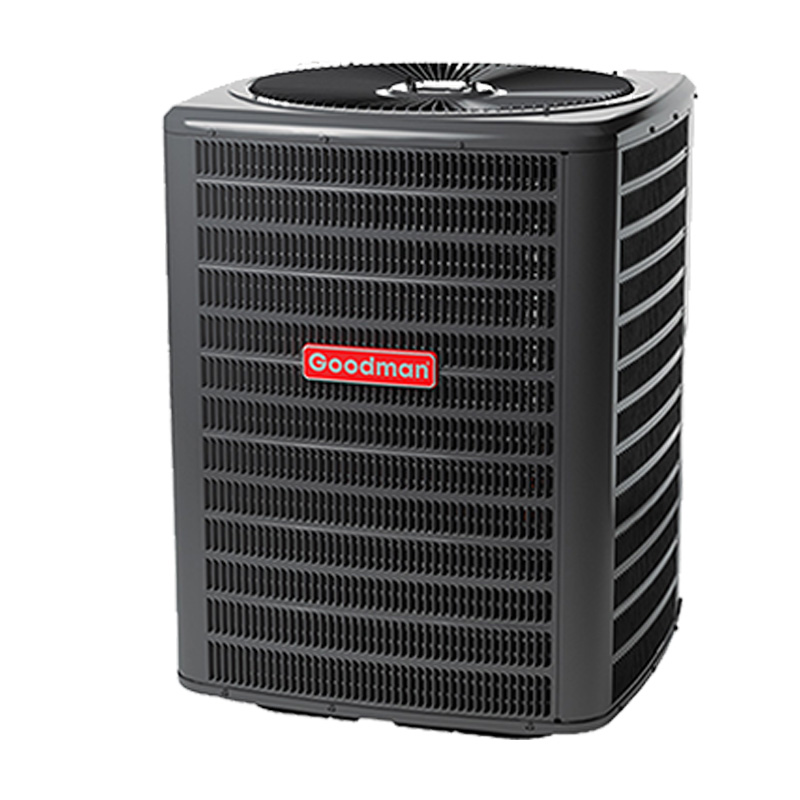
- 3-ton R-32 air conditioner condenser rated at 14 SEER2, meeting current federal minimum efficiency standards
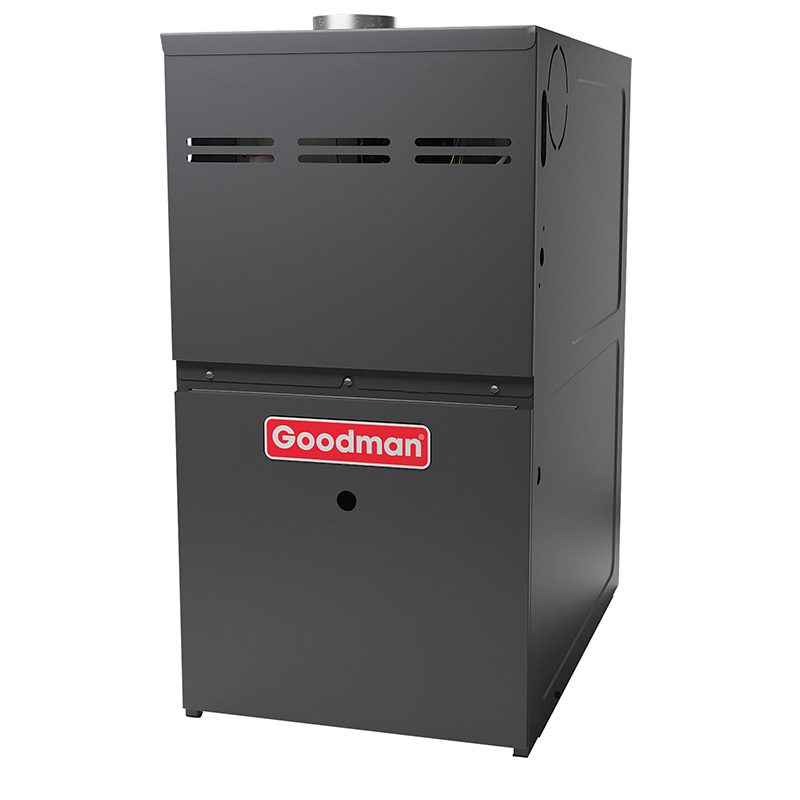
- 80,000 BTU two-stage gas furnace reduces short-cycling and temperature swings compared to single-stage models
- 80% AFUE rating: 80 cents of every fuel dollar becomes heat, the standard efficiency tier
- Upflow cabinet configuration designed for basement or ground-level installs with overhead duct systems
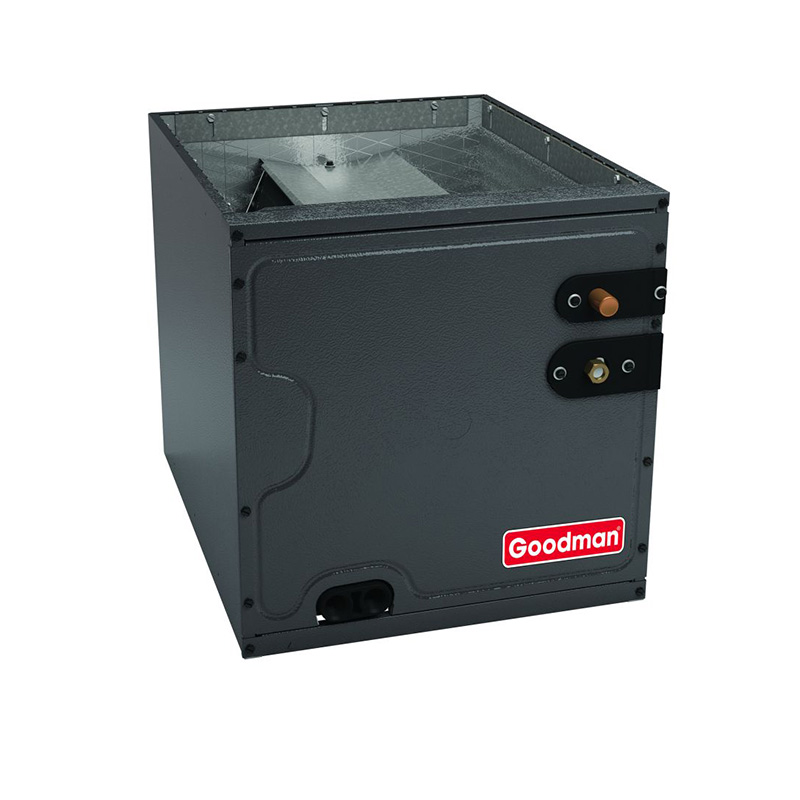
- Matched coil included, factory-paired for consistent airflow and refrigerant charge specifications
- R-32 refrigerant has roughly 70% lower global warming potential than R-410A
About this system
This Goodman bundle pairs a 3-ton, 14 SEER2 R-32 air conditioner condenser and matching evaporator coil with an 80,000 BTU, 80% AFUE two-stage gas furnace in an upflow configuration. The two-stage furnace is a meaningful step up from single-stage equipment: it runs at low fire on moderate days, which reduces temperature swings, cuts short-cycling, and is easier on the heat exchanger over time. The 14 SEER2 rating sits at the current federal minimum efficiency floor for most U.S. climate zones, so this is baseline-compliant equipment, not a high-efficiency purchase. R-32 refrigerant has a lower global warming potential than the R-410A it replaces and is now appearing across Goodman’s newer condenser lineup.
The upflow furnace configuration means supply air exits the top of the cabinet and is designed for basement or crawlspace installations where ductwork runs overhead. Buyers who need horizontal or downflow orientation would need a different model. This system suits homeowners replacing aging equipment in an existing forced-air home who want a complete, matched system from one manufacturer at a price well below premium brands, and who are comfortable accepting the trade-offs that come with value-tier equipment. It is not the right fit for buyers prioritizing top-shelf efficiency ratings or the longest possible compressor service life.
This Goodman package delivers a complete matched system at a price point noticeably below Carrier, Trane, and Lennox, and the two-stage furnace adds genuine comfort value for the money. The 14 SEER2 cooling efficiency is code-minimum, not a selling point, and Goodman's documented history of capacitor failures, evaporator coil leaks, and shorter average compressor life means long-term ownership costs can quietly erode the upfront savings. Installation quality matters more with this brand than most, so the caliber of your HVAC contractor is as important as the equipment itself.
Overall score is the average of the five ratings above.
What we like
- Purchase price typically 15 to 25 percent below comparable Carrier, Trane, and Lennox systems
- Two-stage furnace operation improves comfort and reduces wear versus single-stage alternatives at this price tier
- Complete matched system reduces compatibility guesswork and simplifies warranty claims
- R-32 refrigerant is more environmentally responsible than the R-410A used in older designs
- Broad installer familiarity means parts and service technicians are easy to find nationally
Trade-offs
- 14 SEER2 is the federal minimum efficiency floor, so energy savings over time are modest compared to 16+ SEER2 options
- Dual-run capacitor failures are the most commonly reported issue, typically surfacing within the first several years of service
- Compressor lifespan averages 10 to 14 years versus 15 to 20 for premium brands, a meaningful gap for long-term owners
- A minority of owners report evaporator coil leaks and early refrigerant loss, outcomes that depend heavily on install quality
What homeowners and pros say about Goodman
Among homeowners on review platforms, Goodman earns praise almost exclusively on price. On ConsumerAffairs, where the brand holds roughly 2.5 out of 5 stars, the most consistent complaint pattern is repair costs that start climbing after year seven, with dual-run capacitor failures and evaporator coil leaks cited repeatedly. Google dealer reviews paint a more moderate picture at around 3.8 out of 5, where buyers who hired experienced installers tend to report fewer problems in the early years. The pattern is consistent enough that HVAC technicians frequently mention it: Goodman equipment that is installed correctly, with proper refrigerant charge and airflow, tends to perform closer to its rated life, while rushed or imprecise installs surface problems faster.
For this specific system, the two-stage furnace draws more favorable reactions than the cooling side. Owners who previously had single-stage equipment often notice the comfort difference within the first heating season. On the cooling side, the compressor lifespan question is the one pros raise most often: Goodman compressors averaging 10 to 14 years versus 15 to 20 for premium brands is a real gap, and it matters more on a 3-ton unit that will work harder in warmer climates. The R-32 refrigerant is a newer addition to Goodman’s lineup and has not yet accumulated the service history of their R-410A equipment, so long-term coil leak data specific to this refrigerant combination is still developing. The bottom line from both camps: this system can deliver solid value if the install is done right and you budget for a capacitor replacement somewhere in the middle years.
Sources: ConsumerAffairs Goodman owner reviews, AHRI Directory of Certified Product Performance, U.S. DOE appliance and equipment efficiency standards, Goodman product specification sheets.
What it costs to run
At 14 SEER2, cooling this 3-ton system for a typical 1200-hour cooling season at the U.S. average electricity rate of $0.17/kWh works out to roughly $525 per year in cooling, about $23 less per year than a minimum-efficiency 13.4 SEER2 unit of the same size. Your real cost depends on your climate and local rate.
Method: (36,000 BTU/hr ÷ 14 SEER2) × 1200 hours ÷ 1000 × $0.17/kWh. Rate source: U.S. EIA average; cooling hours: moderate-climate estimate.
How it compares
| Brand | Comparable model | SEER2 | Stage | Price position |
|---|---|---|---|---|
| Goodman | This system (3T 14 SEER2 / 80K BTU 80% Two-Stage) | 14 | Two-stage furnace / standard condenser | Value pick |
| Carrier | Performance 14 Series (24ACC4 condenser + 58TP two-stage furnace) | 14 | Two-stage furnace / standard condenser | Typically 15 to 20 percent higher than this Goodman package |
| Trane | XR14 condenser + S9V2 two-stage furnace | 14 | Two-stage furnace / standard condenser | Typically 20 to 25 percent higher than this Goodman package |
| Lennox | Merit 14ACX condenser + ML195 two-stage furnace | 14 | Two-stage furnace / standard condenser | Typically 20 to 25 percent higher than this Goodman package |
Competitor rows are comparable single-stage units at similar efficiency; price is relative position, not a quote.
Questions about this system
Is 14 SEER2 good enough, or should I pay more for a higher-efficiency condenser?
14 SEER2 meets the current federal minimum and will cool your home adequately, but it is not a high-efficiency unit. If you live in a hot climate and run the AC heavily from May through September, stepping up to a 16 or 17 SEER2 model typically pays back the price difference in energy savings within several years. For mild climates or part-time use, the savings gap is smaller.
What does two-stage mean on the furnace, and does it actually matter?
A two-stage furnace has a low-fire setting for mild days and a high-fire setting for cold snaps, rather than running at full capacity every time. In practice this means fewer on-off cycles, more even temperatures room to room, and less thermal stress on the heat exchanger. It is a real comfort and longevity benefit, not just a marketing label.
How often does the capacitor fail, and what does it cost to fix?
Dual-run capacitor failure is the most frequently reported Goodman repair, and it can happen anywhere from year two onward. The good news is it is one of the cheaper HVAC repairs, generally running between 300 and 600 dollars including labor, and most technicians can diagnose and fix it in a single visit.
Does the upflow configuration work in my house, and can it be converted?
Upflow means the furnace pulls return air from the bottom and pushes conditioned air out the top into overhead ductwork. It is standard for basements and utility closets with duct systems above. Upflow cabinets are not designed to be field-converted to downflow or horizontal; if your ductwork runs below or beside the unit, you need a different model.
What warranty comes with this system, and are there conditions I need to know about?
Goodman typically offers a 10-year parts warranty on registered units, which requires registration within a set window after installation. The warranty on labor is not included and must be purchased separately or negotiated with your installer. Using a non-licensed contractor or failing to register the equipment on time can reduce coverage, so confirm the registration steps with whoever installs the system.
Specifications
| Cooling capacity | 3 Ton |
| Efficiency | 14 SEER2 |
| Furnace output | 80000 BTU |
| Configuration | Upflow |
| Refrigerant | R-32 |