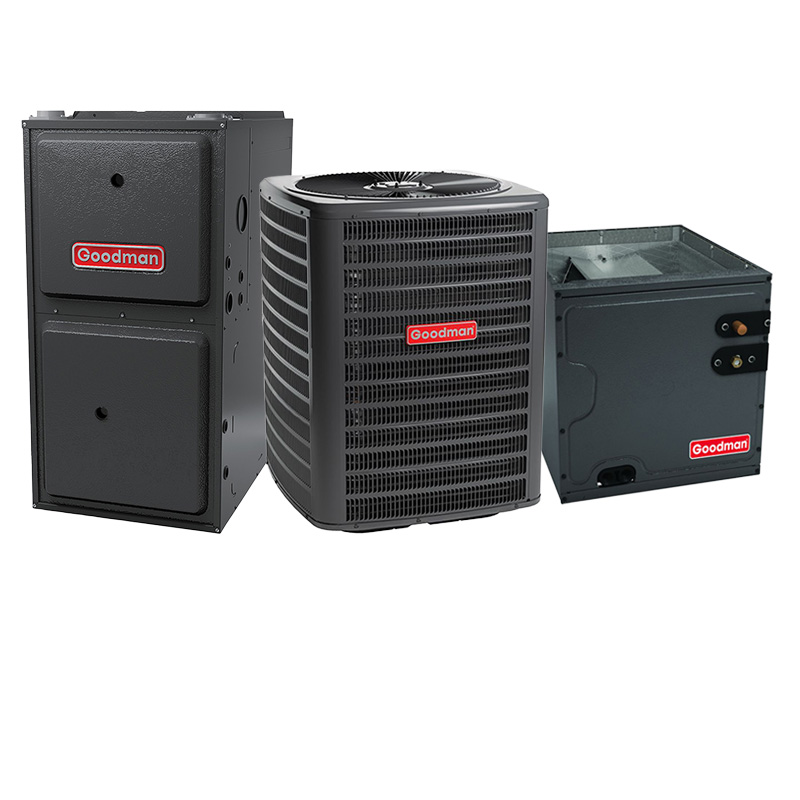
Goodman 3 Ton 14 SEER2 80000 BTU 96% AFUE Multi-Speed ECM Gas Furnace System – Upflow | R32
View on AC Direct see your lowest price →Check current price on AC Direct →
Key features
- 96% AFUE high-efficiency gas furnace reduces heat waste to roughly 4 cents per dollar of fuel
- Multi-speed ECM blower motor lowers electricity draw and improves humidity management during cooling
- 14 SEER2 cooling efficiency meets current federal minimum standards for most U.S. climate zones
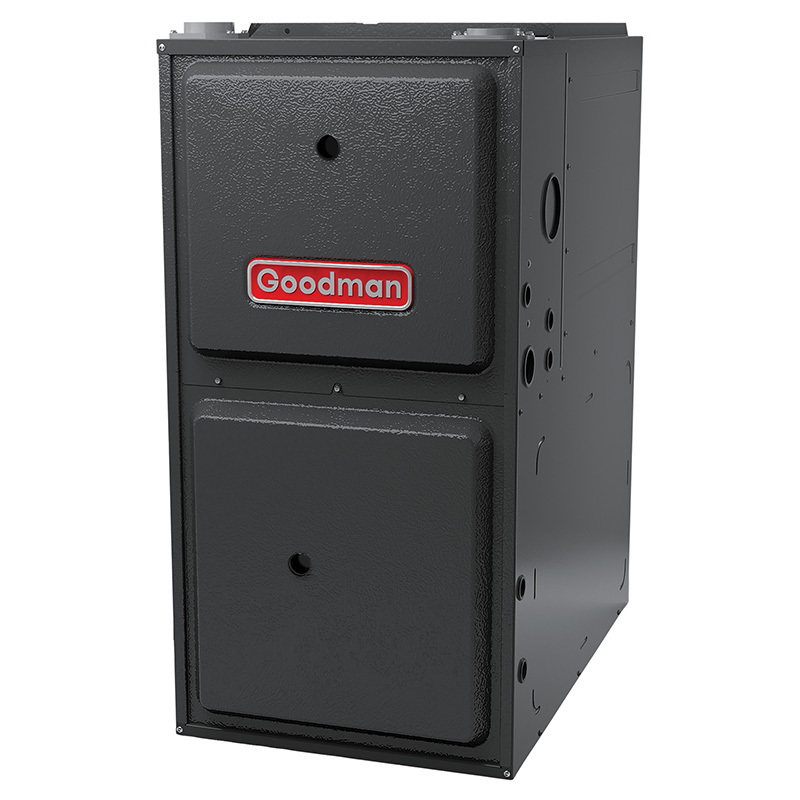
- Upflow configuration designed for basement or ground-level installations discharging air upward
- R-32 refrigerant charge with lower global warming potential than R-410A
- Factory-matched system simplifies permitting and helps ensure rated efficiency when properly installed
About this system
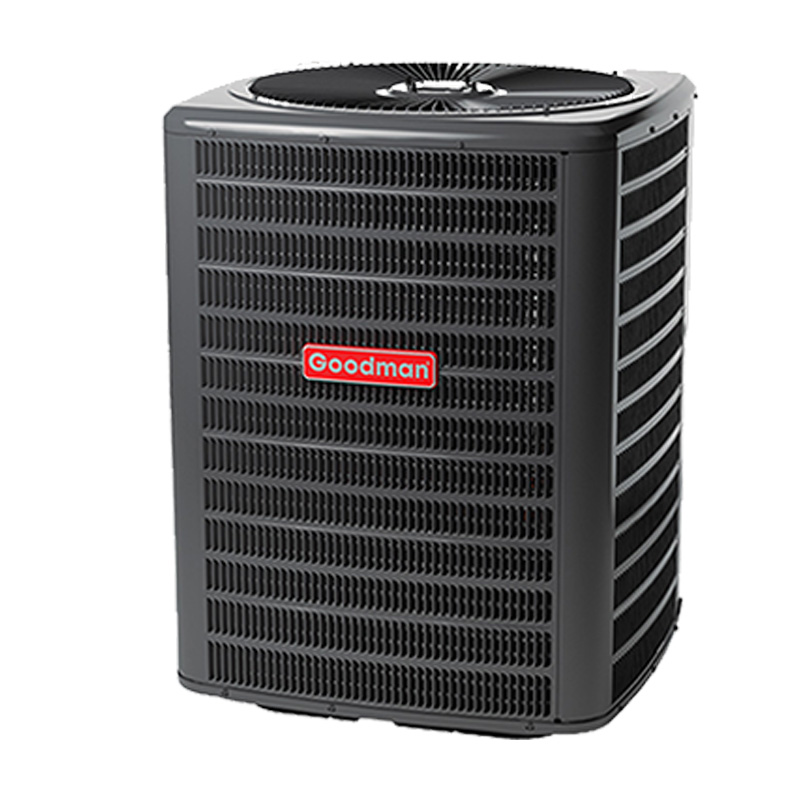
This Goodman bundle pairs a 3-ton, 14 SEER2 air conditioner with an 80,000 BTU, 96% AFUE multi-speed ECM gas furnace in an upflow configuration, making it a practical fit for homes in the 1,400 to 2,000 square foot range that have a basement or ground-level mechanical room where air is discharged upward through the ductwork. The 96% AFUE rating means roughly 96 cents of every dollar spent on gas goes directly into heating your home, placing this furnace in the high-efficiency tier and qualifying it for some utility rebate programs. The multi-speed ECM blower motor runs at lower speeds during mild conditions, which reduces electricity consumption compared to a single-speed motor and helps with humidity control during cooling season.
The R-32 refrigerant charge is worth noting for anyone planning a long-term ownership horizon. R-32 has a lower global warming potential than the R-410A it replaces and is already common in international markets, so parts and refrigerant availability should remain stable as the HVAC industry moves away from older blends. At 14 SEER2, this system meets current federal minimum efficiency standards but sits at the lower end of the efficiency spectrum, so buyers in climates with long, hot summers or high electricity rates should weigh whether a higher SEER2 unit would recoup its premium through utility savings over time. For moderate cooling climates or budget-conscious buyers replacing aging equipment, this package represents a straightforward, code-compliant upgrade.
This Goodman system delivers legitimate high-efficiency heating and meets baseline cooling standards at a price point that is consistently 15 to 25 percent below comparable Carrier, Trane, and Lennox packages. The furnace is the stronger half of the bundle given its 96% AFUE rating, while the 14 SEER2 cooling side is adequate rather than impressive. Long-term ownership costs depend heavily on installer quality and willingness to budget for component repairs, particularly capacitors and coils, after the warranty period ends.
Overall score is the average of the five ratings above.
What we like
- Strong furnace efficiency at 96% AFUE, near the top of what residential gas furnaces can achieve
- Multi-speed ECM motor provides real electricity savings and comfort advantages over single-speed blowers
- Meaningfully lower upfront cost than equivalent Carrier, Trane, or Lennox configurations
- R-32 refrigerant is the industry's direction of travel, supporting long-term parts and service availability
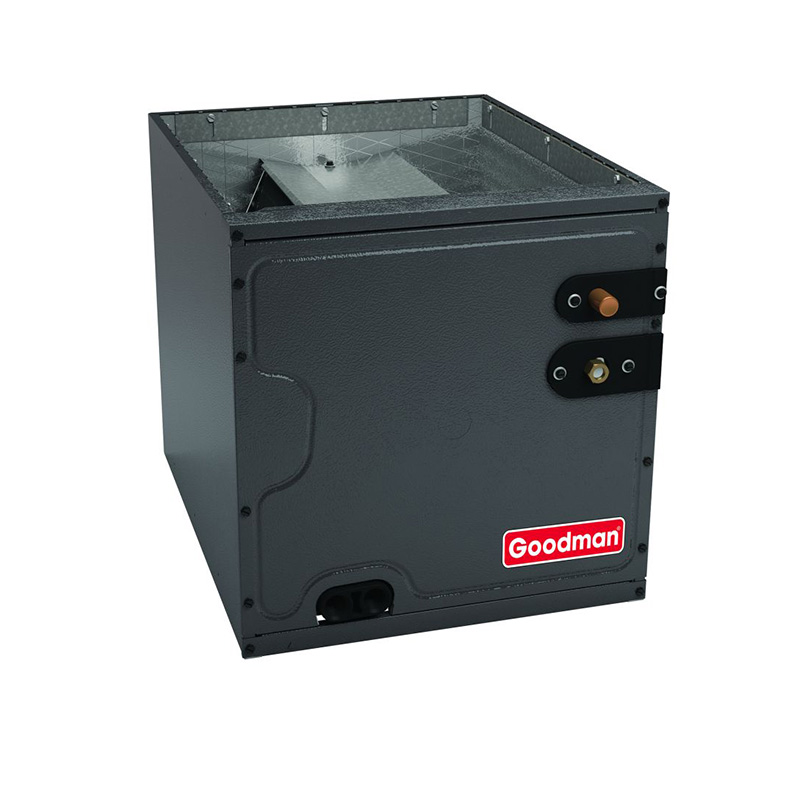
- Factory-matched coil and condenser simplify system commissioning and protect warranty coverage
Trade-offs
- Compressor lifespan averages 10 to 14 years in owner reports, shorter than the 15 to 20 years cited for premium brands
- Dual-run capacitor failures are the most documented repair issue and tend to appear after year 5 to 7
- Evaporator coil leaks appear in a meaningful share of owner reviews, a cost that can run into the thousands if it occurs outside warranty
- 14 SEER2 is the current minimum, meaning owners in hot climates will see higher operating costs than buyers who step up to a 16 or 18 SEER2 system
What homeowners and pros say about Goodman
Homeowners who share feedback on Goodman equipment tend to cluster at the extremes. On Google dealer review aggregates, the brand sits around 3.8 out of 5, where the most consistent praise is straightforward: the equipment is affordable and it works when it is installed correctly. On ConsumerAffairs, a channel that skews toward people motivated to report problems, Goodman lands closer to 2.5 out of 5, and the recurring pattern in those complaints is repair costs that mount after roughly the seventh year of ownership. For this particular system, the two failure modes worth knowing about going in are dual-run capacitor replacement, the most frequently documented Goodman repair and usually a relatively modest cost in the 300 to 600 dollar range, and evaporator coil leaks, which appear in enough owner accounts to be a genuine budgeting consideration rather than an outlier concern.
HVAC professionals tend to describe Goodman as equipment that rewards a careful installation and punishes a careless one more than premium brands do. Compressor longevity is a real gap relative to Carrier, Trane, or Lennox, with Goodman compressors averaging roughly 10 to 14 years versus 15 to 20 for top-tier brands, and a small but documented minority of owners have reported refrigerant leaks within the first year, almost always traced back to installation or initial charge issues rather than a manufacturing defect. Pros who are candid about the brand will tell you that the upfront savings are real, the warranty coverage is reasonable, and the long-term math depends almost entirely on who puts the system in and how well it is commissioned on day one.
Sources: ConsumerAffairs Goodman owner reviews, AHRI Directory of Certified Product Performance, U.S. DOE appliance and equipment efficiency standards, Goodman product specification sheets.
What it costs to run
At 14 SEER2, cooling this 3-ton system for a typical 1200-hour cooling season at the U.S. average electricity rate of $0.17/kWh works out to roughly $525 per year in cooling, about $23 less per year than a minimum-efficiency 13.4 SEER2 unit of the same size. Your real cost depends on your climate and local rate.
Method: (36,000 BTU/hr ÷ 14 SEER2) × 1200 hours ÷ 1000 × $0.17/kWh. Rate source: U.S. EIA average; cooling hours: moderate-climate estimate.
How it compares
| Brand | Comparable model | SEER2 | Stage | Price position |
|---|---|---|---|---|
| Goodman | 3 Ton 14 SEER2 / 80K BTU 96% AFUE Multi-Speed Upflow System | 14 | Multi-speed | Value pick |
| Carrier | Comfort Series (24ACC / 58CVA pairing) | 14-15 | Single-stage | Typically 15 to 25 percent more than this Goodman package |
| Trane | XR14 / S9X1 system pairing | 14 | Single-stage | Typically 15 to 25 percent more than this Goodman package |
| Lennox | Merit Series (ML14XC1 / ML96V pairing) | 14-15 | Single-stage | Typically 15 to 25 percent more than this Goodman package |
Competitor rows are comparable single-stage units at similar efficiency; price is relative position, not a quote.
Questions about this system
Will this 3-ton system be the right size for my home?
Three tons is typically appropriate for homes in the 1,400 to 2,000 square foot range, but the right size depends on your climate zone, insulation levels, window area, and ceiling height. You should ask your installer to perform a Manual J load calculation before purchasing, because an oversized or undersized system will underperform regardless of its AFUE or SEER2 rating.
Does the 96% AFUE furnace qualify for utility rebates or federal tax credits?
The 96% AFUE rating meets the efficiency threshold for the federal Energy Efficient Home Improvement Credit (25C) as of current IRS guidance, which can offset a portion of the equipment and installation cost. Utility rebate availability varies by provider, so check your local gas and electric utility websites before purchasing.
What are the most likely repairs to budget for after the warranty period?
Dual-run capacitor replacement is the most commonly reported Goodman repair and typically costs between 300 and 600 dollars including a service call. Evaporator coil leaks are a more expensive risk, appearing in a meaningful share of owner reviews, and refrigerant recharge or coil replacement can run considerably higher. Setting aside a few hundred dollars per year in a home repair fund after year 7 is a reasonable approach.
Is R-32 refrigerant harder to service or more expensive than R-410A?
R-32 is flammable at certain concentrations, which means technicians need A2L certification to work on it, but the industry is rapidly training to that standard since R-32 systems are becoming common. Refrigerant pricing is comparable to R-410A, and availability is growing. It should not be a significant service burden within the next 10 to 15 years of ownership.
How much does installation quality actually affect how this system performs and lasts?
HVAC technicians consistently cite installation quality as the single biggest factor in Goodman system longevity, more so than with some premium brands that are more tolerant of imperfect setups. Proper refrigerant charge, correct airflow, sealed ductwork, and accurate electrical connections all directly affect efficiency and component lifespan. Getting multiple installer quotes and verifying that your contractor will perform a Manual J calculation and refrigerant charge verification is worth the extra effort.
Specifications
| Cooling capacity | 3 Ton |
| Efficiency | 14 SEER2 |
| Furnace output | 80000 BTU |
| Furnace efficiency | 96% AFUE |
| Configuration | Upflow |
| Refrigerant | R-32 |