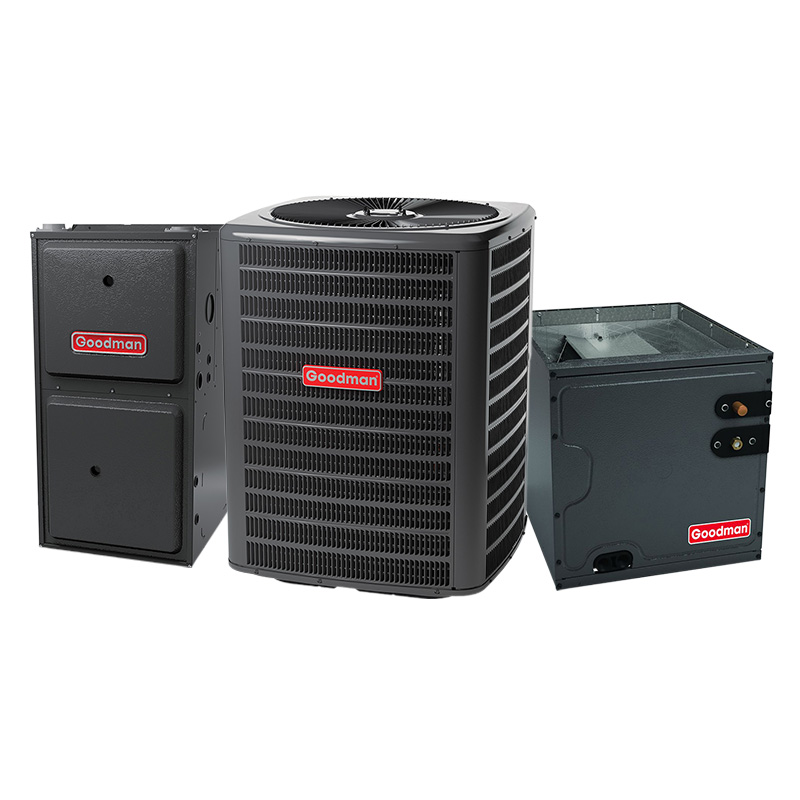
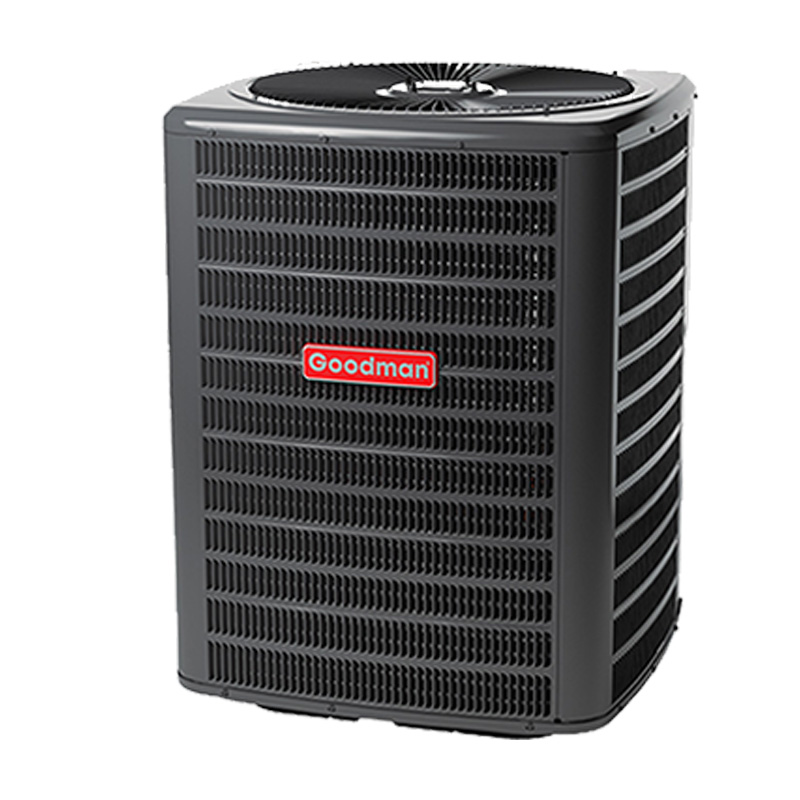
Goodman 3 Ton 14 SEER2 AC & Gas Furnace System – Multi-Speed, 100000 BTU Gas Furnace, 92% AFUE, Upflow, R32
View on AC Direct see your lowest price →Check current price on AC Direct →
Key features
- 3-ton single-stage cooling rated at 14 SEER2
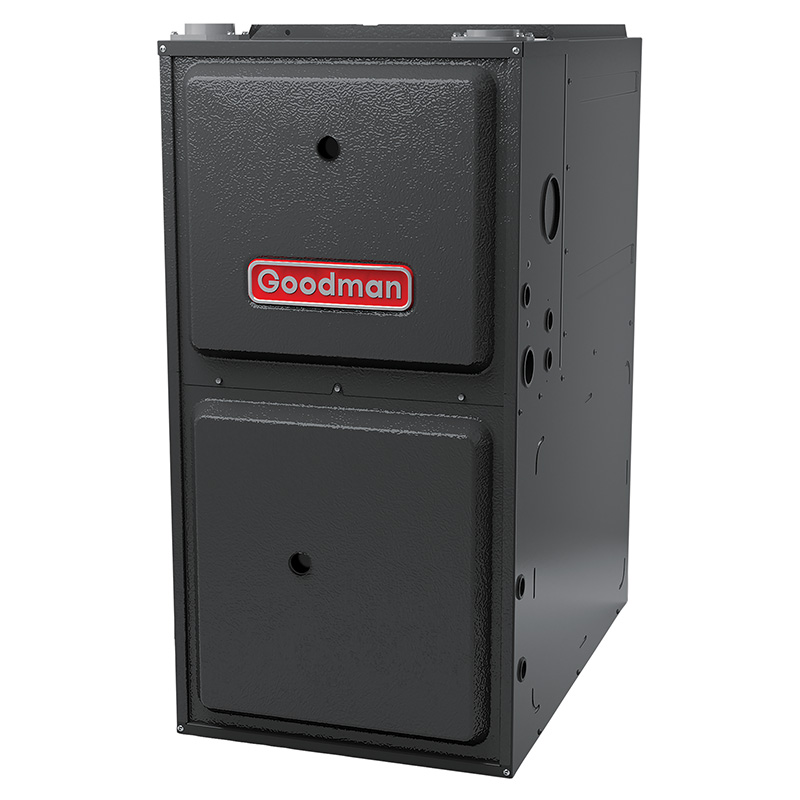
- 100,000 BTU upflow gas furnace with 92% AFUE efficiency
- R-32 refrigerant, lower GWP than R-410A
- Multi-speed blower motor for improved static pressure matching
- Upflow configuration suits standard basement and closet installs
- Goodman 10-year parts limited warranty (registration required within 60 days)
About this system
The Goodman GLXS3BN3610D pairs a 3-ton, 14 SEER2 single-stage air conditioner with a 100,000 BTU, 92% AFUE upflow gas furnace in an R-32 refrigerant package. That efficiency landing sits right at the federal minimum for most northern climate zones, making this a compliant, no-frills replacement option for homes in the 1,500 to 2,200 square-foot range that already have ductwork sized for a 3-ton load. The 92% AFUE rating means roughly 92 cents of every heating dollar reaches living space, a meaningful step above the 80% AFUE floor and a practical choice for cold-weather climates without requiring a condensing-category venting upgrade in most existing installations.
R-32 refrigerant is the direction the industry is moving: lower global-warming potential than R-410A and better thermodynamic efficiency per charge weight. The upflow configuration fits the most common North American basement or closet furnace placement, and the multi-speed blower gives the air handler more flexibility to match static pressure across different duct systems compared to a fixed-speed unit. This is a budget-conscious system built for straightforward swaps where the homeowner wants working, code-compliant equipment without the price premium of a top-tier brand. It is not aimed at buyers prioritizing long-term efficiency savings or minimal service calls over the next 15 years.
The Goodman GLXS3BN3610D delivers a code-compliant, functional heating and cooling system at a price point 15 to 25 percent below comparable Carrier, Trane, and Lennox packages. It is an honest budget option, but owners should budget for likely capacitor replacement around years 5 to 8 and understand that compressor longevity tends to trail premium-brand benchmarks. Install quality will determine more about how this system performs than the nameplate specs.
Overall score is the average of the five ratings above.
What we like
- Price sits well below comparable Carrier, Trane, and Lennox systems
- 92% AFUE furnace delivers meaningful heating efficiency without condensing-venting complexity
- R-32 refrigerant is forward-compatible with industry direction on lower-GWP refrigerants
- Multi-speed blower adapts better to existing duct systems than single-speed alternatives
- 10-year registered parts warranty provides reasonable coverage for a value-tier product
Trade-offs
- Dual-run capacitors are the most documented early failure point, typically years 5 to 8, adding service costs
- Compressor lifespan averages 10 to 14 years versus 15 to 20 for premium brands
- A minority of owners report refrigerant leaks in year one, usually tied to install or initial charge quality
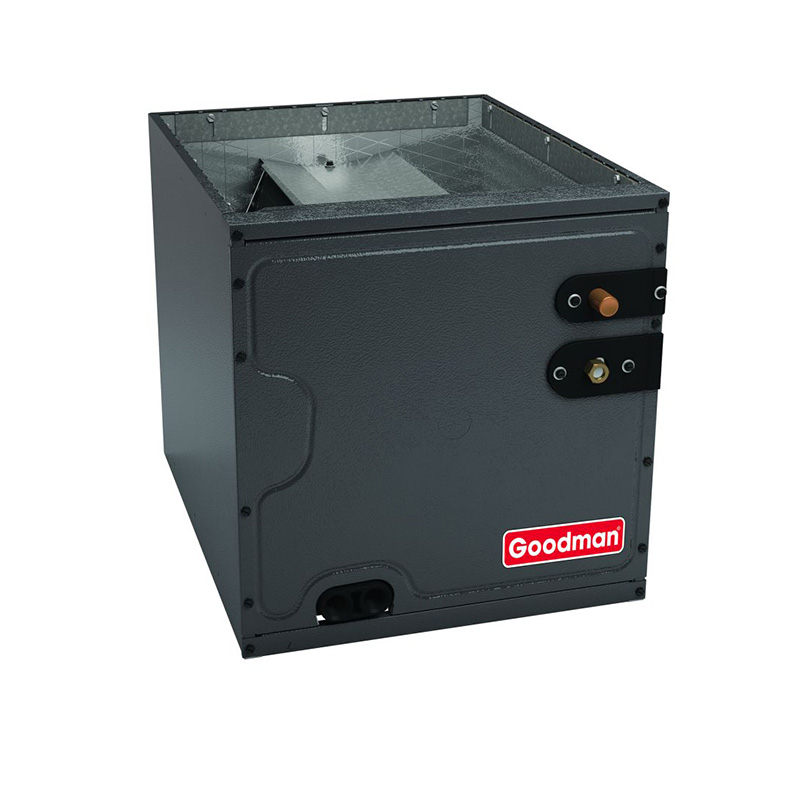
- Evaporator coil leaks appear in a meaningful share of owner reviews, a potential mid-life expense
What homeowners and pros say about Goodman
Homeowners who chose Goodman equipment consistently point to upfront affordability as the deciding factor, and that sentiment is reflected in Google dealer review scores that average around 3.8 out of 5 across hundreds of location-level reviews. Praise for price and straightforward installation is common. The ConsumerAffairs score tells a different story, sitting at roughly 2.5 out of 5, though that platform draws disproportionately from owners motivated to report problems. The recurring theme there is repair costs climbing after about year 7, which aligns with the documented tendency for dual-run capacitors to fail in that window and with the shorter average compressor lifespan of 10 to 14 years compared to 15 to 20 years for premium-brand equipment.
HVAC technicians tend to have a pragmatic view of Goodman: serviceable equipment that holds up reasonably well when installed correctly, but where install quality makes a larger performance difference than it does on more precisely engineered premium units. The documented failure modes to watch on this specific package are dual-run capacitor failure (a common, low-cost repair), evaporator coil leaks appearing in some mid-life units, and a small share of early refrigerant leaks that technicians typically attribute to installation or charge issues rather than factory defects. For this 3-ton, 14 SEER2, 92% AFUE configuration, the honest takeaway is that you are buying a functional system at a real discount, with a trade-off in expected service frequency and longevity relative to the brands priced above it.
Sources: ConsumerAffairs Goodman owner reviews, AHRI Directory of Certified Product Performance, U.S. DOE appliance and equipment efficiency standards, Goodman product specification sheets.
What it costs to run
At 14 SEER2, cooling this 3-ton system for a typical 1200-hour cooling season at the U.S. average electricity rate of $0.17/kWh works out to roughly $525 per year in cooling, about $23 less per year than a minimum-efficiency 13.4 SEER2 unit of the same size. Your real cost depends on your climate and local rate.
Method: (36,000 BTU/hr ÷ 14 SEER2) × 1200 hours ÷ 1000 × $0.17/kWh. Rate source: U.S. EIA average; cooling hours: moderate-climate estimate.
How it compares
| Brand | Comparable model | SEER2 | Stage | Price position |
|---|---|---|---|---|
| Goodman | GLXS3BN3610D | 14 | Single-stage | Value pick |
| Carrier | Comfort 14 (24ACC4) series | 14 | Single-stage | Typically 15 to 25 percent more than Goodman |
| Trane | XR14 series | 14 | Single-stage | Typically 15 to 25 percent more than Goodman |
| Lennox | Merit 14ACX series | 14 | Single-stage | Typically 15 to 25 percent more than Goodman |
Competitor rows are comparable single-stage units at similar efficiency; price is relative position, not a quote.
Questions about this system
Does switching to R-32 mean my existing technician needs special equipment?
Yes. R-32 is mildly flammable (A2L classification) and requires technicians to use recovery equipment and tools rated for A2L refrigerants. Most established HVAC companies are already equipped or transitioning, but it is worth confirming with your installer before booking service.
The 10-year warranty sounds good, but what does it actually cover?
Goodman's 10-year registered parts limited warranty covers replacement parts only. It does not cover labor, refrigerant, or diagnostic costs, which are typically where the real expense sits on a service call. Registration must be completed within 60 days of installation or the warranty defaults to a shorter period.
How likely am I to need a capacitor replacement, and what will it cost?
Dual-run capacitors are the single most commonly reported failure mode on Goodman equipment, often showing up between years 5 and 8. A capacitor replacement typically runs between 300 and 600 dollars for parts and labor, which is a relatively low-cost repair but worth factoring into your ownership budget.
Will a 100,000 BTU furnace overpower a house that needs 3-ton cooling?
Furnace sizing is based on heating load, not cooling load, and in many northern climates a 100,000 BTU furnace paired with a 3-ton AC is a common match. A Manual J load calculation by your installer will confirm whether the BTU output is appropriate for your specific home size and insulation level.
Does upflow mean this furnace cannot be installed horizontally in an attic or crawl space?
Correct. An upflow furnace is designed specifically to draw return air from the bottom and discharge heated air upward into overhead ductwork. If your installation requires horizontal or downflow orientation, you would need a different furnace configuration, so confirm your existing setup or planned ductwork layout with your installer before ordering.
Specifications
| Cooling capacity | 3 Ton |
| Efficiency | 14 SEER2 |
| Furnace output | 100000 BTU |
| Furnace efficiency | 92% AFUE |
| Configuration | Upflow |
| Refrigerant | R-32 |
| Model | GLXS3BN3610D |