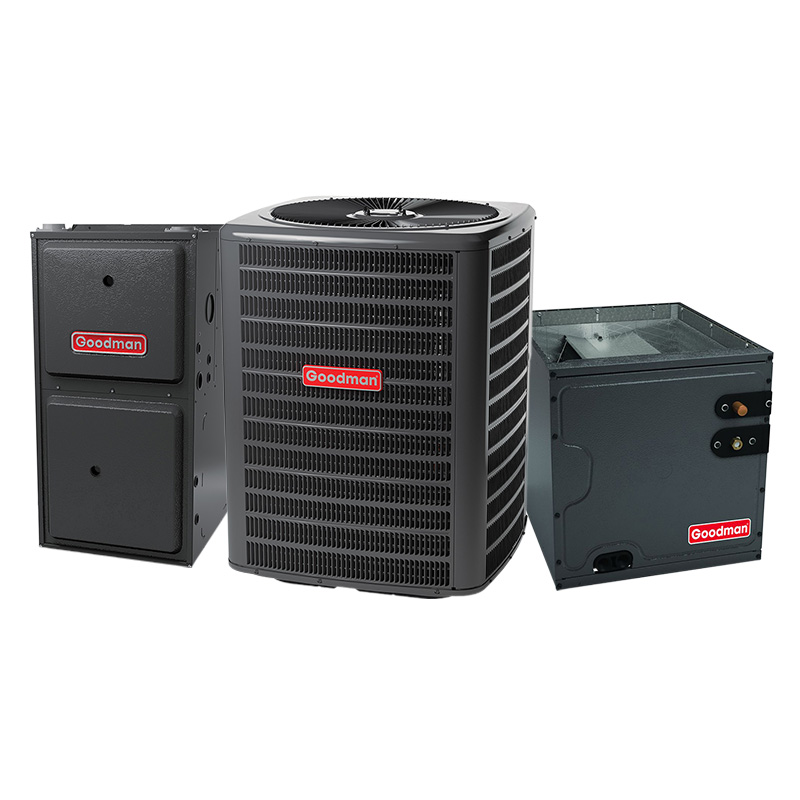
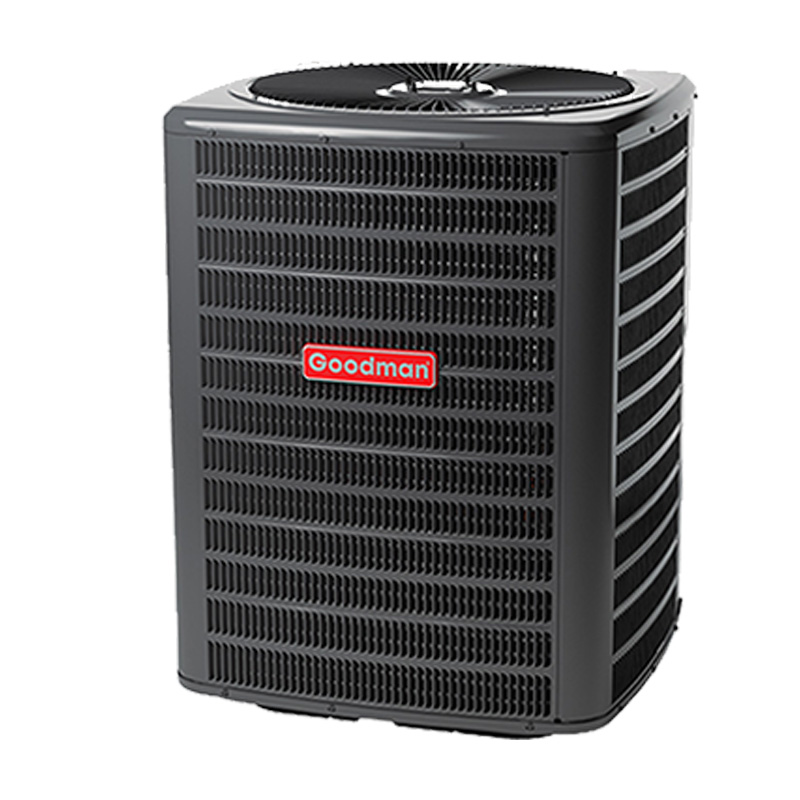
Goodman 3 Ton 14 SEER2 AC & Gas Furnace System – Multi-Speed, 80000 BTU Gas Furnace, 92% AFUE, Upflow, R32
View on AC Direct see your lowest price →Check current price on AC Direct →
Key features
- 3-ton cooling capacity with 14 SEER2 efficiency rating
- 80,000 BTU gas furnace at 92% AFUE mid-efficiency
- Multi-speed blower for quieter operation and better dehumidification
- Upflow configuration for basement or closet installs with overhead ducts
- R-32 refrigerant with lower global warming potential than R-410A
- Bundled AC and furnace system designed for matched-component reliability
About this system
The Goodman GLXS3BN3610D pairs a 3-ton, 14 SEER2 central air conditioner with an 80,000 BTU, 92% AFUE upflow gas furnace into a single bundled system. The 14 SEER2 rating sits at the current federal minimum-efficiency threshold for most U.S. climate zones, meaning it meets code without exceeding it. The 92% AFUE furnace converts 92 cents of every dollar of gas into usable heat, which puts it in the mid-efficiency tier above the 80% AFUE entry level but below the 96–98% condensing category. For homes in moderately cold climates where heating costs are real but extreme cold is not a daily fact of life, that balance is often the practical sweet spot.
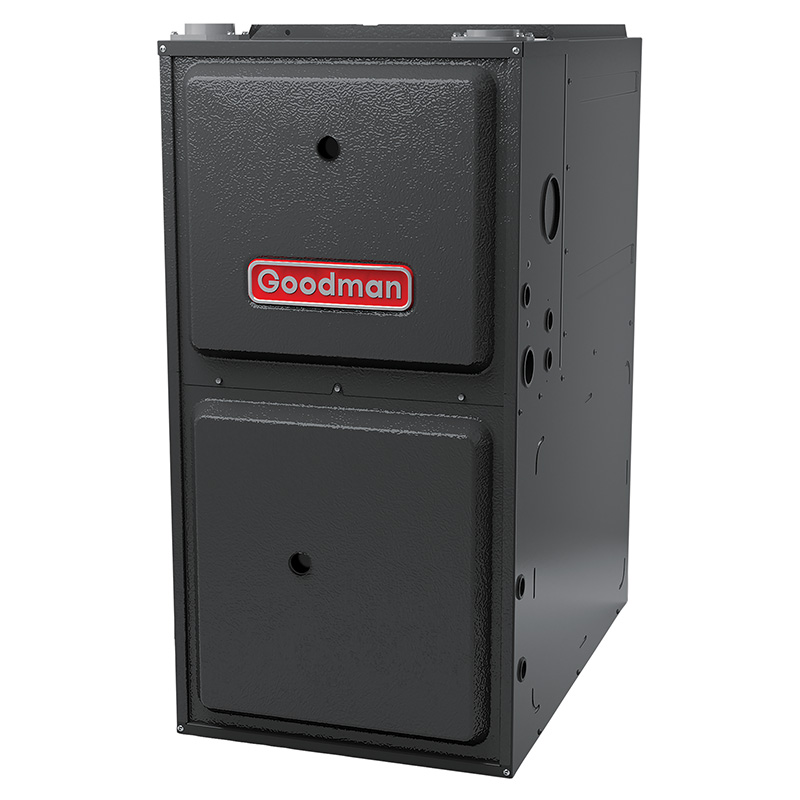
The upflow configuration means the furnace pulls return air in at the bottom and pushes conditioned air upward into the duct system, the arrangement found in most basement and closet installations with ducts running through the floor system above. The system uses R-32 refrigerant, a lower-global-warming-potential alternative to the outgoing R-410A, which positions it ahead of near-future regulatory requirements. Multi-speed blower operation allows the fan to run at a lower speed for steady-state cooling and heating, reducing noise and improving dehumidification compared to a fixed single-speed motor. This system suits budget-conscious homeowners replacing aging equipment in average-sized homes of roughly 1,500 to 2,200 square feet, provided they invest in a qualified installer.
The Goodman GLXS3BN3610D delivers solid baseline performance at a price point that is hard to match from premium brands. It is a workable long-term choice for budget-focused buyers who hire an experienced installer, but owners should go in knowing that repair frequency tends to increase after year seven and that compressor longevity runs shorter than premium alternatives.
Overall score is the average of the five ratings above.
What we like
- Purchase price runs 15 to 25 percent below comparable Carrier, Trane, and Lennox systems
- 92% AFUE furnace meaningfully reduces gas consumption versus 80% AFUE equipment
- R-32 refrigerant meets near-future regulatory direction, reducing risk of future re-charge cost increases
- Multi-speed blower improves comfort and humidity control over basic single-speed units
- Bundled matched system simplifies equipment selection and can support warranty compliance
Trade-offs
- Dual-run capacitors are the most commonly reported failure point, typically requiring a 300 to 600 dollar service call
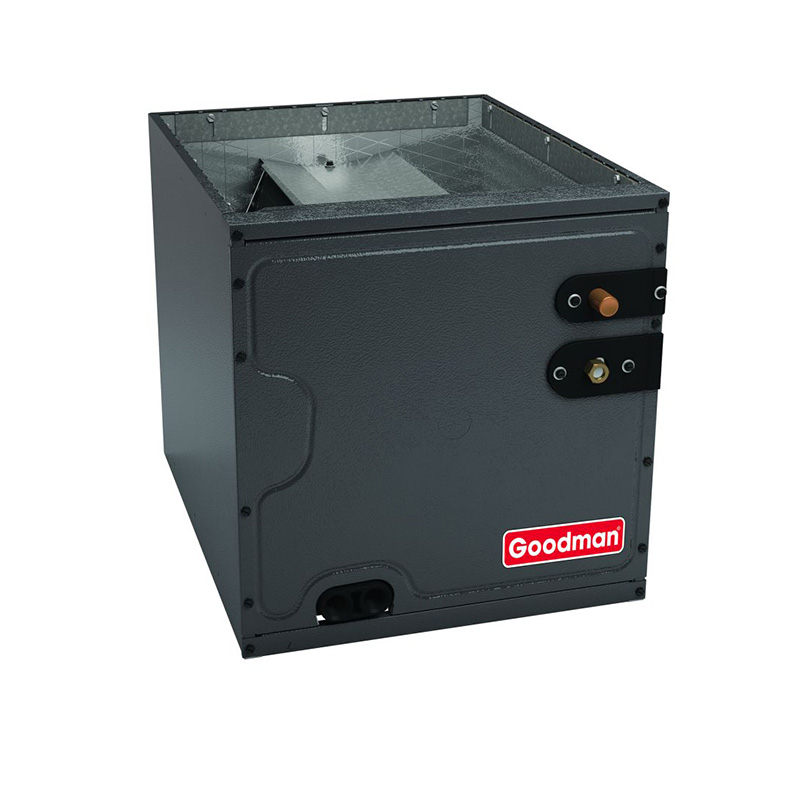
- Evaporator coil leaks appear in a meaningful share of owner reports, a potentially costly repair outside the warranty window
- Compressor lifespan averages 10 to 14 years versus 15 to 20 years for premium-brand compressors
- A minority of owners report refrigerant leaks in the first year, most often traced to installation or initial charge issues rather than the equipment itself
What homeowners and pros say about Goodman
Homeowners who have lived with Goodman equipment long enough to have perspective tend to split into two groups. Those who had strong installs by experienced technicians report years of unremarkable, competent service and point to the lower purchase price as the reason they chose the brand. Those who ran into problems more often trace the frustration to one of three recurring issues: dual-run capacitor failures, evaporator coil leaks, or compressor wear in the 10-to-14-year window rather than the 15-to-20-year range common with premium brands. On ConsumerAffairs, Goodman scores around 2.5 out of 5, a channel that skews toward complaint-motivated reviewers, where the dominant theme is climbing repair costs after roughly year seven. Google dealer reviews land around 3.8 out of 5 across hundreds of location-level reviews, where affordability is consistently the most praised attribute.
HVAC technicians have a nuanced view of Goodman. Many are willing to install it because the margin between Goodman and premium-brand pricing gives homeowners real budget relief, and when the install is done correctly with proper refrigerant charge and airflow, the equipment performs adequately. The caution they raise is that Goodman’s durability curve falls off sooner than Trane or Lennox, and labor costs to repair it in years eight through twelve can erode the upfront savings. For this specific system, the R-32 refrigerant is a forward-looking choice that technicians generally view positively, and the 92% AFUE furnace is a reasonable mid-efficiency selection. The consistent professional advice is the same it has always been for this brand: the installer matters at least as much as the equipment itself.
Sources: ConsumerAffairs Goodman owner reviews, AHRI Directory of Certified Product Performance, U.S. DOE appliance and equipment efficiency standards, Goodman product specification sheets.
What it costs to run
At 14 SEER2, cooling this 3-ton system for a typical 1200-hour cooling season at the U.S. average electricity rate of $0.17/kWh works out to roughly $525 per year in cooling, about $23 less per year than a minimum-efficiency 13.4 SEER2 unit of the same size. Your real cost depends on your climate and local rate.
Method: (36,000 BTU/hr ÷ 14 SEER2) × 1200 hours ÷ 1000 × $0.17/kWh. Rate source: U.S. EIA average; cooling hours: moderate-climate estimate.
How it compares
| Brand | Comparable model | SEER2 | Stage | Price position |
|---|---|---|---|---|
| Goodman | GLXS3BN3610D | 14 | Single-stage | Value pick |
| Carrier | Comfort 14 Series (24ACC4) | 14 | Single-stage | Typically 15 to 25 percent more than Goodman |
| Trane | XR14 Series | 14 | Single-stage | Typically 15 to 25 percent more than Goodman |
| Lennox | Merit ML14XC1 Series | 14 | Single-stage | Typically 15 to 25 percent more than Goodman |
Competitor rows are comparable single-stage units at similar efficiency; price is relative position, not a quote.
Questions about this system
Is 14 SEER2 going to be legal to install in my state going forward?
14 SEER2 is the current federal minimum for split-system cooling in most northern U.S. regions, so it is code-compliant today. Some southern states have higher minimums for new construction or full replacements, so confirm your local requirement with your installer before purchasing.
What does the R-32 refrigerant change mean for me as an owner?
R-32 has a lower global warming potential than R-410A and is the direction the industry is moving, which means re-charge costs and refrigerant availability should remain stable for the foreseeable future. The main practical note is that R-32 is mildly flammable, so any service work must be done by a certified technician familiar with A2L refrigerants.
How worried should I be about the capacitor failure reports?
Dual-run capacitor failures are the most frequently cited repair on Goodman cooling equipment, but they are also one of the least expensive HVAC repairs, typically in the 300 to 600 dollar range for parts and labor. Having a technician check and test the capacitor during annual maintenance is a straightforward way to catch degradation before it becomes a no-cooling emergency.
Will the multi-speed blower work with my existing thermostat?
The multi-speed motor adjusts based on the system's own controls rather than requiring a communicating or smart thermostat, so it is compatible with most standard 24-volt thermostats. That said, a communicating or programmable thermostat will let you take fuller advantage of the comfort and efficiency capabilities the multi-speed motor offers.
What warranty comes with this system and what do I need to do to protect it?
Goodman typically offers a 10-year parts limited warranty when the equipment is registered within a set window after installation, usually 60 days. Failure to register on time commonly reduces coverage to five years, so registration immediately after startup is important. The warranty covers parts but not labor costs, which is standard across the industry at this price tier.
Specifications
| Cooling capacity | 3 Ton |
| Efficiency | 14 SEER2 |
| Furnace output | 80000 BTU |
| Furnace efficiency | 92% AFUE |
| Configuration | Upflow |
| Refrigerant | R-32 |
| Model | GLXS3BN3610D |