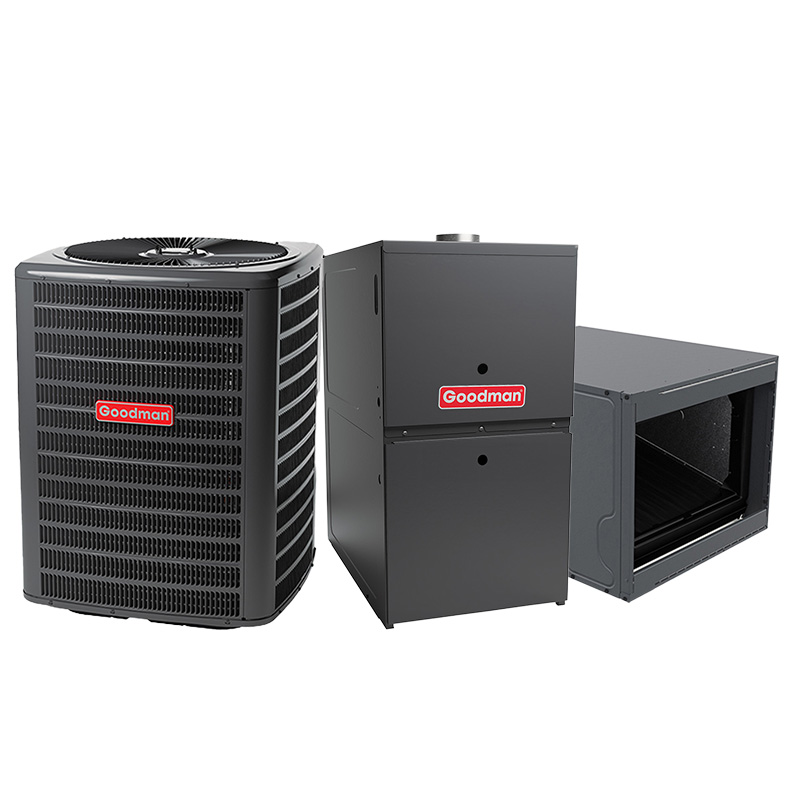
Goodman 3 Ton 14 SEER2 AC & Gas Furnace System – Two Stage Variable-Speed, 100000 BTU Gas Furnace, 80% AFUE, Horizontal, R32
View on AC Direct see your lowest price →Check current price on AC Direct →
Key features
- 3-ton two-stage cooling, 14 SEER2 efficiency rating
- 100,000 BTU horizontal gas furnace, 80% AFUE
- Variable-speed air handler for quieter, more even airflow
- R-32 refrigerant with lower global-warming potential than R-410A
- Horizontal configuration designed for attic or crawlspace installs
- Goodman's 10-year parts warranty with registered installation
About this system
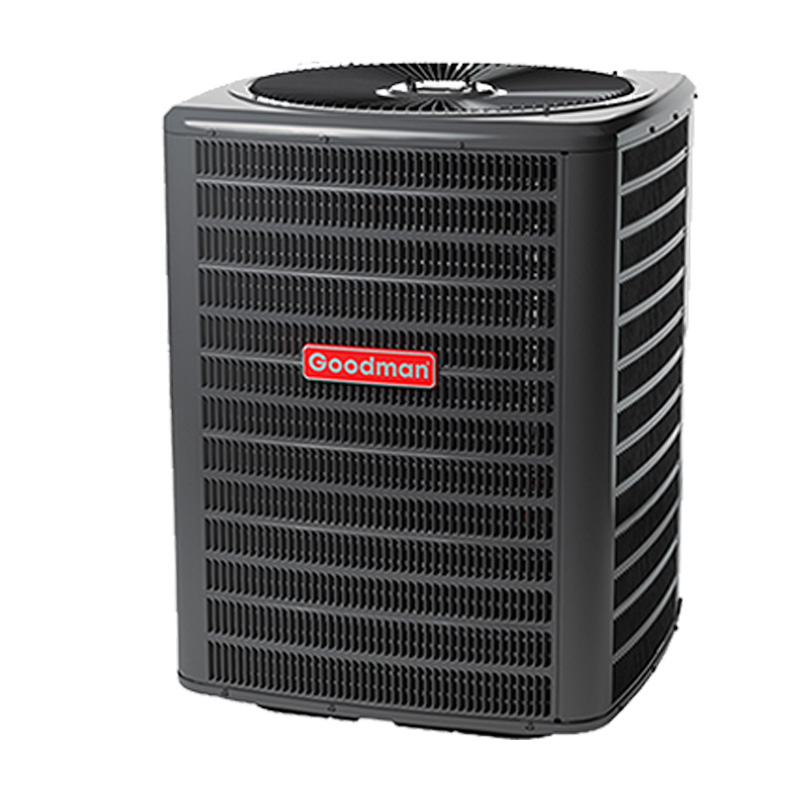
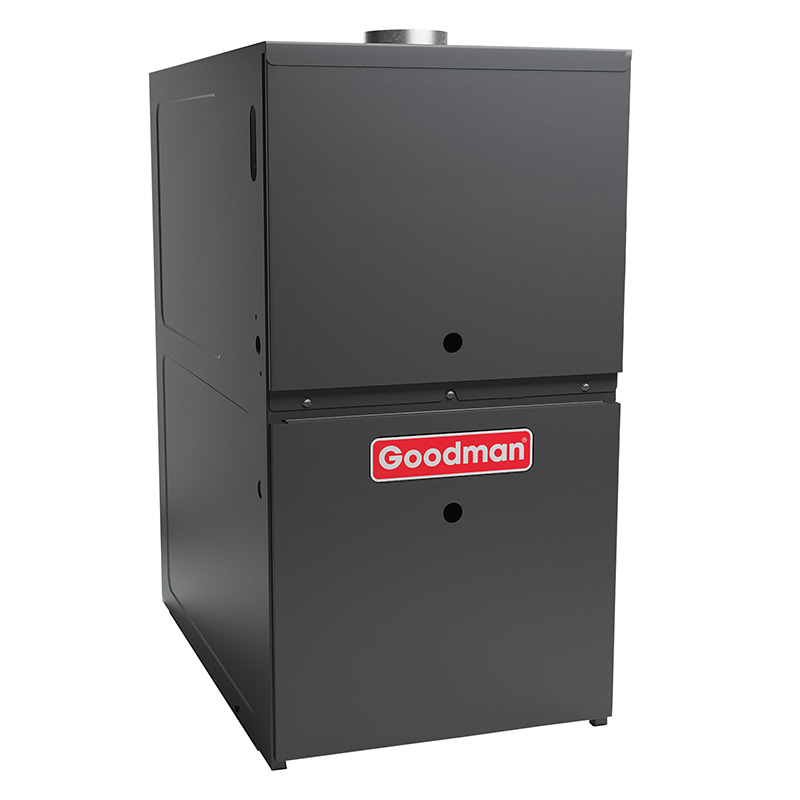
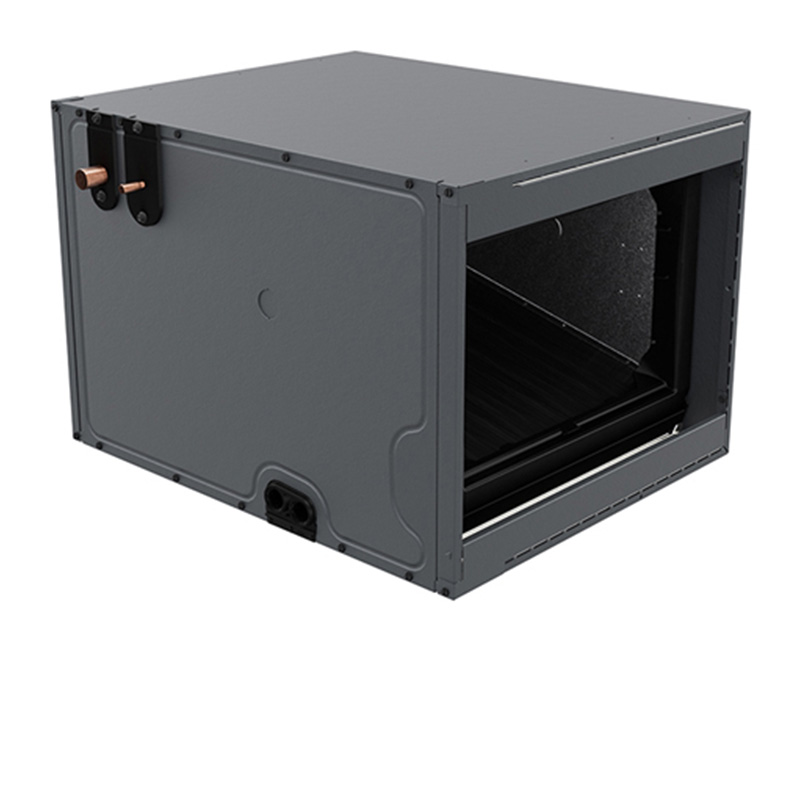
The Goodman 3-ton 14 SEER2 two-stage, variable-speed system pairs a cooling-only condenser with a 100,000 BTU, 80% AFUE horizontal gas furnace. The horizontal configuration makes it a practical fit for attic installations, crawlspace equipment closets, or manufactured homes where vertical orientation simply is not an option. R-32 refrigerant brings a lower global-warming potential than the R-410A it replaces, and the two-stage compressor lets the system run at a reduced capacity on moderate days, which cuts short-cycling and keeps indoor humidity in check better than a single-stage unit can.
The 80% AFUE rating means one dollar in five of your gas spend exits the flue as waste heat. That is the federal minimum efficiency tier, which keeps upfront cost down but costs more to operate over time compared to a 96% AFUE condensing furnace. The 14 SEER2 rating sits at the lower end of what modern equipment offers but meets 2023 federal minimums and will satisfy most buyers whose priority is a reliable, affordable replacement rather than a best-in-class efficiency number. This system is best understood as a budget-conscious, code-compliant option for homeowners who want two-stage comfort upgrades over single-stage entry-level gear without paying premium-brand prices.
This system delivers a meaningful comfort upgrade over basic single-stage equipment at a price point that undercuts Carrier, Trane, and Lennox by 15 to 25 percent. The trade-off is a brand track record that shows above-average repair frequency after year seven and compressor longevity that trails premium competitors. Buyers who budget for routine maintenance and use a skilled installer will get solid value here; buyers expecting set-it-and-forget-it longevity should weigh the premium brands carefully.
Overall score is the average of the five ratings above.
What we like
- Two-stage cooling reduces humidity better than single-stage alternatives
- Variable-speed blower lowers noise and improves air distribution
- R-32 refrigerant is more environmentally responsible than R-410A
- Horizontal furnace configuration suits attics and manufactured homes where verticals won't fit
- Price is typically 15 to 25 percent below comparable Carrier, Trane, or Lennox systems
Trade-offs
- 80% AFUE is the lowest efficiency tier; operating costs are higher than condensing-furnace alternatives
- Dual-run capacitors are the most commonly reported failure, typically showing up within the first several years
- Compressor lifespan averages 10 to 14 years versus 15 to 20 years on premium brands
- Evaporator coil leaks appear in a meaningful share of owner reports, and a minority report refrigerant leaks within year one
What homeowners and pros say about Goodman
Homeowners who post about Goodman on review platforms tend to split into two camps. Those who had a smooth installation by an experienced technician and kept up with annual maintenance often describe years of uneventful service and point to the lower purchase price as genuine savings. Those who report problems frequently trace the trouble to either install-related issues or repairs that showed up after the seven-year mark, which aligns with the brand’s ConsumerAffairs score of roughly 2.5 out of 5. That platform skews toward complaint writers, but the pattern it surfaces, rising repair costs in the second half of the system’s life, is consistent enough to take seriously. Google dealer reviews tell a more balanced story at around 3.8 out of 5, where affordability is the praise that comes up most often.
HVAC technicians who work on Goodman equipment regularly will tell you the brand is very install-dependent. A sloppy refrigerant charge or a rushed startup is, in their view, the number-one predictor of early trouble, including the first-year refrigerant leaks that a minority of owners report. The failure modes that show up most in service calls are dual-run capacitors, a repair that usually runs in the 300 to 600 dollar range and is not unique to Goodman, and evaporator coil leaks, which are documented in a meaningful share of owner accounts. Compressor longevity is another area where pros note a real gap: Goodman compressors tend to average 10 to 14 years of service, versus 15 to 20 years on Trane, Carrier, or Lennox equipment at a similar efficiency tier. None of this makes Goodman a bad choice at this price point, but it does make a competent installer and a maintenance plan non-negotiable rather than optional.
Sources: ConsumerAffairs Goodman owner reviews, AHRI Directory of Certified Product Performance, U.S. DOE appliance and equipment efficiency standards, Goodman product specification sheets.
What it costs to run
At 14 SEER2, cooling this 3-ton system for a typical 1200-hour cooling season at the U.S. average electricity rate of $0.17/kWh works out to roughly $525 per year in cooling, about $23 less per year than a minimum-efficiency 13.4 SEER2 unit of the same size. Your real cost depends on your climate and local rate.
Method: (36,000 BTU/hr ÷ 14 SEER2) × 1200 hours ÷ 1000 × $0.17/kWh. Rate source: U.S. EIA average; cooling hours: moderate-climate estimate.
How it compares
| Brand | Comparable model | SEER2 | Stage | Price position |
|---|---|---|---|---|
| Goodman | GSXH5 / GMVC8 Series (this system) | 14 | two-stage | Value pick |
| Carrier | Performance 14 (24ACC4 Series) | 14 | single-stage | Typically 15 to 25 percent more than this Goodman system |
| Trane | XR14c Series | 14 | single-stage | Typically 15 to 25 percent more than this Goodman system |
| Lennox | Merit ML14XC1 Series | 14 | single-stage | Typically 15 to 25 percent more than this Goodman system |
Competitor rows are comparable single-stage units at similar efficiency; price is relative position, not a quote.
Questions about this system
Why does this furnace use a horizontal configuration instead of upflow or downflow, and can it be converted?
The horizontal configuration is designed specifically for spaces where the unit must lie on its side, such as an attic or a low crawlspace. Most horizontal furnaces cannot be field-converted to upflow or downflow without a different cabinet, so confirm your installation space before ordering.
Is 80% AFUE going to cost me noticeably more to run than a higher-efficiency furnace?
Yes, in cold climates the gap adds up. A 96% AFUE furnace turns 96 cents of every gas dollar into heat; this unit turns 80 cents. In a region with long winters and high gas prices, the annual operating cost difference can be substantial over the life of the system, so the lower purchase price may not always represent the best long-term value.
What does two-stage cooling actually do for me compared to the single-stage systems at the same price?
Two-stage operation lets the compressor run at a lower capacity on mild days, which means longer run cycles, better dehumidification, and more even temperatures from room to room. You'll notice less of the on-off blasting that single-stage units produce, especially during shoulder seasons.
Goodman's ConsumerAffairs score is low. Should I be worried about buying this brand?
ConsumerAffairs is complaint-driven by design, so the roughly 2.5 out of 5 score there reflects owners who had problems, not a representative sample of all owners. Google dealer reviews average around 3.8 out of 5, which is more balanced. The documented weak points are real, specifically dual-run capacitor failures, evaporator coil leaks, and compressor longevity shorter than premium brands, so it is worth setting aside a repair reserve rather than dismissing the concern.
Does R-32 refrigerant require any special handling, and will my local technician know how to work with it?
R-32 is mildly flammable, classified A2L, and requires technicians trained and equipped for A2L refrigerants. It is becoming the new industry standard, so most licensed HVAC technicians are or will be certified for it, but it is worth confirming with your service company before the installation date.
Specifications
| Cooling capacity | 3 Ton |
| Efficiency | 14 SEER2 |
| Furnace output | 100000 BTU |
| Furnace efficiency | 80% AFUE |
| Configuration | Horizontal |
| Refrigerant | R-32 |