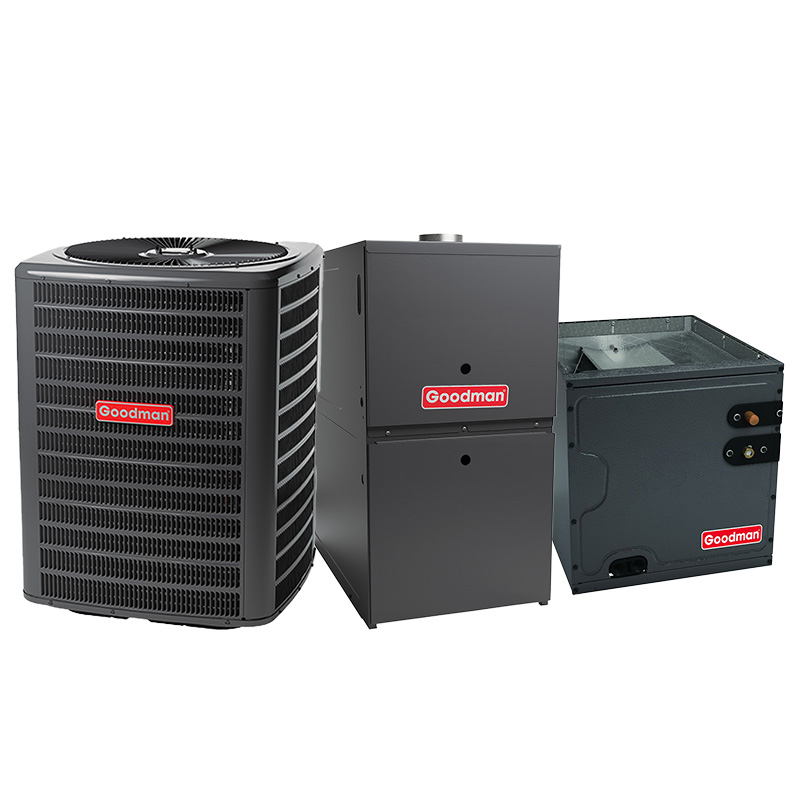
Goodman 3 Ton 14 SEER2 AC & Gas Furnace System – Two Stage Variable-Speed, 60000 BTU Gas Furnace, 80% AFUE, Upflow, R32
View on AC Direct see your lowest price →Check current price on AC Direct →
Key features
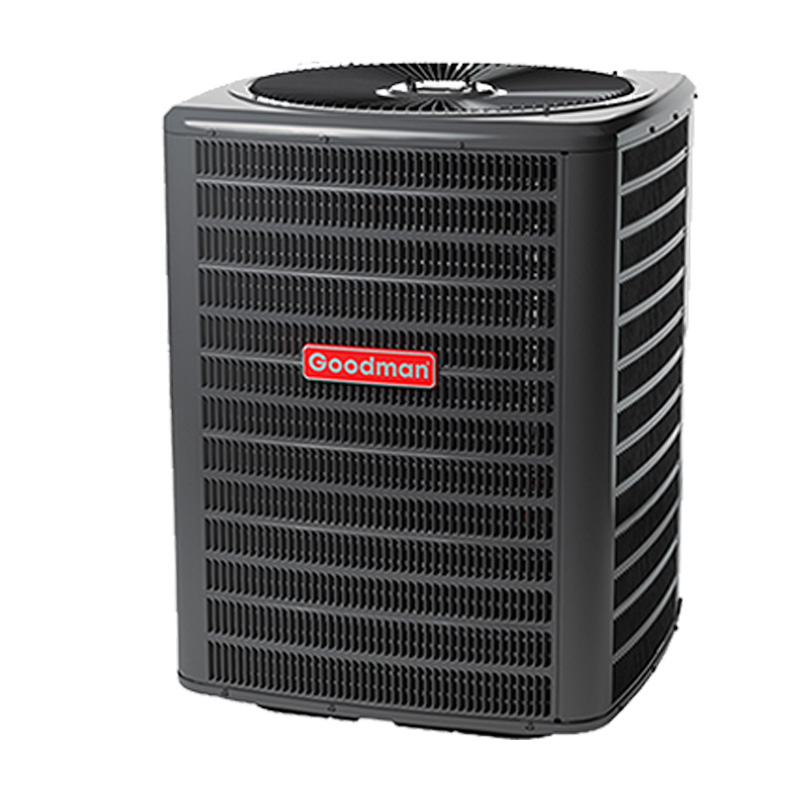
- 3-ton two-stage AC rated at 14 SEER2 for baseline energy efficiency
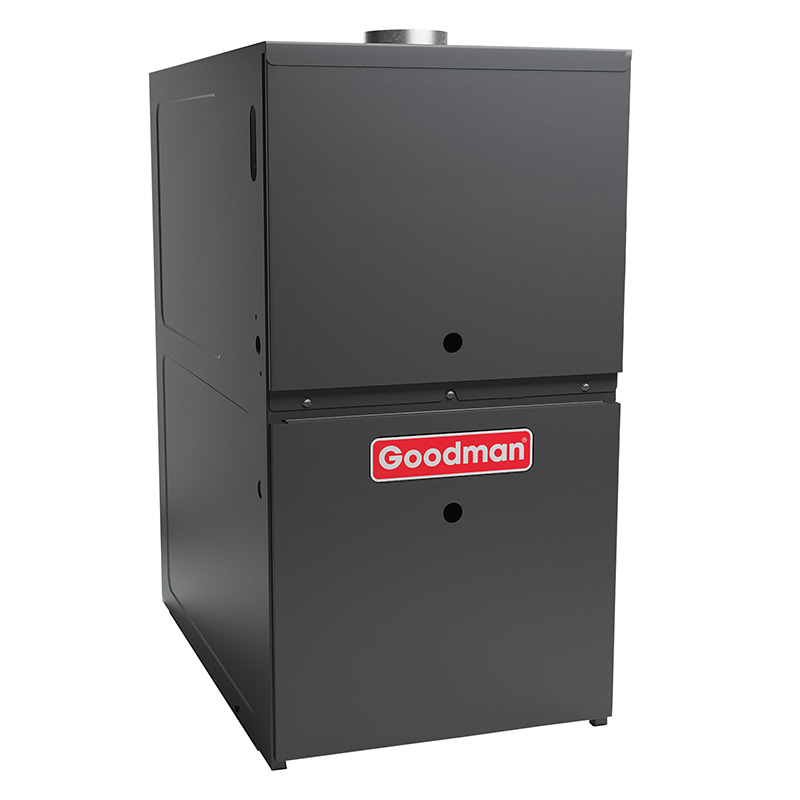
- 60,000 BTU upflow gas furnace at 80% AFUE — heats efficiently at an entry-level efficiency tier
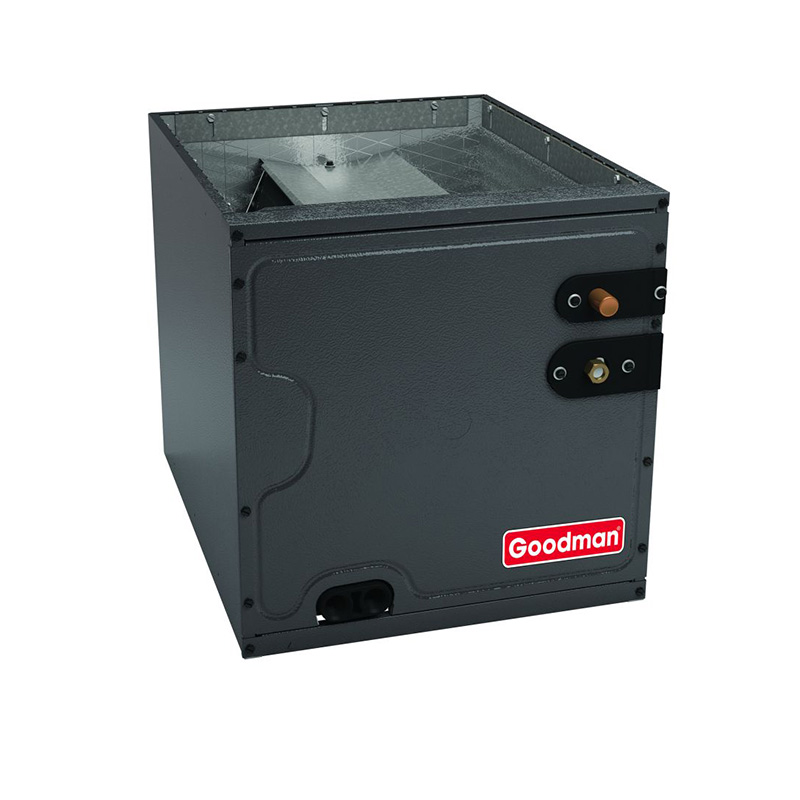
- Variable-speed ECM blower for quieter operation and more consistent airflow
- R-32 refrigerant with lower global warming potential than R-410A
- Two-stage cooling reduces short cycling and improves humidity removal on mild days
- Upflow configuration suited for basement or ground-level utility closet installs
About this system
The Goodman 3-ton 14 SEER2 two-stage, variable-speed system pairs a 60,000 BTU upflow gas furnace with an air conditioner sized for homes roughly between 1,400 and 2,000 square feet, depending on climate and insulation. The furnace runs at 80% AFUE, meaning it converts 80 cents of every dollar of gas into usable heat — a baseline efficiency that keeps equipment cost low but leaves monthly heating bills higher than a 90%+ modulating unit would. R-32 refrigerant is a step forward from older R-410A systems: it has a lower global warming potential and slightly better thermodynamic properties, though it does require technicians to hold the proper certification to service it.
The two-stage compressor and variable-speed air handler are where this system earns its place above a basic single-stage box. Two-stage cooling lets the unit run at a lower capacity on mild days, which improves humidity control, reduces short cycling, and trims runtime costs compared to a system that only knows full-blast or off. The variable-speed blower fine-tunes airflow continuously, which supports more even temperatures room to room and quieter operation at lower speeds. For a budget-oriented brand, getting both of those features in one bundle is meaningful, provided the installation is done well — Goodman’s real-world performance is more sensitive to install quality than most premium brands.
This configuration is upflow only, meaning the furnace discharges conditioned air upward into the supply duct. That suits most basement and ground-level utility closet installs common in northern and mid-latitude homes. Buyers who need horizontal or downflow placement will need a different unit. Overall, this system suits cost-conscious homeowners who want a real upgrade in comfort technology over a basic single-stage system but are not ready to pay Carrier or Trane prices for it.
This Goodman bundle delivers genuine two-stage comfort technology at a price point well below comparable Carrier, Trane, or Lennox equipment, making it a practical choice for budget-conscious buyers who prioritize upfront savings. The 80% AFUE furnace and 14 SEER2 rating are code-compliant minimums in many markets, not efficiency leaders, so long-term operating costs will be higher than mid- or high-efficiency alternatives. Longevity depends heavily on installer quality and preventive maintenance, since Goodman's documented weak points — capacitors, evaporator coil leaks, and compressor lifespan — can surface more quickly without both.
Overall score is the average of the five ratings above.
What we like
- Priced 15 to 25 percent below comparable Trane, Lennox, and Carrier systems, reducing upfront investment
- Two-stage compressor improves humidity control and comfort over single-stage alternatives at similar price points
- Variable-speed ECM blower adds quieter operation and more even airflow without jumping to a higher price tier
- R-32 refrigerant is more environmentally responsible than R-410A and offers slightly better performance properties
- Upflow furnace footprint fits standard basement and utility closet installations without modification
Trade-offs
- 80% AFUE is the low end of current efficiency tiers; heating costs will run higher than 90%+ AFUE alternatives over the system's life
- Dual-run capacitors are the most commonly reported failure point, and evaporator coil leaks appear in a notable share of owner reviews
- Compressor life averages 10 to 14 years in documented reports, shorter than the 15 to 20 years typical of premium brands
- Real-world reliability is more dependent on installer skill than with premium brands, meaning a poor installation can significantly shorten the system's life
What homeowners and pros say about Goodman
Homeowners who have lived with Goodman equipment tend to split into two camps. Those who had a skilled installer and keep up with annual tune-ups often report years of uneventful service and point to the lower purchase price as a genuine win. Those who had a rushed or low-bid installation tell a different story — and the documented failure modes show up in that group more consistently. Dual-run capacitor failures are the most commonly reported issue, typically surfacing in the 300 to 600 dollar repair range and often described as a minor inconvenience rather than a catastrophe. Evaporator coil leaks appear in a meaningful number of owner accounts and are a more serious repair. On ConsumerAffairs, Goodman sits at roughly 2.5 out of 5, with the recurring complaint being that repair costs start stacking up after about year seven. Google dealer reviews are more forgiving at around 3.8 out of 5, where the most common theme is straightforward: the price made it possible for the homeowner to get new equipment at all.
HVAC technicians tend to view Goodman as workable equipment that rewards good installs and punishes careless ones. Compressor lifespan averaging 10 to 14 years — compared to 15 to 20 for premium brands — comes up in trade discussions, and a minority of owners report refrigerant leaks within the first year, which pros generally attribute to charge or connection issues at installation rather than a factory defect. The R-32 refrigerant in this particular system adds a small wrinkle: not every technician in every market has transitioned to R-32 tooling yet, so confirming your servicing contractor is equipped before you buy is a reasonable step. The overall consensus is that Goodman is a legitimate option for budget-constrained buyers, not a premium product disguised as one.
Sources: ConsumerAffairs Goodman owner reviews, AHRI Directory of Certified Product Performance, U.S. DOE appliance and equipment efficiency standards, Goodman product specification sheets.
What it costs to run
At 14 SEER2, cooling this 3-ton system for a typical 1200-hour cooling season at the U.S. average electricity rate of $0.17/kWh works out to roughly $525 per year in cooling, about $23 less per year than a minimum-efficiency 13.4 SEER2 unit of the same size. Your real cost depends on your climate and local rate.
Method: (36,000 BTU/hr ÷ 14 SEER2) × 1200 hours ÷ 1000 × $0.17/kWh. Rate source: U.S. EIA average; cooling hours: moderate-climate estimate.
How it compares
| Brand | Comparable model | SEER2 | Stage | Price position |
|---|---|---|---|---|
| Goodman | GSX/GMVC — 3 Ton 14 SEER2 Two-Stage Variable-Speed Bundle | 14 | Two-stage | Value pick |
| Carrier | Comfort 14 (24ACC4) — Single-Stage | 14 | Single-stage | Typically 15 to 25 percent more than this Goodman bundle |
| Trane | XR14c — Single-Stage | 14 | Single-stage | Typically 15 to 25 percent more than this Goodman bundle |
| Lennox | Merit ML14XC1 — Single-Stage | 14 | Single-stage | Typically 15 to 25 percent more than this Goodman bundle |
Competitor rows are comparable single-stage units at similar efficiency; price is relative position, not a quote.
Questions about this system
Is 80% AFUE going to cost me a lot more in heating bills compared to a 96% AFUE furnace?
In a cold climate running the furnace heavily all winter, the difference can be several hundred dollars per year — 80% AFUE means 20% of your gas is lost as exhaust, while a 96% unit loses only 4%. In a mild climate with short heating seasons, the gap narrows considerably, which is one reason 80% units remain common in southern states.
My technician mentioned R-32 requires special certification. Is it hard to find someone who can service it?
R-32 is increasingly common, and most established HVAC contractors in larger markets are already certified or working toward it. In rural areas, it is worth confirming your local technician is set up for R-32 before you buy, since not all shops have transitioned from R-410A equipment yet.
What does 'two-stage' actually mean for my day-to-day comfort compared to the single-stage unit I have now?
A two-stage compressor runs at a lower capacity most of the time, cycling on for longer but gentler runs rather than blasting at full power and shutting off quickly. That longer low-stage runtime pulls more humidity out of the air, reduces temperature swings between cycles, and is generally quieter — a noticeable improvement in humid climates especially.
Goodman reviews on ConsumerAffairs are pretty bad. Should I be worried?
ConsumerAffairs scores roughly 2.5 out of 5 for Goodman, but that channel is heavily weighted toward unhappy owners, so it skews negative for most brands. Google dealer reviews are more balanced at around 3.8 out of 5, where affordability is the most frequent compliment. The honest picture is that Goodman is not a premium product, and repair costs can climb after year 7, but many owners get a reasonable service life when the system is properly installed and maintained.
Does this system qualify for any federal energy efficiency tax credits?
As of current IRS guidance, the 25C tax credit for central air conditioners requires a minimum of 16 SEER2 for split systems, and this unit is rated at 14 SEER2, so it does not qualify for that credit. The 80% AFUE furnace also falls below the 97 AFUE threshold required for furnace credits. Check with a tax professional for your specific situation, as credits and thresholds do change.
Specifications
| Cooling capacity | 3 Ton |
| Efficiency | 14 SEER2 |
| Furnace output | 60000 BTU |
| Furnace efficiency | 80% AFUE |
| Configuration | Upflow |
| Refrigerant | R-32 |