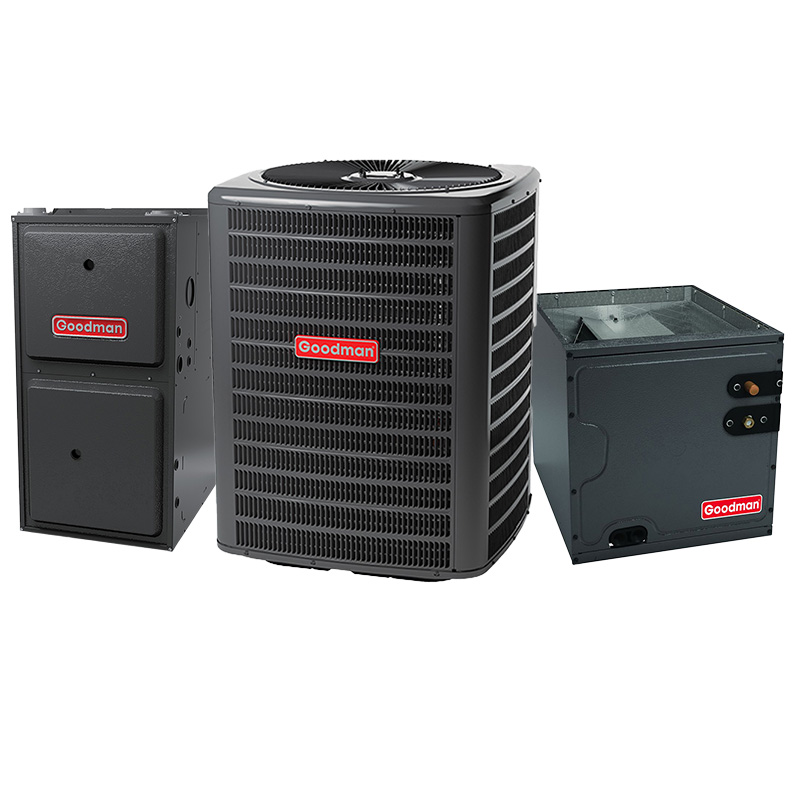
Goodman 3 Ton 14 SEER2 AC With 60000 BTU 96% AFUE 2-Stage Variable-Speed ECM Gas Furnace System – Upflow | R32
View on AC Direct see your lowest price →Check current price on AC Direct →
Key features
- 96% AFUE two-stage gas furnace reduces fuel costs and qualifies for federal efficiency tax credits
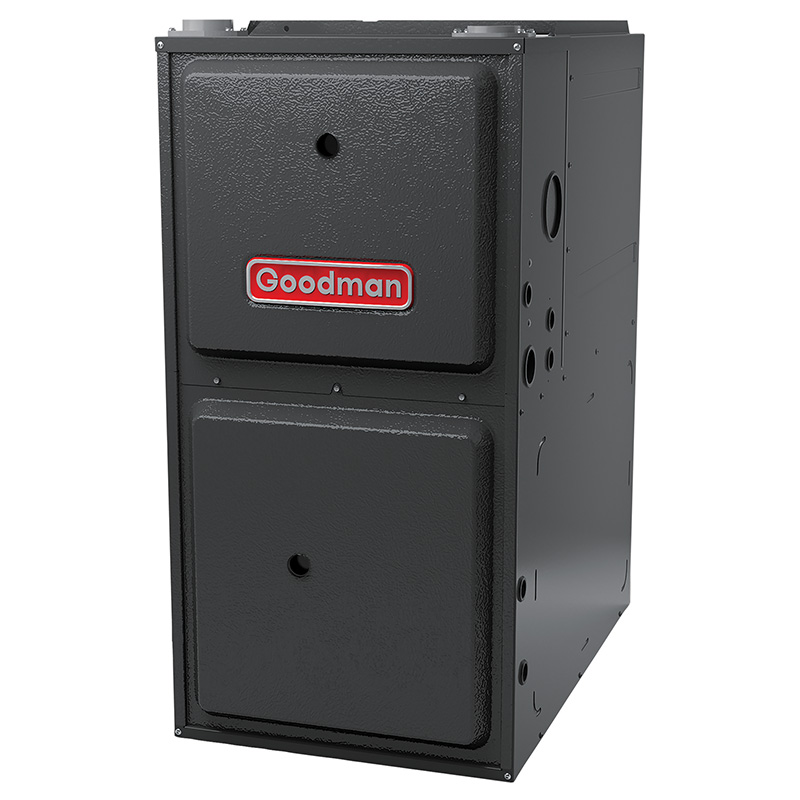
- Variable-speed ECM blower motor lowers electricity use, runs quieter, and improves humidity removal
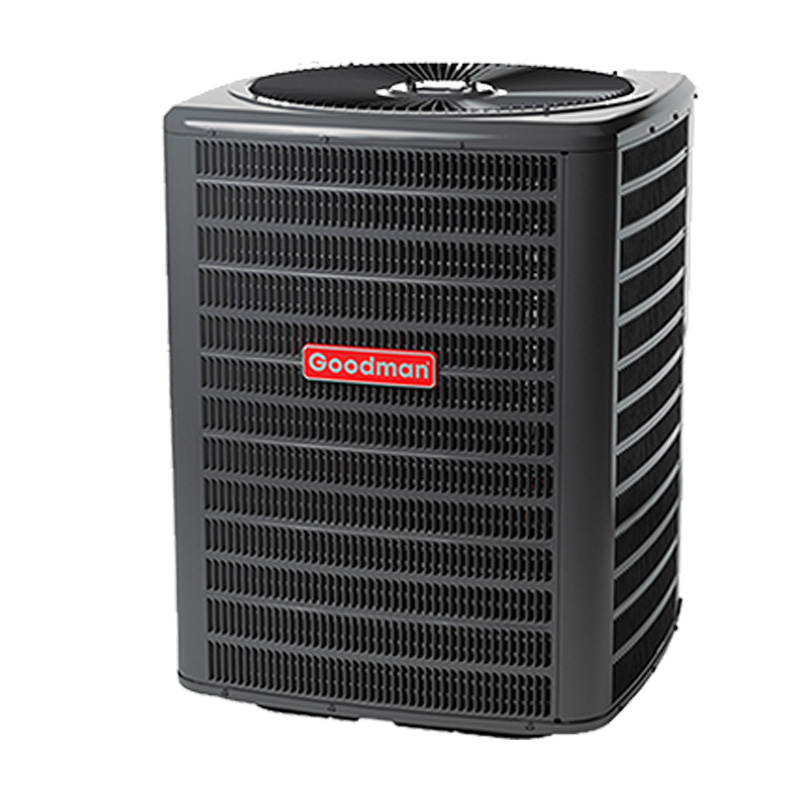
- 3-ton, 14 SEER2 cooling meets current federal minimum efficiency standards for most U.S. regions
- R-32 refrigerant with lower global warming potential than R-410A
- Upflow configuration suits basement and utility-closet installations with overhead duct systems
- Two-stage gas valve allows low-fire operation during mild weather for more consistent comfort
About this system
This Goodman system pairs a 3-ton, 14 SEER2 air conditioner with a 60,000 BTU, 96% AFUE two-stage, variable-speed ECM gas furnace in an upflow configuration. The 96% AFUE rating means the furnace converts 96 cents of every fuel dollar into usable heat, which puts it in the high-efficiency tier and qualifies it for federal tax credits under the Inflation Reduction Act’s efficiency thresholds. The variable-speed ECM blower motor runs at lower speeds most of the time, which reduces electricity consumption, improves humidity control, and runs notably quieter than single-speed alternatives. The two-stage gas valve adds a second layer of comfort by allowing the furnace to run on low fire during mild weather and only ramp up when conditions demand it.
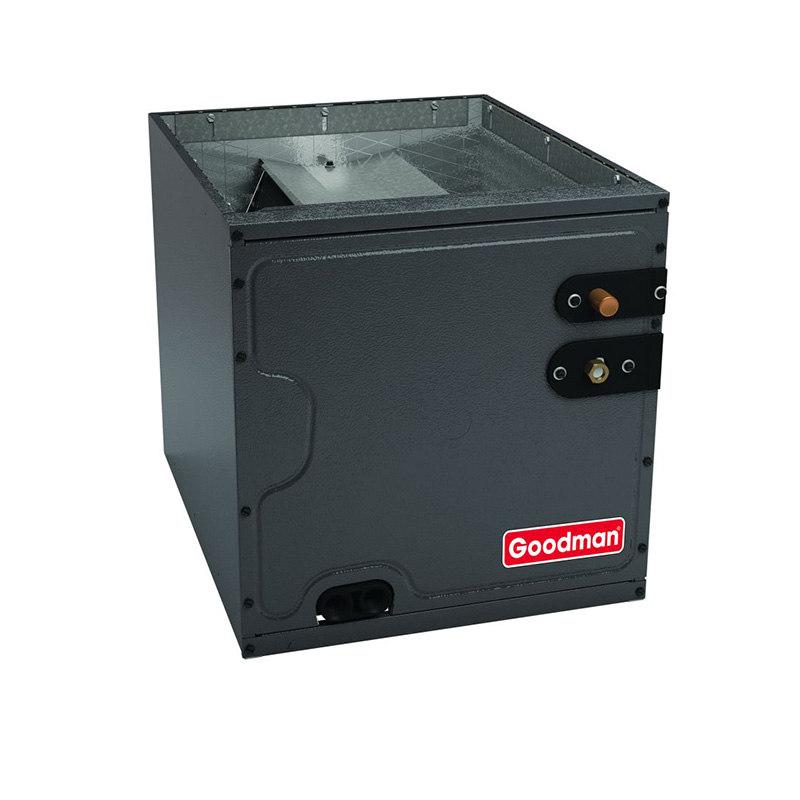
The 14 SEER2 cooling rating sits at the current federal minimum for most of the country, so it is not an efficiency showpiece on the cooling side, but it does keep upfront cost lower and gives buyers a clear path to upgrade in the future if needed. R-32 refrigerant has a lower global warming potential than R-410A and is becoming the standard as the industry moves away from older refrigerants. The upflow configuration is the most common residential orientation, compatible with installations where the furnace sits in a basement or utility closet and the supply air travels upward. This system is a reasonable fit for budget-conscious buyers who want high-efficiency heating without paying premium brand prices, and who live in climates where heating load matters more than maximum cooling efficiency.
This system delivers genuine high-efficiency heating at a price point noticeably below comparable Trane, Carrier, and Lennox bundles, making it a solid choice for budget-focused buyers who prioritize heating performance. The cooling side is competent but not impressive at 14 SEER2, and long-term reliability depends heavily on who installs it and how well it is maintained. Buyers comfortable with the possibility of a repair or two before the 15-year mark will find real value here; those wanting premium longevity assurance should budget up.
Overall score is the average of the five ratings above.
What we like
- 96% AFUE furnace is genuinely high-efficiency and can reduce annual heating costs compared to 80% units
- Variable-speed ECM motor meaningfully improves comfort and humidity control versus single-speed systems
- Two-stage heating provides more consistent temperatures and quieter low-demand operation
- Priced 15 to 25 percent below comparable Trane, Lennox, and Carrier systems, freeing budget for a quality install
- R-32 refrigerant is forward-looking and has a lower environmental impact than R-410A
Trade-offs
- Dual-run capacitors are the most frequently reported failure point, typically needing replacement within 5 to 10 years at a cost of roughly $300 to $600
- Evaporator coil leaks appear in a meaningful share of owner reviews and can be an expensive mid-life repair
- Compressor lifespan averages 10 to 14 years versus 15 to 20 years for premium brands, meaning a shorter window before a major decision point
- 14 SEER2 is the federal minimum for most regions, so cooling efficiency is not a strong suit if your climate demands heavy air conditioning
What homeowners and pros say about Goodman
Homeowners who research Goodman before buying tend to land in one of two camps. Those who had a skilled technician do the installation and who kept up with annual maintenance often report years of uneventful operation and appreciate the lower upfront cost. The brand scores around 3.8 out of 5 across Google dealer reviews, where affordability is the most commonly praised attribute. The other camp, represented heavily on ConsumerAffairs where Goodman scores roughly 2.5 out of 5, tends to surface after year 7, when repair costs on capacitors, coil leaks, or refrigerant issues start to add up. That pattern is worth taking seriously, and it tracks with Goodman’s documented failure modes: dual-run capacitors are the most commonly cited repair, typically in the $300 to $600 range; evaporator coil leaks appear in a meaningful share of reviews; and compressor lifespan averages 10 to 14 years rather than the 15 to 20 years owners of premium brands report.
HVAC technicians who work on Goodman equipment regularly tend to echo a consistent message: the brand is not a bad product, but it rewards good installation more than most. A properly sized, carefully commissioned Goodman system with clean refrigerant charge and tight duct connections will outperform a poorly installed premium unit. That means the money saved on equipment is well spent on a reputable installer rather than pocketed entirely. For this particular system, the 96% AFUE two-stage furnace with variable-speed ECM is a genuinely capable piece of heating equipment, and the pros tend to view it as good value for homeowners who go in clear-eyed about the brand’s track record and plan for occasional mid-life service costs.
Sources: ConsumerAffairs Goodman owner reviews, AHRI Directory of Certified Product Performance, U.S. DOE appliance and equipment efficiency standards, Goodman product specification sheets.
What it costs to run
At 14 SEER2, cooling this 3-ton system for a typical 1200-hour cooling season at the U.S. average electricity rate of $0.17/kWh works out to roughly $525 per year in cooling, about $23 less per year than a minimum-efficiency 13.4 SEER2 unit of the same size. Your real cost depends on your climate and local rate.
Method: (36,000 BTU/hr ÷ 14 SEER2) × 1200 hours ÷ 1000 × $0.17/kWh. Rate source: U.S. EIA average; cooling hours: moderate-climate estimate.
How it compares
| Brand | Comparable model | SEER2 | Stage | Price position |
|---|---|---|---|---|
| Goodman | This system (3-ton 14 SEER2 AC + 96% AFUE 2-stage ECM furnace) | 14 | Two-stage furnace / single-stage AC | Value pick |
| Carrier | Performance 13 / 96 series (CA13NA + 59TP6) | 14 | Two-stage furnace / single-stage AC | Typically 15 to 25 percent more than this Goodman bundle |
| Trane | XR14 / S9X2 series | 14 | Two-stage furnace / single-stage AC | Typically 15 to 25 percent more than this Goodman bundle |
| Lennox | Merit ML14 / ML296V series | 14 | Two-stage furnace / single-stage AC | Typically 15 to 25 percent more than this Goodman bundle |
Competitor rows are comparable single-stage units at similar efficiency; price is relative position, not a quote.
Questions about this system
Is 14 SEER2 going to cost me more on my electric bill compared to a higher-efficiency unit?
Yes, over time a 16 or 18 SEER2 system will use less electricity per cooling hour, and the gap is more noticeable in climates with long, hot summers. In heating-dominant climates where the AC runs fewer months, the payback period on a higher SEER2 unit can stretch to 10 years or more, so the 14 SEER2 rating may be an acceptable trade-off depending on where you live.
What does a variable-speed ECM blower actually do for me day to day?
The ECM motor ramps its speed up and down based on demand rather than running at full blast or not at all. In practice this means longer, gentler cycles that do a better job pulling humidity out of the air in summer, more even temperatures room to room, and noticeably less noise from the air handler during normal operation.
How likely am I to need a repair in the first 10 years, and what should I budget for?
Goodman's most common documented failure is the dual-run capacitor, which typically runs $300 to $600 to replace and is generally considered a routine mid-life repair rather than a catastrophic one. Evaporator coil leaks and refrigerant issues are less common but more expensive. Setting aside $500 to $1,000 in a maintenance fund is a reasonable precaution.
Does this system use R-32 refrigerant, and is that a problem for future service?
Yes, this system uses R-32, which is the direction the HVAC industry is heading as it phases out R-410A. Most HVAC technicians are already being certified to handle R-32, and availability is expected to improve as adoption grows. It is mildly flammable at high concentrations, so service should always be performed by a certified technician.
Will this furnace qualify for the federal energy efficiency tax credit?
A 96% AFUE gas furnace meets the efficiency threshold for the federal Energy Efficient Home Improvement Credit, which allows up to $600 back on qualifying furnace installations through 2032. You should confirm eligibility with a tax professional, as income limits and other conditions apply.
Specifications
| Cooling capacity | 3 Ton |
| Efficiency | 14 SEER2 |
| Furnace output | 60000 BTU |
| Furnace efficiency | 96% AFUE |
| Configuration | Upflow |
| Refrigerant | R-32 |